19 - Principle Three: No One Moves Alone – Independent Networks
2022 No 19
When we had sailed through the sea along the coast of Cilicia and Pamphylia, we landed at Myra in Lycia. There the centurion found an Alexandrian ship sailing for Italy, and he put us aboard it... Since neither sun nor stars appeared for many days, and no small storm was assailing us, from then on all hope of our being saved was gradually abandoned.
--Acts 27:5-6, 20
In the last post, our pastor was standing at the front door of his church, looking across his church field. The fact that so many were immigrants was obvious. How they came to be there was not clear. And so, we began to examine the logistical components of migration. When one looks across any urban center and realizes that perhaps three of every four people are migrants, it is not hard to imagine that they did not all arrive independently. Migration is a big business. In 2015, migrants added some 6.7 trillion dollars to the global economy.1 In our last post, we identified local networks (families, communities, and religious organizations) as the primary means by which people move. Why? Because they share in the benefits.
Although their community facilitates the most significant percentage of global migration, it is certainly not everyone. Many do not have the resources (financial or relational) to go all the way. The concept is not difficult. If you don't have friends and family in the places you want to go, you have to find other ways to get there. Remember that we are demonstrating a principle… that is… no one moves alone! As such, some must use what I have described as independent networks to help them.
In this post, we will look at some of these independent networks. We will divide the discussion into two groups. The first is what I call networks of accommodation. It is basically as the name describes. They are networks that serve to accommodate or offer services that would help facilitate movement. The second is called networks of survival. These are networks of last resort when other options have failed. They typically prey on individuals in their times of greatest need, and at times of greatest weakness. There is a fine line between the two networks, but we will try to help you get a feel for both.
Networks of Accommodation
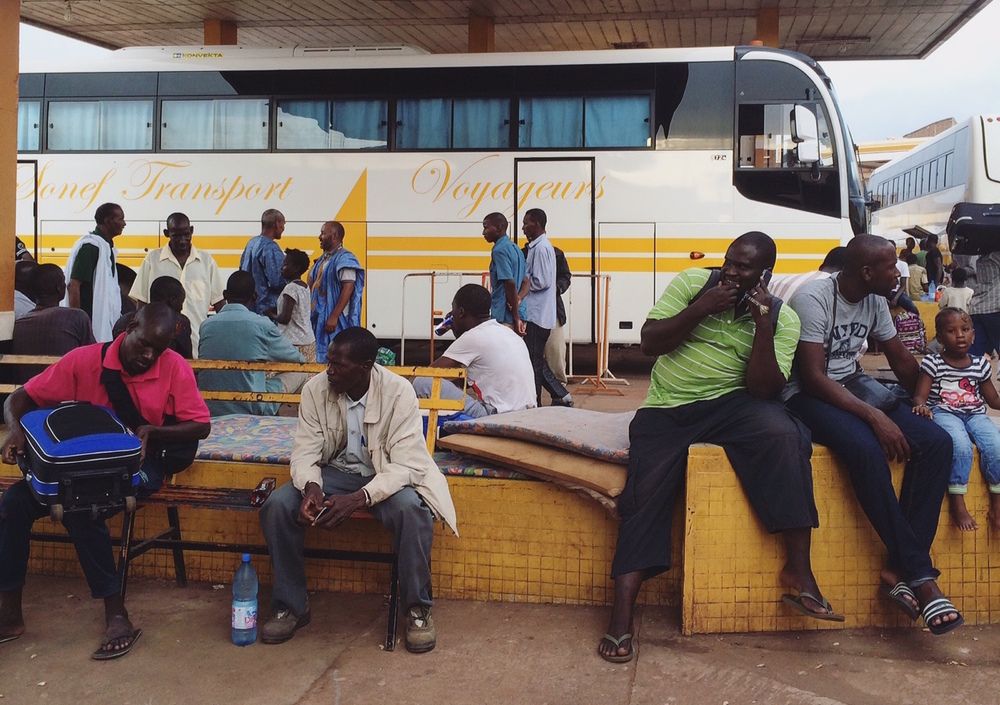
Networks of accommodation are like travel agents. They are in the business to help people go places. They can be as common as a bus company or an airline. They can be affiliated with a university or an employer. We use them every day. They exist in developed countries, and they also are found in developing countries. Wherever there is someone on the move, someone is ready to meet their needs... for a competitive price.
Most migrants begin and complete their journeys through such networks. The particular kinds of networks secured have much to do with where they want to go and how much money they have available to spend. Easy movements from a village to a city or a neighboring country do not take much. Getting off the continent, however, might be a different story. Visas can be difficult to secure, and as one might imagine, the costs go up significantly. But there are always people along the way who are more than willing to help.
Why? Because the result is beneficial for the network and, ultimately, the migrant. Employers may "accommodate" those promoted to new positions or hired to serve in another city. Universities may "accommodate" graduate students as they begin their studies in another country. There are often systems in place to "accommodate" commerçants who are engaging in new markets. This is very common in places like Turkey or China. They can offer the initial capital necessary to travel and invest. They have market connections in both communities of departure and destination. Most importantly, upon the arrival of a new migrant, they can offer cultural and business mentors who guide their efforts.
Across Africa, there are those who are desperate to migrate to obtain a better life and a notion of wealth. Many young men are lured into believing that there will be jobs and resources readily available if they can just leave the continent. Some will go with the blessing and prayers of others, often utilizing borrowed money. Some families will sell their property to fund the effort. But ultimately, these young men can go only so far on their own. Either they will run out of money, or out of the knowledge and capacity to take the next step. By this point, they are generally in too deep to turn back and cannot go forward.
Networks of Survival
Remember, independent migration networks are all about making money. And desperate migrants make easy targets. At one level, some of these networks become a form of exploitation. And they are evil. It is like a modern-day scam, where one thing is promised, and another thing is delivered. Their goal is money. And like most criminals, they don’t quit until they have drained their source completely dry.² On the front end, they present themselves as a network of accommodation. Before long, they become evident for what they really are, the dark side of human smuggling. And these networks of survival are big business. Revenue from human smuggling is estimated to exceed ten billion dollars per year.3
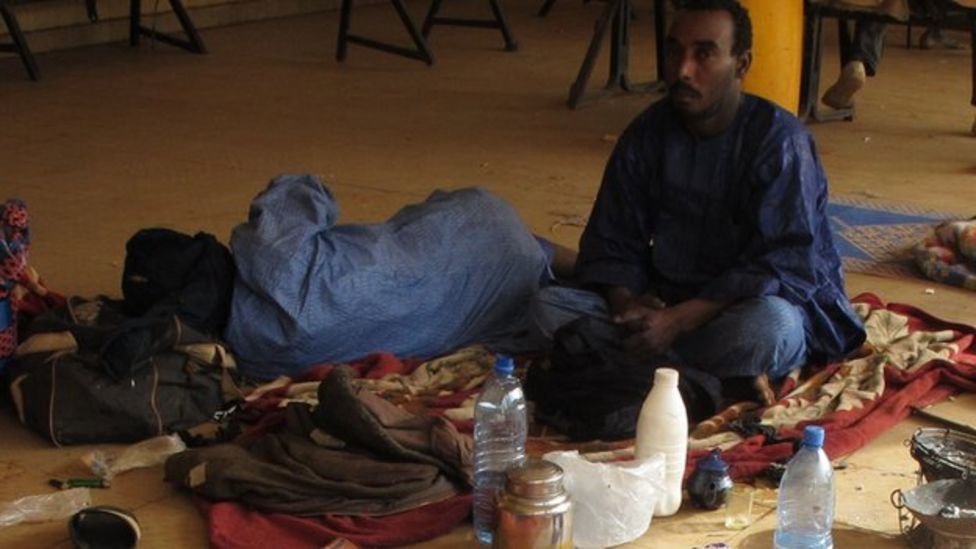
Before we go any further, allow me to offer a word of caution against judgment. Human smuggling is like a coin with two sides. The coin itself is terrible. It takes advantage of people's weaknesses and exploits them for their money. But for the coin to work, there must be two sides. On the one side is the migrant who very much wants to go somewhere. If he cannot get there legally, he is willing to pay someone to help him get there illegally. On the other side are the criminals. Some of which are ruthless. But there are also everyday people who provide services. They may be bus drivers, boutique owners, restaurants, or someone able to offer a place to sleep. People are willing to pay for these services, and they need the money to feed their families. The result may be classified as "illegal," but in the small steps, it is simply survival. Thus, people on both sides of the coin can become victims.
So how does it work? Let’s say that a migrant wants to get from Africa to Italy. Most can find their way to Bamako, Mali on their own. To go any further, however, they will need help. Someone will sell them a bus fare to Gao. Once there, there are those who will give them a place to sleep, food to eat, and a ticket to the next stop on the journey. At this point, there is nothing overtly illegal about the movement. But getting past the bandits and across the border requires money for bribes. In Niger, they must pay again for a place to stay and transit across the desert. I hope you are beginning to see the picture. For the migrant, the journey is to find a better life. For everyone else, it is to make money. For most, on both sides of the coin, it literally becomes a game of survival.
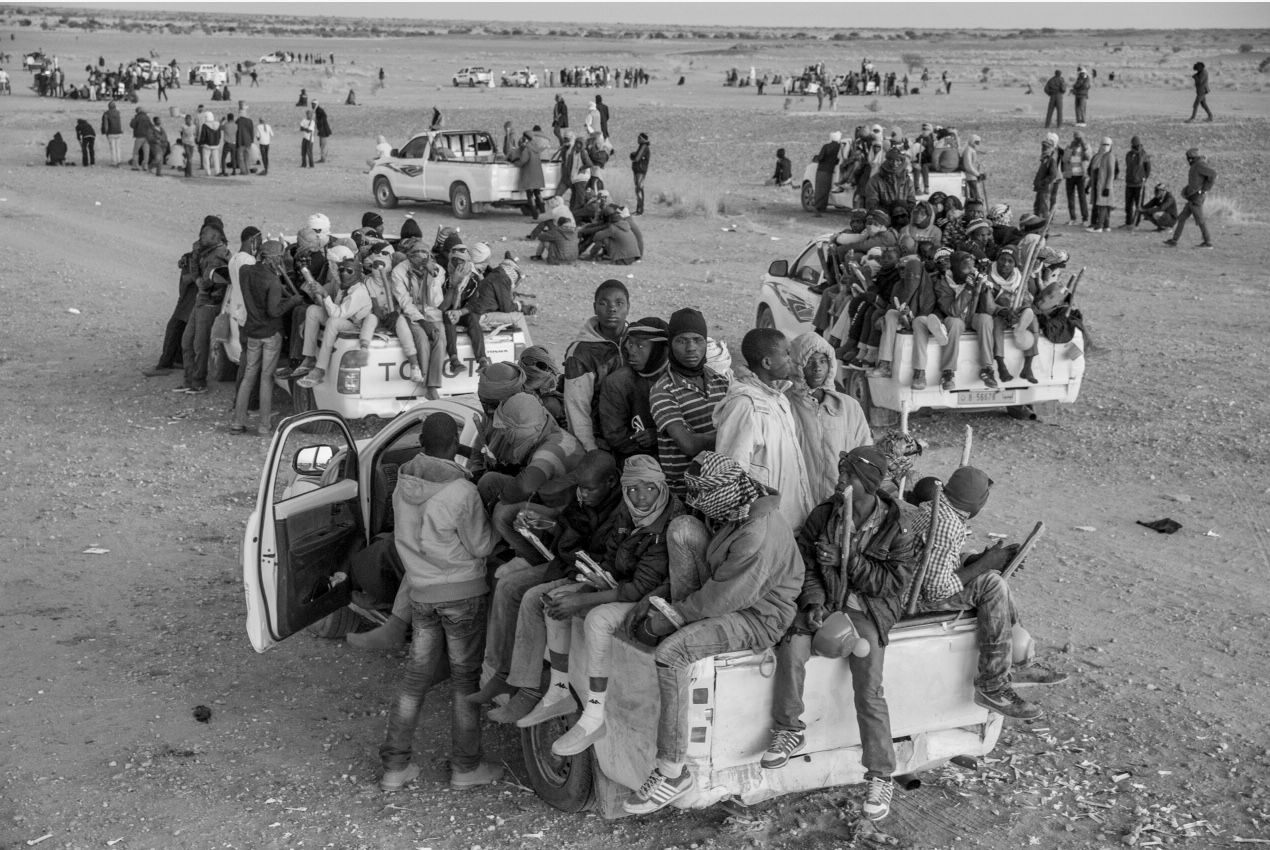
Along the way, there are always those who manipulate the coins of smuggling for their advantage. Theft and corruption abound. Even if bribes are paid, one can still lose everything. There is always a criminal element to this level of migration, and things can become very precarious... very quickly. If a migrant ever becomes stranded, they can become even more desperate and often fall victims to human traffickers. This is a whole new level of tragedy and will be covered in more detail in our next post.
Things can get complicated in trying to understand these networks of survival. Consider the following definition from the United States Immigration and Customs Division. Human smuggling involves "the provision of a service, typically, transportation or fraudulent documents—to an individual who voluntarily seeks to gain illegal entry into a foreign country."4 In other words, someone who helps a migrant to “survive” along their journey is technically a smuggler. Even if it is a baker who simply sells a loaf of bread to someone. If a church offers food or shelter, it may be in violation of the law. If an aid worker gives someone a ride, they may be guilty of facilitating illegal migration. Sometimes smugglers are not bad people; they are just people trying to feed their own families or do something out of compassion.
So, in the end, we hold this coin called human smuggling in our hands. The coin itself is bad. There are those who manipulate the coin for their profit, and they are evil. But often, the actors on either side of the coin may function with good intentions. I once met a believer in Greece who had come to faith as a migrant. He was active in a local church, and God was using him mighty. Because of his past, he knew people who could help migrants get from Greece to Germany. People begged him to make the connection, and he always said no. But one time, when he was in a financial bind, he finally agreed to help. He would have earned a small commission if things had gone as planned. Sadly, his connection stole all of their money and left the people with nothing. All he had done was pass a phone number. But, he was branded an evil smuggler, and he lost his reputation among the people and as a member of the church. By the time I met him, he was utterly broken.
Conclusion
We began this section by seeking to identify five principles that are true with almost all migration. The first principle is that everyone is on the move. It is a human condition that is only differentiated by circumstance. The second principle is that everyone moves for a reason. There is always a compelling reason to leave home. The third principle is that no one moves alone. The more distant the destination, the greater the need for help. The more complicated the travel, the greater the cost.
Obviously, many have the resource and the connections to go wherever they desire. It may be through their family, community, or even through religious networks. To get there, they will use the services of those in the business of accommodating such movements. These networks help secure visas, purchase airline tickets, avoid legal obstacles, etc. If you talk to those who have arrived at their desired destination, such as Paris, New York, or even your neighborhood, most will tell you this story.
But along the way, in places like North Africa, Turkey, and Southern Europe, one can find millions who have become trapped. They will tell a different story. Theirs are stories of survival… about those who either offered help… or those who took advantage. They are often dark stories of exploitation, abuse, and suffering. When they realized that they could not make the journey legally, they chose to use smugglers to help them make the journey along more clandestine pathways. Those decisions ultimately led them to places where they did not intend.
The good news is that God is there, even in those dark places. It is there that they will often encounter Christianity, perhaps for the very first time. By now, they are very different from who they once were. They are empty, wounded, discouraged, lacking trust, and unbelievably streetwise. They know what it takes to survive, seldom letting their guard down. But they are also thirsty for something authentic, honest, and will offer hope. Like the centurion in Acts 27, they may have purchased a ticket on the boat but then became shipwrecked along the way. But in the boat with him was a Christian. And during the darkest nights, the light and hope of Christ shone through. By the grace of God, they were saved. Is it not possible that they were saved for this moment when God would direct their paths to your community… to your church… to you?
____________________
1Jonathan Woetzel, People on the Move: Global Migration’s Impact and Opportunity (Shanghai: McKinsey Global Institute, 2016).
2 For a revealing account of this in China, see Heidi Østbø Haugen, "Nigerians in China: A Second State of Immobility," International Migration 50, no. 2 (2012).
3 "Smuggling of Migrants", Migration Data Portal https://www.migrationdataportal.org/themes/smuggling-migrants (accessed March 26, 2022). One must keep in mind that this number is greatly underestimated. It only includes those movements that were voluntary and transnational. It does not include the multitude of clandestine operations that cannot be documented.
4 Human Trafficking Vs Human Smuggling, (Washington D.C.: United States Immigration and Customs Enforcement, 2017).