28 - The Historical Context of Italy: All Roads Lead to Rome
2022 No 28
Now after these things were finished, Paul purposed in the Spirit to go to Jerusalem after he had passed through Macedonia and Achaia, saying, “After I have been there, I must also see Rome.”
—Acts 19:21
Introduction:
Since the Roman Empire, Italy has been a destination for the world. She has often served as the political and religious capital of the West. Even if you have never set foot on her soil, she has likely commanded some form of influence in your life. It was a bit audacious for Emperor Augustus to plant a stake and declare that the center of the world was Rome.1 But in many ways, he understood the times. And yet today, Rome is hardly the center of anything other than Italy. Even the Vatican has lost that direct sense of control.² And while all roads may not lead to Rome for many of us, there is undoubtedly a sense in Africa that most roads are pointed in that direction. For many sub-Saharans, Rome becomes the central train station that could help them to go anywhere in Europe. Once there, the options can expand dramatically.
Italy has been in the news since the European Migration Crisis dominated the headlines in 2015. But in so many ways, she has been a part of the larger migration picture for much longer. Her history represents a continual engagement of both immigration and emigration.3 She has sent her people around the world. She has also welcomed many, often offering Italian citizenship to those who choose to stay. But it was the crisis of 2015 that finally forced the Italian government and her people to strengthen her borders, manage those who arrived for asylum rather than work, and coordinate with her European neighbors to develop more robust immigration policies.
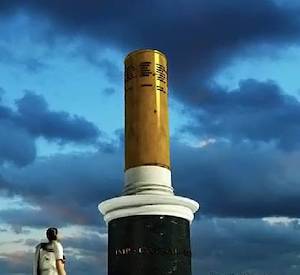
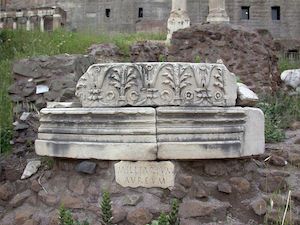
Milliarium Aureum in Rome: Central point from which all roads were measured.
Italy cannot escape her history, and she cannot ignore the impact of past migration policy on the aspirations of modern sub-Saharan Africans. Despite her economic challenges, African migrants recognize that their lives can be better and that their families can benefit if they can only set their feet on Italian soil. Our goal in this post is to help the reader understand that history a bit better, and in so doing, understand why the currents still run strong along the Central Mediterranean Migration Route.
The Door Swings Both Ways
When it comes to movement… Italy has been a country of emigration for much of her modern history. For the century prior to 1980, an estimated 26 million Italians left their homes searching for a better life. They still hold the record for the most extensive voluntary emigration in recorded history, with over 13 million leaving between 1880 and 1915.4 That was nearly 40% of her total population. Much of this was influenced by the poverty of the country. Two world wars compounded later movements. Perhaps as many as four of five emigrants during these periods were from southern Italy, where recovery from WWII was much slower. Farm life offered little opportunity for financial gain. For many, their journey was not successful. Disappointed with the options in their host countries, there was a return rate of nearly 50%. They are significant because, as in Africa, their stories became a part of the collective memory of migration in Italy today.
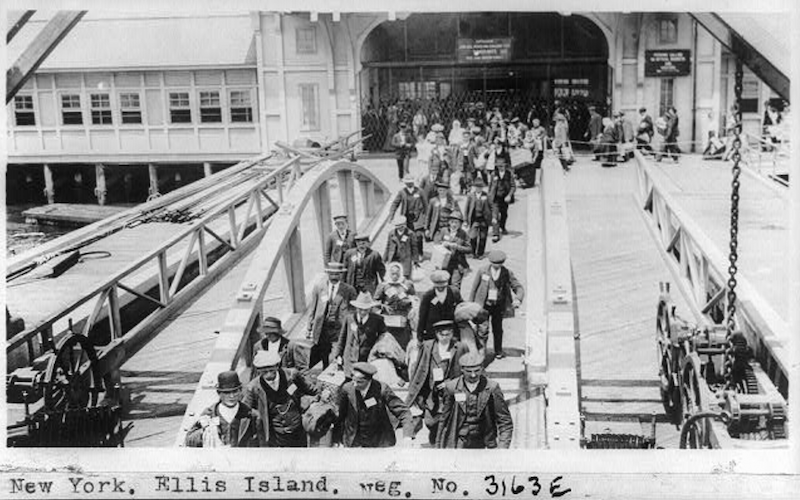
Italians continue to migrate, with some 5 million nationals currently living abroad. Over a million are in Argentina.5 Many more have made their lives in other neighboring countries of Europe. The key to remember is that successful emigration has generally led to a better life for those who go and… for those who stay. In 2019, Italy received over USD 10.5 billion in remittances.6 Most of those resources went directly into the pockets of their family members. This gain of wealth played a direct role in the perception of migration in Italy. Because of the benefits, the challenges of migration have a way of generating sympathy among the populace. That carries over to all who migrate, even those from Africa.
As far as immigration is concerned, Italy has received large numbers of immigrants across the years. In 2020, an estimated five million foreign-born citizens were living in Italy.7 This number does not include those who had acquired citizenship or entered illegally. Such may add another million to the total. For the most part, these immigrants are welcome in that they contribute to the overall national economy. Over the years, their arrivals have come in waves. After the fall of the Berlin Wall in 1989, and then again in the mid-2000s, Italy saw large numbers of immigrants from the former Soviet Union. Italy has also recorded numbers of immigrants from Asia-Pacific and Latin America. And then, recently, as is the focus of this series of articles, there were large movements from North Africa in the wake of the Arab Spring.
Regularization: Be Italian!
Italy has a need for immigrants! The country had over 1.5 million farms in 2010, with 63% in the south. She is the world's largest wine producer and a leading producer of various fruits. The service sector contributes to 74% of the nation's GDP.8 But with birth rates at a 160-year low and the average number of children per family at 1.17, Italy has one of the lowest ratios in the world.9 Her average age is 46 years old. As one can imagine, there are a lot of jobs and not many young people to fill those positions.
To encourage immigration, Italy has often engaged in the process of regularization. That is to say, they enacted a series of laws to grant residency and citizenship to foreign nationals who were working in the country. Until recently, Italy had limited border controls and held a reasonably open migration policy.10 Between 1984 and 1989, over 700,000 immigrants entered the country, half of whom were illegal. Between 1986 and 2009, the Italian government regularized some 1.7 million people. Among these were Senegalese Mouride street vendors. Unfortunately, these policies had unintended consequences in that they sent a strong message to the world that illegal entry was a valid means of arrival. Consequently, the desire to immigrate to Italy for what was then, available work, grew in sub-Saharan Africa. Particularly among those who were living in Libya.11
Floodgates
Italy began to recognize in the mid-2000s that the open border policy and the messages she was sending were unsustainable. They were starting to see dramatic increases from Libya and Tunisia through the islands Malta and Lampedusa. In 2008, the "Friendship Pact" was signed with Libya that included some 5 billion dollars in aid and gave the authorization to forcibly return immigrants intercepted at sea. It had little effect, for the gates were already open and could not be closed. During the early days of the Arab Spring, some 48,000 immigrants arrived in Lampedusa from Libya and Tunisia. With the collapse of the Libyan government and subsequent civil war, all of the controls of the prior agreement failed, and hundreds of thousands sought passage.12
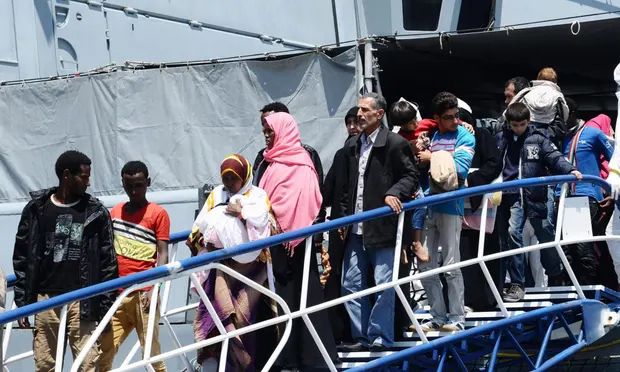
In the five years leading to 2020, nearly 700,000 migrants arrived at Italian ports.13 The first four years, 2014-2017, carried the greatest numbers, reflecting the exodus from the Libyan civil war. Most passed through centers in Malta or Lampedusa on their way to Italy. As will be discussed later, the conditions of the journeys were incomprehensible. The number of deaths is untold. Officially, there were 16,500 lost due to shipwrecks and drowning. But once again, that reflected the remains that were recovered and could be counted. The number of deaths was most certainly much higher.
In an effort to slow down the migration attempts and reduce the loss of life, the Italian navy initiated "Operation Mare Nostrum" in 2013. Essentially, it became a search and rescue mission along the Libyan coast. It sent a clear message that said… if you can get out here, we will pick you up and take you to Italy! Not surprisingly, it played directly into the hands of the smugglers, and the number of migrants picked up increased dramatically over time. The operation was suspended in October 2014 and outlawed the rescue operations of other private organizations. The intent was to interrupt the smuggling networks, but the result was perhaps a tenfold increase in migrant deaths. As Italy pulled her support for rescue operations, the EU initiated "Operation Triton". Led by Frontex, it saw the resumption of patrols. However, this time, their role was border control, primarily staying in Italian waters. More than anything, it was a political move to squelch criticism of the Italian policy changes. It also served to provide a measure of border control against the larger vessels that would depart from Libya.14
In February 2017, Italy entered into yet another agreement with Libya in an effort to control illegal immigration. It was called the Memorandum of Understanding (MoU). In that agreement, Italy offered financial incentives and training for the Libya Coast guard to intercept boats and return them to African soil. As we mentioned in the previous post, those efforts dramatically reduced the number of boats leaving.15 Perhaps the most controversial aspect of the MoU is that it put the migrants back into the hands of smugglers and traffickers. Such was catastrophic from a humanitarian perspective. In a later post, we will go into more detail regarding what that looks like.
A Darker Side
There is indeed a darker side to the history of Italian immigration. Organized crime has deep roots in Italian soil. Their fields of operation are in some of the same areas that have a direct influence on sub-Saharan migration. As noted above, Europe receives a significant proportion of its drugs through North Africa. They include cannabis from Morocco, cocaine from South America transiting through West Africa, and prescription drugs from Nigeria. Many of these African drug networks are linked to Italian mafias.16 Human trafficking is intricately tied to these drug movements, as criminal networks seek to supply the needs of the agricultural, hospitality, and sex industries.17
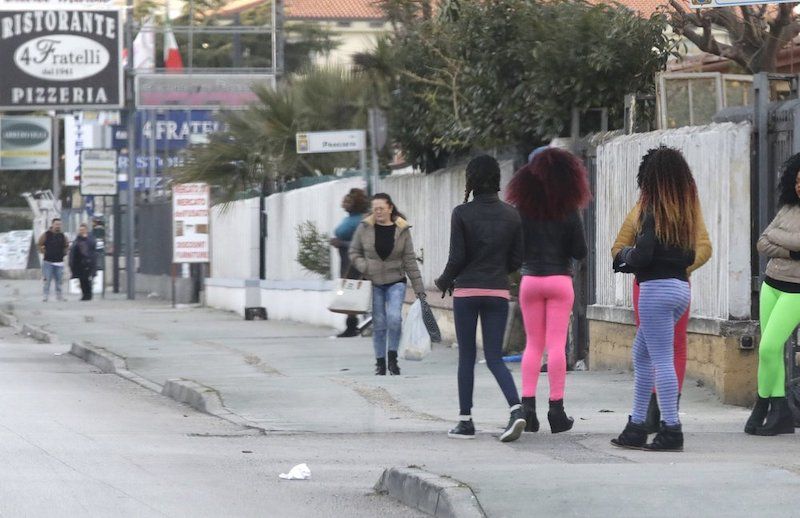
As noted above, Italy has a need for migrants. And where there is a demand, criminal networks will often step in to profit from those willing to pay. In Libya, militias and gangs seem to have no problem selling human laborers to the highest bidder. Migrants are often ready to become indentured for the cost of transit across the Mediterranean, if for no other reason than to escape North Africa. On the Italian side, mafia-controlled areas profit from the forced labor of these immigrants.
Conclusion
In the end, migratory flows are like water flowing from the mountains to the sea. Migrants who enter these flows have little control over the direction they go or the suffering that may ensue. And that is the point of the past three contextual posts. The CMR is not a migration route that can be easily controlled either through government policy or migrant decision-making processes. It is so much bigger than that. Many migrants set off imagining that one day they would arrive in Rome. Some will actually make it and may do very well. Others, like Paul, will come in chains.
When we, as God's people, look upon our communities, we see collections of people who carry the label of migrant. If we look closer, however, we can see the eyes of human beings created in the image of God, searching for life, hope, and peace. We may not be able to change their circumstances, but we can certainly share with them the hope that is found in Christ. We have what they desperately desire, and just an ounce of compassion on our part will open the door to their receptivity. Perhaps it is time to look beyond how and why they arrived in our neighborhood… and see them through the eyes of our Lord.
1The Milliarium Aureum in the forum of Rome was a monument established by Emperor Augustus in about 20 BCE. It marked the center of the Roman road system. All roads supposedly led to this point, and all distances were measured from this point. According to Phillip Schaff, the phrase “all roads lead to Rome” was coined with this monument in mind. A. Cleveland Coxe and others, The Ante-Nicene Fathers. Translations of the Writings of the Fathers Down to A.D. 325, vol. 1, The Apostolic Fathers, Justin Martyr, Irenaeus (New York: The Christian literature publishing company, 1885), 1.
2Frank Desiderio, "The Catholic Church’s Center of Gravity Shifts South", Aljazeera America https://tinyurl.com/wmzsaa27 (accessed June 24, 2022). See also Philip Jenkins, The Next Christendom: The Coming of Global Christianity, 3rd ed. (Oxford: Oxford University Press, 2011), 6, 22.
3As a reminder, immigration is when non-Italian peoples move to Italy and seek some form of recognition. Emigration is when Italian peoples seek to move away from Italy.
4Angelo Scotto, "From Emigration to Asylum Destinatin, Italy Navigates Shifting Migration Tides", Migration Information Source https://tinyurl.com/2p85hkf5.
5"Fifteen Largest Italian Populations Living Abroad in 2019 by Country of Residence", Statistica https://tinyurl.com/3tr2wnsb. (accessed June 24, 2022).
6"Personal Remittances Received - Italy", World Bank https://tinyurl.com/5eahn7h6 (accessed June 24, 2022).
7ISTAT, Indicatori Demografici: Popolazione in Calo Quasi Ovunque Sul Territorio (Rome: Istituto Nazionale di Statistica, 2020).
8Benjamin Sawe, "What Are the Biggest Industries in Italy?", World Atlas https://tinyurl.com/ypsnc4uw (accessed June 24, 2022).
9Celine Wadhera, "Birth Rate in Italy Hits 160-Year Low", Independent https://tinyurl.com/ycku8jfu.
10Alessandra Venturini Daniela Boca, Discussion Paper: Italian Migration (IZA Research, 2003).
11Giovanna Zincone, "The Case of Italy," in Migration Policymaking in Europe: The Dynamics of Actors and Contexts in Past and Present, ed. Rinus Penninx Giovanna Zincone, Maren Borkert (Amsterdam: Amsterdam University Press, 2011). See also Stefano Uberti Bruno Riccio, "Senegalese Migrants in Italy: Beyond the Assimilation/Transnationalism Divide," Urban Anthropology and Studies of Cultural Systems and World Economic Development 42 (2013).
12Mattia Toaldo, "Migrations through and from Libya: A Mediterranean Challenge," IAI Working Papers 15 (2015).
13UNHCR, "Operation Data Portal: Refugee Situations", United Nations https://tinyurl.com/mwrekxx7 (accessed June 24, 2022).
14See Scotto. See also Elsa Vari, "Italy-Libya Memorandum of Understanding: Italy’s International Obligations," Hastings International and Comparative Law Review 43 (2020): 109.
15Vari "Italy-Libya Memorandum of Understanding: Italy’s International Obligations," 118-119.
16UNODC, World Drug Report 2021: Drug Market Trends (Vienna: United Nations, 2021), 30-31.
17EASO, Nigeria Trafficking in Human Beings (Geneva: European Asylum Support Office, 2021). See also 2020 Trafficking in Persons Report: Italy, 2020.