42 – Historical Context of Morocco
2023 No 42
Again He went out from the region of Tyre, and came through Sidon to the Sea of Galilee, within the region of Decapolis.
—Mark 7:31
When Jesus and the disciples arrived in Decapolis, it was as if they had walked into a whole new world. Unlike the familiar Jewish territory west of the Jordan, Decapolis was a region that had come under strong Greek influence in the three centuries before Jesus' arrival. The traditional culture was a mix of Jewish and Aramean backgrounds. On the surface was contemporary Hellenism. Thus, the region served as a point of diffusion, seeking to spread Greek culture across the Middle East.1
Morocco is very similar in that it has served as the historical launching point of Islam and Arab culture into what could be considered traditional sub-Saharan Africa. The Muslim conquest of the eastern Maghreb began in the middle of the 7th century and held firm control of North Africa by the 8th century. The indigenous peoples of Morocco adopted the Islamic religion but, like much of Africa, also held closely to their traditional customs. By the 11th century, the Almoravid and Almohad dynasties had control of the region. It was at this time that Islam began to make its way south along the Atlantic coastline towards Senegal.
It was not that Islam had not already made deep inroads into the central Sahel. Traders had been crossing the Sahara Desert for generations. As in many cases, those in the Sahel (sub-Saharans) were more than willing to do business with their northern Muslim counterparts. Many would adopt Islam simply because it gave them an economic advantage.² But the trade routes along the Atlantic coast revealed two noteworthy exceptions. First, coastal West Africa seemed to hold to her traditional religion much more tenaciously than those in the interior. This may have been because the existing trade routes were so strong that there was no need to adopt Islam to maintain commerce. Second, Christian colonial influence in the 15th century, for the most part, blocked the spread of Arab culture to the South. When it finally arrived in the 19th century, it came by force. But that is another story.3
In the New Testament, the disciples' arrival in the region of Decapolis resulted in a bit of culture shock. It may have been one of their first experiences in a place where the indigenous culture pressed back against their Jewish identities… and with a substantial measure of force. Such can be the same for modern migrants to Morocco. Those, particularly from Christian backgrounds, can find themselves at odds with the decidedly Islamic culture. And yet, despite the cultural and religious challenges, there is much to draw the ambitious to Morocco.
The Road to Morocco
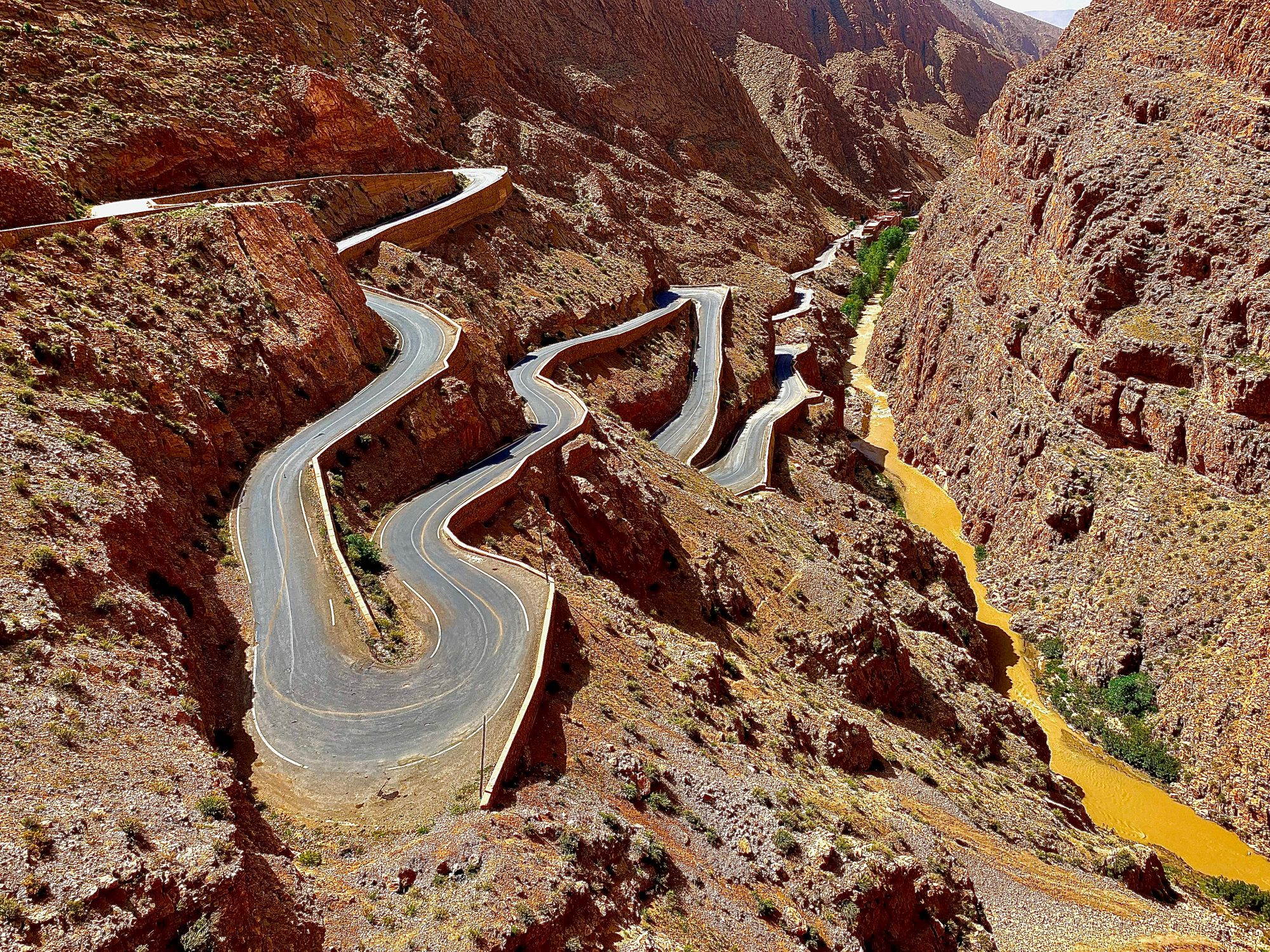
The road to Morocco is rather broad. Why? Because the government of Morocco desires to be a key player in the African economy. Under the current regime, she has engaged in extensive North-South relations with sub-Saharan Africa. Part of that has been the forgiveness of debt towards other countries, along with very generous support of humanitarian issues. Morocco rejoined the African Union in 2017 and simultaneously applied for membership in ECOWAS (Economic Community of West African States). While the latter has yet to happen, it is making good progress.4 Morocco has remained a visa-free country for many African countries, meaning that a plane ticket is all that is needed for most to engage in either tourism or commerce.
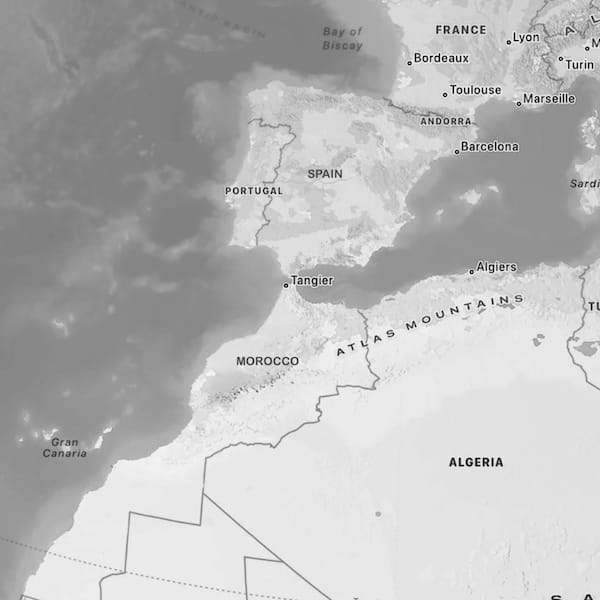
It is difficult to find accurate numbers on migration to Morocco because the data is scattered across numerous sources. In general, however, it is estimated that as many as half a million migrants legally reside in Morocco. Over fifty percent are from sub-Saharan Africa.5 A large portion of these visitors are students. In 2020, an estimated 25,000 international students were enrolled in Moroccan universities, with most coming from the continent.6 Morocco is also a hub for Sufism, a branch of Sunni Islam. The birthplace of the Tijaniyya brotherhood is in Fez, making the region a destination for many SSA Muslims.7 And although the country is 99% Islamic, there may be as many as 30,000 international Christians who worship openly across the country.8 In other words, Morocco has made great efforts to remain open to those of other countries and cultures who wish to visit... along legal pathways.
The Road to Europe
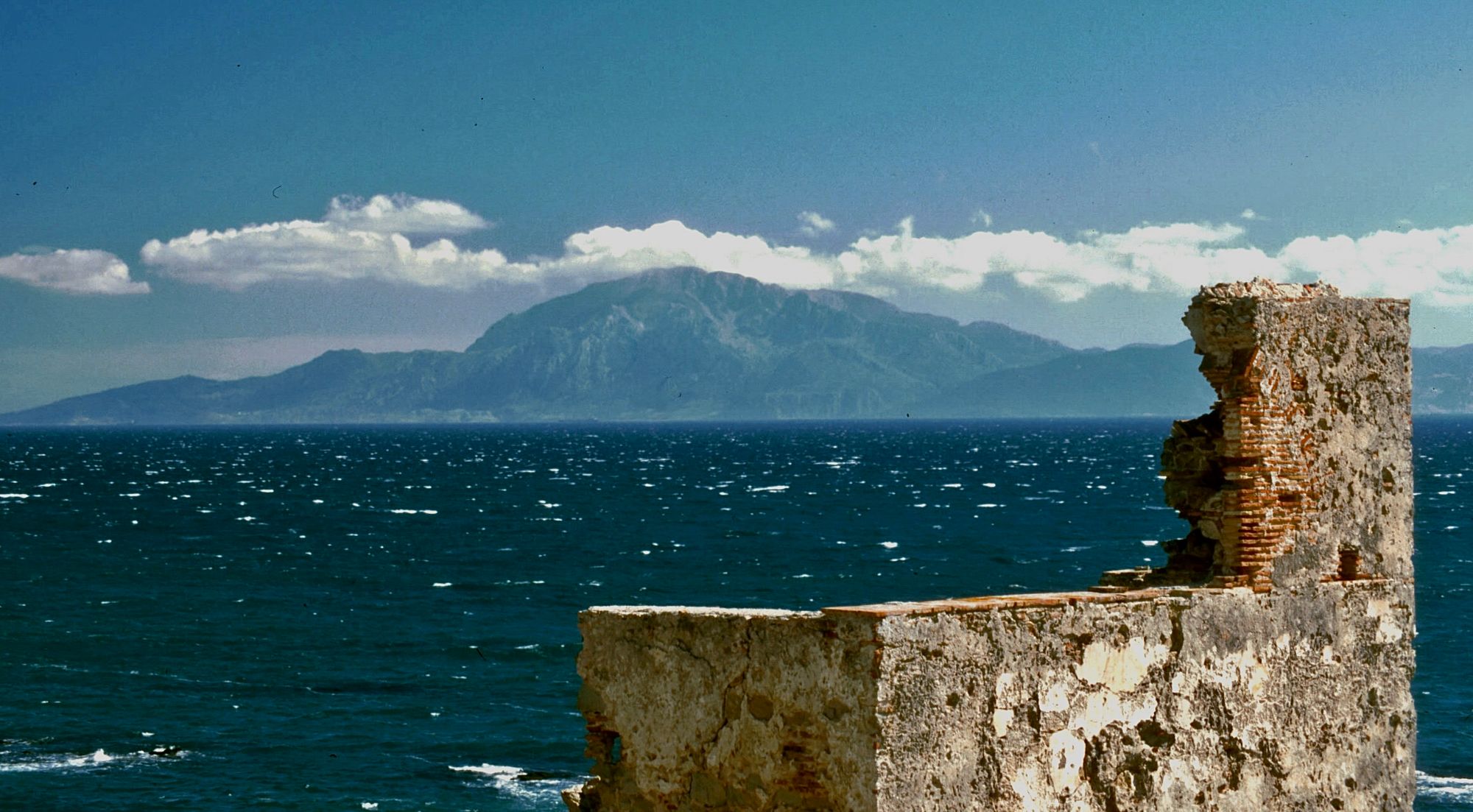
But Morocco is also a migration junction. Yousra Abourabi wrote a fascinating journal article this year in which he recognized that Morocco "stands at the geographic crossroads of Europe and Africa and serves as a migratory gateway between the two continents." He states, "it is an important part of the transit route to Europe, encompassing a long stage in a multi-state migratory journey, and has also become a long-term destination for many migrants."9 This may help to explain why the Western route through Morocco comprises at least 45% of all irregular migration into Europe. Interestingly, half of that number are Moroccans themselves. It is estimated that ten percent of her population of 36 million are living outside of the country.10 Not all, but many, have migrated illegally.
Much of this movement is directed by Spain's labor needs and shortages. As we will cover in the next post, nearly half of all Spanish lands are used for agriculture, and she needs nearly a million laborers each year to supply her agricultural needs. Her nearest neighbor, France, requires another eighty thousand yearly for the grape harvest alone.11 EU regulations, if followed, result in very high labor costs. Consequently, informal, if not illegal, labor markets become attractive. Africa is the most natural source of that labor, and the point of departure is often Morocco.
Morocco is well positioned to control the migration flows to Europe as with other Mediterranean departure countries. This gives her government a huge diplomatic advantage at almost every point of negotiation. On the one hand, she can send her citizens to work in Europe, which would directly benefit Morocco. In 2019, over 2.7 million people participated in Operation Marhaba, a program that assists Moroccans in their transit between their homeland and Spain.12 The program was restarted after COVID, and this year, in 2023, Spain inaugurated a program to allow another 16,000 workers to immigrate from Morocco.13 In 2022 alone, remittances to Morocco were nearly 5.5 billion US dollars. That is up from 3.5 billion in 2018. These resources flow directly into the lower-class economy of Morocco, creating a direct benefit... if not relief for governmental social services.
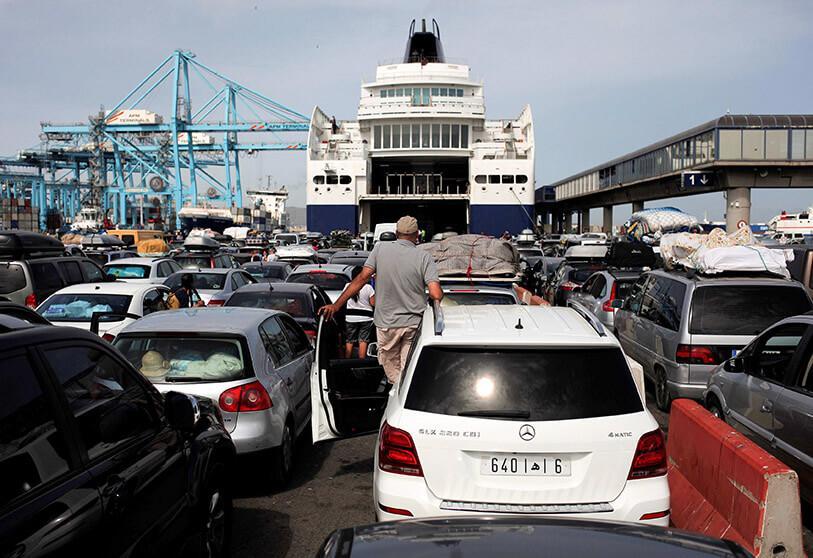
Many of these movements are intended to be seasonal and circular. On the European side, however, many of these migrants arrive legally but have no intention of leaving. Many do not even find work. Almost half of all Moroccans (and sub-Saharan Africans) who go to Spain for labor purposes remain unemployed. This creates an incredible strain on European migration agencies and respective social systems. Thus, the EU often seeks to incentivize Moroccan border control to limit the flows through cash agreements. Since 2014, Morocco has received some €343 million from the EU. Negotiations for continued cooperation could reportedly see that figure rise to as much as €3.5 billion for the period between 2020 and 2027.14
We must also realize that Moroccan migration control provides more than a financial advantage. There are political advantages inherent to the system. In April 2021, over ten thousand migrants crossed the border into the Spanish enclave of Ceuta, apparently unimpeded by Moroccan authorities.15 Similarly, the Moroccan government delayed the resumption of post-COVID ferry service between the two continents, creating catastrophic labor shortages for Europe's agricultural economy. Both were the governments' way of expressing their disapproval of the EU's policies regarding the Western Sahara. Not surprisingly, Spain has recently changed its position on the matter. Soon after, the ferries reopened, and Morocco strengthened border patrols.
Morocco as a Destination
As we will examine in future posts, not everyone who arrives in Morocco has the fortune to continue to Europe. For most, that can be a good outcome. Many sub-Saharan migrants came to Morocco with the goal of Europe and later decided to settle in the Maghreb. We have also spoken to many in Spain who testify that their life and opportunities were much better before they crossed the Mediterranean. They would love to return if they could go to Morocco. Their problem is that the boats only go one way, and European repatriation flights would take them back to their country of origin.
This puts Morocco in a delicate position. She seeks to remain open to African visitors... but not encourage illegal or clandestine movements. She needs enough transit migrants to keep the upper hand with Europe... but not so many that would overwhelm her own internal social systems. Using her citizens, those who would migrate illegally to Europe, as political bargaining chips can come with a high price at home. Thus, for the Moroccan government, there is a need and value for irregular sub-Saharan migrants. The challenge is that once the flow along the Western Route gets started, it can become very difficult to control. As noted above, informal estimates place the undocumented SSA migrant population in Morocco at over half a million people. Thousands more come each year.16
As in most places, the Moroccan government must somehow accommodate these migrants, particularly those who have integrated themselves into local society. There have been three recent regularization campaigns between 2014 and 2017.17 In total, some 76,500 SSA migrants gained their Moroccan citizenship. It was not easy. These programs were only available for those who had demonstrated a desire to become a productive part of society. The conditions were strict, including stable employment and an uninterrupted residency tenure of at least five years. And while this may have been between 10 and 15% of the total illegal migrant population, it has sent a strong message to those seeking passage to the North.
Conclusion
Much could be written about Morocco. It is a beautiful country and hosts the fifth-largest economy on the African continent. It may have welcomed as many as eight million tourists in 2022. It provides easy access to much of Africa and all of Europe. One can stand in Tangiers and see the Rock of Gibraltar in Spain. Several Spanish territories are located in Morocco, creating a land connection that is only separated by a fence and a border station. It is no wonder that Morocco has become a destination for sub-Saharan migrants.
"The Lord is not slow about His promise, as some count slowness, but is patient toward you, not wishing for any to perish but for all to come to repentance." (2 Peter 3:9)
As we will see in a future post, both International and African churches are strong in Morocco. Since many of her legal visitors are broadly Christian, and many hail from the same communities as the irregular population, pathways are undoubtedly present for sharing the hope of Christ. Additionally, the capacity for the African church (in the South) to engage SSA migrants is growing not just in Morocco but around the Mediterranean Rim.18 There is something about being in a "Decapolis" that creates an openness to new ideas, if not religious change. Our Lord has taken notice, as well as His people in the region. Pray for them as they take the opportunity to minister and share the hope of eternal life in His name.
1 Ray Vander Laan, "That the World May Know: Decapolis", Focus on the Family https://www.thattheworldmayknow.com/a-far-country-decapolis (accessed December 9, 2022).
2 This syncretism is not uncommon. Underneath much of Islam, and Christianity for that matter, lies a solid foundation of traditional religion.
3 I spend some time describing the expansion of Islam into coastal West Africa in my doctoral dissertation, See, M. Augustus Hamilton, “Analysis of the Dynamic Relationship between Globalization and the Transmission of the Gospel: A Case Study of Soninke Transmigrants in Africa and Europe” (Southwestern Baptist Theological Seminary, 2017), 142.
4 Alba Sanz, "Ecowas Supports Morocco's Future Accession to the Community", Atalayar https://atalayar.com/en/content/ecowas-supports-moroccos-future-accession-community (accessed December 7, 2022).
5 Yousra Abourabi, "Governing African Migration in Morocco: The Challenge of Positive Desecuritisation," International Development Policy - Revue internationale de politique de développement [Online] 2022 (2022).
6 Statista, "Number of Foreign Students in Morocco from 2010 to 2020", Statista https://www.statista.com/statistics/1182836/number-of-foreign-students-in-morocco/ (accessed December 7, 2022).
7 Abourabi, "Governing African Migration in Morocco: The Challenge of Positive Desecuritisation," #15.
8 Enrique Bayo, "Morocco. The Al Mowafaqa Ecumenical Institute of Theology in Rabat.", SouthWorld https://www.southworld.net/morocco-the-al-mowafaqa-ecumenical-institute-of-theology-in-rabat/ (accessed December 7, 2022).
9 Abourabi, "Governing African Migration in Morocco: The Challenge of Positive Desecuritisation."; ibid.
10 Marzia Rango Phillipe Fargues, Migration in West and North Africa and across the Mediterranean (Geneva: International Organization for Migration, 2020), 9.
11 Carmen Enríquez, "Temporary Migration between Morocco and Spain", ELCANO https://www.realinstitutoelcano.org/en/analyses/temporary-migration-between-morocco-and-spain-ari/ (accessed December 7, 2022).
12 Addie Simkin, "Across the Strait: Bordering Regimes, Operation Marhaba, and Morocco’s Role as a Transit Country", Eurasia Review https://www.eurasiareview.com/23072022-across-the-strait-bordering-regimes-operation-marhaba-and-moroccos-role-as-a-transit-country-oped/ (accessed December 7, 2022). See also, Kawtar Ennaji, "Marhaba 2019: Tangier-Med Port Records New Diaspora Arrival Peak", Morocco World News https://www.moroccoworldnews.com/2019/08/279878/marhaba-2019-tangier-med-new-diaspora-arrival-peak (accessed December 7, 2022).
13 Shkurta Januzi, "Spain Unfolds Plans to Hire over 16,000 Agricultural Workers from Morocco", Schengen Visa News https://www.schengenvisainfo.com/news/spain-unfolds-plans-to-hire-over-16000-agricultural-workers-from-morocco/ (accessed December 7, 2022).
14 Sam Edwards, "Morocco Uses Migrants to Get What It Wants", Politico https://www.politico.eu/article/morocco-uses-migrants-to-get-what-it-wants/ (accessed December 7, 2022). See also, ECRE, "Eu Southern Borders: Spain and Eu Funding for Morocco Amid Crack-Down on Migrants, Iom Reports Thousands of Deaths on the Atlantic and Mediterranean as Tragedies Continue, Italy Funds the So-Called Libyan Coastguard Amid Protests over Migration Cooperation", European Council on Refugees and Exiles https://ecre.org/eu-southern-borders-spain-and-eu-funding-for-morocco-amid-crack-down-on-migrants-iom-reports-thousands-of-deaths-on-the-atlantic-and-mediterranean-as-tragedies-continue-italy-funds-the-so-called-li/ (accessed December 7, 2022).
15 Alfons Luna, Ismail Bellaouali, and Philippe Agret, "Spain Says Deadly Migrant Rush “Attack’ on Its Territory.", Al-Monitor https://www.al-monitor.com/originals/2022/06/spain-says-deadly-migrant-rush-attack-its-territory (accessed December 7, 2022). See also, Deutsche Welle, "Thousands of Migrants Storm Fence at Morocco-Spain Border", Deutsche Welle https://www.dw.com/en/migrants-storm-spain-border-at-melilla/a-62251109 (accessed December 7, 2022).
16 This number is tough to substantiate. Illegal immigrants merge with those who are present legally and get lost in the system. There could easily be over a million SSA migrants in Morocco, and most presume the number ratio between regular and irregular is 50/50.
17 Regularization is the process whereby a country will allow illegal immigrants to become citizens. Most every country around the Mediterranean has had seasons where they allowed this to happen. It is not that suprising. Once large populations become established over time, it becomes nearly impossible to deport them.
18 There is a growing movement from churches and denominations in "Christian" sub-Saharan Africa to engage lostness and plant churches among SSA migrants. In most cases, Arab countries do not oppose this process, as long as the activities remain limited to immigrant populations.