5 - Africa Migration: A Contemporary View
2022 No 5
“He made from one man every nation of mankind to live on all the face of the earth, having determined their appointed times and the boundaries of their habitation, that they would seek God, if perhaps they might grope for Him, and find Him, though He is not far from each one of us.”
--Acts 17:26-27
Not too many years back, I was sitting with a Malian family who were experiencing a measure of shock. For most of their lifetime, Mali had been one of the most peaceful countries on the continent. She was poor, so there were always humanitarian organizations providing help to her citizens. She was a beautiful country with a rich history. As such, there was a constant stream of tourists, creating economic support for many. But all of that had changed. The Arab Spring in the Maghreb had brought conflict to the Sahel, and Mali had been caught in the middle. Her government had been replaced in a coup d'état, and terrorist attacks were becoming more common. The tourists were gone, and NGOs were concentrated in Bamako. Their world had changed forever. Unfortunately, such can happen almost anywhere in Africa... and virtually that fast.
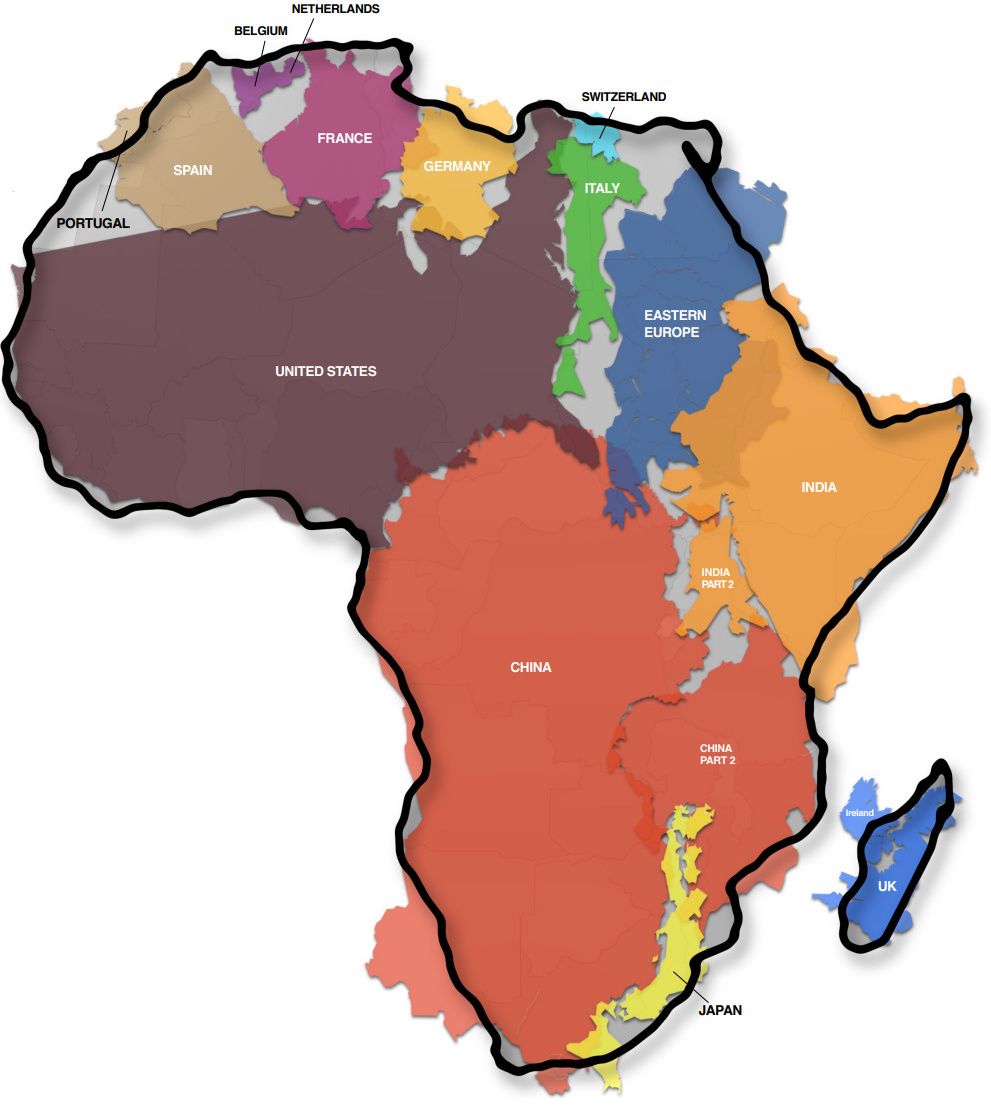
How does one get their arms around contemporary Africa? Africa is a continent of 11.3 million square miles, with fifty-four individual countries that offer a cumulative population of nearly 1.3 billion.1 It is larger than the United States, China, and Brazil combined and constitutes over twenty percent of the world's landmass. It is a vast expanse of geographically, ethnically, religiously, economically, and politically diverse territory. It is a continent with over three thousand ethnic groups and some 2,100 different languages! One could spend a lifetime and not scratch the surface of her cultural diversity.
Reliable statistical data on Africa can be complicated, if not impossible, to find. Much of what one may read in the literature is true, but it is seldom accurate. This challenge is particularly evident when trying to monitor human movements. This is not a criticism of the effort. The preponderance of migration occurs in places that are not monitored and in countries that are not motivated to do so. Almost every report from any reputable source will include a disclaimer that acknowledges the limitations of their statistical data.2 Even so, researchers must rely on this data to draw conclusions that can perhaps be applied in a general sense. Those conclusions can be, at times, profound.
For example, the UN estimates that the total population of sub-Saharan Africa, over one billion people, will double in the next 30 years.3 Pause and process that for a moment. Half of the world’s population growth during that time will occur on this one continent. By 2050, twenty-four African countries will double or triple in population, and Nigeria will surpass the United States to become the world’s third-largest country.4 The reasons for this growth are multitude. In the past thirty years, the life expectancy for an average adult has grown from 51 to 61 years of age. In 1990, the infant mortality rate was 183 out of every 1000 children under five. That number was down to 86 by the year 2020.5 With an average birth rate of 4.7 children per woman, twice that of any other region globally, it is not that difficult to understand the population projections.6
This growth is already creating seismic pressures on local governments. Even though people are living longer, Africa remains a very young continent. Her median age is 19.7 years, meaning that half of her population should be in school.7 Most parents recognize that their future lies in the education of their children. For many, the positive effects of education have led to increased personal resources, motivating past graduates to see their own children succeed in school. As such, the generational emphasis upon completing secondary school by parents only grows across educational cycles, perhaps as much as by a factor of ten.8 In very real terms, education begets more education.
Keep in mind that globalization and education go hand in hand. At the center of the current wave of globalization are “the triple S-forces” of speed (with the capacity for instant communication), scope (the capacity to communicate to the entire world), and simultaneity (the capacity to communicate everywhere at the same time).9 The impact upon Africa has been far-reaching. At the end of 2020, there were some 500 million cell phone subscriptions and 640 million internet connections across the continent. Such services are often available in places where other necessities such as food and shelter are absent. These networks have introduced the world to Africa in a way that is intrinsically changing her culture, her economy, and particularly her awareness of opportunities in other places. As a result, people are moving.
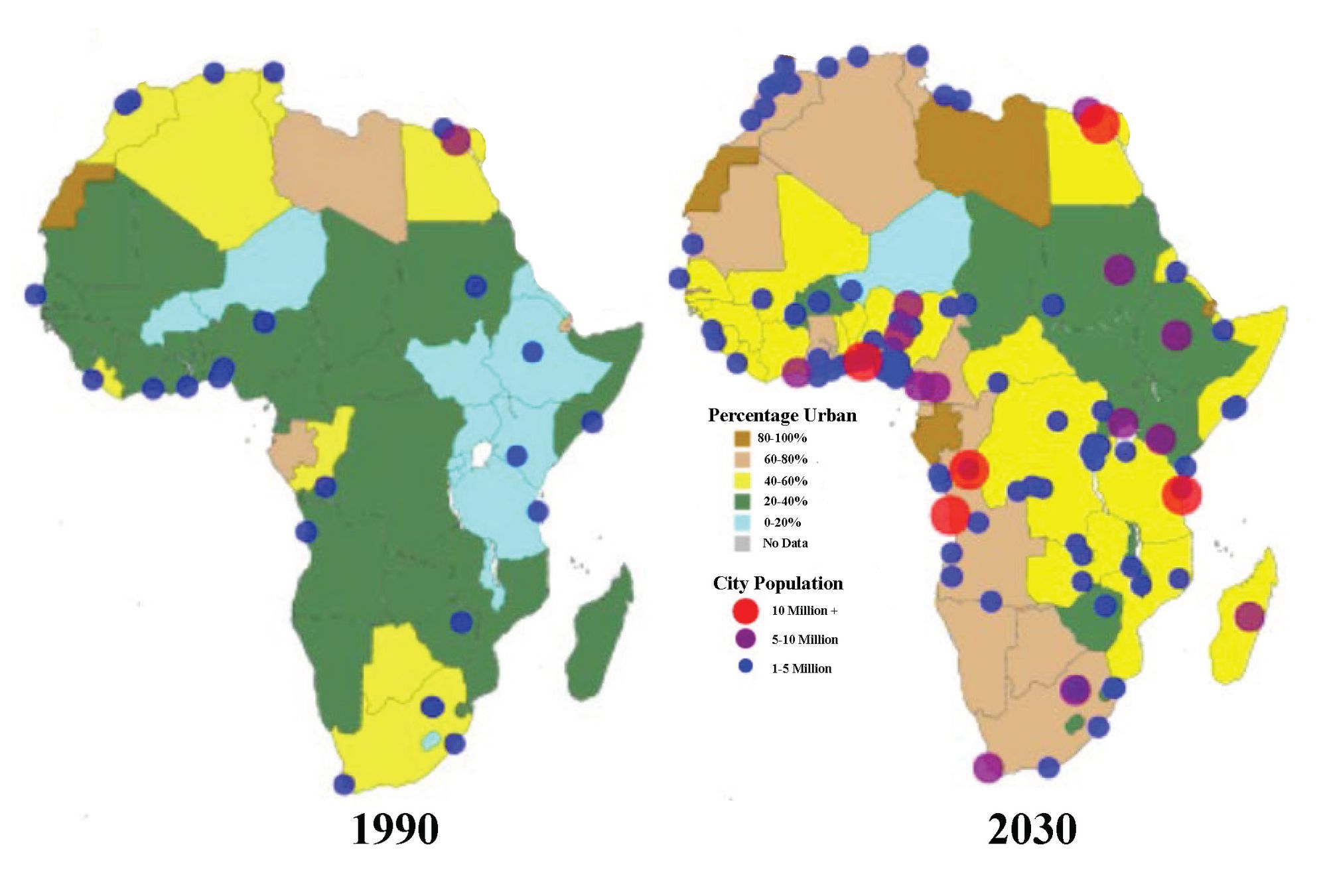
Population growth, educational demands, and global awareness drive a vast rural exodus and exponential urban growth. In 2000, a third of the African population lived in urban areas. That number will double by 2050.10 The growth is most evident in the metropoles, where the number of cities exceeding five million people has expanded rapidly. And while one may think that urbanization would imply prosperity, the opposite is often the case. Poverty remains rampant. Currently, sixty percent of African city dwellers live in slum conditions.11 Across the continent, nine out of every ten people live in poverty, surviving on less than $5.50 per day. Four of them live on less than two dollars a day.12 It may be helpful to remember that of the world's 29 poorest countries, 28 are found in sub-Saharan Africa.13
Despite an expanding population, Africa is also a continent of opportunity. Africa has one of the world's fastest growing economies, with Morocco, Egypt, Kenya, Ghana, and South Africa leading the way. Even considering the economic contractions due to COVID-19, they, along with others, are well into positive GDP territories. Africa enjoys a long history of financial involvement from the West, but new interests from China, Russia, Turkey, and the Arab Emirate States show significant interest in the continent. Foreign investment exceeded $40 billion in 2020 and is expected to witness a 10-15% increase in the next few years. These resources are creating unprecedented opportunities for new jobs and entrepreneurs, particularly in urban contexts. Opportunities for Africans to work abroad and to send help back to their families also continue to expand. In 2020, some $56 billion in remittances were realized. These monies were used to purchase goods and services, that in turn, generate income for others. Foreign investment and remittances combined equal nearly 4% of the total African GDP.
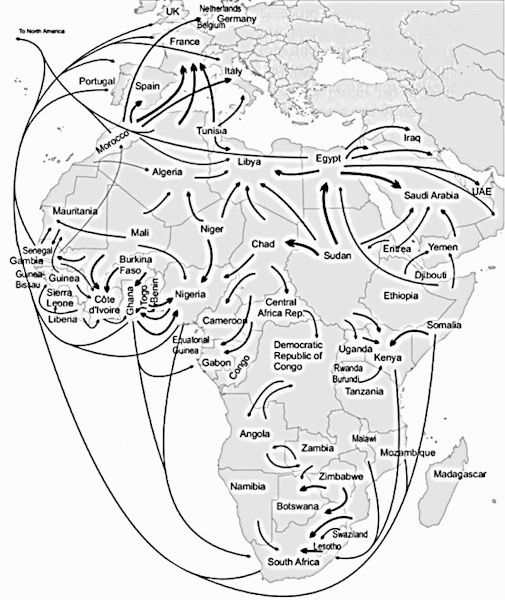
Given the above realities, it is no wonder that Africa is a continent on the move. The United Nations Department of Economic and Social Affairs (UNDESA) has estimated that over 200 million persons, roughly one in five, do not live in their city or village of birth.14 These represent voluntary movements where individuals made a conscious decision to migrate. Another 27 million have moved off the continent and continue to do so at a staggering rate of 1.8 million per year.15 That is roughly 35 every ten minutes! The latest statistics show that some 575,000 are students attending non-African universities.16 France holds the majority or 27%. But they are also traveling further west towards the United States and east towards Saudi Arabia and Asia. It is almost certain that the rate of student mobility will grow significantly in the years to come.
Unfortunately, Africa is also a continent of conflict. In 2017 alone, half the world’s violent conflicts were in Africa.17 In the two years that followed, armed conflict saw a 36% increase.18 These conflicts have created over twenty million internally displaced persons. According to the UNHCR, two million people have been displaced in the Sahel.19 One out of every three people has been displaced in the South Sudan, five million in the Central Africa Republic, and another two million in Nigeria.20 Of these twenty million IDP’s, fourteen million still live in their home country, meaning that they remain under the care and custody of their own government, even if the government is the reason for their displacement. Another 6.3 million have crossed an international border, making them refugees. They are trusting that they will find protection in their new host country.
Given the above statistics, it becomes impossible to separate African context from African migration. But then, such is true anywhere in the world. People are on the move, and they always move for a reason. Most of the time, it is well planned, legal, and profitable. At times, however, it is sudden, forced, and involves incredible suffering. Understanding the context allows the church to become strategic as she seeks to engage her neighbors for Christ. Every new family in your community came from somewhere, and knowing their story helps you to compassionately build a bridge into their life. This is true whether they are students living with their uncle not far from home or living in a dormitory in a strange new country. This reality changes little if they work at an embassy or a hotel, if they sell commodities on a street corner or stand in line at a refugee center. If you start with context, pathways to a relationship can be created. Ignore the context, and all you will find will be stereotypical barriers and an inability to engage the world God has brought to your doorstep.
1 UNDESA, World Population Prospects 2019 Vol. 12019.
2 Marie McAuliff and Martin Ruhs, World Migration Report 2018 (Geneva: International Organization for Migration, 2018), 210.
3 United Nations, "Population", United Nations https://www.un.org/en/global-issues/population (accessed July 24, 2021).
4 UNDESA, "World Population Prospects 2019 Highlights", United Nations Department of Economic and Social Affairs https://population.un.org/wpp/ (accessed July 24, 2021).
5 UNICEF, "Under Five Mortality", United Nations Children’s Fund https://data.unicef.org/topic/child-survival/under-five-mortality/ (accessed November 18, 2021).
6 John Bongaarts, "Trends in Fertility and Fertility Preferences in Sub-Saharan Africa," Genus 76, No. 32 (2020).
7 UNDESA.
8 Peter Darvas, Sharing Higher Educations Promise Beyond the Few in Sub-Saharan Africa (Washington DC: The World Bank, 2017).
9 Os Guinness and David Wells, "Global Gospel, Global Era: Christian Discipleship and Mission in the Age of Globalization," (2010), April 7, 2014; Available from http://conversation.lausanne.org/en/resources/detail/10566#.U0JHi62Sy-8.
10 UNDESA, World Urbanization Prospects 2018: Highlights (Geneva, 2018).
11 Somik Vinay Lall, African Cities: Opening Doors to the World (Washington DC: World Bank Group, 2017), 38.
12 World Bank, "ProvcalNet: An Online Analysis Tool for Global Poverty Monitoring", World Bank http://iresearch.worldbank.org/PovcalNet/home.aspx (accessed November 25, 2021).
13 Nirav Patel, "Figure of the Week: Understanding Poverty in Africa", Brookings Institute https://www.brookings.edu/blog/africa-in-focus/2018/11/21/figure-of-the-week-understanding-poverty-in-africa/ (accessed November 17, 2021).
14 UNDESA. Informal estimates place the number much higher, at perhaps 50-80%.
15 World Bank, "World Bank Open Data", Word Bank Group https://data.worldbank.org/.
16 UNESCO, "Institute for Statistics (Uis) Database" http://data.uis.unesco.org (accessed July 24, 2021).
17 Tsion Tadesse Abebe, "Breaking Africa’s Cycle of Forced Displacement", Institute for Security Studies https://issafrica.org/iss-today/breaking-africas-cycle-of-forced-displacement (accessed November 17, 2021).
18 Simon Allison, "Conflict Is Still Africa’s Biggest Challenge in 2020", Institute for Security Studies https://issafrica.org/iss-today/conflict-is-still-africas-biggest-challenge-in-2020?utm_source=BenchmarkEmail&utm_campaign=ISS_Today&utm_medium=email (accessed November 17, 2021).
19 UNHCR, "Sahel Emergency", United Nations https://www.unhcr.org/en-us/sahel-emergency.html (accessed November 17, 2021).
20 See Kensiya Kennedy and Keshav Bastoia, "The Internal Displacement of People in South Sudan: Understanding Civil War and Forced Movement of People," in Dignity in Movement: Borders, Bodies and Rights, ed. Jasmin Lilian Diab (Bristol: E-International Relations, 2021), 59. See also UNHCR, "Dr Congo Emergency", United Nations https://www.unhcr.org/en-us/dr-congo-emergency.html (accessed November 17, 2021). And UNHCR, "Nigeria Emergency", United Nations https://www.unhcr.org/en-us/nigeria-emergency.html (accessed November 17, 2021).