72 – The Road to Turkey
2023 No 72
You shall not oppress a stranger, since you yourselves know the feelings of a stranger, for you also were strangers in the land of Egypt.
—Exodus 23:9
Introduction
As we dive into the Eastern Mediterranean Route (EMR), one quickly gets the sense that it can be challenging to separate the legal from illegal and the regular from irregular movements. Everyone who lands in Turkey follows the same arrival routes… even if their motivations differ. In this post, I want to help the reader to see the interactions at a different level... perhaps. Stories are always a great way to communicate. In this post, we will illustrate some of the EMR dynamics, only through the eyes of a local pastor.
As with some of our previous narrative posts, everything in this post will seek to remain accurate… it just may not be true! What I mean by this is that the following account does not describe any particular church or person. Such ambiguity is necessary for security purposes and to protect my African connections. But, every aspect of the following story draws from real people, actual events, and verified testimonies. Remember that the goal is to maintain a high view of the EMR so readers can grasp the big picture of what is happening along this route. This perspective is essential.
Why? Because it is easy to speak of migration academically, identify political challenges, and offer judgment on governmental policies and responses. But in so doing, one loses the human aspect of movement. In truth, each of us is a migrant, and at some point in our lives, we were strangers in a new place. I want you to remember how that felt. I want you to see yourself somewhere in this story. In so doing, you may look at your neighbor across the street with new eyes and much greater compassion in your heart.
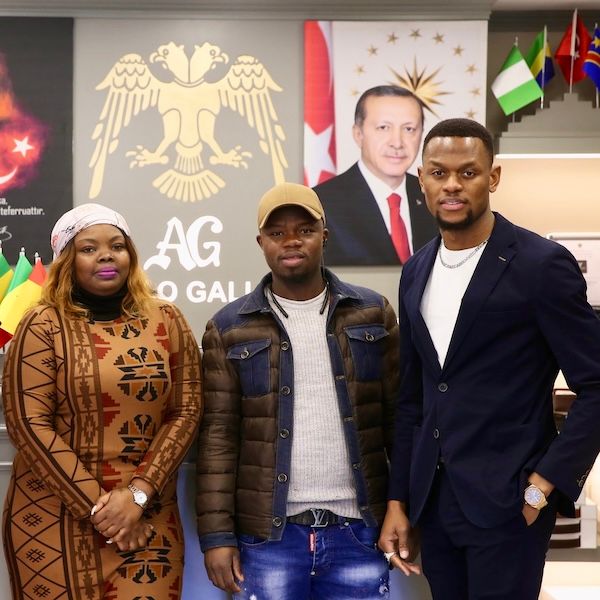
Pastor Joseph
Joseph is from Nigeria. He grew up in Lagos and attended church with his family since he was a small child. Theological tradition in Nigeria flows from two major streams. One is Evangelical; the other is Pentecostal. While Joseph was fully immersed in the Pentecostal tradition, his beliefs and practices would fit well within almost any Baptist (evangelical) church. He knew that he loved his Lord and had a heart to serve. As he grew into a young adult, he always envisioned that God had a role for him to play in the ministry.
Joseph was very gifted academically. As such, educational opportunities were prevalent in Nigeria. He could have attended any university there. But, he set his sights on studying internationally. He often thought that such would be a way to do missions. He knew there might be possibilities for study in Turkey and found a program in Istanbul with openings. After filling out the application, Joseph was quickly accepted and was even offered a partial scholarship. While his parents needed to help with his living expenses, his school costs would be covered. With that, he moved to Turkey.
It was a four-year program with a focus on education and administration. One of Josephs's visa conditions was that he had to pass a proficiency exam in the Turkish language after one year. The school offered first-year classes in English and helped him with language study. Since Joseph grew up speaking several languages, passing his proficiency exam was not difficult. He then settled into his classes… some in Turkish… some in English. He did well in school and spent his spare time enjoying Istanbul and attending a local church.
That church was a Pentecostal church affiliated with a major denomination in Nigeria. They ministered primarily to African textile workers, but some university students also attended. Things often got a bit "wilder" than he desired, but it was a fellowship of people who loved the Lord and wanted to keep Christ at the center of their lives. It was here that Joseph heard the call to ministry, and through this church, he was given the opportunity to lead a bible study focused on students. Before long, the pastor was mentoring him to start his own church.
When Joseph graduated from the university, he had a choice. He could return to Nigeria. Or… he could stay and pursue his Master's degree. If he stayed, he would maintain his scholarship and be permitted to work. He chose the latter and started working at a local high school... teaching classes in English. He also saw this as an opportunity to progress from being a Bible study leader to becoming a church planter. He branched out to an area close to several universities… and a church was planted. That was eight years ago!
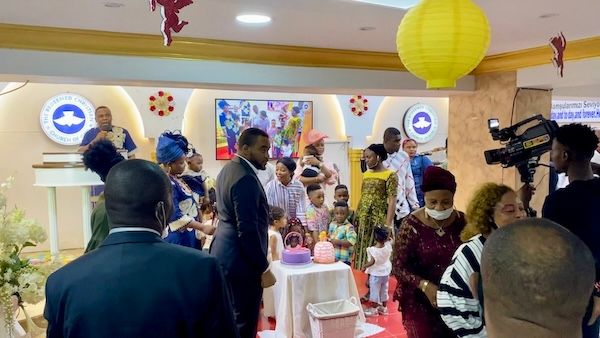
His Congregation
The church, like most others, began as a ministry. It started with a few university students from various Anglophone sub-Saharan countries. In the beginning, it was all singles. But… any singles ministry will quickly evolve into a ministry of married couples… and then a ministry to families. (Which is why it is impossible for a growing church not to become heterogeneous!) Some of the students would return to their home countries upon graduation. Others, in the same way as Pastor Joseph, would stay for further education and work. The church grew and, with time, was averaging between 50 and 75 bright, mature, and economically stable members.
Although Joseph remained bi-vocational, the church soon became self-sustaining. She was able to do more than just pay the bills; she was able to dedicate resources towards discipleship and ministry. As the congregation matured, they began ministering to their neighbors. It was here that the church discovered that she could be used in a significant way to care for both the legal and illegal migrant populations in Istanbul. A few examples may help to illustrate.
Annie is from Liberia. She had come to Turkey to attend university, but things did not go as anticipated. During her freshman year, she met a young man and became pregnant. This not only interrupted her studies but also delayed her ability to learn Turkish. When she could not pass her proficiency exams, she lost her scholarship. Because her baby was born out of wedlock and outside of her home country, she could not return. Or, more specifically, the baby could not get documents to return.2 It is difficult for someone who is in a country illegally to get travel documents, especially for children.
Consequently, Annie was stuck in Turkey on an expired education visa. Life was hard for Annie as a single mom. She worked in a restaurant and was barely getting by. Her family back home helped a little, but her "situation" had brought them shame. Annie had professed to be a Christian since she was a small child. However, she realized how much was missing from her faith along the way and experienced a true conversion while in Istanbul. At the church, she found community and the courage to press forward.
John is from Kenya. He works with his uncle at a shipping company that supplies textiles to East Africa. Their shop is in the Yenikapi district, a prime location for African migrants. It is a busy place; many come from across the continent to buy clothing for resale in African markets. It is a family business, and when it recently expanded, he was able to get a special visa to live and work in Istanbul. John was active in his Baptist church in Nairobi and found that Pastor Joseph's approach to ministry and worship accommodated his beliefs. He attends regularly, serving on both the leadership team and the choir.
David is from Cameroon. He is studying to be a surgeon at one of the leading universities in Istanbul. He is in his last semester and is preparing to take his medical exams. He will then enter a residency program at the Taksim Training and Research Hospital. He is married and has two children. He plans to finish his studies and then return home to practice medicine in his hometown of Yaoundé. The hospital is in the heart of the illegal African community (Taksim Square). David has found that God is using him to minister to the needs of many who have become trapped in Turkey. He was a part of the early Bible study when the church started and has been an active member ever since.
Kwan is from Korea. He is studying migration law at Koc University in Istanbul. He has known that God has called him to missions and has tied that calling to his university studies. He is a part of a large international Christian student organization and is being supported by his church back in Korea. He is active in the immigrant community, ministering to those struggling with visa issues in the Turkish system. Kwan found the church through one of his clients and has been attending for about two years. When he finishes school, he hopes to stay in Turkey and work for one of the legal aid societies.
Samuel says he is from Burkina Faso, but everyone knows he is from the Congo. He and his friends do not attend church very much, but they go whenever they have a meal or are providing help for the community. They started coming about a year ago, shortly after they arrived in Turkey. Their goal is to raise enough money to cross into Greece. Finding work and saving money is difficult for a migrant. But they work odd jobs in the neighborhood and live close to the church. Joseph has spoken to Samuel several times about his faith, but it seems he is only marginally interested in Christianity. He has heard he might use it on an asylum application if he ever gets to Greece. Samuel has asked to be baptized, but the pastor has refused. A common tactic is for a Muslim to feign conversion so he can then say he is persecuted in his home country. In Samuel's case, he is pretending to be a Muslim… who has become a Christian. Everyone can see through the scheme.
Nehir is from Turkey. She was born in Ankara and went to school in Istanbul. She met a Christian in one of her classes and began her journey to find Christ. Her conversion was not illegal, but it carried significant social ramifications. Her family has distanced themselves from her, and she is socially isolated. She attends church regularly and has many friends. Pastor Joseph has encouraged her to attend one of the many Turkish churches. He knows she would find much broader support… and perhaps a husband along the way. But she is content to be a part of their fellowship and adds richly to the culture.
As you can see, the church is rather diverse. Each of the above illustrates the kind of members and visitors attending most African churches in Turkey. Istanbul is unique simply due to the population density and the predominance of sub-Saharan migrants. If you move south towards Izmir, you will find that most churches are either focused on university students… or smaller gatherings that are very ethnocentric. Joseph has related to this author that the needs are significant in his church, but so also are the resources. Ministry to migrants is best done by the members of the church. His role is simply to help them grow to maturity… and the fruit of that maturity will be the love of their neighbors.
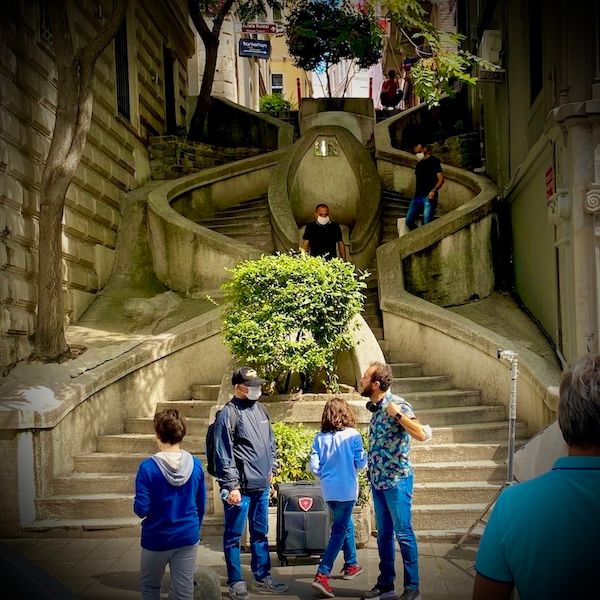
The Challenges
Pastor Joseph will readily admit that leading a predominantly African church in Turkey comes with some inherent challenges. He once referred to the nearby Camondo stairway and told me that they always had to walk a difficult pathway.
First, the church must remain legal and in good relationship with the community and authorities. They cannot purchase a building, so they must rent space from locals who are often Muslim. As in most places, money overcomes prejudice. But… such has its limits if the church were to create societal pressure on the landlord. Local officials also understand that they are a church, which allows them to minister to the Christian community. In many respects, this serves the government's purposes and demonstrates freedom of religious expression in Turkey. But the church must stay in her lane. The government could make things very difficult if she wanders too far and draws too much attention.
Second, the church cannot actively seek to proselytize Turkish Muslims. As in other places in the Islamic world, the authorities monitor who comes and goes from a local church. They give little attention to foreigners who may come. But if Turks start attending, it can lead to unwarranted attention from the authorities. The general rule is that if a Turk attends, the police may talk to that individual. If two attend, the police will speak with the pastor. If three attend, permits for services or rental agreements for space could be revoked. Thus, ministry in the community is always a dance, always watching where one steps and always avoiding public attention.
Third, the church cannot engage illegal migrants in such a way that might link them to smuggling networks. The government is well aware that African churches, particularly in Nigeria, serve to recruit migrants and often work with both drug and human traffickers. There is a fine line between ministry and facilitation. The latter must be avoided at all costs. As with ministry to the Turks, such is best one-on-one and outside the church's walls. Additionally, care must be taken to guard young university students from becoming too involved with irregular migrants. Any perceived involvement in illegal activities could run the risk of losing their student visas.
Conclusion
Hopefully, the above grants a measure of insight into the ministry challenges of a local church in Turkey. It may also highlight some of the different scenarios that can occur with African migrants along the Eastern Mediterranean Route. The landscape is truly diverse. Almost everyone arrives in Turkey by the same pathways. If you were at the airport when the plane landed, you might think they were all the same. Nothing could be further from the truth. Some have come to make Turkey their home… at least until they finish their business and return home. Some are landing without any intention of staying very long. They genuinely believe that they will be one of the ones who will make it to Europe.
When you hear the stories, you may even be able to see yourself in the narrative. We all have been strangers… someplace… at some time in our lives. You know the feelings of anticipation and discouragement. You know what it is like to be alone and not a part of the local community. You have been on one of these roads before and know that things can change quickly. If you were in Turkey, you could look outside your door and likely see a migrant who is living in one of the above realities. If you were in a church, your pastor would face the same challenges as Pastor Joseph. As a member, you would be serving the same people.
Wherever you are today, look outside your door. When you get to church, look across the congregation. I suspect that you will not look long before you can find a stranger. Pray for them. Then... put feet to your prayers and offer them a hand of fellowship.
1 Please remember that security concerns do not allow me to publish the actual photos of individuals in these stories. This is a cropped image from the following, "Africans Drawn to Istanbul Become a Part of Lively Cosmopolis", Daily Sabah https://www.dailysabah.com/turkey/istanbul/africans-drawn-to-istanbul-become-a-part-of-lively-cosmopolis?gallery_image=undefined#big (accessed November 6, 2023).
2 Jacqueline Bhabha, "Arendt’s Children: Do Today’s Migrant Children Have a Right to Have Rights?," Human Rights Quarterly 31 (2009). See also, Bronwen Manby, "Who Belongs? Statelessness and Nationallity in West Africa", Migration Policy Institute https://www.migrationpolicy.org/article/who-belongs-statelessness-and-nationality-west-africa (accessed October 30, 2023).