76 - Going By Sea: Samos
2023 No 76
And there arose a fierce gale of wind, and the waves were breaking over the boat so much that the boat was already filling up. Jesus Himself was in the stern, asleep on the cushion; and they woke Him and said to Him, “Teacher, do You not care that we are perishing?”
—Mark 4:37-38
Introduction
Our last blog post discussed one of two routes from Turkey to Greece. Technically, one can drive six hours from Istanbul, arrive at the Evros River, swim 50 yards, and you will be in Europe. At that point, you can find a policeman and claim asylum. In the early days of the migrant crisis, that is how it was supposed to work.
In reality, it never works that way. To make the land crossing, you must cross miles of open farmland on both sides of the river without detection. If caught, migrants are often abused and returned to Turkey… or worse. Even still, many want to enter Greece this way, undetected. That way, they could cross the Balkans and attempt to make Germany their first country of entry. They rightly believe this route will give them a better chance of being granted asylum. As noted previously, however, this route is filled with danger and risk. If that is their goal, then the land route is their only option. But for others, getting to Greece is sufficient. They just have to get there in a way that will not result in being pushed back to Turkey.
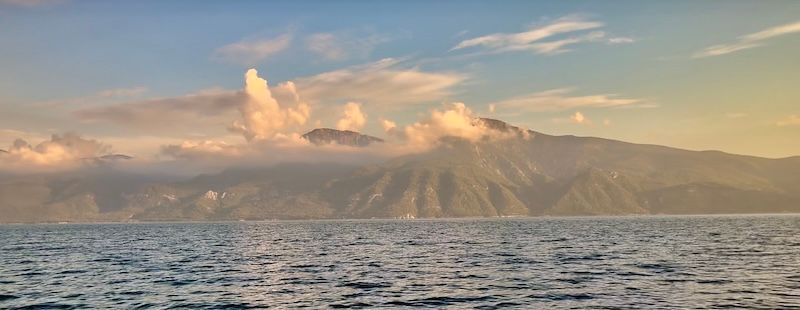
This difficulty is why the preferred route of smugglers is by boat to one of five small Greek islands just off the coast of Turkey. The Mycale Strait between Turkey and Samos is only one mile across. Other crossings range between five and fifteen miles. Typically, the waters are calm. Passage is also facilitated because the entire region is difficult to patrol. Such makes it much easier for smugglers to find a window where migrants can cross without detection. In 2022, the Greek government reported that 18,000 illegal immigrants arrived in their territories, two-thirds of the annual total, crossing by sea into the islands.1 Not a small number.
This does not mean the route is any less dangerous. Migrants typically will use smaller boats and rafts to make the crossing. On the shorter routes, some of these crafts will be without motors. Winds and currents can quickly push boats into the Aegean Sea where they risk almost certain death. Storms can arise quickly in the region, making these small boats susceptible to capsizing. When that happens, few survive. If detected, authorities will block the route, and pushbacks into Turkey have become more common. In the end, it can take several attempts to make the crossing.
The Ticket
Adaego (Ada) is from Lagos, Nigeria. She came to Turkey seven years ago with her husband, Michael. They went on a student visa, but their goal was to make it to Germany. They were not poor in Nigeria, but they knew that Michaels's job in the technology sector would not make enough money to have the life their parents had given them as children. They wanted more for their son and daughter. They settled in the city of Izmir, and after about 18 months, Michael was able to cross the Evros River, make his way through the Balkans, and enter Germany. Because his family was from northern Nigeria, he had claimed asylum by stating that they were victims of Boko Haram violence. It was now time to get Ada and their two children, Favour and Blessing, into Germany as well.
As noted in our previous post, the conditions for the land crossing into Greece have changed dramatically since Michael made the trip. Today, it is simply too dangerous, especially with children. The current idea was to get them into one of the Greek islands and claim asylum there. Because Ada’s husband was already in Germany and because the children were young, they were told that they could easily be relocated as a part of the EU family reunification policy. Thus, finding an agent to help them get to Greece made sense. They chose the island of Samos because the journey across the water was very short, reducing the danger.
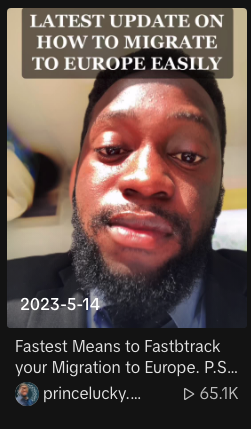
In the migrant community in Izmir, many offer their services to help migrants cross into Greece. One can find hundreds on social media who are openly advertising. The challenge is knowing who could be trusted, who had the contacts necessary to avoid the authorities, and who had a good track record. Ada met many who had tried and failed in their attempt. Those who were successful were already gone. In the end, a friend at church had remained in contact with a woman who had made it to Lesvos and then to Athens. She did some checking for Ada and was able to offer the name of an agent who could help. His name was Jonathan.
Jonathan did not see himself as an agent and certainly not a smuggler. He thought of himself as a networker. Ten years ago, he was a student at a university in Izmir… but did not do well in his studies and struggled to pay his bills. He found that he could make money by finding those who wanted to cross to Greece and referring them to those who could make it happen. The pay was good… $500 USD per contract. Over time, his connections within the smuggling networks grew, and he learned who had better reputations. That knowledge allowed him to see a higher success rate among his clients, increased his referrals, and ultimately made him much more money. But as his profile grew, so did his risk of being arrested by the authorities. He knew that he eventually would have to leave Turkey himself.2
Ada met with Jonathan one evening, and they discussed the conditions of the journey. He explained to her that there were indeed risks, but his contacts would handle all the details. Movements to the islands were, at present, more manageable due to the political situation. Greece was in the spotlight after the sinking of a large boat off their eastern shores, so they were lax in their patrols and had halted much of the customary pushbacks. His people had inside information on Turkish patrols and could pay for her protection once she arrived on the island of Samos. As a female with small children, they would be quickly transferred to Athens. From there, his contacts would help her with the paperwork and the final relocation to Germany. Her services would typically cost around $2,000 USD per person.3 But with Jonathan's help, he could get the three of them across for $4,000 USD total. After consulting with her husband, Ada agreed to the terms and paid the money to Jonathan.
The Crossing
Crossing from Turkey to Samos is not as easy as it might appear. The Mycale Strait is very narrow, and the distance at that point to Samos is only a mile. But, getting to that specific launching point on the Turkish mainland is very difficult; the Strait is heavily patrolled, and infrared cameras monitor the region. Consequently, the boats have to depart from a further distance, launching from the area just south of Kuşadasi. This increases the distance to between eight and eleven miles. That makes the journey much more complex, requires a more stable boat, and raises the risk of detection. Ada is counting on the word of Jonathan that his connections have considered all of this.
Within a few weeks, the trip was arranged. They were to place all of their belongings into a tiny backpack. Space on the boat was premium, and there was no room for luggage. Her children, now ages six and eight, could not carry anything. They said their goodbyes to a limited number of friends and abandoned everything else. From their neighbor's perspective, they were just going away for a few days. They had to be careful not to attract the attention of the Turkish authorities. People noticed anytime a migrant… legal or otherwise… started closing down their affairs. Such could cause the police to follow them and intercept the crossing.
A car picked them up at their apartment and drove them to the launch site. Ada was grateful that the boat was made of wood, not an inflatable. There were about twelve people, and the boat captain said he was a friend of Jonathan's. Like his fellow "networker," he feared that he was becoming known to the Turkish authorities and felt the time was good for him to leave. The sea was calm, and the skies were clear. That was good from a navigation perspective, but it made it much more difficult to avoid detection. He explained that waves have a way of blocking radar signals. If all went well, he had calculated that the trip would take three hours.
Leaving the beach was uneventful. Everyone simply got into the boat and was given instructions on where to sit and how to move in a way that would not cause the boat to capsize. To avoid detection, they were told to be very quiet, to turn off their cell phones, and not to use anything that could create a light. They had a schedule for Turkish patrols and should be able to stay clear of the coast guard. They would be in Greek waters once they were close to the Island of Samos. If everything held true, there would not be any Greek patrols, and they should be able to land on a beach without difficulty. And yet…
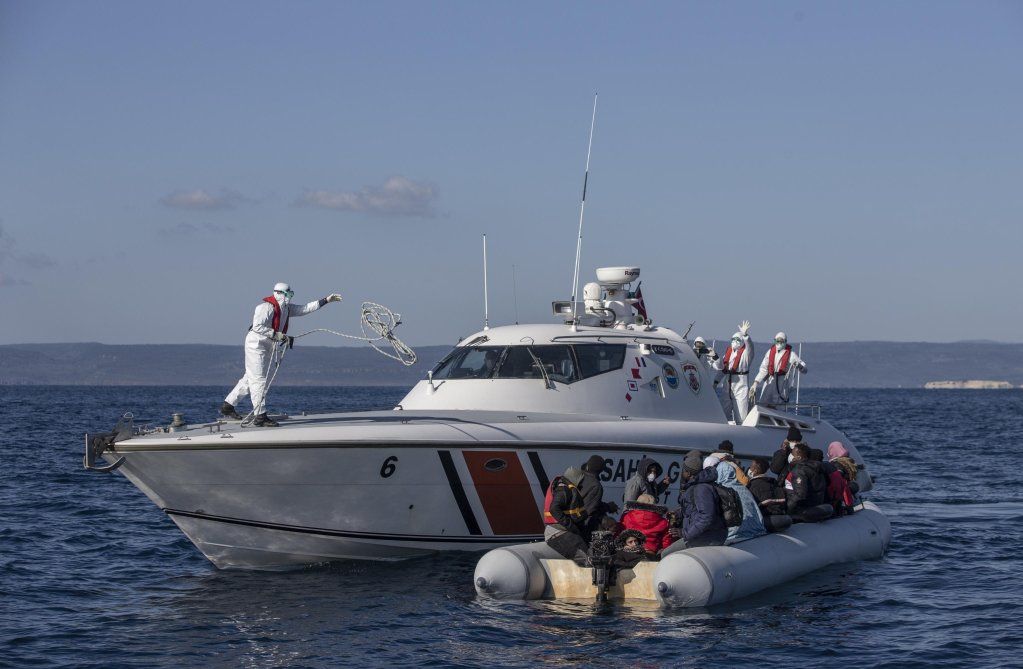
About two hours into the trip, they could see the lights of a ship moving quickly in their direction. Their driver turned off the motor and told everyone to get very low in the boat. If this were the Coast Guard, they might be able to pass under their radar and remain undetected. Unfortunately, such was not the case. The authorities had spotted them, and the ship pulled alongside their boat. Everyone feared that they would be sent back to Turkey and arrested. Surprisingly, that was not what happened. Their driver was taken aboard and had a conversation with the authorities. When he returned, he told everyone that he needed to collect 10,000 Euros and that they would be allowed to proceed. Everyone paid their part, and the Coast Guard vessel pulled away after the money was delivered. In fact, they followed them until they entered Greek waters.4
Once they were close to Samos, their boat driver seemed to know where he was going. Despite the risk of detection, he was using Google Maps on his phone to direct them to a specific beach. Everyone thought that once they landed, that they would be safe. Little did they know that the Greek Coast Guard had been watching their approach and would be waiting on them when they arrived.
The Landing
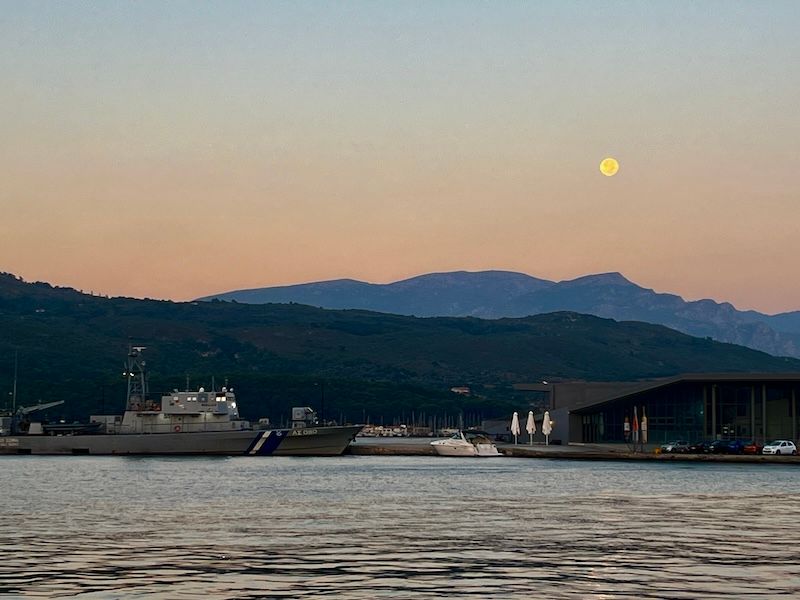
In the past, once a boat arrived at Samos, the goal was to be found by the police. They would then take you to a reception center where you would be processed. That has changed in recent years. Today, if the police intercept migrants on the beach, they are detained and often put in a boat and pushed back into Turkey. The procedure is illegal by international law. But, as along the Evros River, that has not stopped the Greek authorities. They aim to convey to a watching migrant community that an attempt to travel to the islands is a waste of money. In the end, such efforts of deterrence have only cost the Greek government its credibility.5 A recent New York Times article that exposed this process in May of 2023.6 It truly made the authorities look bad.
The smugglers understand this risk and have taken it into consideration. Landing the boat has become a game of evasion. Their goal today is to land on the beach and get their people into a public place. In so doing, the authorities have little choice but to accept the migrants and process them as refugees. Samos is a large island, but many beaches are isolated or cut off by cliffs and high mountains. The number of landing zones is relatively small, making a successful landing difficult.
In Ada's boat, their driver had a plan. Because she had children, he told her to wait for him to get out of the boat and stay close once they were on the beach. He didn't tell her that his plan involved abandoning the other passengers. In essence, he used them as a decoy. The way it worked was for him to pull the boat close to the beach but to stay in deep enough water for him to re-launch. Once everyone was out of the boat, except himself, Ada, and the children, he backed the boat into deeper water.
When they reached the beach, the authorities were waiting for them. They turned on bright spotlights, and everyone started running for the trees. There was a lot of shouting and confusion. In the mayhem, Ada's driver navigated the boat around another point and landed at a second beach. He knew the authorities were not prepared to intercept them at a different location... giving them time to get on the beach and into the woods quickly. From there, they would follow the road until they reached the outskirts of one of the larger cities. They just walked into a hotel without difficulty and asked for help. Being in such a public place made it almost sure they would be taken to the camp.
Conclusion
In some respects, Ada’s journey was simple. She paid a fee to a known agent and arrived safely with her children in Greece. Stories like hers are what sell seats in boats. For the others, however, their future is unknown. They should have been taken to the refugee camp, but Ada reported that she did not ever see any of them again. That doesn't mean that some of them did not make it, but the camp had over 4,000 residents at the time of this writing. Since she was the only African in the boat, and it was dark, she really wouldn’t know. It is more likely that they were returned to Turkey. We have spoken with several individuals who share this testimony.
Her story could have been very different. Not every boat arrives safely, and many are lost each year. In each of those boats are those who are seeking a better life. Some are true refugees, fleeing war and destruction. Others are those who have imagined a better life and have pursued their dream. All are under the loving care of our Lord. In hindsight, the disciple's question was immature. Of course, our Lord cared... whether they were perishing or not.
Such raises yet another question... do we care? Is there not a point where our Lord looks past the political failures of governments and the errant decisions of people and simply looks at people in a boat with compassion? Does He not weep when they perish without faith in Christ? Does He not make every effort to share with them the hope of the gospel? Does He not send His people to share His love at every stage of their journey? Is that not who we are?
As many can attest, arrival at the camp does not mean that Ada's journey is over or her destination is close to being certain. In many respects, things were just beginning for this young mother and her children. We will cover that part of her story in our next post.
1 InfoMigrants, "More Deaths on Eastern Mediterranean Route to Greece", Infomigrants https://www.infomigrants.net/en/post/46216/more-deaths-on-eastern-mediterranean-route-to-greece#:~:text=The UN refugee agency said,as many as in 2021. (accessed October 31, 2023).
2 This author had dinner with Jonathan. (Not his real name.) He was very open about his work. Shortly after the interview, he took a boat to Samos. I received word later that he had lost his life when their boat capsized.
3 Luigi Achilli, "The Nexus: Human Smuggling and Syrian Refugees’ Trajectories across the Middle East and the Balkans", Elliott School of International Affairs https://tinyurl.com/4pyyx8uw (accessed October 31, 2023). The price in 2017 was between $1,200 and 1,500. Today, it is well over $2,000
4 Elena Becatoros, "Greece Accuses Turkey of Escorting Migrant Smuggling Boats", AP News https://apnews.com/article/turkey-smuggling-migration-greece-europe-38eea946e3f9251f8439f7b7ae01ccf8 (accessed October 31, 2023).
5 Stefanos Levidis, "Drift-Backs in the Aegean Sea", Forensic Archetecture https://forensic-architecture.org/investigation/drift-backs-in-the-aegean-sea (accessed October 31, 2023).
6 "Video Shows Greece Abandoning Migrants at Sea", New York Times https://tinyurl.com/4t9n2du9 (accessed October 31, 2023). See also, Tasos Kokkinidis, "Damning Video Proves Greece Abandons Migrants at Sea Says Nyt", Greek Reporter https://greekreporter.com/2023/05/20/greece-abandons-migrants-sea-new-york-times/ (accessed October 31, 2023).