98 - Northern Routes: Why the North Becomes a Second Choice
Hope deferred makes the heart sick, but desire fulfilled is a tree of life.
—Proverbs 13:12
2026 No. 98
Let me share a moment I have witnessed many times, and it rarely looks the way people expect. A man steps off a bus without any luggage. Others arrive carrying only what they could manage on the journey. Someone finally reaches a city they have heard about for years. In that moment, you can almost feel the release. They made it, and they survived. It is as if all of their hard work has paid off. But, unknown to them, this will not be their final destination.
They will soon discover that arrival does not equal resolution.1
Most people believe that once a migrant reaches Europe, the hardest part is behind them. In one way, that is true. The physical dangers of the journey often fade away. However, what replaces those dangers is not peace but a different kind of pressure, slower and more difficult to put into words. The relief of arriving lasts only temporarily before reality begins to settle in.
One of the first surprises is how little actually changes. The journey does not end with arrival. A person may be safe, but they still feel unsettled. They may have reached a destination, but they have not yet found a home. Their body has stopped moving, but their life has not started again.
For many, the first days and weeks feel like standing in a hallway.2 Everything is transitional. Housing is temporary, and others often make decisions that affect their lives. Information is partial, and paperwork is confusing... especially if they do not understand the language. The person who crossed borders now finds himself waiting for a stamp, a file, or an interview.
Standing in line becomes the new normal.
This is where the emotional weight starts to show. Most migrants carry two stories at once. One is the story of gratitude. They are thankful to be alive, grateful to have reached a safe place. The other is the story of loss. Home is gone, and family is far away. Even when the future is still possible, it is not clear what it will be. And that uncertain future becomes its own kind of burden. As the writer of Proverbs framed it, a heartache.
I do not think this was the intention of those who framed Europe's migration policies. What we see today has evolved across the decades.
Europe’s Asylum Framework and Its Historical Assumptions
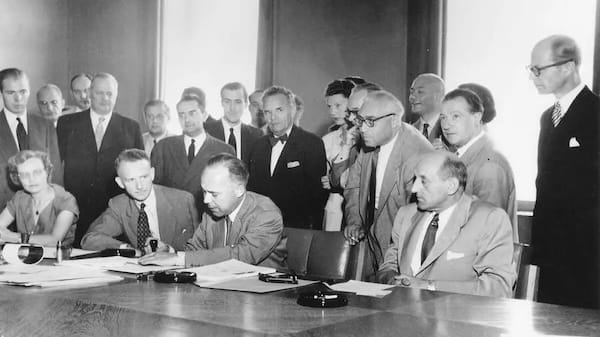
After World War II, Europe faced a unique challenge. Much of her population had become refugees. The 1951 Refugee Convention was created for that moment, providing a legal framework to determine how those displaced by war and persecution should be received and protected. Its scope was intentionally narrow. It focused on European refugees, shaped by the realities of wartime destruction and the early Cold War. The belief was that displacement, though tragic, would be limited in scope and duration, and that host countries would be able to handle claims without becoming overwhelmed. But the implementation of that convention would soon expand.
In 1967, the Refugee Protocol removed the Convention’s geographic and temporal limits, expanding its protections worldwide. The definition of a refugee remained significant and demanding, based on a “well-founded fear of persecution” on specific grounds, and it continues to influence asylum decisions today.4 Although the legal instruments themselves have not changed, their application has continually evolved as patterns of global displacement have shifted.5 What was once a framework meant for postwar Europe is now tasked with addressing multiple, overlapping crises across different regions.
The system cannot handle the strain.
As asylum applications increased in the late twentieth century, European countries aimed for better coordination. The creation of the Common European Asylum System, especially the Dublin Convention, tried to organize a growing crisis. Under Dublin rules, asylum claims were to be processed in the first EU country where they were made. While designed to stop multiple applications across member states, this rule unintentionally made countries along Europe’s southern and eastern borders responsible for most cases. Countries like Greece, Italy, and later Spain became de facto gatekeepers for the entire Union.6 There were relocation agreements, but they were limited and inconsistently applied, often depending on political will rather than a shared commitment.
These structural tensions existed long before the Arab Spring, but they became more apparent as conflict in Syria and instability across the Middle East and North Africa worsened. Early arrivals were often met with genuine kindness. Governments responded, and civil society stepped up. However, when asylum applications surged dramatically in 2015, surpassing one million in a single year, the system reached its breaking point. Processing slowed down, reception centers became overcrowded, and public trust declined. Governments that initially opened their borders were pushed to implement restrictions, not necessarily out of a lack of compassion, but due to administrative fatigue.
During this period, people from North Africa, Sudan, Eritrea, and across Sub-Saharan Africa moved northward, seeking asylum under the Convention’s protections. Some clearly fit the refugee definition. Others used the broad definition to their advantage. Between 2010 and 2020, the European Union received more than six million first-time asylum applications.7 While exact ten-year figures are hard to compile, recent Eurostat data show that roughly forty to fifty percent of positive decisions result in official refugee status, with the rest receiving subsidiary or humanitarian protection.8 Those granted status entered national welfare systems. Those denied often vanished into informal economies.
The most important thing for you to carry from this section is this… Europe’s asylum framework, rooted in post–World War II assumptions, was never designed to absorb sustained, large-scale, mixed migration flows. The 2015–2016 crisis did not create these weaknesses. It simply exposed them.9
France as a Corridor, Not a Destination
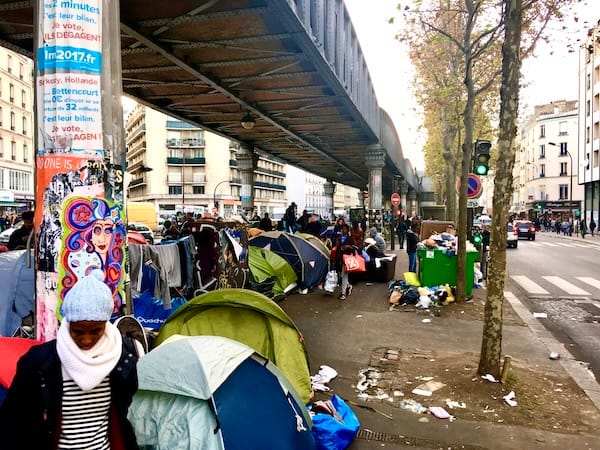
If we want to understand why so many migrants eventually move further north, we need to recognize why parts of southern and western Europe have become places of transition rather than destination. We could discuss this using several countries, but France is a good example. Why? Because France occupies a central role in the story of European migration.10 It is rarely the first destination people reach, and for many, it is not where they plan to stay. Instead, it becomes a place where people pause and wait.11 To understand why, we need a bit more history.
France After WWII
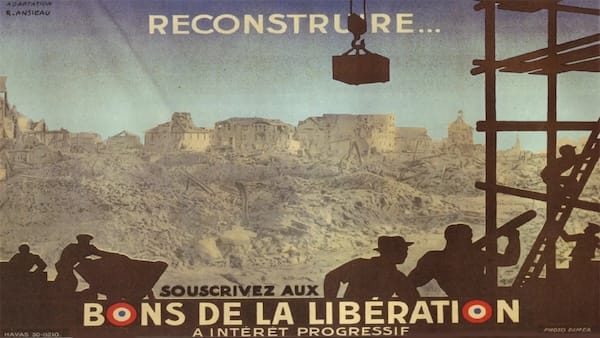
France’s relationship with African migration goes back decades. After World War II, France faced significant labor shortages while rebuilding the cities, factories, roads, and railways destroyed by the war. Migrants from its former African colonies, mainly from West Africa, were actively recruited to fill this need. Many had already served in French military units during the wars and returned as workers, attracted by familiar language, existing connections, and established paths of movement. Over time, these flows became steady migration networks linking villages in Mali, Senegal, and Guinea to ports like Marseille and continuing to Paris.13
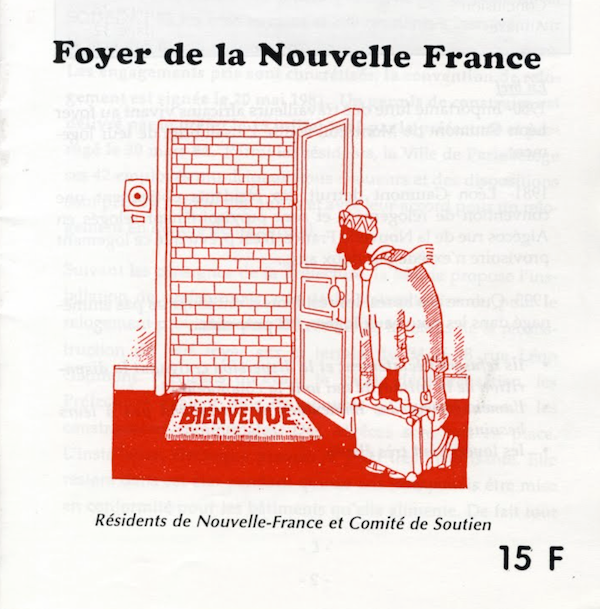
Housing for this workforce took institutional form in the foyers de travailleurs immigrés, public residences built for single male laborers and meant to be temporary. In reality, they became long-term living spaces. Regulated and crowded, often isolating, they were places where men could work and send money home. But in such places, building a family or progressing socially proved very difficult.14 Even today, foyers remain a key part of migrant life in France. They provide shelter and stability, but offer little hope for the future.
For many African migrants, France still feels familiar and relatively safe, shaped by decades of presence and contribution. For those from Francophone Africa, a common language reduces the initial barrier. Social and religious networks facilitate survival. There is already a sizable African community in France. Recent surveys estimate that about 3.5 million African-born residents currently live there, nearly half of France’s immigrant population.15 In Paris alone, immigrants make up more than ten percent of the population, with Africans comprising roughly half of that group.16 France feels accessible. Arriving is not necessarily the hardest part; settling in is.
So, Why A Corridor?
To be fair, France does process asylum claims and tries to make life as manageable as possible for those who arrive. But integration is slow, uneven, and hard to scale. Employment opportunities are limited. Government aid, when available, is temporary. Over time, even those who fit within the system find that resources become scarce. Life begins to resemble that of many on the margins of French society… only with fewer supports. France takes in people, but it does not easily assimilate them in large numbers. It is is no wonder that the country often feels more like a corridor than a destination.
So what does life inside this corridor actually look like?
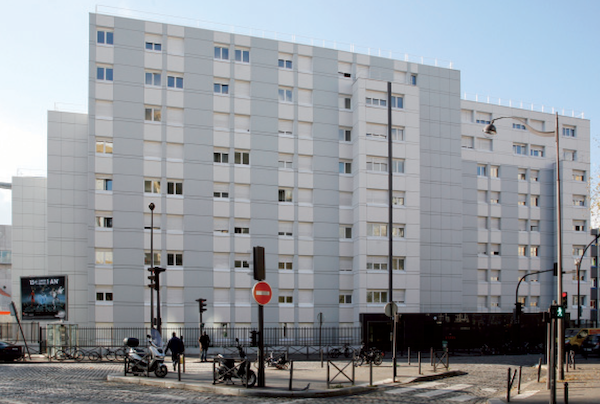
For most people, housing is temporary, and work is informal or irregular. Refugees are often spread out across the country, sometimes into small towns or rural villages far from established migrant communities.18 I have met many who were officially recognized as refugees and then placed in isolated locations. When benefits ran out, it became too much for them. They quietly left and moved to cities like Paris or Lille to be near their community, even if it meant breaking the terms of their agreements.19
Time begins to act strangely in these places. Months turn into years. After putting in enormous effort to reach Europe, progress slows to a crawl. Life feels like it is on pause. Among the Christian migrants I haveve spent time with, gratitude is genuine, but it is mixed with exhaustion. Faith keeps them going, but the future looks much less certain than they had hoped. They have survived… but now they are asking new questions.
How do I live here, and how do I build a future in a place like this?
The Quiet Realization
France is not the end... it is a waypoint. For some, this realization comes sooner than for others. Those coming from Arabic or English speaking backgrounds may find learning French well enough to participate in society to be overwhelming. French culture is deeply tied to language, and you cannot really understand one without the other. For some, the hurdles simply seem too high. Over time, the focus shifts inward, long before it becomes visible. You can hear it in how they speak and see it in their eyes. The shift moves from trying to fit into France... to imagining life elsewhere. This is not rejection; it is an acknowledgment of limits. A survival instinct starts to reemerge, the same one that drove earlier departures and carried people this far.
Why the North Emerges as the “Fix”
By the time many migrants reach this stage, their questions have evolved. Initially, safety or economics was the primary focus. Later, it shifted to stability. Now, it is something more profound.
Can I build a life somewhere else?
This is when many migrants begin to reconsider their options. The question is no longer, "Can I survive here?" That has already been answered. The new question is, "Can I live here?" And when the answer remains unclear for too long, hearts begin to look elsewhere.
What makes this season especially hard is that it exists between two realities. Home is gone, and return is not possible. But the future has not yet taken shape. People are not running for their lives anymore, but they are not truly living either. Refuge has been found, but a new home still eludes them. In that space, discouragement has room to grow.
This is where the idea of the North takes shape.
For most migrants, the North is not a single country. It is an idea. It is imagined as a place where effort leads somewhere… where life begins to move again. Whether the destination is the UK or one of the Nordic countries, the hope attached to the North is remarkably consistent. Life is imagined as more workable there, with clearer systems and better opportunities. In their mind, if they can just get there, the future will open up.
These perceptions do not happen in a vacuum. They are influenced by stories passed through migrant networks, social media, and brief encounters with those who have already moved on. Someone knows someone who made it to London and found work. Someone heard that Sweden offers better support for families. The details are often incomplete and sometimes exaggerated… but hope does not need full information. It only needs contrast. And compared to a life of extended uncertainty, the North seems definitive.
Language also plays a role here. For English speakers, the UK feels more approachable than France. For others, the perception is more cultural than linguistic. Northern Europe is viewed as less strict, less socially complicated, and less governed by unwritten rules. Whether these assumptions are accurate is another matter. What matters now is that they seem plausible.
There is also a moral aspect to this decision that is often ignored. Choosing to move north is rarely about seeking comfort. It is about responsibility. Men and women first arrived when they were single. Now they are married, and life for a migrant family is very different from life as a single person. Men think about providing for families. Parents think about their children’s future. Staying indefinitely in a place where progress seems impossible starts to feel irresponsible rather than patient. Moving again seems necessary.
It is important to state this clearly. When migrants head north, they are not rejecting the places that welcomed them. They are responding to limitations. France, Germany, Italy... these countries offered safety, and that mattered. But safety without a clear direction eventually feels insufficient. The North becomes the “fix” not because it is perfect, but because it seems to provide what has been missing... a real future.
The decision to move again is often made internally, over time. Plans are tentative. Conversations are cautious. People quietly test the idea before acting on it publicly. But once their eyes and hearts look north, movement usually follows. The same courage that carried them across deserts and seas begins to stir again. The journey is not finished. It has simply changed direction.
Conclusion
At this point, it might be tempting to rush to judgment. It would be easy to blame… governments, systems, or even migrants themselves. But doing so would overlook what is truly happening. What we are witnessing is not a failure of compassion on one side or character on the other. It is the clash between human migration and structures never built to bear the weight they now carry.
The systems in place across Europe were built to offer protection, not permanence. They were designed for moments of crisis, not decades of movement. When those systems are stretched beyond their intended purpose, the strain shows up everywhere. Authorities struggle to manage entry and processing. Communities and migrants face different challenges. None of this is simple, and none of it lends itself to easy solutions.
From the migrant’s perspective, the choices they make are rarely reckless. They are deliberate and often motivated by a sense of responsibility rather than ambition.21 Staying in a place where progress seems impossible can begin to feel irresponsible, especially for those burdened by family expectations and the care of future generations. Moving northward, then, is not a rejection of refuge; it is an effort to regain momentum.
From the perspective of host nations, the strain is just as real. Handling large-scale arrivals, unresolved cases, and informal populations over long periods puts pressure on housing, labor markets, and social trust. Recognizing this reality does not mean lacking compassion. It means understanding limits. Judging either side without considering both realities does not do justice to the complexity of the moment.
This is where Scripture helps us slow down.
Northern routes do not begin with ambition. They begin with hope. They emerge not from restlessness, but from prolonged stillness… from lives paused too long in places never meant to be permanent. When hope is deferred, an ache grows in the heart that is difficult to resolve. Understanding why people move north requires more than maps and policies. It requires attention to that ache, and to the quiet calculations people make when survival has been achieved, but life has not yet resumed. As we turn next to specific northern routes, the question is not simply where migrants go, but what they are still searching for… and how the church might walk alongside them with patience, clarity, and renewed love.
1 Albert Kraler, Benjamin Etzold, and Nuno Ferreira, "Understanding the Dynamics of Protracted Displacement," Forced Migration Review, no. 68 (2021), https://www.fmreview.org/externalisation/kraler-etzold-ferreira/.
2 Leslie Carretero, "Trial of New Asylum System in Parts of France Attracts Criticism," InfoMigrants, accessed 12/15/2025. https://www.infomigrants.net/en/post/64988/trial-of-new-asylum-system-in-parts-of-france-attracts-criticism.
3 UNHCR, "Convention Relating to the Status of Refugees (1951) and Protocol Relating to the Status of Refugees (1967)," United Nations High Commissioner for Refugees, accessed 12/15/2025. https://www.unhcr.org/about-unhcr/overview/1951-refugee-convention.
4 Ibid.
5 European Union Agency for Asylum, The Evolution of the Common European Asylum System (CEAS): Timeline (2024), https://www.euaa.europa.eu/sites/default/files/2024-06/2024_CEAS_timeline-v8.pdf.
6 See "Dublin Regulation," https://en.wikipedia.org/wiki/Dublin_Regulation. (overview of the Dublin Convention, Dublin II, and Dublin III, including the first-entry principle and the evolution of the regime); and Ashley Binetti Armstrong, "You Shall Not Pass! How the Dublin System Fueled Fortress Europe," Chicago Journal of International Law 20, no. 2 (2020, https://cjil.uchicago.edu/print-archive/you-shall-not-pass-how-dublin-system-fueled-fortress-europe.
7 Eurostat, "First-Time Asylum Applicants in the EU," European Union, accessed 12/15/2025. https://ec.europa.eu/eurostat/statistics-explained/index.php?title=File:First-time_asylum_applicants_in_the_EU_countries.jpg.
8 Eurostat, "Asylum Decisions in the EU," European Union, accessed 12/15/2025. https://ec.europa.eu/eurostat/statistics-explained/SEPDF/cache/131955.pdf.
9 Tim J Hatton, "European Asylum Policy Before and After the Migration Crisis," IZA World of Labor, no. 480 (2020), https://wol.iza.org/articles/european-asylum-policy-before-and-after-the-migration-crisis/long.
10 Anja Radjenovic, Reform of the EU Asylum System: Key Issues and Developments (European Parliamentary Research Service, 2024), 5, https://tinyurl.com/4kzypb3a.
11 Carretero,
12 Mark Davis, "How World War II Shaped Modern France," Euro News, accessed 12/22/2025. https://www.euronews.com/2015/05/05/how-world-war-ii-shaped-modern-france.
13 M. Augustus Hamilton, “Analysis of the Dynamic Relationship between Globalization and the Transmission of the Gospel: A Case Study of Soninke Transmigrants in Africa and Europe” (Southwestern Baptist Theological Seminary, 2017).
14 François Manchuelle, Willing Migrants: Soninke Labor Diasporas, 1848–1960 (Athens, OH: Ohio University Press, 1997).
15 Insee, "Immigrants in France by Continent of Birth," Institut national de la statistique et des études économiques, accessed 12/15/2025. https://www.insee.fr/en/statistiques/8245925.
16 Insee, "The Diversity of Origins and the Mix of Unions Progress Over the Generations," Institut national de la statistique et des études économiques, accessed 12/15/2025. https://www.insee.fr/en/statistiques/6477611.
17 APUR, "Les Foyers De Travailleurs Migrants à Paris: État Des Lieux en 2010 et Inventaire Des Interventions Sociales, Sanitaires et Culturelles," Atelier Parisien d’Urbanisme, accessed 12/22/2025. https://www.apur.org/sites/default/files/documents/foyers-travailleurs-migrants-paris.pdf?utm_source=chatgpt.com.
18 William Berthomière, "The Reception of Exiles in Rural France: National Guidelines and Local Variations of a Dispersion Policy," Revue européenne des migrations internationales 36, no. 2–3 (2023), https://journals.openedition.org/remi/17873.
19 Laurent Delbos, Kenza Othmani, and Sébastien Charre, Country Report: France (Asylum Information Database: European Council on Refugees and Exiles, 2024), https://asylumineurope.org/reports/country/france/.
20 Patrick A. Taran, "La Convention, Symbole d’Une Approche Alternative des Migrations Internationales," Hommes et Migrations, no. 1271 (2008/01 2008), http://dx.doi.org/10.3406/homig.2008.4689.
21 Jérôme Tubiana, "Refugee Chronicles: The Long and Lonely Road from Sudan to Northern France," 2024/09/22, https://www.aljazeera.com/features/longform/2024/9/22/refugee-chronicles-the-long-and-lonely-road-from-sudan-to-northern-france.