M-Moments: Mobilization Pt 2
A View From the Field: Go
And Jesus came up and spoke to them, saying, “All authority has been given to Me in heaven and on earth. Go therefore and make disciples of all the nations, baptizing them in the name of the Father and the Son and the Holy Spirit, teaching them to observe all that I commanded you; and lo, I am with you always, even to the end of the age.”
—Matthew 28:18-20
I have been around a lot of missionaries. Each will tell you that the first word in the Great Commission is to GO! Since the early first century, mobilizing missionaries has been a core value of the Christian faith. Jesus sent His disciples at various times throughout His ministry and, ultimately, into the world. (John 20:21) The church in Antioch, under the leadership of the Holy Spirit, sent Paul and Barnabas into Asia to proclaim the gospel. They set the pattern for those who would follow. And those subsequent missionaries, sent by their churches, took their role very seriously. They were called to go… and went to the fields that were white unto harvest. These early missionaries had a passion for the lost, a commitment to the task, an unswerving allegiance to the One who had called them, and a profound sense of accountability to the church that had sent them.
Not much has changed today. While there are various definitions of "missions," the role of the missionary is abundantly clear. A missionary is an ambassador sent under the authority of the Lord by the church to occupy new frontiers for Christ, preach the gospel of redemption in Christ, make disciples, and establish functioning, evangelizing, and reproducing Christian churches.1 What they do and how they do it may differ in each context, but what they all hold in common is that their responsibility has been delegated to them by the Lord… through the church. True missionaries are not self-appointed. They have been called, they have been sent, and most assuredly, they go.

A Heritage of Missions: God’s Timing
But when the fullness of the time came, God sent forth His Son, born of a woman, born under the Law, so that He might redeem those who were under the Law, that we might receive the adoption as sons. (Galatians 4:4-5)
These dedicated servants of Christ stand on the shoulders of missionary heroes who have gone before them. Jesus came in the "fullness of time" (Gal 4:4). By this, I mean the timing of His arrival was perfect. The context of the Roman Empire created a common language and a safe road for traveling from frontier to frontier. Jewish synagogues were found in almost every significant community, providing natural opportunities to proclaim the gospel. God had prepared the soil for His arrival.3
In the same way, His first ambassadors could easily be sent throughout and beyond the empire, carrying the gospel to a waiting audience. Our time could be consumed recounting the early stories of Irenaeus in Gaul, Aiden in Britain, Patrick in Ireland, Boniface in Germany, Pantaenus in India, and Alopen in China. Other missionaries remain unnamed, having served faithfully, often at the cost of their very lives. By the end of the first millennium, Asia, Africa, and ultimately much of Europe would owe her faith to those who followed the call and set off for distant lands.
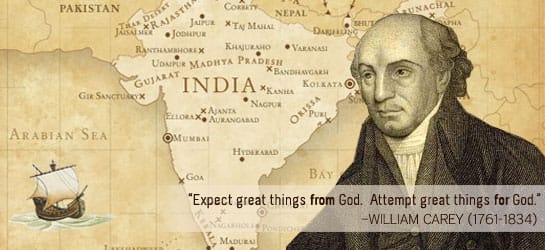
That fullness of time came again in the second half of this last millennium. Two great movements converged to create incredible opportunities to transmit the gospel. The first was in the church herself. The Reformation renewed the church's focus on the centrality of the gospel and the need to mobilize workers. The second was the rise of European maritime power. The capacity to master the seas opened new doors for territorial expansion… and missionary movements.4 Wherever the colonial powers would send their ships, missionaries were often some of the first passengers. God had called, the church had sent, and they would go. Their names are etched into our hearts and testify to the calling of God. Men and women like William Carey, Adroniam Judson, Hudson Taylor, Lottie Moon… and countless others gave their lives to carry the hope of Christ into distant lands.
Today, we are witnessing yet another “fullness” of time as the rise of technology and the interconnectedness (globalization) of our world opens the door for the increasing effectiveness of our “sent” ones. Travel has never been easier than today. Strategies can be coordinated, the gospel can be transmitted, discipleship can be facilitated, and prayers can be offered with just a mouse click. It is an unparalleled moment when the needs of the field can be identified, and missionary personnel can mobilize almost simultaneously. As the mission fields evolve, so do the tools available to bring about the harvest. This is a time for a new generation of missionaries to be sent, for the need is as great as ever, perhaps even more so.
The Heart of Missions: Engage Lostness
One would be quite correct to say that the gospel spreads by mission. Ed Smither wrote that “Mission simply means sending.”6 I would add that missions is an intentional effort of the church, local and global, to fulfill Christ’s work. It is vital. It is the focused mobilization of God-called, church-commissioned people to places without access to the gospel. Those who go represent the best of our churches and embrace sacrifice and suffering as part and parcel of the task. They have high expectations of themselves and seek to honor the trust given to them by the church. It is not an easy assignment. And for all the right reasons, the work is growing increasingly difficult.
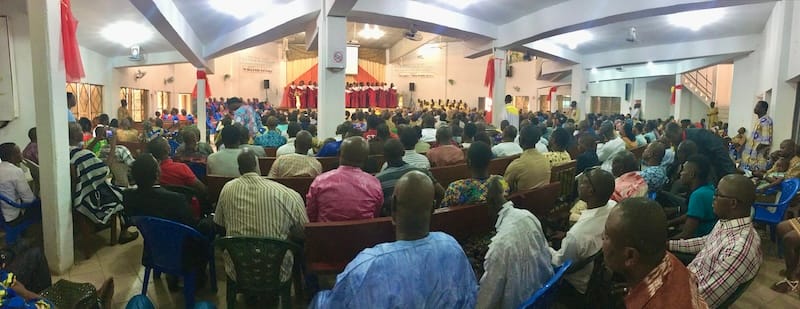
The good news is that the labor of our forefathers has borne much fruit. Churches can be found in every country and among almost every people group. In many places, those churches are solid and mature. The global south now holds more Christians than North America and Europe combined.7 Churches in Asia, Latin America, and Africa send missionaries in numbers exceeding those from the West.8 Much of the fertile soil has been planted and is now reaping the harvest. For that, we give God the praise.
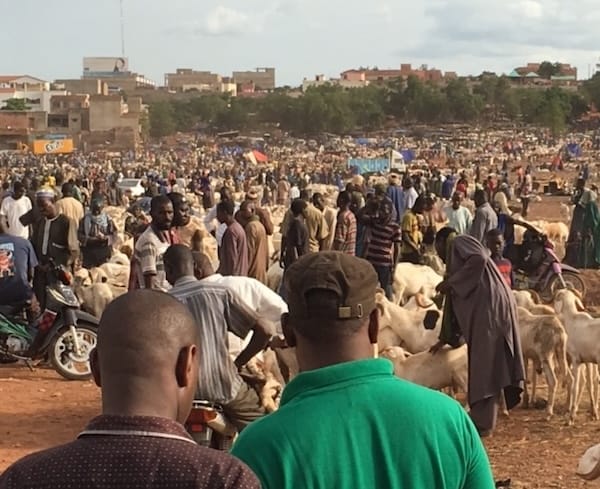
But the hard and rocky soil still remains. The primary targets of most modern mission-sending agencies are the pioneer fields, those places that rank in the zero to one range of the GSEC Scale.9 That means they seek to serve in places with little or no access to the gospel. Their goal is to engage these unreached people and cultures with the gospel with the intent to plant reproducing churches. By most accounts, there are still some 7,000 unreached people groups in this world. Most of these remaining fields of lostness are now concentrated in an area described as the 10/40 window. It is located between 10 degrees south and 40 degrees north of the equator. It comprises some 69 nations and over 5.3 billion people.10 Over half are without the gospel.
The challenge is that access to these groups depends on the winds of contemporary geopolitical environments. A century ago, the world was wide open to the West, and the resources available were extensive. In those days, missionaries with a proper strategy could be deployed almost anywhere.11 Such has dramatically changed today. The West is no longer welcome in much of the above 10/40 space. The good news is that our spiritual children from the South and East have open access. They continue the effort and the tradition of sending thousands of missionaries into some of the most challenging fields.12
This sharing of the mantle of missions does not diminish the role of the Western Church. In many ways, we are busier than ever. In addition to serving hand in hand where we can gain access, we are now mentors to the next generation of churches and missionaries. Churches have been planted, conventions have been formed, seminaries have been established, and missionaries are being sent. The time is ripe for our most seasoned and experienced missionaries to lead the church in what is now called the Majority World (non-Western) to be self-supporting, self-governing, and self-propagating.
The Hour of Missions: Mobilization
Thus, on paper, this God-ordained system of church-sent ambassadors delegated with the task of carrying the gospel into all the world has been eminently successful. And yet, when viewed from the missionary's perspective, the fields could not be any whiter, the task no less daunting, and the need for more "sent" ones no more critical. Christianity is indeed present in most of their fields of service, but the lost significantly outnumber those who are saved. Churches are also present, but many are immature, and some have often fallen into grave doctrinal errors. We can celebrate the arrival of Christianity in many areas. Still, the role of the global church, represented by the missionary, is far from complete. Our hour is still now.
Luke 10:2 states, “The harvest is plentiful, but the laborers are few; therefore beseech the lord of the harvest to send out laborers into His harvest.” These words ring ever so true for our missionaries and occupy much of their prayers. I suspect you can feel their passion and sense their urgency when they speak in your churches. For these missionaries, their task is all or nothing. Please do not despise their calls to action. Do not withdraw from their pleas for resources. They know that if the church does not continue to send, then our missionary force will be depleted in just one generation. They know that if the church does not support them, many of our existing missionaries will have to come home in short order.
I also urge the church to keep a balanced view of these precious servants of Christ. They are neither saints nor zealots. They are men and women, just like you. But… they were called and sent into the world as the most unlikely of ambassadors. They are just one in a long heritage of those who have followed the call of Christ. As a church, you have delegated to them a responsibility God gave you. They stand in your place and serve on your behalf. Pray for them, encourage them, support them, and when God calls… join them.

Conclusion:
In this post, I desire that you would somehow catch the spirit of missions. It is not something new, not an innovative program to adopt, and certainly not to be considered a burden to the local church. Above all, it is not outdated! The need for missionaries could not be any greater than today. The call to go should not come with any less force or authority than when our Lord gave it. Ignoring the call may be a mark of spiritual immaturity for some. However, for most, it would be nothing less than sinful rebellion.
1 George W. Peters, A Biblical Theology of Missions (Chicago: Moody Press, 1972), 4.
2 "Litany of St. Padrig of Eire - Photo", FishEaters https://www.fisheaters.com/customslent4-litany.html (accessed September 7, 2024).
3 Edward L. Smither, Christian Mission: A Concise Global History (Bellingham, WA: Lexham Press, 2019), 2.
4 Andrew F. Walls, The Missionary Movement in Christian History: Studies in the Transmission of Faith (Edinburgh: Orbis Books, 1996), 33.
5 "William Carey: 11 Commandments of Missions", Blue Letter Bible https://blogs.blueletterbible.org/blb/2011/06/06/william-carey-11-commandments-of-missions/ (accessed September 7, 2024).
6Smither, Christian Mission: A Concise Global History, XIV.
7 Lausanne Movement, State of the Great Commission: A Report on the Current + Future State (Lausanne Movement, 2024), 10.
8 Ibid., 14.
9 Joshua Project, "Global Stataus of Evangelical Christianity", PeopleGroups https://joshuaproject.net/help/definitions (accessed September 7, 2024).
10 "The 10/40 Window", Window International Network https://tinyurl.com/2wj2s8ez. See also Joshua Project, "What Is the 10/40 Window?" https://tinyurl.com/3kjudru5 (accessed September 7, 2024).
11 Brian Stanley, The World Missionary Conference, Edinburgh 1910 (Grand Rapids: Eerdmans, 2009), 3.
12 Adelou Olanrewaju, "With Nigerian Believers on the Move Who Will Help Them Spread the Gospel?", Christian Daily https://www.christiandaily.com/africa/nigerian-believers-on-the-mov.html (accessed September 3, 2024).
13 Sue Sprenkle, "Not Cliché When Missionaries Ask for More Workers - Photo", IMB https://www.imb.org/2024/05/02/not-cliche-when-missionaries-ask-for-more-workers/ (accessed September 7, 2024).