M-Moments: Mobilization Pt 4
A View From the Field: Gone
And Jesus came up and spoke to them, saying, “All authority has been given to Me in heaven and on earth. Go therefore and make disciples of all the nations, baptizing them in the name of the Father and the Son and the Holy Spirit, teaching them to observe all that I commanded you; and lo, I am with you always, even to the end of the age.”
—Matthew 28:18-20
Introduction
Thank you for your attention and encouragement over these past few posts on Mobilization. If you have been with M2M3 for a while, you know that what typically lands in your mail box is a description of sub-Saharan migration into Europe. We have had a break in our schedule as we travel to the Balkans for the next segment of those posts. This has allowed me to talk briefly about the Great Commission and how different groups view and mobilize for the task. We have tried to present the GC from the viewpoint of the missionary on the field. Their battle cry is “go”! We then sought to reflect the perspective of the local church, big and small, back home. Their focus is on preparation for "going"… the baptizing, teaching, and then sending. Today, I want you to stand in the shoes of another group of Great Commission participants.
They are the pastors and churches on the ground… in all the places missionaries have gone and continue to go. I refer back to a recent study that suggests that nearly half a million missionaries are at work in our world.1 Yet of those 450,000 laborers, only 15,000 are in truly pioneer areas. That means that 96% of all missionaries work in contexts where the local church already exists. The church is present in these global urban contexts, often numbering in the hundreds of fellowships.
Over the past few years, I have traveled through some rather spiritually dark places in our world, and I have yet to be in a place where at least one of these churches was not gathering. Areas that were once pioneer now have a Christian witness. I can only imagine the joy this brings to our missional forefathers, who gave their lives so that the gospel would take root in these places. They are singing a song today, and it is a song of victory.
And yet, the task remains unfinished. There are still too many people without Christ, and communities with too few churches. I have sat with hundreds of pastors around the globe, seeking to see their vision, hear their wisdom, and understand how we, as Western missionaries, can touch their lives. It does not take long for a similar theme to emerge from their conversations.
We think of the Great Commission in terms of “Go and Going.” In our churches back home, we talk about those who have “Gone.” To put it bluntly, we are in sending mode. Yet the churches on the field regard us as those who might “Come,” who are “Coming,” and most significantly as… those who “Came." You see, most of the global church is not deeply concerned with how to send missionaries; they are just trying to figure out what to do with the ones they already have! Allow me to explain.
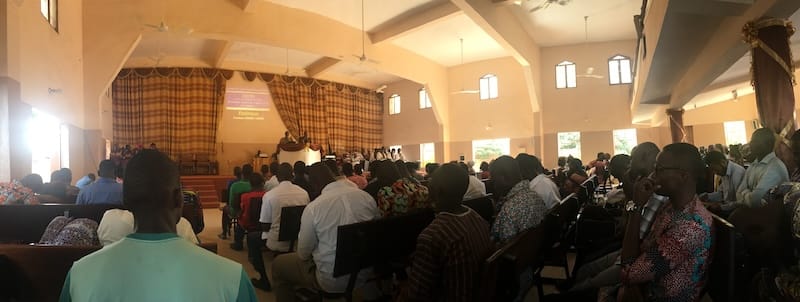
Indigenous Church
Churches typically fall into three general groups: indigenous, immigrant, and international. Let me start with the national churches and their pastors. These would be French pastors leading French churches. Moroccan pastors are leading Moroccan churches. They speak the local language and embrace the local culture. You get the idea. Like American pastors leading American churches, these shepherds know how to do their work and generally do it very well. Like us, they owe their existence to the Great Commission. For some, like the Italians, their heritage goes back to before Paul’s arrival in Rome. Those along the West African coastline can trace their history back nearly four centuries. Many churches in the African interior may have been formed as recently as the previous generation.
Like their Western counterparts, these pastors are passionate about preparing and sending missionaries into the world. That preparation is very similar to every other church; I believe it is principle-centered.2 Human beings grow from infancy to maturity through very identifiable stages. The same is true of our spiritual growth. As people come to faith in their indigenous culture, they grow in that faith, learning how to love God and, along the way, how to love their neighbors. They raise their families, leading their children to Christ. They engage their community, bringing a word of hope to others. In so many respects, they are exactly like your home church. With, perhaps, one exception… they are planted in the middle of a mission field.
National pastors recognize this very clearly. I was recently with a group of such pastors in Italy. They shared with me one of their greatest challenges. The conversation went something like this… "We know how to minister to Italians. That part has not changed across the years. Like our fathers, we have been shepherding our people in our language and traditions our entire lives. During all these years, the only people in our community were like us… Italian. That has changed. Today, when we look outside the doors of our church, and often in the pews on Sunday, we see immigrants from around the world. How do we minister and share the gospel with them? How do we lead our people to love and care for a group in our community that they do not know... and may not even like?
We have met with many national pastors in places like Paris who tell yet a different, more exciting story. If you attend their services on Sunday, you will see many immigrants. They are not just in attendance, but they are active members. They serve in leadership roles on the platform and in ministry. The pastors will tell you that their presence has brought life and joy back to their churches, many of which were previously in decline. The immigrants, often first generation, testify that they have found their spiritual home, a part of the body of Christ, with opportunity to serve faithfully.
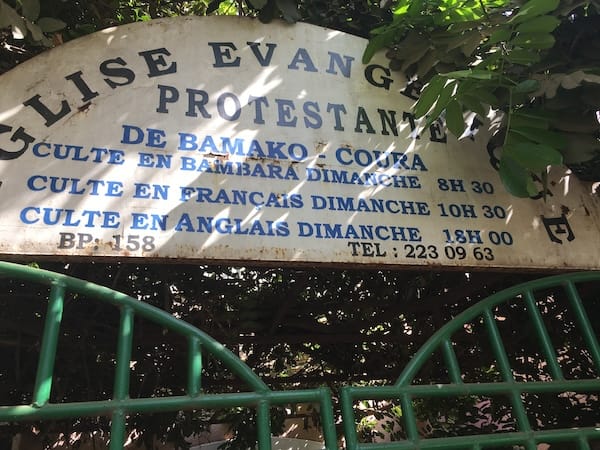
Immigrant Church
Wherever Christian immigrants can be found, they will be gathered in worship. It is what believers do. University students land in a foreign culture, and small groups will form for Bible study and fellowship. Economic migrants will create space in their workplaces to meet on Sundays. Refugees will pray together in the camps. Over time, these pockets will often merge and form small churches. As one might expect, these immigrants find spiritual comfort in being with people of their own ethnic group, language, and theological perspectives.
We have attended a wide variety of immigrant churches across the years. Some were planted by intentional missionaries sent from another church or denomination. However, most simply evolved from the immigrants themselves. Many will sense the call to Christian service in their new home, and some will become pastors and leaders in these churches. Like nearby national churches, they become more diverse as their people reach their neighbors with the gospel. The difference is that immigrants lead them and tend to retain the cultural feel of the founding group.
Immigrant churches often see themselves as missionaries in their host country. They have a proven record of engaging other immigrants from similar backgrounds. For example, Francophone immigrant churches in Africa will draw almost anyone whose native tongue is French. English-speaking churches will have Africans, Asians, and nearly anyone from the Anglophone world. Of particular importance, we have recognized that these immigrant churches are incredibly effective in reaching the hidden migrants, those who have overstayed their visas or become stranded by various smuggling networks.
Many of these churches also play a significant role in reaching nationals in their host country. Time and again, we see this principle play out. Young churches are homogeneous… meaning they reach very similar people. Mature churches are heterogeneous… meaning they have a very diverse complexion. Immigrant church members live in the community and share Christ’s love with their neighbors. As they come to faith, they come to church. Over time, the immigrant church, led by the immigrant pastor, will start looking like a church to the nations. And this is not just in “non-Christian” territories. We see this happening quite often in historic Christian homelands such as Europe.
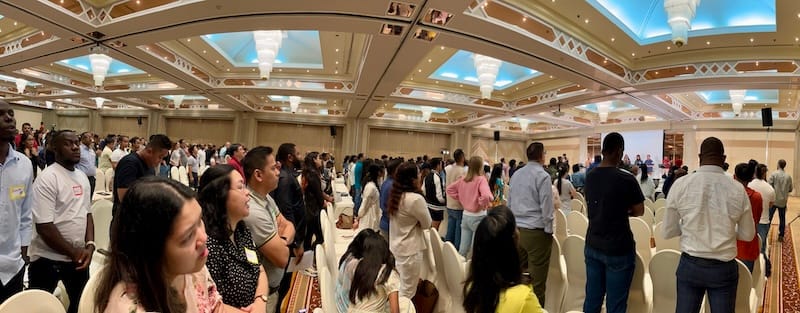
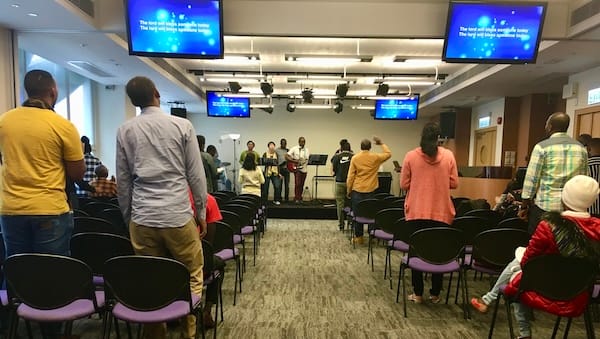
International Church
International churches are a marvelously unique component of the Bride of Christ. They are like immigrant churches, although their form and function differ. In the past, wherever expatriates landed, they formed churches. Such was the case in Acts 13 when refugees from Jerusalem landed in Antioch. Every time their members moved forward, they formed a new church in a new location. Thus, one might correctly argue that the fruit of the Great Commission is simply the church on the move… internationally. The same is true today.
International Churches are different from immigrant churches as they fill a critical gap on the mission field.3 They have evolved to become the forward-facing arm of the diaspora, particularly from the West. These ex-pats, whether military, merchants, students, or tourists, find temporary homes in these churches. Missionary pastors frequently lead them, and they often reflect a contemporary Western style of worship. They are also different from immigrant churches in that they are intentionally heterogeneous from the start, gathering people from diverse backgrounds. While generally holding to Evangelical beliefs and worship practice, one will find Protestants, Catholics, Anglicans, Pentecostals, and Orthodox traditions worshipping side by side.
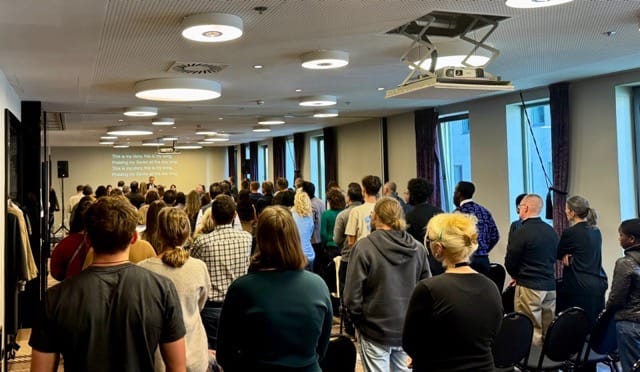
International churches are found in some of the largest global cities. They hold particular Great Commission value in parts of the world that may be contrary, if not hostile, to Christianity. Governments in many non-Christian sectors greatly desire to do business with the West. They know attracting students, businessmen, and diplomatic personnel requires creating space for their Christian beliefs and worship. In many of those places, the International Church is not just tolerated but even invited to be present. Since the government knows that their focus is not on nationals, they are often left to practice their faith as they please.
This gives the International church incredible leverage to engage diaspora populations. I have been in churches that were openly worshipping in some very closed countries. Their attendance on Sundays can run in the thousands. It would not be unusual for 20-40 nationalities to be present in many places. These pastors recognize that God has sent His children to their churches, and their responsibility is to equip them for the work of service. (Eph 4:11) They know that although their church cannot openly engage the national population with the gospel, her members will live and share their testimonies in their marketplaces every day.
Conclusion
The longer I work alongside these churches in the "mission field," the more I find that they are much like our churches back home. They serve in a world surrounded by the lost. Their communities are changing, their churches are evolving, and the gap between believers and unbelievers grows wider every year. This reality betrays the fact that every church, yours and mine, here and there, are all on a mission field; they are all white unto harvest, and God is strategically moving His ambassadors between them.
It is called diaspora, and it reflects a new age in missions. Those from historic sending countries are often at a loss for how to remain faithful in this time. For them, the Great Commission means to go, requiring missionaries to be sent. Faithfulness to the call requires a lot of time, effort, resources, and sacrifice. When they land, it takes logistical support, cultural acquisition, language learning, and time to build trust. However, in our work we have recognized that those from historic receiving countries are now the ones sending, but they are using a different model.
Diaspora missiology is not nearly as focused on sending as it is on receiving those God has already sent. The global church sends and receives people every day. They are university students, laborers, diplomats, refugees and economic migrants. People come to faith, land in one of the above churches, grow towards maturity, and then move on. Many sense the call to Kingdom service, believing that they have not arrived by accident. When they do leave, they often go into places that even missionaries cannot access.
Visiting with the pastors, one quickly recognizes that they have their hands full. People are coming and going all the time, and investing in a Western sending model can become a massive consumer of time, effort, and energy. Many believe that their time is better spent dedicated to those already in their pews, those who will soon be on the move. They recognize that the only difference between “going” and “sending” is the degree of intentionality. They are convinced that their efforts and energy have a higher rate of return when they lead their people to engage their community for Christ, and to have a heart for those they will engage down the road.
Imagine any one of the above churches when a young new missionary from the West walks in the door and declares, "I'm here!". No one can doubt their calling, sacrifice, or good intentions. At the same time, however, we should not be critical of the pastor for his lack of enthusiasm. He knows that a new missionary produced through a sending model is often less equipped than those who arrive naturally through diaspora models. And of the latter, he already has more than he can adequately serve.
It is here that I sense the greatest divide between the church in the West, traditional mission sending agencies, and the church on the field. Each are committed to the Great Commission, yet their vision is limited by their own history and context. Truly pioneer fields will never be reached with the gospel unless someone is sent (Romans 10:15). The good news is that our God is in the sending business. What we miss is that He is sending His people every day… they are just not following traditional pathways.
Perhaps it is time for contemporary Christian leaders to take pause, consider how God is moving, focus a bit more on collaboration, and celebrate the broader movements of God. In fairness, that is already happening. I struggle with a desire to push for a greater awareness, and to have patience to allow Western missional systems to catch up with the realities of our world today. I have a few thoughts on how to speed up the process… but that will have to wait until our next post.
1 Lausanne Movement, State of the Great Commission: A Report on the Current + Future State (Lausanne Movement, 2024), 15.
2 I have written extensively on this process. If you would like to know more, see my book, Strategically Planted, available on Amazon for Western audiences, and as a PDF for those without access or resource for the printed copy.
3 I would encourage readers to explore the opportunities found among International Churches, and would challenge missional agencies to invest more in their capacity to propagate the gospel in regions with restricted access. See https://micn.org