14 - Principle Two: Everyone Moves for a Reason – Community Expectation
2022 No 14
Now it came about in the days when the judges governed, that there was a famine in the land. And a certain man of Bethlehem in Judah went to sojourn in the land of Moab with his wife and his two sons.
--Ruth 1:1
In our last two posts, we exmined the princple that migration is a human condition. In realaity, almost everyone reading this post is a migrant of some type. There is a second principle that must also be recognized in any serious study of migration. It is that "people move for a reason.” It is an all-inclusive reality. No one wakes up one morning and packs their bags for no reason. Their rationale may not be evident on the surface, but everyone can justify their actions. Over the years, scholars have tried to quantify those reasons. The simplest has been to describe motivations following a push/pull dynamic. Some things push you out of one environment while others pull you into their space.
Intense societal pressures often drive these personal motivations. Challenges in places of origin can quickly create pressures for individuals and families to seek a better life for themselves or their loved ones. In Africa, such movements are intended to ensure the survival of the family or village back home. Since over half the population is of school age, one should not be surprised that much movement is in search of education. And when the median household income for a country like Mali is less than $700 per year, one could expect to see high percentages of labor migration.
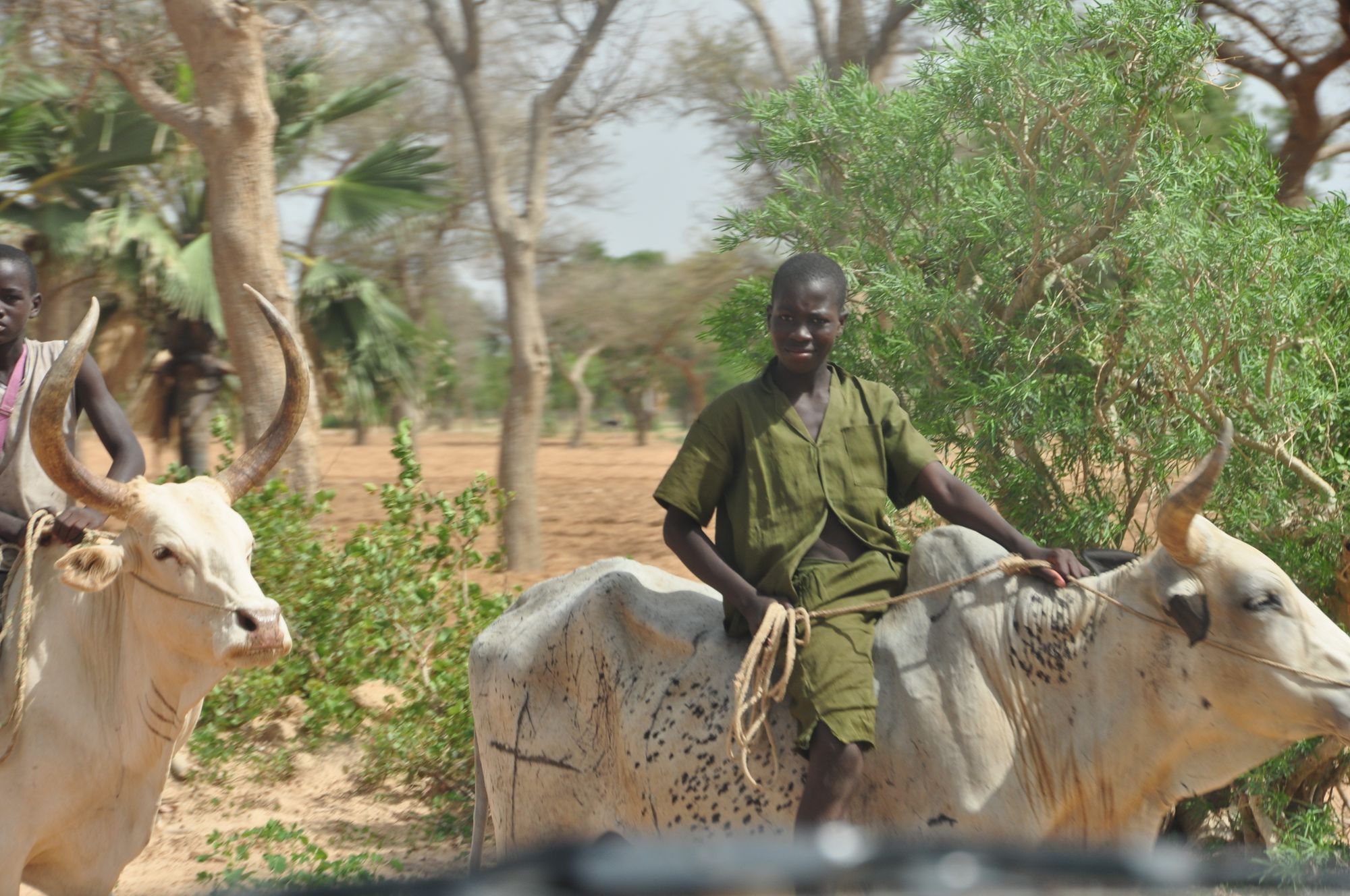
These conditions often evolve out of a rich historical context. One’s culture can play a significant role in the pressure to migrate. Movement is not new to Africa, in that shepherds and commerçants have been mobile for generations. Certain ethnic groups have developed patterns and dependencies within their communities that utilize migration to ensure their survival, creating firm expectations of compliance. Migration is a cultural expectation in many of these environments, and immobility can spell disaster.
We must also consider that not all such movements are voluntary. Forced displacements occur, and the circumstances that cause involuntary migration can vary. Drought, disease, and natural disasters can leave entire communities with little option but to relocate. War and violence dictate movement, forcing families to flee and seek asylum in distant lands. Tragically, such displacements create vulnerabilities that allow human traffickers the opportunity to further victimize these migrants in ways that are beyond imagination.
Over the next four posts, we will explore the conditions that facilitate movement. They are indeed true in an African context. But, as one would expect, they can be confirmed in almost any other global environment. We will begin by examining how communal expectations can compel migration. Western countries, which tend to be highly individualistic, do not seem to comprehend the pressures felt by migrants to live up to the responsibilities assigned to them by their families and neighbors. Judgments are easy for those who live in a world where they are the ultimate determiner of their fate. In many places, particularly in sub-Saharan Africa, such individualism is not possible, and avoiding cultural responsibilities is not an option.
Cultural Identity
Across Africa, one can find many ethnic groups with a long history of migration. For centuries before colonization, migrants would follow established trade routes in their economic enterprises. With the arrival of the French and English, many would adopt a European system of cash trade. They engaged in labor migration on the farms and transportation sectors. Military service during two world wars and work during European reconstruction offered many men the opportunity to travel to Europe and accumulate significant wealth.
Over time, this has created strong cultural expectations that young African men should relocate to urban settings in Africa, Europe, and beyond as labor migrants. Often, they are sent using community resources and through established networks. They become responsible for sending their earnings back to support the family and village. These remittances have, over time, developed into a form of a subsistence strategy for many communities.
One of the strongest drivers of movement can be the social expectation to go and succeed in the world. (Meaning beyond the local context.) Migration is seen as a rite of passage into manhood in many cultures. Young men are expected to leave home, find work, experience the world, and discover the means of success. Migrants from across the region will speak of their "adventures." The successes are often embellished, while the failures are forgotten in most stories. Such only increase the pressures on young men to make their way into the world.
Consequently, immobility... or failure to migrate, can become an aspect of great shame in many African cultures and significantly limits one's capacity to function within society. Those who could not travel due to economic or physical capacity are viewed as weak links in society. They become burdens who take from their family rather than become ones who can contribute. Because mobility is considered a crucial part of the transition to adulthood, those who cannot migrate become less than men, enduring the shame of their diminished status. They may even be denied marriage opportunities or leadership positions in their communities.
Understanding African migration requires that Western observers accept the breadth and the scope of this expectation. Most every sub-Saharan male will identify that this one factor, above all others, pushed them into migration. There was simply no way to evade the responsibility. Western viewers tend to become critical when the risks appear to exceed the benefits. But in most cases, the more complex the journey and the more dangerous the pathway, the greater the respect upon their return.
Family Responsibilities
In most African societies, the extended family bears responsibility for all its members. Each head of household is to care for his immediate family. But, he is also dependent upon his father before him and on his sons who will follow. In such a structure, the family name is protected while her members seek to find provisions. And although suffering and want may occur, the burdens are distributed across the entire family.
There are extreme pressures placed upon the firstborn to structure his family in such a way that will promise economic support for the whole. The role of “breadwinner” for the family will ultimately rest upon him. As a young man, he should prepare to assume his father’s position and build upon his financial capacity over time. By the time his father steps away from those responsibilities, he should be in a place to care not only for his own family but the extended family as well.
The degree of family resources will often dictate the pathway to achieving this goal. If the family head has wealth or strong relational connections in other countries, the firstborn will profit through educational or economic opportunities. In cases where the family is relatively poor, the son will bear increased pressure to create the future himself. Such can lead to risky mobility decisions and often forces the migrant to carry an incredible burden to succeed. I once spoke with a migrant in Paris who related, "If I live, my family lives. If I die, my family dies.”
Once again, these kinds of pressure may be difficult for Western observers to fully comprehend, especially when the migration effort comes with significant risk and loss of life. I was visiting with a group of young men in Senegal who had failed in their attempt to reach the Canary Islands by boat. After their motor quit, they were fortunate that the winds and currents pushed their boat towards a Mauritanian beach. Many had died of exposure and dehydration. I was astonished to hear from one man that this was his second attempt. When I asked him why he had tried so often, even in the face of death, he responded that he had no choice. He said that a soldier could not refuse to serve, even if the mission held a high risk of death. If he died, he died a hero. If they were victorious, his family would be saved. But if he did not go, he would be worse than a coward; he would be as one who had abandoned everything that his culture deemed necessary.

Community Survival
There are other migrant contexts where larger communities can assert strong expectations to migrate. For example, there are villages along the Senegal River valley with many members working in urban contexts such as Paris. Their combined labor and associated remittances provide for much of the infrastructure for their communities back home. For many of these villages, their mosques, schools, medical clinics, roads, water, and sanitation systems are all sustained through the money earned by their members abroad.
In some regions, these remittances are so solid and stable that governmental support has been discontinued. Because of this, the village has become locked into a system of sending their men to work far from home. Today, one can find communities where only the old or the disabled men are present. Migrants may return from time to time to marry or to care for their existing families, but such is limited. In these cases, the village has become entirely dependent upon the migratory nature of their community to provide for their needs.
Young men in this context face an obligation to migrate and endure strict controls to ensure compliance while away. In places such as Paris, the migrants have formed associations to represent their communities back home and somewhat replicate village authority structures. If a migrant were to fail to perform at any level, they could face the shame of being returned home and replaced by someone else. Such reproach would be beyond any individual capacity to bear. Consequently, most continue to work, almost as remote slave labor, for the benefit of their family and neighbors back home.
A One-Way Trip
There are often some very established networks to facilitate movement in places where a strong communal expectation to migrate exists. It is always helpful to have family, friends, or even a whole community of connections in an area of destination. In those cases, some measure of success can be anticipated. Often, men and, at times, women will succumb to the pressures to migrate in the absence of any "connections" along the way. In these cases, they secure the income to go independently and use facilitators when necessary. That is to say; they pay smugglers to move them in particular directions. Families or entire communities have been known to loan them the money to cover these costs.
Along the way, however, they discover that success is far from the norm. Most will never arrive at their intended locations, and they will spend years trapped in places of transition. By this time, they will have lost any money given to them, and they are often found begging on the streets or working in illegal job markets. Once a migrant reaches this stage, their shame can become almost unbearable. A few will stay in contact with home. To save face, they may take pictures of themselves in borrowed clothes and in front of nice cars to mimic success. Others will allow their families to think that they have died. Remember, death in the effort has honor; failure brings only shame. I remember meeting a young man on the streets of a large city in Europe, and he was suffering greatly. I asked him why he did not go back home. There were aid programs that would have assisted with his return. His response was telling. "It is better to die here one day on the streets than to go home and die in shame, every day, for the rest of my life.”
Conclusion:
Explaining migration using constructs such as "push" or "pull" factors works well in Western, individualistic societies. When we do so, we can categorize the negative elements as having "pushed" someone out and the positive as having "pulled" someone to another location. The challenge is that all of these events tend to be circumstantial. Any serious conversation regarding African migration must also consider the cultural pressures that move people into the world. They are complex and often defy our efforts to fit them into logical categories.
The local church needs to take care when questioning the motivations for migratory movements. It is easy to judge our neighbors by conditions that would be true in our context but would be absolutely foreign in theirs. It may be hard to imagine, but most of us would have made the same decisions had we been raised in their culture and walked in their shoes. There are plenty who will seek to judge their actions. Our greatest kingdom service, however, is to love our neighbors and help them come to faith. Then, under the guidance of the Holy Spirit, they will be in a much better place to make the best decisions for themselves and their families back home.