15 - Principle Two: Everyone Moves for a Reason – Education
2022 No 15
I am a Jew, born in Tarsus of Cilicia, but brought up in this city, educated under Gamaliel, strictly according to the law of our fathers, being zealous for God just as you all are today.
--Apostle Paul (Acts 22:3)
In the last post, we described the communal pressures underlying almost all sub-Saharan migration. Africa is a continent where most of its inhabitants live in communal, collective contexts. Unlike the West, which is highly individualistic and uses resources for personal benefit, sub-Saharan migrants cannot fathom avoiding their responsibility to support and provide for their families.1 This honor has been given to them by previous generations, and it is their duty to show respect to their efforts.
Most, however, recognize that their hope lies in the future and through their children. In this, parents are very much like their global counterparts. They may approach things differently, but the motivation remains the same. If they can create a better future for their children, they have created a better future for all. Such is why education has been elevated to a high priority among African families. And it is the pursuit of education that has become a significant driver of migration on the African continent. Globalization has reached the smallest villages, and most families recognize that their future lies in at least one child becoming successful in a larger marketplace. Some studies indicate that those who complete secondary education earn as much as 150% more than their uneducated counterparts.² This can be the difference between abject poverty and survival for many families.
Primary / Secondary Schools
We will begin with those schools which are closest to home. It would be a false assumption to believe that Africans are generally uneducated. Educational statistics may vary by country, but the Word Bank has estimated that nearly 99% of sub-Sahara's school-age population, i.e., 6-11 years of age, has been enrolled in primary school. And while it is well known that enrollment does not equate to attendance, their data suggests that slightly over 56% of those enrolled will complete this first level of education. One out of three will continue to secondary school, and nearly half of those will finish their studies.3 For the United Nations, one of their key sustainable developmental goals is to do more than expand access to quality education but to see students remain in school until they graduate.4
Consequently, school access is a crucial component of rural-to-urban movements. There is little hesitancy to send a child to live with family in a neighboring city to attend primary school, nor send the graduate to another larger town for high school. Distant families often receive these students, and the entire process is deemed culturally appropriate. Remember, in Africa, individual and isolated families are socially rare, making children the responsibility of the extended family. The average number of children in a sub-Saharan family is between four and five. Consequently, it does not take many rural families to account for the relocation of significant numbers of children in any given region.
Religious Training
Understanding the image of educational mobility in sub-Saharan Africa would not be complete without a discussion of religious education, particularly among younger children. Africa is, by definition, a religious continent, with 63% being Christian, 30% Muslim, and 8% traditional religion.5 Not unexpectedly, many students leave their childhood homes to attend schools that promote their faith.
Among Christians, religious schools have arisen at primary, secondary, and tertiary levels. Boarding schools abound in historic colonial territories such as Nigeria. Although Christian mission agencies may have introduced primary schools, they quickly evolved with the desire that a post-primary education would be developed that "would qualify their children to work as intermediate civil servants in the colonial systems. That would subsequently qualify them to gain admission into higher institutions of learning…thus they could occupy leadership roles within the nation.”6 For many, however, there was a notion that additional schooling beyond primary education would “fetch” the young person more money in the employment market.7 With such a foundation in place in contemporary Africa, many churches and denominations have founded their own schools to serve their members.
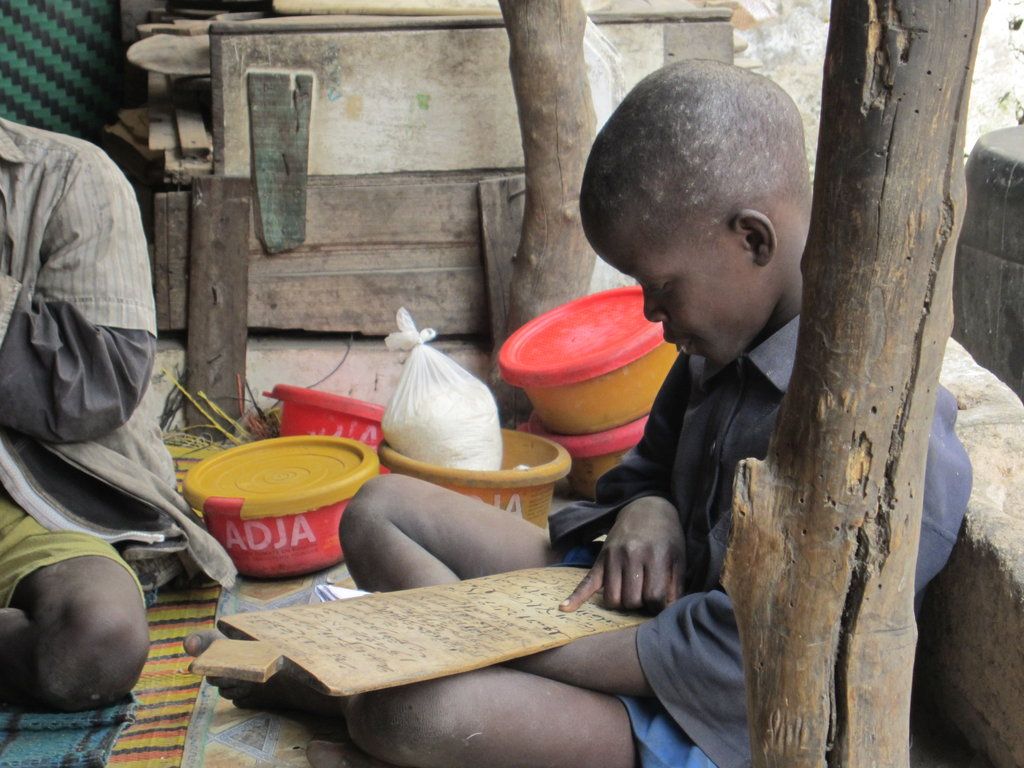
Among Muslims, there has also been a corresponding rise in religious education. This expansion is happening at two levels. First are the historic Qur'anic schools that are found across the Sahel. There are long-standing traditions and pressures to send the firstborn male to a Qur’anic school to study the Koran. This is particularly true among those who have few other educational opportunities. Determining the number of these students is nearly impossible. UNICEF estimated in 2007 that there were between 50,000 and 100,000 talibé in Senegal alone.8
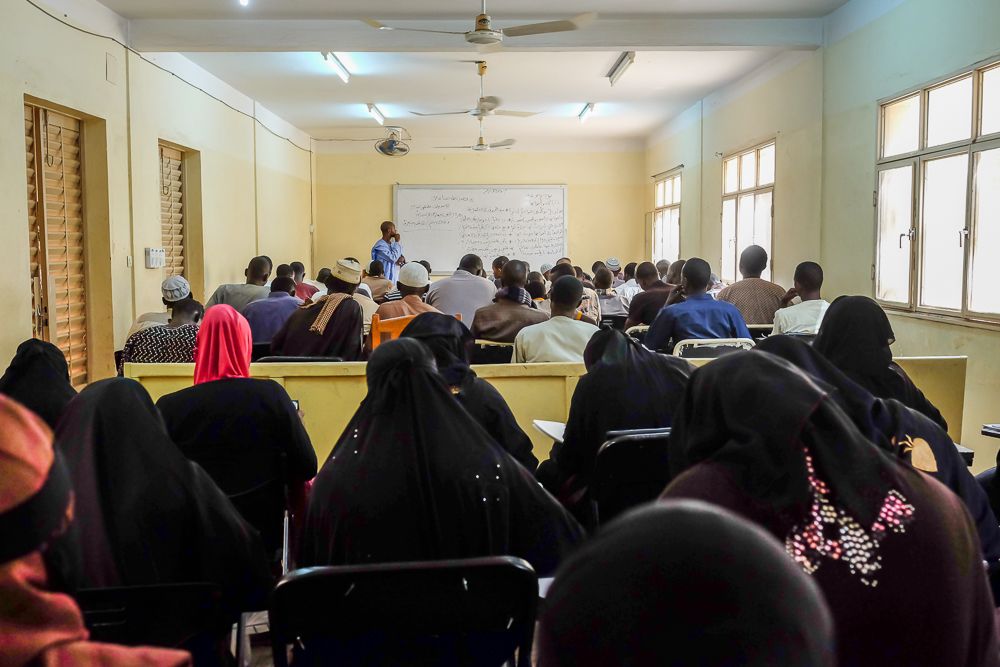
However, there is a rise in the number of mosques and madrassas across the Sahel at a second level. Outside sources fund many. Thousands of orthodox schools and places of worship have been built over the last decade. Funding for these schools is augmented by scholarships offered to study in Islamic Universities in Saudi Arabia and Kuwait. These training centers have been established to provide for much more than the education of the students. It is a part of a much larger strategy to influence Sufi cultures to adopt the more conservative, Salafist and Wahabbist structures of Eastern Islam.9 Because the schools are often fully funded, they become attractive to many.
Regional Universities
On the African continent, the number of students who progress to High School with subsequent university studies is also growing. Their numbers are not insignificant. One source indicates that High School graduation rates were at 42%, and that number is expected to rise to 59% by 2030. If so, this would represent nearly 137 million students.10 Many of these graduates will qualify to attend their regional university. These new educational endeavors will occur in larger urban contexts and will almost always require another relocation. In most African countries, universities are found in the capital cities. This creates another conduit of movement whereby a steady stream of educational migrants moves towards the more prominent, primary urban centers.
It is essential to understand that while many of these students may return home to visit, their educational experience has moved them to urban contexts where they will often spend the rest of their lives. Educational migration is typically the first step of what will ultimately become a more extensive journey. Their movements comprise a crucial component of the urbanization and globalization of the African continent. And while most may not leave the region, some will have opportunities to expand their horizons significantly.
International Universities
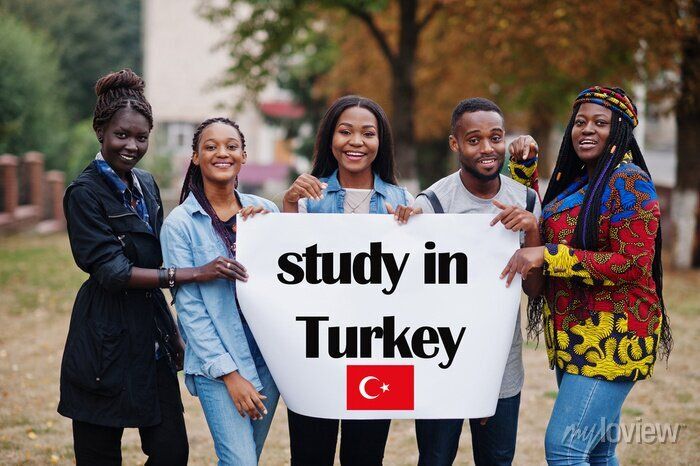
Students have a common belief that an international degree will give them more significant employment and income opportunities. Such may not be too far from the truth. Unemployment among continental graduates remains high, and the training received is often considered substandard. Those who seek degrees from more recognized universities tend to do very well. Upon graduation, many will find jobs in their host countries and often serve to build transnational economic bridges. Local African governments have recognized this potential and have come to depend on their employment-generated remittances. This economic capacity has led many sub-Saharan countries to subsidize international studies with substantive scholarships.
Consequently, international educational opportunities are becoming increasingly available to African students. There are currently more than 8 million university students in Sub-Saharan Africa, and that number is expected to triple in the next decade.11 Today, some 400,000 of those students are living off the continent.12 France holds the majority or 27%. But, they are traveling further West toward the United States and, as noted above, East towards Saudi Arabia and Asia. Undoubtedly, the student mobility rate is almost certain to grow significantly in the years to come.
Conclusion:
If we consider that one of the principles of migration is that everyone moves for a reason, educational migration makes sense. In almost every African city, one will find students who have relocated to attend primary, secondary, or university level schools. Additionally, one can find numbers of international students in the most prominent global cities. Educational migration is almost always legal, always regular, and almost always has positive outcomes for the students. And when we consider the projections of population growth in Africa, this form of movement most certainly has the most significant potential impact on the future.
It does not take much insight to recognize that engaging these students with the gospel should be a foundational strategy for the church. As evidenced in the Sahel, the Islamic world took this position decades ago. Why? Because these students are hungry for new ideas, are willing to cross established cultural norms, and feel a sense of obligation to those who invest in their lives. Once again, this globalizing factor of migration combined with an education can profoundly affect these young adults.
And it is not just the teachers who have influence. Fellow students, who are also maturing believers, can significantly influence someone searching for a relationship with God. Remember, how one feels about Christianity can be changed by contact with almost any follower of Christ. What one knows about salvation can occur at multiple levels. But the volitional choice to follow Christ is generally found within the context of a trusting relationship with another believer.13 Engaging university students should become more than just an outreach event to unbelievers. It can often become a discipleship event among students that they may grow in their faith and begin to engage their neighbors with the gospel.
_________________________
1M. Augustus Hamilton, “Analysis of the Dynamic Relationship between Globalization and the Transmission of the Gospel: A Case Study of Soninke Transmigrants in Africa and Europe” (Southwestern Baptist Theological Seminary, 2017).
2Peter Darvas, Sharing Higher Educations Promise Beyond the Few in Sub-Saharan Africa (Washington DC: The World Bank, 2017).
3For a statistical look at education in sub-Saharan Africa, see World Bank, "World Bank Open Data", Word Bank Group https://data.worldbank.org/.
4United Nations, "The 17 Goals", United Nations https://sdgs.un.org/goals (accessed July 25, 2021).
5Pew Research Center, The Future of World Religions: Population Growth Projections, 2010-2050 (Washington, 2015).
6Sunday Abolade; Ayotunde Oyelade, "Historical Development of Private Secondary School Education in Nigeria; 1859-Present," eJournal of Educational Policy Spring 2018 (2018): 2.
7Ibid., 3.
8UNICEF, Enfants Mendiants Dans La Région De Dakar (New York, 2007), 35.
9For a fascinating review of this construct, see Joshua Meservey, "Salafis, Sufis, and the Contest for the Future of African Islam," (2021), March 21, 2022; Available from https://www.heritage.org/africa/commentary/salafis-sufis-and-the-contest-the-future-african-islam.
10Darvas, Sharing Higher Educations Promise Beyond the Few in Sub-Saharan Africa, 21.
11Wachira Kigotho, "Sub-Saharan Africa Leads the World on Student Mobility," University World News: Africa Edition2020.
12UNESCO, "Institute for Statistics Database" http://data.uis.unesco.org (accessed July 24, 2021).
13********See blog post on globalization. (Affective / Cognitive / Volitional)