16 - Principle Two: Everyone Moves for a Reason – Economics
2022 No 16
Come now, you who say, “Today or tomorrow we will go to such and such a city, and spend a year there and engage in business and make a profit.”… Instead, you ought to say, “If the Lord wills, we will live and also do this or that.”
--James 4:13-16
My wife and I have spent several years in West Africa and around the Mediterranean Rim. We have been to many of the places of origin, transition, and destination for sub-Saharan migrants. We have visited with more migrants than one could imagine. We have spent time with well over a hundred pastors of indigenous and immigrant churches in the region. And as I have often said, one can find almost every form of migration among sub-Saharans. The vast majority are economic. We keep revisiting this principle that everyone moves for a reason. For most, it is to find a better life. That often takes money.
I am not sure why the West might find this unusual with all her capitalistic history. Short of forcible displacement, most of us are opportunistic. That is, we move voluntarily from one place to another, especially when we are presented with the opportunity to improve our lives. It is not much different in Africa. Except... that perhaps in Africa, the disparity lies in how many people are deeply impoverished. Nearly three-fourths of those surveyed in Ghana and Nigeria said they would migrate if possible.1 For years the West has delivered a message to Africa that communicated her wealth. Initially, it was through the images of television. Recently, it has been through social media and music. Either way, the message is clear… “there is gold in them hills, and if you can get here, it is free for all".
But Why Not Stay Home?
This seems to be a fair question. When considering the amount of money spent in any migration attempt, one could postulate that it would have had a better outcome if it had been invested locally. In some respects, there is logic in the sentiment. But, if you have kept up with the preceding posts, you will know that there is much more to the picture than simply making money. There is a strong tension between the life experienced at home and the perceived life somewhere else. In some cases, one’s challenges may have less to do with their present location and more to do with one’s personal decisions and disciplines. For many, however, the obstacles at home are truly daunting. Allow me to offer a few examples.

Unemployment of College Graduates: Across Africa, unemployment rates are high. But as noted previously, those who can gain formal education have a much better chance of finding an adequate job. Even still, among college graduates, over half struggle to find employment. Often there is a mismatch between their education and the current labor market. Others find that they cannot compete in an environment of corruption and the pervasive nepotism that favors family members. In places of conflict, many professional workers lose their jobs due to political instability. Over 15,000 teachers have become unemployed due to fighting in Northern Mali.² It is unfortunate, because these graduates have demonstrated the capacity to complete a goal, and they possess the skills necessary to function in their chosen fields.
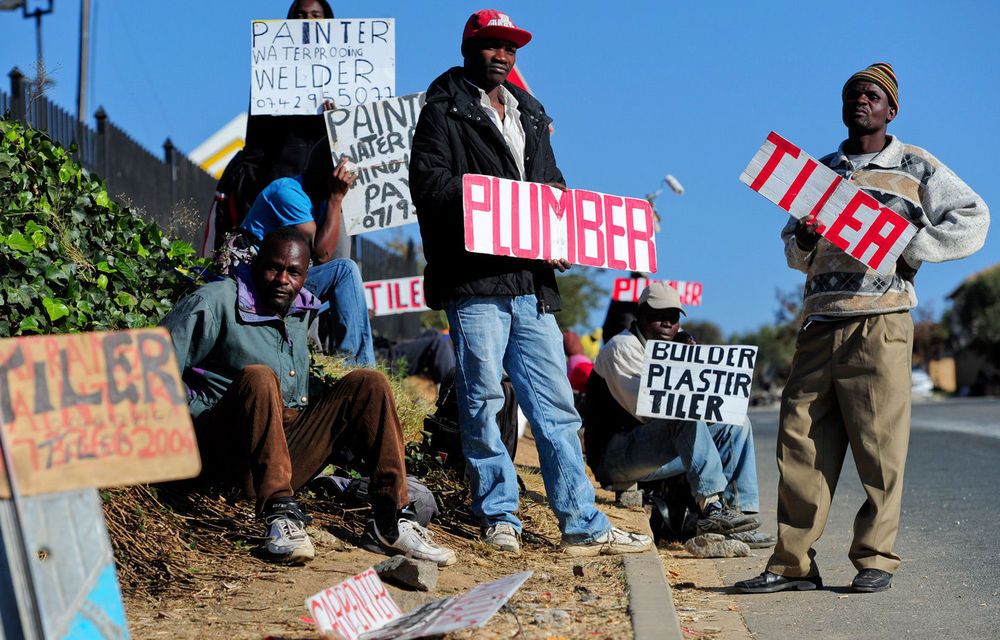
Underemployment of Skilled Workers: The World Bank has posted that the unemployment rate in Africa was 7.28%.3 This would imply that employment was not an issue in Africa. But we have already demonstrated that poverty is rampant and that some 90% of Africans live in poverty.4 So how are these two constructs reconciled? One conclusion is that those who have a job are seriously under-compensated. Why might this be the case? In Senegal, for example, 9 of 10 workers are in informal employment. This covers 97% of all businesses!5 Most company owners do not keep books, do not have bank accounts, do not pay taxes, and are not regulated. In other words, they are not legal. Such puts the businesses at significant risk, limits their capacity to gain government contracts, and it forces them to underpay their employees.
Another conclusion is that skilled laborers may work but do not get paid. Such is often the case. It is hard to imagine having a job and not getting paid for months. Such, however, is often the case for civil servants.6 Across the Sahel, it is not uncommon for the governments to withhold the pay of teachers, police, and other government workers. They have little recourse in that they would forfeit their backpay if they resigned. At least with a job, there is a measure of honor, even if their family suffers financially. Consequently, some will turn to corrupt practices to simply survive.
Many unemployed and underemployed university graduates believe that their chances would be better if they were in another location. Often they take risks that do not appear to be reasonable. For example, the Central Migration Route to Italy is incredibly dangerous. Yet focus groups by the International Organization for Migration found that many migrants traveling through Niger had formal education and nearly ten percent held university degrees.7
Are They Not Trading One Bad Situation For Another?
Ultimately, the case for economic mobility rests on the perception that migration will allow for an improved standard of living. And to be clear, successful migration may validate that perception. According to the World Bank, sub-Saharan Africa received 48 billion dollars in remittances in 2019.8 That equals about two thousand dollars per international migrant after paying their expenses each year. That is nearly three times the median income of sub-Saharan Africa. It is not difficult for community members to see the fruits of successful migration. Potential migrants often speak of those who "made it" upon arrival in Europe and now have the money to buy cars, houses, and to provide for their families.
What is difficult to see is the vast number who attempt to migrate and fail. This is particularly true for those who seek to go to distant places like Europe. Like a lottery, the rewards of a few are projected upon the masses and fuel their hopes and dreams. Unfortunately, most who make an effort will become bankrupt or worse. Successful labor migration is possible, but it generally occurs among migrants who either have enough resources to guarantee arrival or those who have connections in all the right places to help them succeed. Or… as we shall soon see… for those who choose to stay a bit closer to home.
Continental Economic Migration
Labor migrants (who do not leave Africa) are by far the largest contributors to economic migration and constitute a significant force in the African economy. In 2017, the working-age population of Africa was estimated at 662 million people, with a total workforce of 439 million people. The majority are working in regions close to their homes, or if they do travel, their movements are not recorded. But within that labor pool, there are over 25 million known workers who have crossed into another African country.9 Of significance, this number has increased by 91%, or nearly double from just a decade prior. These workers are primarily found in agriculture (25%), trade (17%), public administration (17%), and construction (10%).
Even though the sampling sizes are small, one can perhaps gain some helpful insight from recent studies. For example, researchers found that roughly two-thirds of employed labor migrants had no formal education. The remainder was divided between those who had completed high school and university.10 They are the ones most likely to migrate greater distances. Such helps to highlight that people across the spectrum of education are finding a variety of jobs… just in other locations. And although the pay may be nominal, as outlined above, it is sufficient for the moment.
Transcontinental Economic Migration
There is a massive draw for labor migrants in Northern Africa and Southern Europe. There are informal markets in agriculture, trade, and construction on the continent. Unfortunately, many of these jobs are controlled by criminal networks. Those positions with a legal foundation can prove profitable, but they are generally held by immigrants who also arrived legally and have the networks to sustain their stay. These jobs are predominantly found in commerce.
Africa is considered one of the fastest-growing consumer markets in the world. As the African economy improves, opportunities for individuals to engage in commerce have begun to expand exponentially. Retail expenditures by African consumers reached nearly 1.4 trillion US dollars in 2016.11 Economic opportunities exist in almost every market for both supply and distribution. Just about anyone with entrepreneurial drive and a bit of capital can open a boutique and find willing clients.
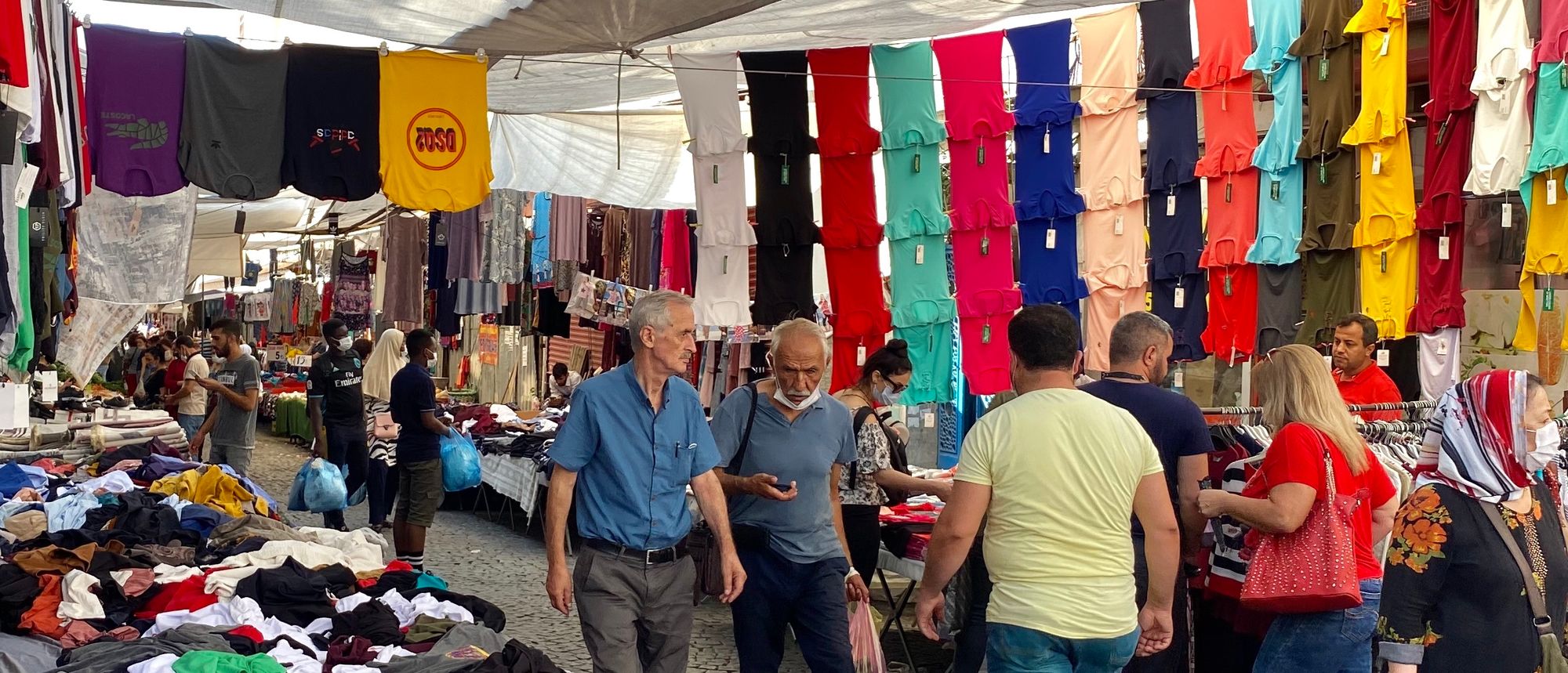
Critical suppliers for these markets are found in places like Europe, China, Turkey, and the UAE. Such has created significant trade corridors, facilitating movement between countries that are both internal and external to the African continent. West Africans travel routinely to Asian markets to purchase electronics for resale in their countries of origin. East Africans have a strong presence in places like Istanbul, where they buy textiles for resale back home. Entire industries have evolved to facilitate the movement of goods, most providing lucrative benefits to African merchants.
Conclusion
As we wrap up this post, I want to bring us back to the principle that people move for a reason. Often, those motivations are economic. Try not to be too critical of such reasons. If you lived where they lived and under their conditions, you might consider some of the same things. In the end, opportunities exist for economic gain in Africa. Most will stay on the continent and push through the difficulties. Those with capacity will stretch beyond the continent and pursue opportunities in more lucrative markets. Yet others will take unimaginable risks in their effort to strike it rich, chasing a perception of opportunity. A few will make it, but most will not.
Regardless of how they arrived in your neighborhood, they are not that different from most people around them. They are searching for something that will support their families, fill their lives with value, and give them a sense of contentment. An evil voice says that all of that is found in riches. The voice has declared that message to some of the poorest countries and has told them that it can all be found in the West. Millions have heard the sirens call and have followed its alluring message. But it is an empty promise… and those who follow Christ know that well.
We have a better message. And our voice speaks on behalf of the One who can care for their families, can give their lives purpose, and can fill their hearts with peace… regardless of the circumstances. That is why we left our home in the West to live among the churches here. This blog is about helping the church, her pastors, and her members to understand her neighbors, and to love them enough to share a message of hope with them.
1Pew Research Center, "At Least a Million Sub-Saharan Africans Moved to Europe since 2010" https://www.pewresearch.org/global/2018/03/22/at-least-a-million-sub-saharan-africans-moved-to-europe-since-2010/.
2The North African Journal, "Sahel: Teachers in Mali on Strike over Pay", MEA Risk https://north-africa.com/2020/01/sahel-teachers-in-mali-on-strike-over-pay/ (accessed March 21, 2022).
3World Bank, "Unemployment: Total - Sub-Saharan Africa", Word Bank https://data.worldbank.org/indicator/SL.UEM.TOTL.ZS?locations=ZG (accessed March 21, 2022).
4World Bank, "ProvcalNet: An Online Analysis Tool for Global Poverty Monitoring", World Bank http://iresearch.worldbank.org/PovcalNet/home.aspx (accessed November 25, 2021). See also Mitch Hamilton, "5 - Africa Migration: A Contemporary View" https://m2m3.org/5-africa-migration-a-contemporary-view/ (accessed March 21, 2022).
5Dramane Haidara, Diagnostid De L’économie Informelle Au Sénégal (Genève: Organisation Internationale du Travail, 2020).
6Yemisi Adegoke, "Nigeria Has a Culture of Not Paying Workers and It’s Not About to Change Anytime Soon", Quartz Africa https://qz.com/africa/663626/nigeria-has-a-culture-of-not-paying-workers-and-its-not-about-to-change-anytime-soon/ (accessed March 21, 2022). See also Joseph Ndondo, "South Africa’s Youth Population, Unemployment and Economic Growth Prospects", IVolunteer International https://www.ivint.org/south-africas-youth-population-unemployment-and-economic-growth-prospects/ (accessed April 14, 2022).
7Matthew Kirwin; Jessica Anderson, "Identifying the Factors Driving West African Migration," West African Papers No 17 (2018): 15. See also IOM, Iom Niger 2016 Migrant Profiling Report (Geneva, 2016), 12.
8World Bank, "World Bank Open Data", Word Bank Group https://data.worldbank.org/.
9Leila Ben Ali; Sabelo Mbokazi, Report on Labor Migration Statistics in Africa (Geneva: African Union Commission, 2017), 4.
10Ibid., 47. Keep in mind that this study was limited to data from Côte d’Ivoire, Liberia, Namibia, Niger, Nigeria, and South Africa.
11Landry Signé, Africa’s Consumer Market Potential: Trends, Drivers, Opportunities, Strategies (New York: Brookings Institution, 2018), 12.