17 - Principle Two: Everyone Moves for a Reason – Forced Displacement
2022 No 17
Now when they had gone, behold, an angel of the Lord appeared to Joseph in a dream and said, “Get up! Take the Child and His mother and flee to Egypt, and remain there until I tell you; for Herod is going to search for the Child to destroy Him.”
--Matthew 2:13
Over the past few blog posts, we have examined the principles that underlie practically all migration. The first principle is that migration is a human condition. This is to say that everyone is on the move, and those movements have a way of changing everyone. The second principle is that there are always conditions that facilitate movement. People move for a reason. For some, it is out of community expectation. Additionally, there are often the motivators of education and economic aspirations. These three conditions reflect some 200 million African migrants, or perhaps one in five persons.1
There is yet another condition that facilitates movement in sub-Saharan Africa. It is called forced displacement. A host of circumstances can force one to leave the region of their birth. These involuntary displacement events include conflict, violence, natural disasters, and human trafficking. Unfortunately, statistics on these movements are vague and unreliable. Government agencies have estimated that number to be approximately 32 million in 2021.² That represents less than 3 percent of the African population and perhaps 15% of all African migration.
At times, involuntary displacements occur among large population segments due to singular, identifiable events such as war. These massive movements of people can place incredible strain on the urban centers within one's country or upon the international community as they seek to receive hundreds of thousands… or perhaps millions of refugees. But they can also occur at much smaller levels precipitated by disease, locusts, or even the death of a breadwinner in the family. The former is much more documented than the latter, while the latter may be a much greater number if such could be tallied.
Conflict / Violence
Africa has a long history of political instability. It is a continent of 54 countries whose borders seldom align with the historical boundaries of ethnic groups. When conflict or violence erupts in one region, people are forced to move to safer places of refuge. These are generally to areas that are either known or have existing relational contacts. For example, when Islamic militants captured northern Mali in 2012, nearly 300,000 people were displaced. Most fled to their nearest place of refuge while remaining within their ethnic or familial circles. But, that meant that almost half were forced to go to another country (Mauritania, Senegal, Niger), and the remainder stayed within Mali and moved to regions free of conflict (Segou, Bamako, Kai).3 All were forcibly displaced... but only those who crossed an international border were technically considered refugees.
Unfortunately, some regions of Africa have a long history of conflict. Areas such as Sudan, Somalia, and the Democratic Republic of the Congo have been in various stages of civil war for generations. This conflict often breeds ethnic violence. The Rwandan genocide of 1994, in which certain Hutu people slaughtered nearly 800,000 Tutsi, serves as an example of the capacity of one ethnic group to wreak havoc upon another. In the Central Sahel region, over two million people have been displaced due to political, religious, and ethnic conflict, with untold thousands killed.4
Natural Disasters
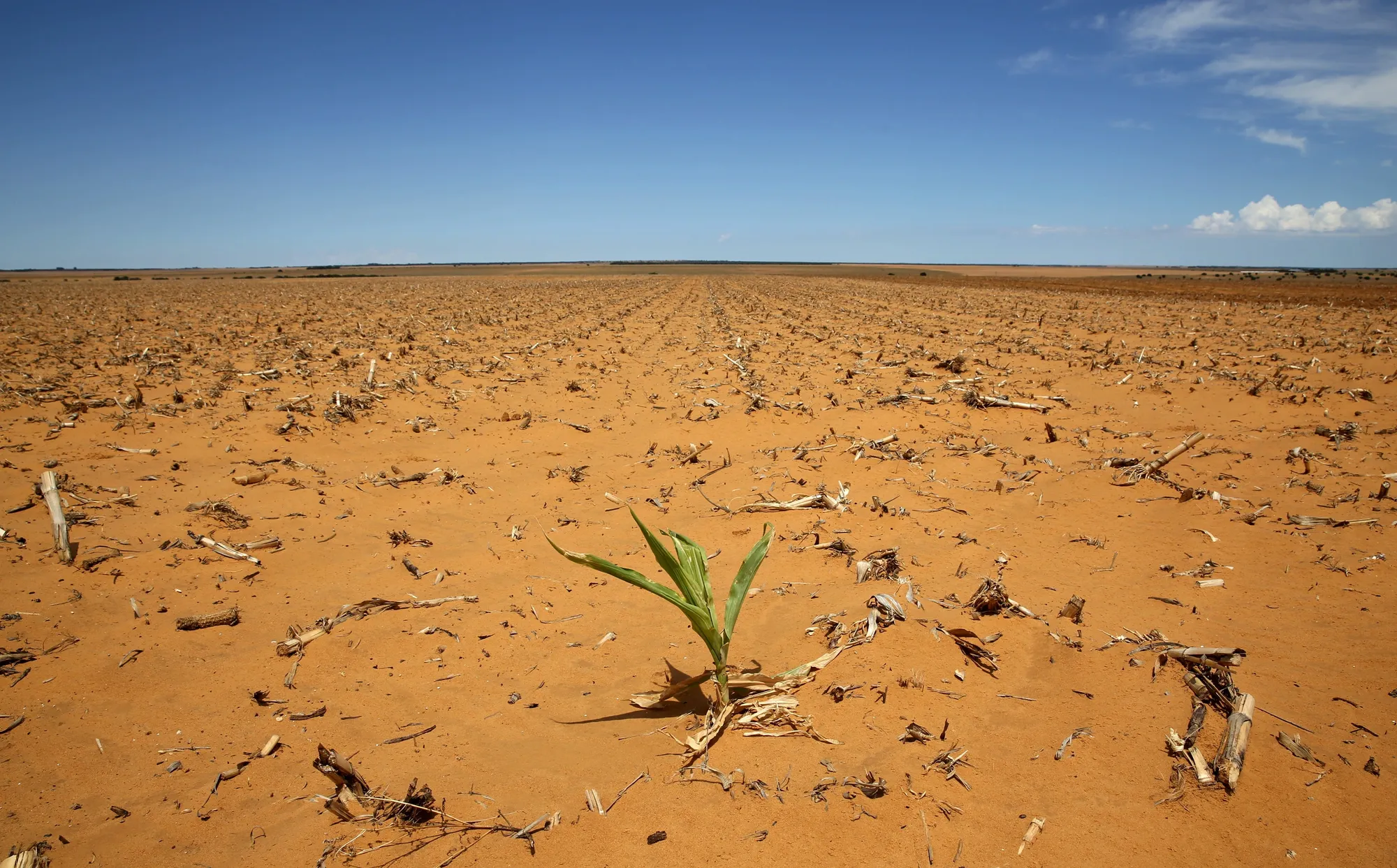
Natural disasters also play a significant role in forced displacement. Between 2000 and 2020, there were more than 1,100 recorded natural disaster events in the two decades, affecting over 330 million and killing nearly 50,000 people.5 These events tend to interact with regional conflicts and affect the most vulnerable peoples. For example, famine due to drought in Somalia killed nearly 20,000 people in 2010. But it also occurred in a region most affected by the civil war, making it even more difficult for many to flee. Floods, locusts, and other factors can severely affect agriculture production, leading to extreme poverty and famine. These events are characterized by their capacity to affect sizable population groups, displacing large numbers of people simultaneously.
Not every natural disaster has such a temporal impact. Globally, malaria creates nearly 240 million clinical visits and kills over 600,000 people each year. Ninety-five percent of those are in Africa! The most vulnerable are children, pregnant women, senior adults... and migrants coming from areas with little immunity.6 The Ebola epidemic in West Africa from 2014 to 2016 resulted in over 11,000 deaths, created 30,000 orphans, and displaced unknown thousands of people.7 It has been suggested that measles may have killed twice as many people during the same period.
Much like a drought-induced agricultural failure, illness and death are factors that can dramatically change family financial situations and can thus create involuntary movements. They may be as simple as family relocation, but the effects can be profound. And as in cases of conflict, these become movements for survival. Those with the resources to move will become mobile. In the end, it becomes a choice to either escape or perish.
A key component of forced displacement is recognizing that many people will ultimately seek to return home, assuming that the conditions that caused them to leave have been resolved. Their movement was involuntary by nature, meaning that short of the crisis, they had more reason to stay at home than they did to move. However... in many cases... the movement expands their view of the world (globalization). They discover the capacity to have a better life in a new location than they would have had in their place of origin. I remember speaking to a migrant who had evacuated New Orleans during Hurricane Katrina. They were living in Houston and did not plan to return. When I asked them why, their response was provocative. They said, “I was poor when I left New Orleans. If I have to start over from nothing, why would I not do that here, where there is at least an opportunity.”
At times, forced displacement can initiate migratory movements that go far beyond the initial crisis. Involuntary relocations can easily transition into voluntary movements with little time for transition. Sub-Saharan people often claim asylum and seek refugee status at European entry points. In the beginning, they were indeed forcibly displaced from their homes. They sought a place of safety in another city or perhaps a neighboring country. But they kept moving. Their voyage to Europe was not to seek protection but rather an economic gain. As you may tell, this entire conversation can quickly become complicated… and entirely political!
Human Trafficking
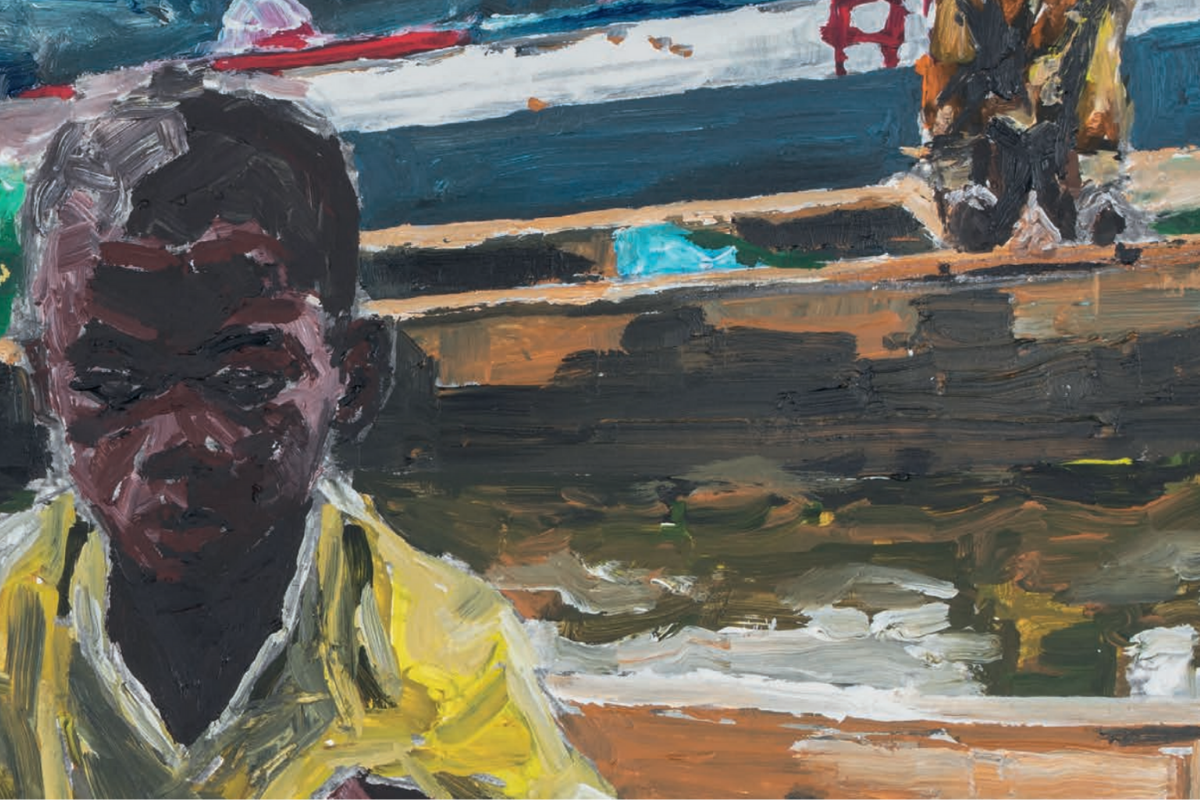
Human trafficking is a form of forced displacement that deserves a post all to itself. Few would voluntarily become a slave to either sex or labor traffickers. And yet many fall into this trap every year. Victims of this crime may have started their journey as voluntary migrants, simply seeking a better life through work or education. Along the way, however, they become victimized and now find little means of escape.
According to the United Nations, human trafficking is defined as "the recruitment, transport, transfer, harboring, or receipt of a person by such means as threat or use of force or other forms of coercion, abduction, fraud or deception for the purpose of exploitation.”8 The International Labor Organization (ILO), an agency of the United Nations, estimates that trafficking generates over 150 billion dollars each year. This makes it highly profitable for criminal networks, rendering it unimaginably challenging to control.
In 2020, human trafficking was predominantly a crime against women. Five of ten trafficked persons were women; an additional two were girls. A third of all trafficked persons are children.9 The poor are the primary targets. The recent COVID pandemic has exasperated the economic plight of many underdeveloped countries, raising the trafficking risk for the impoverished. Migrants, particularly those who are undocumented, do not enjoy local law enforcement protection. As such, they are at greater risk of being trafficked. For example, in Southern Europe, some 60% of all trafficked persons are undocumented migrants.10
As with all migration statistics, it is impossible to know the actual depth of trafficking numbers. The ILO reported that there were 40 million globally trafficked persons in 2016. Twenty-five million were either labor or sex trafficking victims. Another fifteen million were victims of forced marriage. More than one in five originate from Africa.11 Among sub-Saharan Africans, the situation is somewhat unique. While globally, a third of all trafficked victims are children, that number rises to 60% in Africa.12 In West Africa, the number rises yet again to nearly 75%. These children are forced to do either farm labor, domestic work, or beg on the streets.
In sub-Saharan contexts, most of the victims of trafficking are from the same region. In other words, trafficking victims found in West Africa are generally not very far from their places of birth. The same is true in East and Southern Africa. Once again, these victims are predominantly children... or women who have been forced into marriage. This situation changes, however, as one moves North. In the Maghreb, 37% of trafficked victims are from sub-Saharan Africa. These are primarily migrants seeking passage to Europe. Many become trapped in places like Libya as they are pressed into forced labor.
It is here in North Africa where many migrants encounter European criminal networks… who create pathways across the Mediterranean… for a price. Upon arrival, they are forced to repay their debts by working on the farms or in the sex industry. Eastern European criminal networks are deeply embedded in Southern Spain, reported in 2011 as the world's third-largest capital of prostitution, behind Thailand and Puerto Rico.13 Spain's domestic sex trade is annually a 27 billion dollar industry, with over 300,000 workers. Up to 90% have been trafficked. Italy has long-standing connections between local and Nigerian mafias, where the situation may be worse.14
Conclusion
I recognize that this post has been chiefly statistical data. For that, I apologize. I pray that the effect has made the reader grateful for their own circumstances while at the same time burdened by the pain and difficulties of others. It is easy to look at a migrant and offer an opinion on what we think they should be doing with their lives. Often, those who have come the furthest have the deepest scars. Most have lost everything and are simply trying to survive. Many are victims of modern-day slavery and have few options to escape.
It is here that the church can have her most significant influence. As individuals, we are rendered mostly powerless against the elements that create forced displacement. Conflict, natural disasters, and even criminal networks are beyond our ability to change. The victims of these events, however, often live in our neighborhoods. Christian organizations and churches can serve in the refugee camps and among the masses of displaced peoples. It is here that we can share the love of Christ freely. And in so many respects, those we take under our wings are receptive to our love and our message.
___________________
1UNDESA, World Population Prospects 2019 Vol. 12019. 10. Informal estimates place the number much higher, at perhaps 50-80%.
2 ReliefWeb, "32 Million Africans Forcibly Displaced by Conflict and Repression", United Nations Office for the Coordination of Humanitarian Affairs (OCHA) https://reliefweb.int/report/world/32-million-africans-forcibly-displaced-conflict-and-repression (accessed March 22, 2022).
3 Diana Cartier, Mali Crisis: A Migration Perspective (Geneva: International Organization for Migration (IOM), 2013).
4 M. McAuliff; A. Triandafylidou, World Migration Report 2022 (Geneva: International Organization for Migration (IOM), 2021), 68.
5 Disasters in Africa: 20 Year Review (2000-2019), (Brussels: Centre for Research on the Epidemiology of Disasters, 2019).
6 See "Malaria’s Impact Worldwide", Centers for Disease Control and Prevention https://www.cdc.gov/malaria/malaria_worldwide/impact.html (accessed March 22, 2022). See also World Malaria Report 2021, (Geneva: World Health Organization, 2021), xv-xvi.
7 "2014-2016 Ebola Outbreak in West Africa", Centers for Disease Control and Prevention https://www.cdc.gov/vhf/ebola/history/2014-2016-outbreak/index.html (accessed March 22, 2022).
8 United Nations, United Nations Convention against Transnational Organized Crime and the Protocols Thereto (Vienna: United Nations, 2004), 42.
9 UNDOC, Global Report on Trafficking in Persons (Vienna: United Nations Office on Drugs and Crime (UNODC), 2020), 9.
10 Ibid., 10.
11 Global Estimates of Modern Slavery: Forced Labour and Forced Marriage, (Geneva: International Labour Organization, 2017), 9-12.
12 UNDOC, 82-85.
13 Annie Kelly, "Prostitution Is Seen as a Leisure Activity Here: Tackling Spain’s Sex Traffickers", Guardian https://www.theguardian.com/global-development/2019/may/11/prostitution-tackling-spain-sex-traffickers (accessed March 22, 2022).
14 "Nigeria: Human Trafficking Factsheet", Pathfinders Justice Initiative https://pathfindersji.org/nigeria-human-trafficking-factsheet/ (accessed March 22, 2022).