20 - Principle Three: No One Moves Alone – Criminal Networks
2022 No 20
Then some Midianite traders passed by, so they pulled him up and lifted Joseph out of the pit, and sold him to the Ishmaelites for twenty shekels of silver. Thus they brought Joseph into Egypt.
–Genesis 37:28
It is a dream come true. COVID is over, and you can now travel again. Your vacation to the Sun Coast of southern Spain has become a reality. The fruits and vegetables are not like the wax imitations you purchase at the grocery back home. They are fresh! And cheap! Every meal is prepared with the most amazing olives. It is an absolute culinary paradise. At the hotel, there is staff to attend to your every need. For you, it is a vacation into the land of luxury and the life of royalty. What you don’t realize, however, is that you are at ground zero in the world of human trafficking. In most parts of the world, luxury for one is provided by the servitude of another.
While there are some technical definitions of human trafficking, it may be most simply understood that “human trafficking involves exploiting men, women, or children for the purposes of forced labor or commercial sexual exploitation.”1 It is a terrible plague upon humanity, and it exposes the very depths of depravity. There is not any way to cover the topic in a post such as this, but we must try. Why? Because it plays a significant role in African migration, particularly in Southern Europe.
The Scope of Human Trafficking
Human trafficking is a criminal activity that treats people as commodities. People can be sold for as little as 35 dollars or as much as 23,000 dollars.² Half of all victims are trafficked for sexual exploitation, the remaining 38% for forced labor, 6% for forced criminal activity, and the remaining 1% for begging.3 In some regions, entire networks are built around the selling of babies and the harvesting of organs for transplants. Globally, for every ten people trafficked, five will be women, and two will be young girls.4 The industry will generate over 150 billion dollars each year, with two-thirds in the domain of sex trafficking.5 That is more than Pfizer, Coca Cola, Nike, and Tesla... combined!6
In Africa, the numbers are skewed a bit differently. There, only one in five are in the illicit sex trade. The remainder, some 3.7 million people or 75%, are in some form of forced labor at any given time. The profits amount to 13.1 billion US dollars annually.7 Over half of all trafficked persons in Africa are children.8 Boys outnumber girls as they are put to work in the farms or used as child soldiers. Among adults, women outnumber men and are typically involved in domestic service and sex trafficking.9 As we shall soon see, however, the statistics get muddy in the transition zones of North Africa and Southern Europe.
The Involuntary Nature of Human Trafficking
If you remember from the last post, human smuggling, and human trafficking are both illegal activities. The former (smuggling) is unlawful because it assists people to do something prohibited, that is, entering another country without proper authority. But they do so of their own choice. The latter (trafficking) is illegal because it forces people to do something that they do not want to do. Human trafficking is involuntary by nature. Such is why the terms “human trafficking" and “modern slavery” are often used interchangeably.10
As we will see in later posts, the road from being a migrant, to being a smuggled person, to being a trafficked person can occur in a very short distance. Consider the following example. Yousef knew he needed to leave his home village to find work. The journey on a bus to Dakar was easy. He bought a ticket and stayed with his uncle. With that one move, he became a migrant. But things were not easy in Dakar. He had always heard about life in Europe, and one day his uncle’s brother called from France. He was told that he could help him find a job if he could only get to Paris. But he would have to do that on his own. With little effort, Yousef found a man on FaceBook who offered to help people get to Europe for $3,000.
So, he called his family back home and told them of this exciting opportunity. If he could get there, he could pay back the money and begin to support his family. He would then be like other sons in their community. With high anticipation, they sold their farm and sent him the money. Yousef connected the man for help and paid him the money. With that one move, he became a smuggled person. The day was soon upon him when he left Dakar, traveled to Mali, through Niger, across the desert, and into Libya.
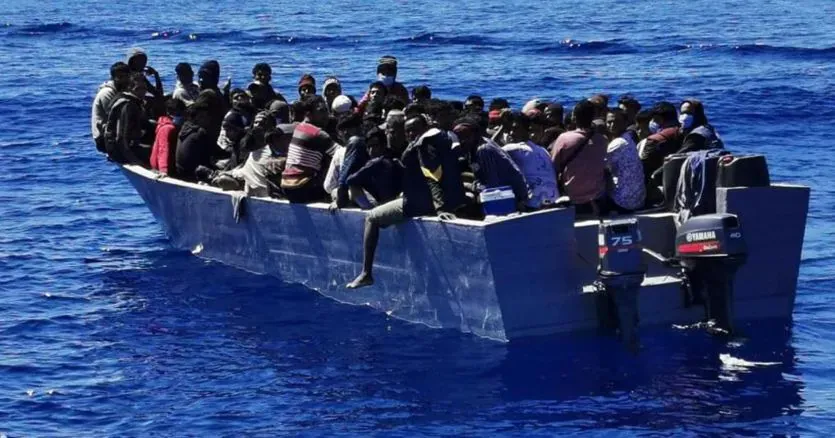
Only there, things did not go as planned. The people who would put him in a boat to cross the Mediterranean wanted more money. They said that he owed them an extra $2,000. When he told them that he did not have that much money, they demanded that he call his family. But they did not have any money either. Thus, to pay off his “debt” and to hope for a chance to cross into Europe, he had to go to work for them on a construction project. He was now a trafficked person.
One might think that trafficking is a crime of opportunity that begins in distant places like Libya. In reality, smugglers are often traffickers in disguise. They promise something to willing participants to get them to begin the journey. They know that once people leave home, there is no turning back. They promise men passage to Europe but do not tell them that they will wind up in forced labor camps. They promise women jobs in the tourist industry, but they do not tell them that it will be prostitution. By the time they realize what is happening, it is too late.
The Networks Behind Human Trafficking
It is somewhat naïve to think that this kind of exploitation can be avoided, simply by paying attention and being careful. Such can be very difficult. It is unfortunate, but, most people are sold into slavery by those they trust the most. In Africa, the majority of trafficked persons are children. Most were either sold or given to others by their parents for some form of compensation. Recruiters travel from village to village, promising work for the children and a financial return for the family. As one might imagine, those from the poorest countries surrender their children in the highest numbers.11 Many are never seen again as they are exported to other regions of Africa.12
As we have noted in an earlier post, there are religious networks that facilitate movements. Unfortunately, some faith leaders also serve to recruit members, primarily women, for organized crime networks.13 Many of the recruiters work to manipulate the poverty and religious aspects together. They will target young women with the promise of work in Europe and are then press them into obedience by the manipulation of their traditional religious beliefs.14 The women are offered jobs and must borrow the money to make the journey.15 They then swear an oath to the spirit world that they will repay the money and obey their new "employers," or evil things will happen to them or their families. Only later, do they realize that they have been recruited into the sex industry.
Social media has also played a significant role in human trafficking. Today, people can be recruited, efforts coordinated, and obedience maintained through online social networks. One recent study of human trafficking survivors revealed that one in four participants were exploited through their social media accounts. Seventy-five percent used internet platforms while they were being trafficked.16 For many traffickers, social media has opened doors to victimize an entirely new audience of vulnerable persons.
The Consumers of Human Trafficking
In the end, trafficking is about making money. Those who traffic people do so because it is profitable. Victims are treated like commodities, but they, as individuals, are uniquely different. Everything else, once it is sold, is consumed. People, on the other hand, continue to generate revenue. As such, they are exploited until there is nothing left. The sad part is that these networks would not exist if not for the insatiable desires of the rest of the world.
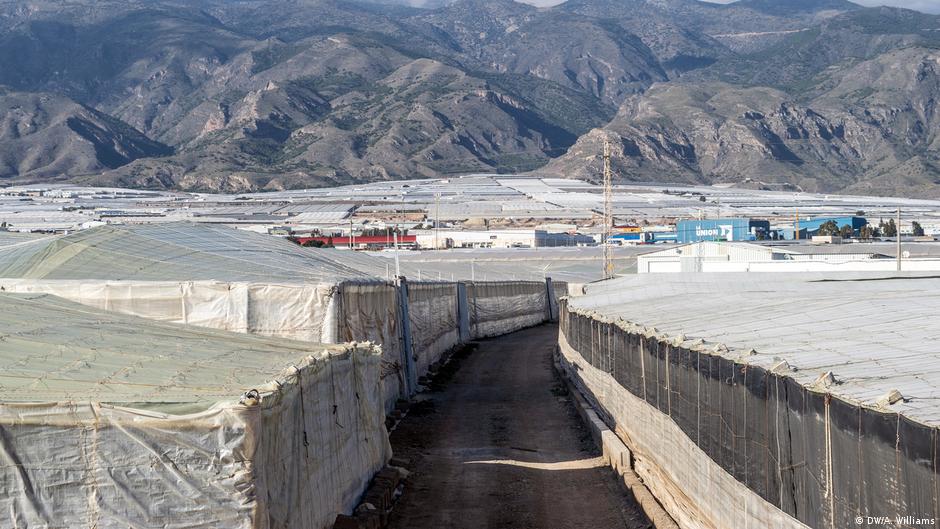
Take our vacationer, for example. The strawberries he is enjoying were grown just down the road. Spain is a major producer of fruits and vegetables, mostly grown under the plastic of greenhouses. And who are the workers… illegal labor migrants. The farmers hire them because they cost a fraction of what legal workers would cost.17 The women cleaning his room are also labor migrants. They are working for pennies to pay back the exorbitant debts charged by their handlers. Behind the scenes are the prostitutes. Spain hosts the world’s third-largest sex trade, after Taiwan and Puerto Rico.18 Many of these trafficked women serve the tourist industry, but a large number are also there to service the working men… at five euros an encounter.
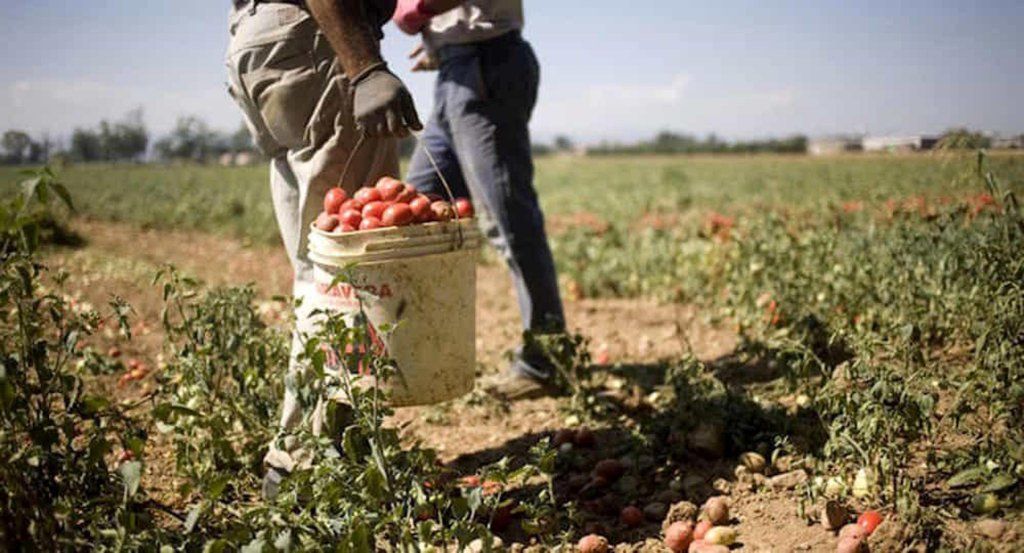
This is just one place in Spain, but the story is repeated in places like Italy, Greece, Turkey, and Cyprus. And while legal and even illegal migration may comprise the most significant percentages of moving people, few suffer as much as this group. The others do what they do voluntarily. But this group is held against their will, is trapped in their context, and has little opportunity for escape.
Conclusion
As one might imagine, trafficking networks operate in the darkness and generally in places where the church has little access. Those in bondage are held at a distance from anyone who might offer a word of hope or may have a message of God's love. And yet they are not forgotten. God is moving among them in powerful ways, and He creates ways for people to find Him. Joseph was sold into slavery by his brothers. He faced a terrible life of servitude. And yet, God honored him for his faithfulness and used others to help lift him out of prison. When it was all over, he could look back and see God’s hand. But rest assured, he must have had some dark days along the way.
We live in a different world than ancient Egypt. Much of modern human trafficking occurs in developed countries where resources exist to end the practice. Those responsibilities fall upon the shoulders of governments and businesses. They also happen in places where the local church can minister, serve, and stand ready to assist with recovery. Of all the migration networks, this one is perhaps the most evil and carries the greatest risk for all involved. As such, we pray that God will work in supernatural ways to shut these networks down.
____________________
1Human Trafficking Vs Human Smuggling, (Washington D.C.: United States Immigration and Customs Enforcement, 2017).
2 UNDOC, Global Report on Trafficking in Persons (Vienna: United Nations Office on Drugs and Crime (UNODC), 2020), 47.
3 Ibid., 10.
4 Ibid., 9.
5 2021 Trafficking in Persons Report, (Washington D.C.: Office to Monitor and Combat Trafficking in Persons, 2021). See also Channing May; Christine Clough, Transnational Crime and the Developing World (Washington D.C., 2017), xii.
6 "Fortune 500 List of Companies", Fortune Magazine https://fortune.com/fortune500/ (accessed March 27, 2022).
7 See Charles C. Jalloh; Kamari M. Clark’ Vincent O. Nmehielle, ed. The African Court of Justice and Human and Peoples’ Rights in Context (Cambridge: Cambridge University Press, 2019). See also UNDOC, 95.
8 Victoria Mangelli, "The Issue of Human Trafficking in Sub-Saharan Africa", The Borgen Project https://borgenproject.org/human-trafficking-in-sub-saharan-africa/ (accessed March 27, 2022).
9 Nadine Liv, An Examination of a Potential Connection between the Trafficking of Women on the Darknet and the Financing of Terrorism: Trafficking Routes in Africa (2019), 13.
10 2021 Trafficking in Persons Report, 24.
11 Mangelli.
12 2021 Trafficking in Persons Report, 84.
13 Connect with Jason Lee on video.
14 EASO, Nigeria Trafficking in Human Beings (Geneva: European Asylum Support Office, 2021), 33.
15 2021 Trafficking in Persons Report, 27.
16 Alicia Marie Terwilliger, “The Role of Social Media in Human Trafficking Victimization” (Nova Southeastern University, 2021), 2.
17 See Anelise Borges; Natalie Huet, "Invisible Workers", EuroNews https://www.euronews.com/my-europe/2020/07/17/invisible-workers-underpaid-exploited-and-put-at-risk-on-europe-s-farms (accessed March 27, 2022). See also Andreane Williams; Nico Swanepoel, "Spains “Sea of Plastic”: Where Europe Gets Its Produce, Migrants Get Exploited", InfoMigrants https://www.infomigrants.net/en/post/15606/spains-sea-of-plastic-where-europe-gets-its-produce-migrants-get-exploited (accessed March 27, 2022).
18 Annie Kelly, "Prostitution Is Seen as a Leisure Activity Here: Tackling Spain’s Sex Traffickers", Guardian https://www.theguardian.com/global-development/2019/may/11/prostitution-tackling-spain-sex-traffickers (accessed March 22, 2022).