34 – Drug Runners
2022 No 34
The LORD protects the strangers; He supports the fatherless and the widow, but He thwarts the way of the wicked.
—Psalm 146:9
Along the Central Route, there are migratory pathways in the shadows, and then there are pathways that are deeply covered by darkness. You cannot separate human trafficking from other forms of illegal activities. Much of North Africa is in conflict, and the sale and trade of arms are very lucrative. Most of the illicit drugs that enter Europe pass through North Africa, including opiates from Asia, cocaine from the Americas, Cannabis from the Maghreb, and synthetic drugs from sub-Saharan Africa.1 Globally, these activities generate nearly a trillion dollars in profits annually.² How much of this transit through North Africa is very difficult to estimate. Suffice it to say that the amount of money is staggering.
The difficulty in a series such as this is that it becomes easy to lose the larger view, i.e., the forest, as you spend time at ground level among the trees. For some, watching the following video on migration may be helpful. It is a bit dated, but it provides an excellent context.3
After you have watched that video, let me encourage you to watch another in the same series.4 It will take some time to view both, but they clearly help to set the stage for what follows.
Drug Runners
I have titled this blog "Drug Runners" because I want to discuss an element of the Mediterranean crossing that is seldom in the news or any official reports. We know that a vast source of European drugs and many trafficking victims originate in Africa. How they get from North Africa to Southern Italy is often lost in the conversation. Obviously, they are being brought across the Mediterranean in various ways, but the mechanics of those operations remain shrouded in darkness.
Over the years, we have heard stories from migrants about the conditions they faced on Libyan beaches. As we will see in a future post, it is not unusual for migrants to craft their histories in a way that would best benefit them as they seek asylum. But some of these stories seem consistent and, in some ways, run counter to the economics of smuggling. Remember that smugglers are in the business of selling a product, and success is their best advertisement. The stories we have heard seem to work against the smugglers. But, if our position is valid, it plays directly into the hands of the traffickers.
Many of those reports come from the early days of the European Migrant Crisis. The goal was simply to get 12 nautical miles off the Libyan coast, where rescue ships were waiting to pick them up.5 In those days, the migrants would get into rafts and were given enough fuel to enter international waters. Distress signals were then sent out, and any vessel in the vicinity was required by law to assist with the rescue.6 That included naval and coast guard assets, and of note… those who were tasked with drug interdiction.
One of the reasons for the suspension of Operation Mare Nostrum was to eliminate the volume of boats being launched from African beaches and to place the responsibility for their interception and rescue on the shoulders of the Libyan Coast Guard.7 It was replaced by Operation Triton (2014), followed by the Italy-Libya Memorandum of Understanding (2017). This would free Italian assets to resume their patrols for the drug runners, only in their own territorial waters. However, EU's Frontex was still patrolling the Mediterranean, and international law still requires that any available vessel assist another vessel in distress, so the smuggling strategy remains in place. Only now, rescues are focused on larger vessels and with more migrants per event.
Returning to trafficking, it is crucial to recognize that drugs are not the only "commodity" being transported by these covert operations. The demand for labor and sex workers remains high in southern Italy. If these women were sent through traditional smuggling pathways, traffickers would lose control when they were processed by government agencies. They would simply report their abduction and escape. Therefore, the migrants must be brought across independently from North Africa in the boats with the drugs. And while there are literally no statistics on the numbers making the crossing in this manner, the number of African prostitutes and farm laborers in Italy leads one to conclude that the volume of boats must be significant.
If you have watched the above video, you can see that drug interdiction measures in the Mediterranean are strong. This challenge has created a need for ways to avoid detection. One strategy arises that helps to explain the reports we have heard from migrants. The mafias would organize a series of migrant launches from one part of Libya. While the authorities were conducting rescue operations, they would then launch their drug boats from another region and have an open pathway to Italy. In other words, they were using the migrants as cover for their illicit movements.8
Making it even more challenging to discern the details, those transported in this manner are often inaccessible to interview. They are almost always under the control of their handlers, and even attempting to talk to them can raise severe risks for both the migrant and the outsider asking questions. We have heard multiple reports of researchers being threatened by armed mafia workers when migrants were approached. We also know of at least one ministering to prostitutes who was told she would be killed if she returned. In her context, it was not an empty threat.
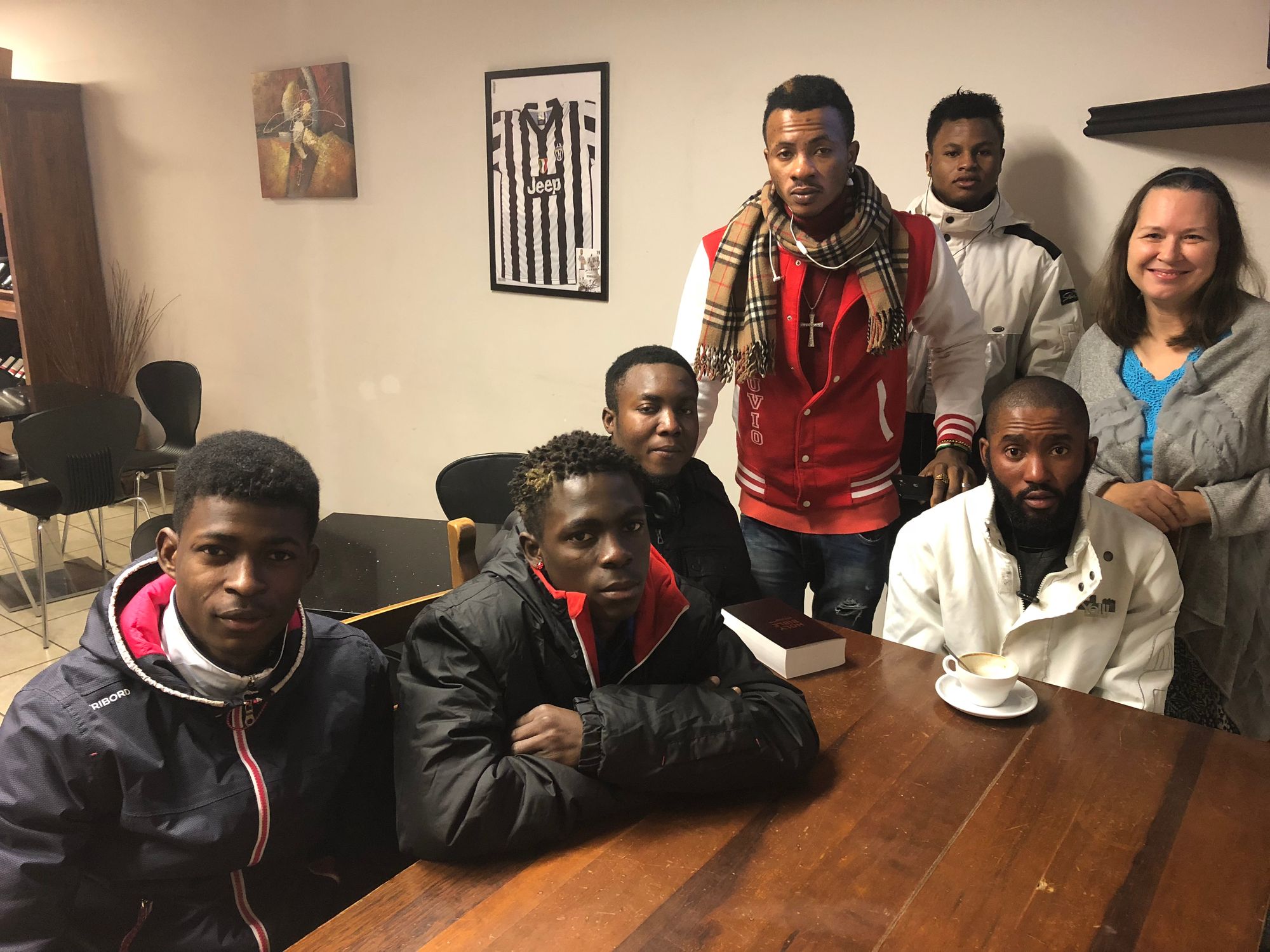
However, the testimonies of those migrants sent out as potential cover for the drug runners abound. We had the opportunity to visit six young African migrants awaiting their asylum applications in central Italy. They told the story of having become stranded in Libya. Each had worked on various construction projects as they sought to raise enough money for a boat to Italy. This part of the story is not unusual, as it could easily be repeated thousands of times by those who made it to Libya and ran out of money.9
A Unique Migrant Story
One, whom we shall call Oumar, shared that he was in Tripoli, working on a construction project. As the work was nearing completion, the owners announced to the workers that there was an opportunity to secure a boat in about six months at a discounted rate. The cost was only $500, and they would take the money from their wages over time. Oumar and others agreed to the plan and began preparing for the trip. It seemed almost too good to be true. The typical cost of a trip was $1,500.
A week before the departure, those organizing the boat announced that the price had gone up to $700. Those who could not come up with the extra money would not be allowed on the boat, and… they would lose the $500 that had been withheld. Needless to say, everyone was scrambling to find the extra money. Some had it saved; others called their family back home. Most found a way to get the money, but it was obvious that this had been the smugglers' plan from the beginning. Already, Oumar felt cheated.
When the night of departure came, Oumar was taken to a dark beach some fifty kilometers outside Tripoli. Five huge rubber rafts and hundreds of people were at the water's edge. He saw many women, children, and even babies. To his surprise, there were also many men with guns. Once everyone had arrived, people began to get into the boats. It was obvious to Oumar and everyone else that there were more people than the boats could hold. Soon the situation became very chaotic, as the smugglers began to push people into the rafts. At times, children were separated from their mothers, but the smugglers didn't seem to care.
There was a group of migrants who were refusing to get into a raft. It was obviously overloaded, and the men feared that the raft could not survive in the open ocean. They argued loudly, and the situation soon became violent. Suddenly, one of the smugglers pulled out a pistol and shot one of the men. As the others ran to escape, the men with rifles began to shoot them. Before it was over, five or six migrants had been killed. It was obvious to everyone on the beach that there were only two options. Get in the raft, or die on the beach. Oumar got into the raft.
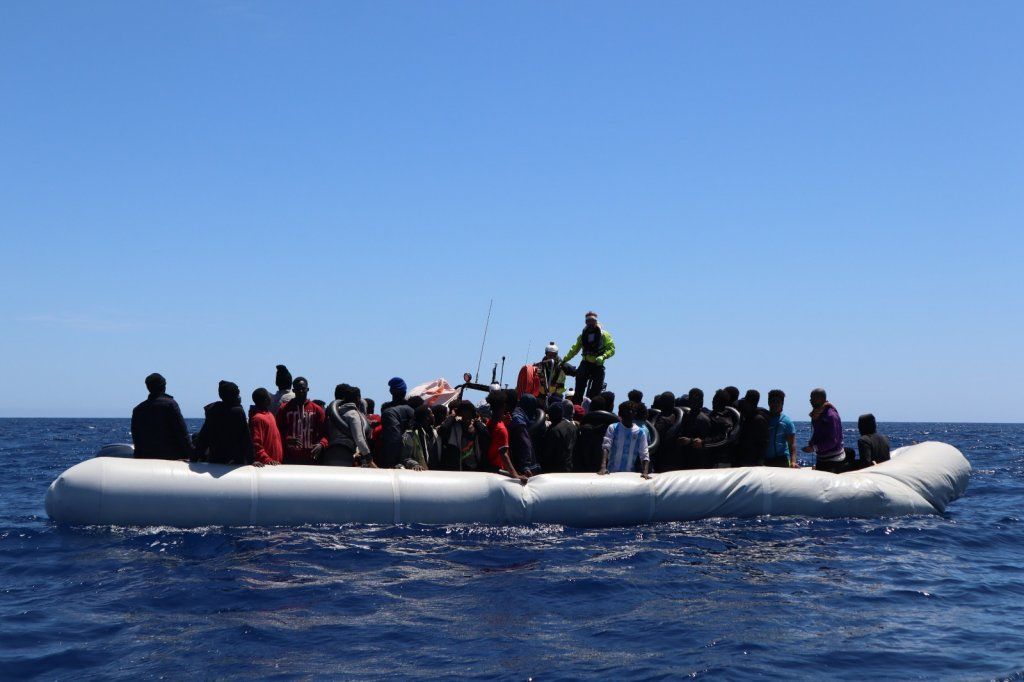
The smugglers told them to go as far as they could before running out of fuel. They were then to use a radio to call for help. When the rescue boats arrived, there was a risk that the boats would be towed back into Libyan waters and handed over to the Coast Guard. Unknown to most, men in each raft had been instructed to use knives to deflate the boats and force a rescue. Everyone was told that they would be rescued and taken to Italy.10
You can read Oumar’s story in any one of a dozen news articles of the period. Between 2013 and 2017, hundreds of rubber rafts left Libyan coastlines with little intervention by Libyan authorities. Many would make it into international waters, run out of fuel, and pray for rescue. Those in the articles were the ones that were found and rescued. Many capsized on the way out, with all lives lost. For others, either their radios did not work, or there was simply no one to receive their distress call. They, too, would perish.
Oumar shared that most of the rafts became quickly separated. His boat stayed close to another boat, and that is likely what saved their lives. He told us that once they were out in the middle of the ocean, they tied the two boats together and called for help. One radio quit working, so they had a second radio to keep calling. Soon they saw an airplane, which was followed by a military ship. As the rescuers approached, one of the boats began to sink as it lost air on one side. They put the women and children in the boat that remained afloat, and the young men got into the water and held on to the sides. They were fortunate in that no one had died in their boat. In total, there were 380 people in the two boats. He did not know what had happened to the other three.
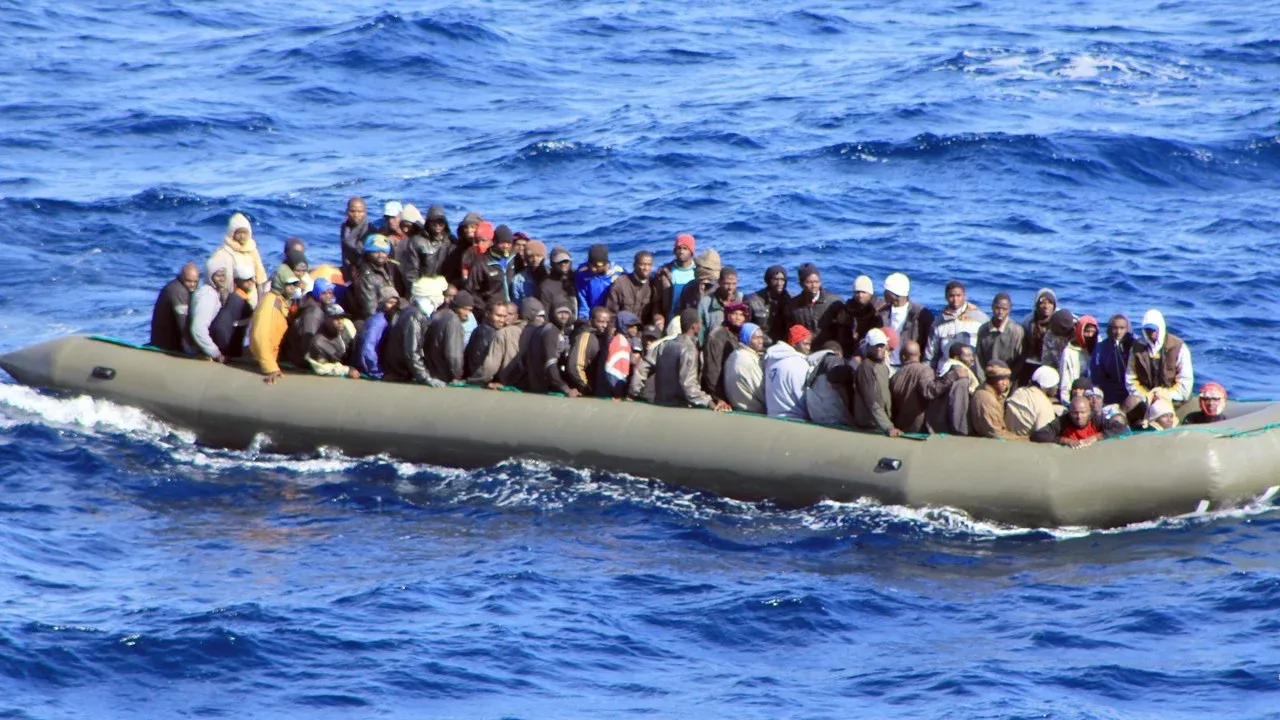
As for the drug runners, one can imagine this was all a part of their strategy. They collected $700 from each migrant that night, of which there may have easily been a thousand people. They then successfully transported their drug and human cargo into Italy while the rescue operations were taking place. The lives of those who were lost were inconsequential to them. They made money off the migrants and could move their products... drugs, and people without being detected.
Conclusion:
It would seem that human suffering is present in every trafficking context. The global drug trade generates as much as $650 billion each year.11 It victimizes 35 million people each year through addiction. The desire for cheap labor and sexual gratification leads to another 27.6 million people who are trafficked each year.12 It all flows from and through a dark underworld that seeks to corrupt and destroy any semblance of decency. At times, one might think that it is even beyond the capacity of our Father to address.
But such would be far from the truth. Our Father is actively protecting the stranger, loving those who suffer, and leading those in authority to confront those who are evil. Around the world, His church serves as His hands, feet, and voice in these dark places. She is fighting spiritual battles in these places of darkness through her prayers and the presence of the Holy Spirit among her members.
As I mentioned above, these corners of the world are so dark that even we cannot go there. But we meet pastors every day who live in these places. We ask that you stand with us, pray with us, and continue your support as we minister to these churches on the front lines.
1Giacomo Persi Paoli and Jacopo Bellasio, Against the Rising Tide: An Overview of the Growing Criminalization of the Mediterranean Basin, RAND Corporation (Santa Monica, 2017), 17-18, https://www.rand.org/pubs/perspectives/PE220.html.
2 Human trafficking is estimated to be a 150 billion-dollar-a-year enterprise. Drugs account for another $650 billion, while arms trafficking is yet another $100 billion. In truth, these numbers are challenging to estimate. For further information, see Trafficking in Persons Report: June 2021, (Washington D.C.: Office to Monitor and Combat Trafficking in Persons, 2021). See also Channing May, Transnational Crime and the Developing World, Global Financial Integrity (Washington D.C., 2017), xii, https://www.gfintegrity.org/wp-content/uploads/2017/03/Transnational_Crime-final.pdf. And, EU Drug Markets Report, 28 (Lisbon: EUROPOL, 2019). And finally, "Killer Facts 2019: The Scale of the Global Arms Trade," Amnesty International, 2019, accessed September 26, 2022, https://www.amnesty.org/en/about-us/contact/.
3 "The Shady Business of Trafficking Desperate Refugees," YouTube, Uploaded by ENDEVR, 2016, https://youtu.be/2kWRBmdUUZY
4 "Why Europe is Flooded with Drugs," YouTube, Uploaded by ENDEVR, 2016, https://youtu.be/skeeQOH8iFU
5 See "The Historical Context of Italy: All Roads Lead to Rome," M2M3, 2022, accessed September 26, 2022, https://m2m3.org/28-the-historical-context-of-italy-all-roads-lead-to-rome/. See also Elisa Vari, "Italy-Libya Memorandum of Understanding: Italy’s International Obligations" Hastings International and Comparative Law Review 43, 5, no. 1 (2020): 109, https://repository.uchastings.edu/cgi/viewcontent.cgi?article=1844&context=hastings_international_comparative_law_review.
6 Marika McAdam and Morgane Nicot, Issue Paper: Smuggling of Migrants by Sea, United Nations Office on Drugs and Crime (Geneva, 2011), 32, https://www.unodc.org/documents/human-trafficking/Migrant-Smuggling/Issue-Papers/Issue_Paper_-_Smuggling_of_Migrants_by_Sea.pdf. See also Kristiina Kangaspunta and Angela Me, Global Study on Smuggling of Migrants: 2018, United Nations Office on Drugs and Crime (Vienna, 2018), 40, https://www.unodc.org/documents/data-and-analysis/glosom/GLOSOM_2018_web_small.pdf. See also Persi Paoli and Bellasio, Against the Rising Tide: An Overview of the Growing Criminalization of the Mediterranean Basin, 31.
7 Paolo Campana, Human Smuggling: Structure and Mechanisms, Institute of Criminology, University of Cambridge (Chicago: Chicago University Press, 2020), 41, https://www.repository.cam.ac.uk/bitstream/handle/1810/304068/C&J 49__campana_accepted version.pdf?sequence=1.
8 Nourhan Azia, Paola Monzini, and Ferruccio Pastore, The Changing Dynamics of Cross-Border Human Smuggling and Trafficking in the Mediterranean, New-Med Research Network (Rome: Instituto Affari Internazionali, 2015), 42.
9 "The Horrors of Libya," M2M3, 2022, accessed September 26, 2022, https://www.m2m3.org/32-the-horrors-of-libya/.
10 "The Med Migrant Crisis and Defend Europe," CIMSEC, 2017, accessed September 26, 2022, https://cimsec.org/tag/mediterranean/.
11 EU Drug Markets Report, Short, 28.
12 Global Estimates of Modern Slavery: Forced Labour and Forced Marriage - 2022 Executive Summary, International Labour Organization (Geneva: International Labour Organization., 2022), https://www.ilo.org/wcmsp5/groups/public/---ed_norm/---ipec/documents/publication/wcms_854795.pdf.