33 – The Journey Across the Sea
2022 No 33
Leaving the crowd, they took Him along with them in the boat, just as He was; and other boats were with Him. And there arose a fierce gale of wind, and the waves were breaking over the boat so much that the boat was already filling up. Jesus Himself was in the stern, asleep on the cushion; and they woke Him and said to Him, “Teacher, do You not care that we are perishing?”
—Mark 4:36-38
Many things have changed since the massive movement of people from Libya to Italy in 2013. In those days, most who made the trip were migrant workers in Libya before and during the fall of Khadaffi. They were stable, had a measure of resources, and knew that returning to their sub-Saharan country of origin would not be profitable. In those days, Libyans themselves were seeking to escape the violence.1 Many were fishermen and willing to use their boats or skills on the sea to profit from what others would pay to make their way to Italy.
In those days, European Coast Guard and humanitarian organizations were rescuing anyone in distress. Most boats that left Libya were never intended, much less equipped to make the journey across the Mediterranean. Many were simply rubber rafts. Their goal was to get far enough offshore to be in international waters and then call for help. Those who were found would often be taken to the islands of Malta or perhaps Lampedusa (Italy). From there, they could claim asylum and ultimately be taken to Europe. The danger, however, was that your call for help may not be received. Often, boats would be lost due to overloading, rough water, or lack of navigational skills. It is unknown how many died, simply because it is unknown how many boats left North African beaches. But anyone making the journey considered the reward worth the risk, and smugglers were making a lot of money.
In 2014, Italy suspended extended patrols along the Libyan coast and prohibited humanitarian organizations from participating in rescue operations. It was a very controversial policy. The goal was to make the possibility of arrival in Europe much more difficult and thus reduce the capacity of the smugglers to "sell" a seat in a raft. The EU would only patrol in Italian waters and left distant rescue operations up to Libya. However, all this did was push migrants into larger boats that could then journey further into EU waters. Malta was less than 225 miles, and Lampedusa was less than 300 miles from Libyan beaches. The result was that the scale of the tragedies increased by horrific proportions.² Many migrants, not understanding the distance they would need to travel, still paid for seats in rubber rafts. The chances of success were very low. But from the smuggler's perspective, once they collected the money, the lives of the migrants were inconsequential.
The Next Leg of the Journey
Mamadou faced such a situation as he paid the smugglers nearly $1,500 for the next leg of his journey. After Abdoulaye left, Mamadou's father wired the money necessary to pay his debts and secure a seat in a boat.3 He was told he would be on one of the next boats, but they could not leave until the weather, and the sea was calm. They also had to wait for the right time to slip by the Libyan Coast Guard. Rumor was that people in the government had been paid to allow their passage.
As he paid his Libyan handler, he was given more information about the process. The boat would leave at night to avoid being spotted by the coast guard. The goal was to get close enough to Malta that the authorities could intercept them. If all went well, they could make the trip in less than 20 hours. Once on the island, they would have an interview with authorities to request asylum. Mamadou was told to create a story about how he had escaped jihadists in Northern Mali and had fled to Libya for safety. His contact instructed him to avoid speaking about Bamako, or his case could be denied. In Mamadou's mind, however, his uncle lived in Italy. All he wanted to do was to get to Rome, and he would take care of him.
The time of departure came with very little notice. Some men came to his room and told him to get ready. He could only pack a few things and needed to leave within the hour. Remembering the trip across the desert, Mamadou left everything and took only some bread and as many small bottles of water as his bag could carry. On the one hand, he was excited about the trip because he knew it was the only way to get to Europe. On the other hand, Mamadou was anxious. He had heard stories of those who had been captured by the Libyan Coast Guard and returned. He had also heard of those whose boats had sunk and the many who had drowned. Having grown up in Bamako, he did not know how to swim, and getting into a sea of water was very different from a sea of sand.
Chaos on the Beach
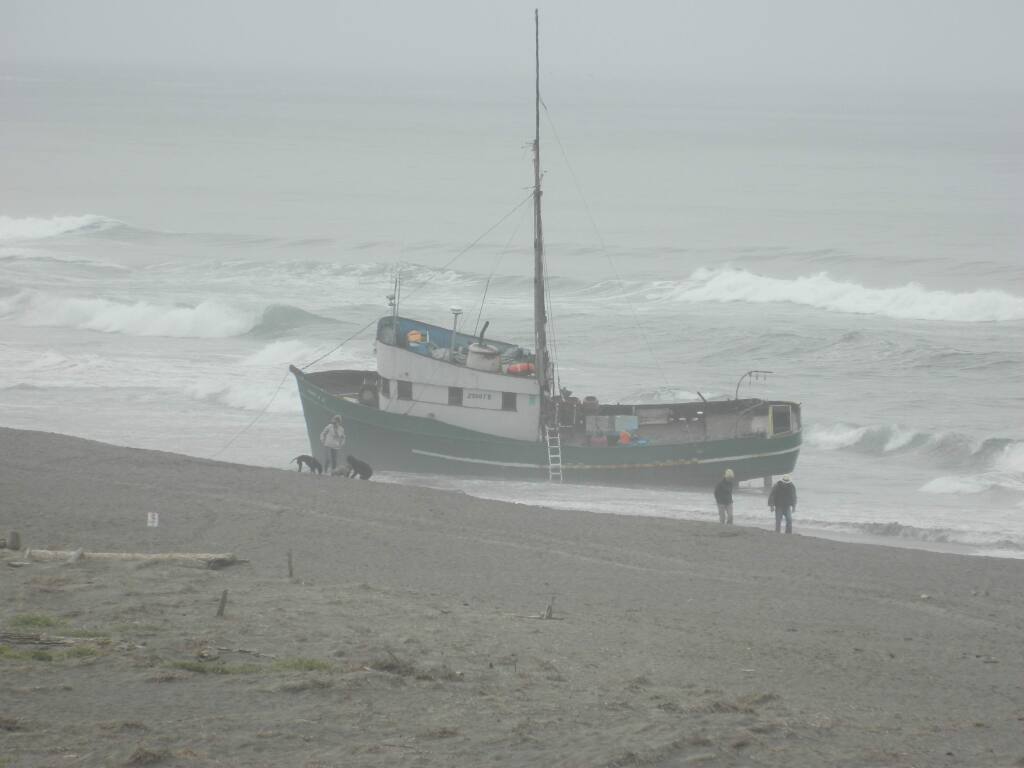
When they arrived at the beach, he only saw one boat. It was an old fishing trawler about 20 meters in length. Although he had never been on a ship before, it seemed too small for the black ocean in the background. It certainly seemed to be too small for the number of people on the beach. Even in the dark, it looked like there were more than a hundred people. And yet it seemed that everyone was getting into the one boat. Those who entered first went below the deck. He didn't know how many were down there. He overheard someone saying that those who had paid less had to be at the bottom of the boat. Some of them had only paid $400. Like himself, others who had spent more would be on the top, where there was air to breathe. For that, he was grateful.
There were many people from many different places. He could hear their languages but did not understand what they were saying. But he did know that they were afraid. Perhaps like himself, this was the first time they had been in a boat. Some were crying, while others were arguing with the Libyans. One man refused to get into the boat and demanded that they give him his money back. One of the smugglers hit him so hard with his gun that the man fell and didn't move. Mamadou thought he was dead, but others carried him into the boat.
Soon it was time for Mamadou to get into the boat. He was afraid and had second thoughts. But after seeing what had happened to the other man, he did as those on the beach told him. He was towards the front of the boat, where at least he could get some fresh air. Others were in the back, and the smoke from the engine would become trouble for them later on. There were no life jackets, and they told everyone to find a place to sit. One of the smugglers said to them that they must stay where they were seated. If everyone moved too much, the boat could turn over.
Into the Sea
Mamadou had his doubts when they finally left the dock. It was apparent that the ship was too heavy. Although the motor was running at full speed, they were not going very fast. The sea was calm, so the ride was smooth. There were no lights on the boat, and he watched the dark horizon for any approaching lights. He knew their greatest risk at this point of the journey was to be captured by the Libyan coast guard. If that happened, everyone would lose their money, but even worse, the police would likely send them to prison camps.
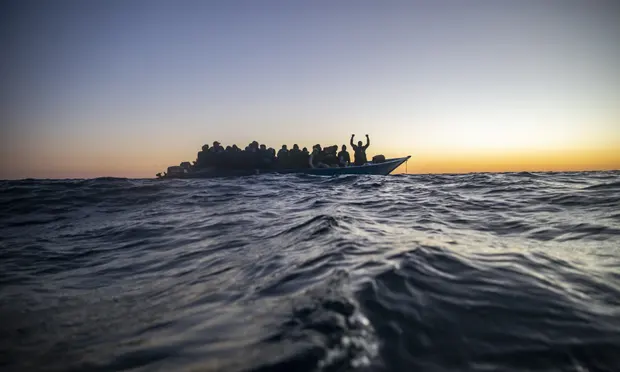
After a couple of hours, the lights from Tripoli faded, and when the sun finally came up, they could not see any land. The man steering the boat was a Somalian fisherman. The waves were not big, but it was still a rough ride. He must have known the sea because he had a way of going through the waves in a way that kept the boat from rocking too much. Everyone on board, however, was becoming very ill. Those on the edges had the advantage of throwing up over the side. Everyone else was just sick where they were. The same was true for using the restroom. Before long, the odor was unbearable, and it was hard to remain seated on the deck. The only relief was when they hit a big wave, and water washed into the boat. Mamadou could only imagine what it must have been like below the deck.
As the day progressed, the sun became hot. Most everyone had drunk all the water that they had carried with them. Mamadou was being careful, consuming as little as possible. Even so, he was down to only two bottles when the engine stopped running. It had been blowing black smoke for several hours, and many in the back struggled to breathe. For them, it was almost a relief when the motor stalled. But it was only then that Mamadou could hear the cries from below. Their moans... and often wails... were unimaginable. The memory of their voices haunted him for weeks after their rescue.
They would be rescued, but not for another eighteen hours. The captain could not restart the motor, and those with cell phones had tried to call for help. Not surprisingly, there was no signal. The plan had been to be much closer to Malta, where the phones would work. While they waited, those in the worst shape below deck were brought to the top. There wasn't much room, and everyone was careful not to move too quickly or shift the weight to any one side. Mamadou thought there were over a hundred on the top deck, and he was told there were nearly seventy-five below deck.
Rescue
They spent the rest of the day and all of the following night floating in the Mediterranean. The seas were relatively calm. Had they not been, the boat would have surly capsized. The next day, an airplane flew overhead. They watched as it turned around and came back, flying low. Many thought that it was the Libyans and cried out in fear. At that point, Mamadou would have been grateful to see anyone. Soon a boat appeared on the horizon, and before long, they could read the words "Coast Guard" painted on the side. It was Frontex. They launched a small boat that came alongside their stricken vessel.
The rescue took several hours but was very organized. The seas were calm, and there was time to give everyone a life jacket. One by one, they transferred people from the fishing boat to the larger cruiser. Everyone was given water to drink, and doctors were there to care for those who were sick. The man who had been hit in the head had, in fact, died.4 As they transferred his body to the boat, Mamadou was impressed with the care and respect he was shown. In fact, Mamadou was impressed with how everyone was treated. He felt human again for the first time since he had left Bamako.
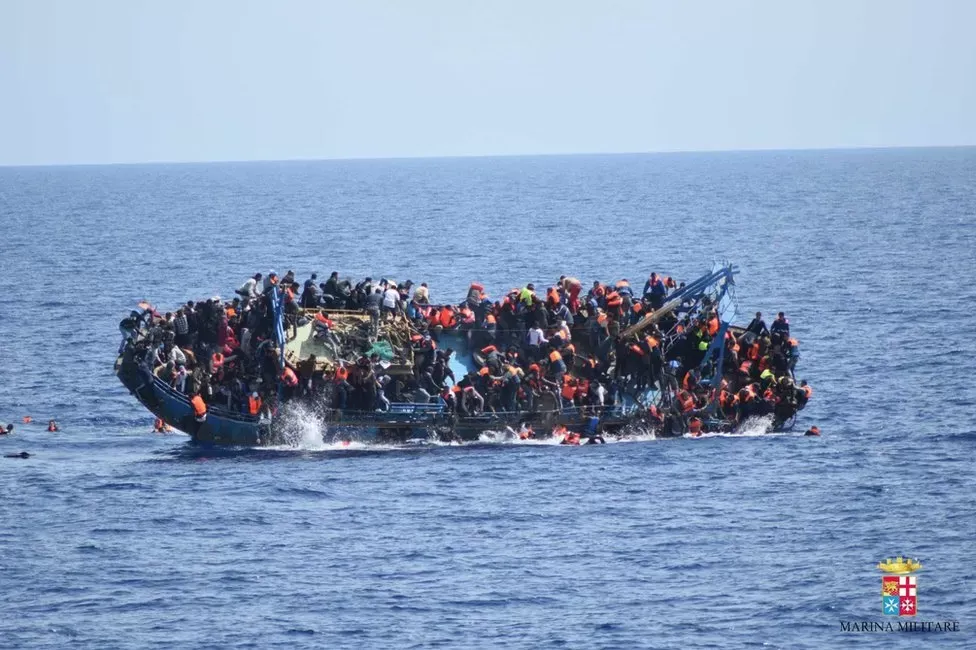
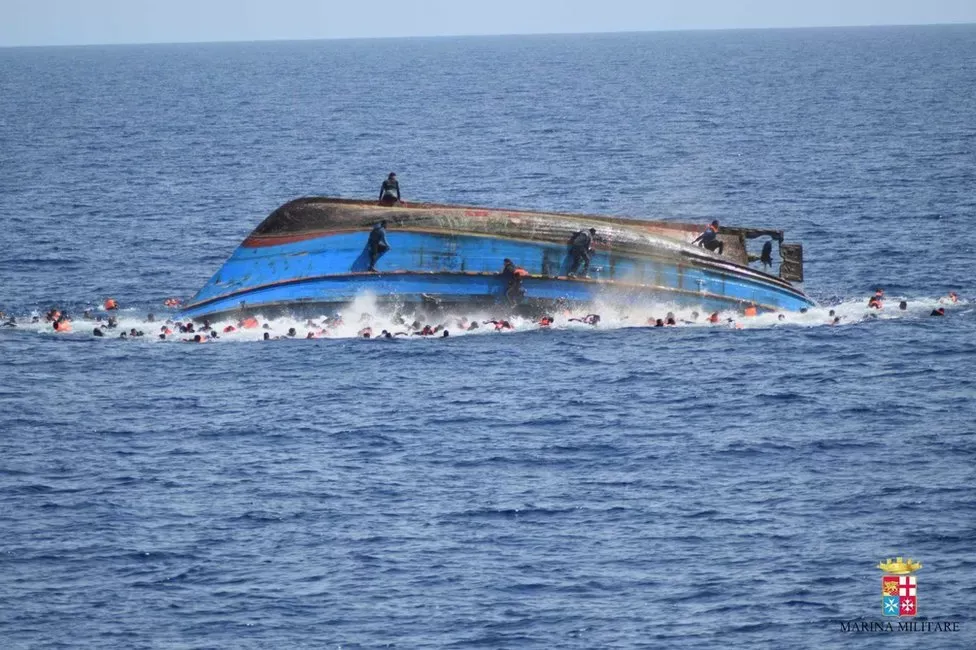
Photos as Migrant Boat Capsizes in the Mediterranean
He was surprised to learn that they were not the only ones who had been rescued that day. There was a group of twelve who had been found earlier. They were a mix of men and women from Egypt and Sudan. Their story was much more tragic. They had also left Libya, only in a smaller boat. It was owned by a Libyan fisherman who had decided to go to Europe and sell seats on his boat. He had told them there was enough fuel and the seas were calm enough for the journey. But he had become greedy and had filled the boat with too many people. During the night, a wave hit the boat, and everyone fell to one side. When that happened, the boat turned over. Of the thirty who were in the boat, only their group had survived. Had the airplane not found them, they would have all drowned.
Conclusion
When I was a young man, before I came to faith, there was an American song that was very popular on the radio. It was about a shipwreck in the Great Lakes region of the United States. For some reason, I can still remember a question that Gordon Lightfoot posed in that song.
"Does anyone know where the love of God goes when the waves turn the minutes to hours?"5
It is hard to imagine the fear and anxiety of being in a small boat in the middle of the Mediterranean Sea, particularly if it is dark, the wind is blowing, and the waves are high. A crisis is always but one unfortunate turn of events away. In this crisis, people often die. It is in those moments that people pray. The disciples understood this situation completely. Mark recorded an evening when the disciples were crossing the sea of Galilee. They, along with Jesus, were in one boat, and others were in additional boats. As could be expected in the region, a strong wind arose, and the water became so rough that the boats were in danger of capsizing. One must assume that people were afraid and that everyone in all the boats was praying. And what were the disciples asking Jesus? They asked, "Jesus, do you not care that we are perishing?".
His response was a bit surprising. Jesus first calmed the waves, but he then rebuked them for having no faith. Why? Because by that time in their spiritual journey, they should have had enough faith to trust that Jesus would take care of them whether they lived or died. Remember, they had Jesus in their boat! I am curious what Jesus' response would have been if the disciples had awakened Him and said, "We see people in boats who are perishing. They do not know you as we do. How can we help them have faith in you?"
If you are reading this blog, you probably should be at a place in your spiritual journey where you have such faith. But having great faith, if that is all that is visible, is simply not enough. James reflected on the same question,
What use is it, my brethren, if someone says he has faith but he has no works? Can that faith save him? If a brother or sister is without clothing and in need of daily food, and one of you says to them, “Go in peace, be warmed and be filled,” and yet you do not give them what is necessary for their body, what use is that? Even so faith, if it has no works, is dead, being by itself. —James 2:14-17
As you read this post, know that boats are in the water. There is not much you can do about that other than to pray for them. But there is much the church (in places of origin and transition) can do before they enter the boat, and certainly for those who survive the journey. By that time, they can clearly see that it was the hand of God that answered their prayers and brought them through the waters. At that point, they are perhaps the most receptive to the message of the gospel. And at that point, there is undoubtedly much that the church can do.
1"The Central Route: The Historical Context of the Maghreb," M2M3, 2022, accessed September 24, 2022, https://m2m3.org/27-the-central-route-the-historical-context-of-the-maghreb/27 – The Central Route: The Historical Context of the Maghreb.
2See "Hundreds of Migrants Believed to Have Drowned Off Libya After Boat Capsizes," The Guardian, 2015, accessed September 24, 2022, https://www.theguardian.com/world/2015/apr/14/400-drowned-libya-italy-migrant-boat-capsizes. See also, "UN says 800 Migrants Dead in Boat Disaster as Italy Launches Rescue of Two More Vessels," The Guardian, 2015, accessed September 24, 2022, https://www.theguardian.com/world/2015/apr/20/italy-pm-matteo-renzi-migrant-shipwreck-crisis-srebrenica-massacre.
3See previous article… The Horrors of Libya
4"Mediterranean: Open Arms Rescues 402 Migrants, Sea-Watch Disembarks 428," InfoMigrants, 2022, accessed September 24, 2022, https://www.infomigrants.net/en/post/43411/mediterranean-open-arms-rescues-402-migrants-seawatch-disembarks-428.
5Lyrics.com, STANDS4 LLC, 2022. "Wreck of the Edmund Fitzgerald Lyrics." Accessed September 24, 2022. https://www.lyrics.com/lyric/167168/Gordon+Lightfoot/Wreck+of+the+Edmund+Fitzgerald.