32 – The Horrors of Libya
2022 No 32
Then I will draw near to you for judgment; and I will be a swift witness against the sorcerers and against the adulterers and against those who swear falsely, and against those who oppress the wage earner in his wages, the widow and the orphan, and those who turn aside the alien and do not fear Me,” says the LORD of hosts.
—Malachi 3:5
It is hard to imagine the actual situation of migrants who arrive in Libya. In April 2022, there were nearly 650,000 migrants in the country, representing some 41 different nationalities.1 This number, however, is far from complete. When the International Organization for Migration counts migrants, it only accounts for those who can be recorded. For example, of the above number, half are from sub-Saharan Africa, and two-thirds are legally employed. This number reflects, for the most part, those for whom Libya was a destination. It does not include those who have arrived via clandestine routes at the hands of smugglers and whose destination is Europe. Nor does it include those who have been forcibly placed into the Libyan labor systems by human traffickers. If the IOM added those numbers, the above number could easily surpass a million people.
To be clear, everyone who goes to Libya does so along pathways that correspond with their financial capacities. Those with resources can arrive directly by air. Those with fewer resources must cross the desert by bus. Others, such as Abdoulaye and Mamadou, have to come in the back of a pickup. In the same way, the degree of suffering also corresponds with their means of travel. Life may be difficult for those who arrive in Tripoli legally, but it can be infinitely more difficult for those who must come through more clandestine routes.
Perhaps it is time to pause and remind ourselves of how and why these smuggling / trafficking routes can become so evil. The goal of these systems is to make money, and they do so by using human beings. It is called human commodification.² In this system, people cease to be human beings; rather, they become sources of income through and by their labor. Their value is in how much money they can make, or save an invested party. In a strict sense, it is nothing more than slavery, where people are literally sold as property on an auction block. (And yes, that happens in Libya.3) More often, people are pressed into labor at meager wages. Others will then charge just enough for lodging and food to take whatever they may earn. Prostitution and drugs become common vices to consume whatever the rest. In the end, migrants are left with nothing and are held in place by their poverty... and often by their debt. On the even darker side of this model, violence is often used to maintain control. It was into this system that Abdoulaye, Mamadou, Blessing, Idara, and Aisha of previous posts fell.
A Change in Plans
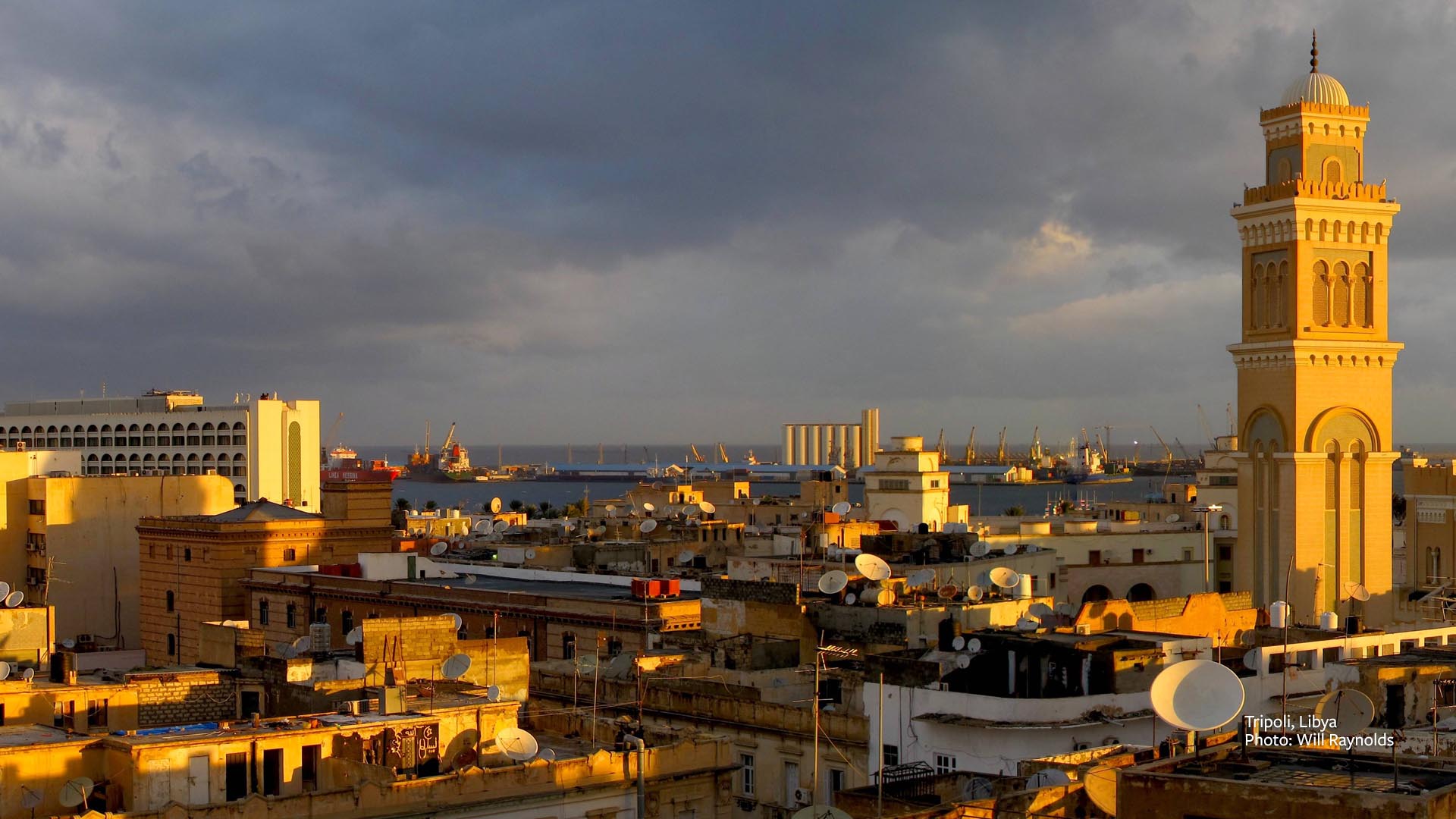
When Abdoulaye and Mamadou arrived in Tripoli, they imagined the journey's most difficult part was over. They reminded each other that the only thing that remained was the boat trip to Italy. Once in town, they were taken to yet another safe house and were told to stay inside until arrangements could be made for the next leg of the journey. Mamadou was still recovering from the desert, and they both needed time to rest and regain strength.
It was almost two weeks before the "passeurs" informed them that a boat could be arranged to take them to the island of Malta. It was supposedly a good boat with an experienced captain. The price was $1,500.4 Their cost of room and board for the previous two weeks was $100. If you remember from previous posts, they had paid an agent all their money upfront, and he was managing each leg of their journey from Bamako.5 Mamadou made the call to their “contact” to get the money sent, but no one answered. He contacted his father, who also tried to find their agent. It would appear that the man, and the rest of their money, were gone.
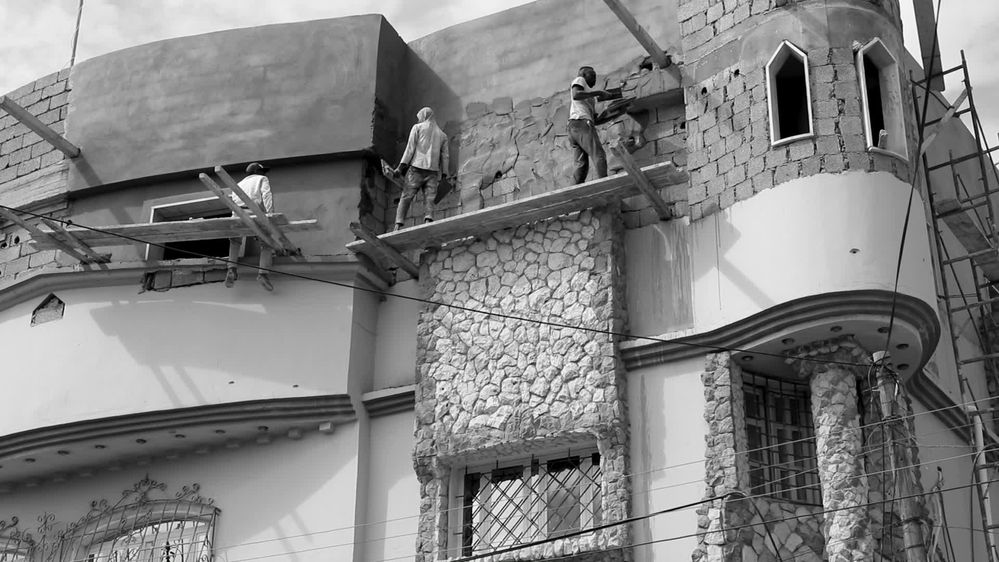
The implications of this event were profound. Not only did they not have the money for the boat to Italy, but they owed money for their room and board. Mamadou was still pretty weak from the journey, which limited him from trying to find work. Those at the house were pressuring them to pay for their stay, so Abdoulaye took a nearby construction job recommended by the smugglers. Unknown to him, it was all a part of a system where they took what he “owed" and gave him a few dollars a day to buy food. What was left, however, was not enough to cover the money owed by his friend, Mamadou.
As the pressures increased for Mamadou to pay, he was forced to call his father back in Bamako and ask for help. He agreed to cover the costs and to also pay the additional for the boat towards Italy. Abdoulaye's family had no such resources, and it was here that they parted ways. (We will follow his journey in the next post.)
From Bad to Worse
It seemed that there was always a movement of migrants through the smuggler's house. The expenses were high, and Abdoulaye's pay was very low. He soon discovered that there were cheaper ways to live and that perhaps better jobs were available. He knew that such was the only way he could possibly earn enough money to pay for a boat. His mistake was in telling the smugglers of his plans. A few days later, when he boarded the bus to the construction site, he found that he was being taken someplace different, very dark, and filled with misery.
He was initially told that his "work contract" was being transferred to a new construction site. He did not know that it was to the smaller town of Mizdah, about 190 kilometers to the south of Tripoli. In reality, he had been sold to a labor camp. There he was forced to work as a bricklayer, building a wall around a piece of property. It was backbreaking work, and his captors took all his pay to cover his "debt ." In essence, he was never paid for his work. He and other workers lived at the construction site and were not allowed to leave. The isolation made it difficult to escape, and he could see that the living conditions had caused many to become weak. There was a field behind the town where many had been buried in unmarked graves.
The mix of migrants in Mizdah was unique. Many were Sudanese, a country in East Africa. Civil war had been a part of their history for decades, and many had come to Libya for work. But there were also migrants from Bangladesh. Like Abdoulaye, they had paid brokers to help them reach Europe. Many had traveled to Nepal, Dubai, Egypt, and then on to Libya. And, like Abdoulaye, they had landed in a place far from dreams. All were made to work. In addition to the men, some women had been brought to Mizdah as prostitutes. Most were young Nigerian girls who thought they were finding jobs in Italy but had been forced into the sex industry.
Their captors made two assumptions about the migrants. First, that one would not be in Libya if they did not have family back home with some financial resource. Second, that each individual had value... men through their free labor, or ... women through their "services".. Abdoulaye was told by many that Mizdah was the end of the road for migrants. When they had nothing left to offer their captives, they would disappear, and another grave would appear in the field. He knew his only hope was to stay strong, escape, and find a way back to Tripoli.
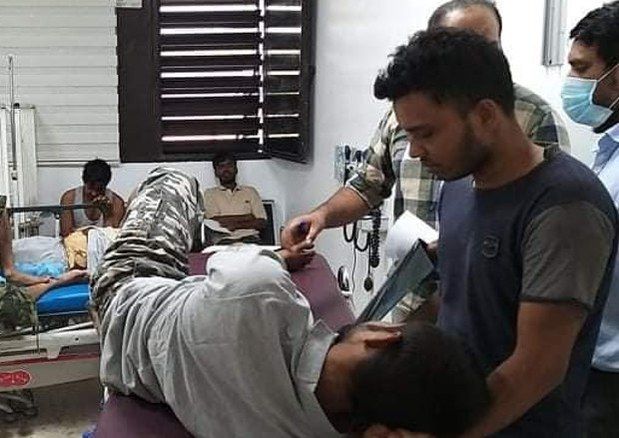
That opportunity came after three months, although it was at a horrific price. The human traffickers had a system of extortion where they would force a migrant to call their family back home and demand money. If the family didn't pay, the migrant would be tortured… on the phone… until the family agreed to send money. There was one group from Bangladesh who was being held for ransom. The traffickers were demanding $12,000 each from the families and were torturing the men daily until they were paid.6 One day, things became so bad that the migrants revolted and killed one of their captors. The consequences were severe. The family of the man killed came and began to randomly shoot the migrants. In total, some 30 died that day, and many more were injured.
Fortunately, Abdoulaye was not injured in the attack. In the aftermath, however, the government was forced to take the wounded to the hospital and transport the rest to a detainment center in Tripoli. Abdoulaye was in the second group. The conditions were not much better than the smuggler house where he stayed when he first arrived. He knew that once attention dropped from the tragedy in Mizdah, his chances of being sold to another labor camp were high. He watched for an opportunity and was soon able to slip away.
He had heard that there was a community of French-speaking Africans on the edge of town. It did not take him long to learn more, and he soon found the group. They were all from West Africa, and he even found a few who came from his home country of Burkina Faso. Life was hard, but it was a community. They all had a way of looking out for one another. There, he learned how to live on the streets, find food where there was none, avoid the police, and most importantly, earn money to make a run for Europe.
Conclusion
The reality of the above is that most of these stories go unrecorded. People are used, abused, and discarded when they have nothing left to give. Around the Mediterranean, human beings have become nothing more than objects to be exploited. It happens every time a migrant is given low wages, a woman is pressed into prostitution, and a government uses migration as a political bargaining chip. Each takes advantage of the migrants' situation, using them for ulterior motives.
How this must cause our Lord to weep. He never views people as commodities. Each one has been created by His loving hand, has an eternal place in His heart, and was the focus of His sacrifice on the cross. Many undoubtedly fall into very difficult times through their own choices. Who doesn't? It is then, however, that they are victimized as others capitalize on their choices. Malachi takes a firm stand in his declaration that the Lord stands with the weak and brings judgment upon those who would oppress them.
So what does this mean for those of us on the outside. I have often said that problems cannot be solved unless they are brought into the light. This is perhaps one of those kinds of situations that is completely outside of your control. It is not as if you can go to Libya and stop the victimization. It is in these times that the church is called to prayer. Ask the One who holds all things in His hands to intervene. Ask Him to mobilize His people who are in the kinds of places to make a difference. Most of all, ask Him to show His grace, love and the light of the gospel to those who are in such dark places.
1DTM Libya, IOM Libya Migrant Report Round 41: February-April 2022, International Organization for Migration (2022), https://displacement.iom.int/sites/default/files/public/reports/DTM_Libya_R41_Migrant_Report_FINAL.pdf.
2See "Nearly There, But Never Further Away," Forign Policy, 2017, accessed September 23, 2022, http://europeslamsitsgates.foreignpolicy.com/part-3-nearly-there-but-never-further-away-libya-africa-europe-EU-militias-migration. In this article, Tiniti states, “Migrants have become a commodity to be captured, sold, traded, and leveraged. Regardless of their immigration status, they are hunted down by militias loyal to Libya’s U.N.-backed government, caged in overcrowded prisons, and sold on open markets that human rights advocates have likened to slave auctions.”
3"The Libyan Slave Trade Has Shocked the World. Here’s What You Should Know," Time, 2017, accessed September 23, 2022, https://time.com/5042560/libya-slave-trade/. See also "It Was As if We Weren’t Human: Inside the Modern Slave Trade Trapping African Migrants," Time, 2019, accessed July 17, 2022, https://time.com/longform/african-slave-trade/.
4 A "passeur" is a french slang title for a smuggler or an agent. See, "To Get to Europe, Tunisian Migrants Turn to “Self-Smuggling”," Deutsche Welle, 2021, accessed September 23, 2022, https://www.dw.com/en/tunisian-migrants-turn-to-self-smuggling-to-get-to-europe/a-58828200.
5"The Thin Line Between Volitional and Forced Displacement," M2M3, 2022, accessed September 23, 2022, https://m2m3.org/29-the-thin-line-between-volitional-and-forced-displacement/.
6"Please Help Me, I Want to Go Home: Mizdah Shooting Survivor Pleads From Tripoli," The Daily Star, 2020, accessed September 23, 2022, https://www.thedailystar.net/backpage/news/please-help-me-i-want-go-home-1907113.