29 - The Thin Line Between Volitional and Forced Displacement
2022 No 29
Now there was a famine in the land; so Abram went down to Egypt to sojourn there, for the famine was severe in the land.
—Genesis 12:10
Over the past few posts, I have sought to explain the context which underlies the movements of sub-Saharan Africans toward Italy. We have talked about how men and women followed this route for centuries, and we have examined some factors that facilitated movements. We have had global discussions that addressed push/pull factors and governmental migration policy. They were all a part of the 40,000-foot view of the Central Migration Route (CMR), which plays well in academic circles. But this journey cannot rest at such a high altitude. Sure, we can see the entirety of the forest. That helps! But if we stay there, it will become increasingly impersonal. That is why there is a need from time to time to land the plane, get out and walk among the trees. For this reason, we will take the next few posts and share stories from the migrants themselves.
We have spoken to literally hundreds of migrants, heard their stories, and prayed with them, asking God to guide them along the way. After a while, certain elements emerge in a way that reflects their common realities. Our goal is to share those combined realities in a way that would make sense to a western audience. I have selected a few individuals to share their experiences. They reflect real people… although their names have been changed... and some of the elements of their stories have been combined to maintain the brevity required for our context. We will begin with Abdoulaye from Burkina Faso and Mamadou from Mali. They represent the majority of those who take the Central Mediterranean Route.
Forced Displacement
Abdoulaye was from a small village called Dablo in Northern Burkina Faso. For generations, his family had owned a small farm and raised a few sheep and cows. He was the youngest of six, with two brothers and three sisters. One brother had moved to Ouagadougou (the capital) to attend university, and the other was in Bamako, Mali. The one in Mali told everyone he had a good job but never sent any money back home. His family was not wealthy, but they had enough to make ends meet.
Dablo was a quiet village, despite the conflict that had begun to infiltrate their region. Things were happening to the North in Mali, and there had been some bombings in the capital to the South. But in his village, the people lived much as their ancestors had for generations. It was a community with both Christians and Muslims. The Catholic church had been there a long time, and his family attended services every Sunday. His father was a leader in the church, and Abdoulaye had fond memories of drinking tea with the priest and studying the Bible in the church courtyard. It was in that church, in May of 2019, that his life would change forever.
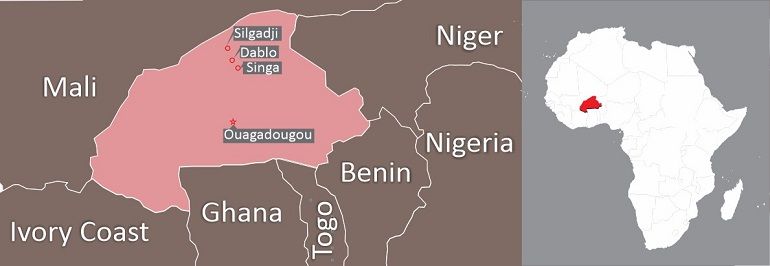
That Sunday morning, during mass, a group of jihadists attacked their town. It is hard to understand why. There were about thirty of them. They started shooting people as they made their way to the church. When Abdoulaye heard the first gunshots, he grabbed his mother's hand, and they ran to hide in the bush. He tried to return to help others escape, but his mother would not let him go. There was a lot of shooting, and before long, the village was on fire. When they finally decided it was safe, they returned to the church. Many had died, including the priest and his father. It was a horrible tragedy for his village and his family. News outlets were soon telling the story around the world.1
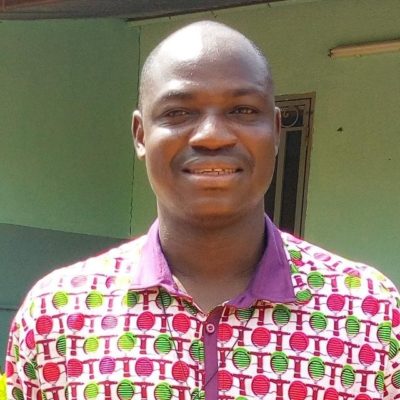
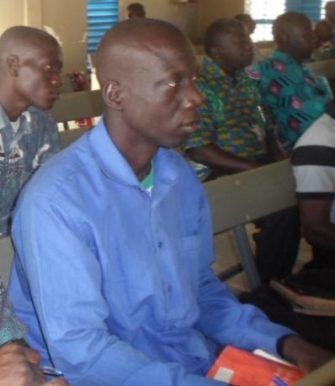
Fr. Siméon Yampa and Pasteur Elie Zoré, killed during the attack in Dablo. (Photo: Catholic Church in Burkina)
For Abdoulaye, life could never return to what it was before the attack. With his father gone, there was no way to provide for the family. His mother moved to Ouagadougou to be with the oldest son. Abdoulaye had heard that the jihadists would come back and that their goal was to kill any Christians who remained in the village. It was a genuine threat. His brother from Bamako had returned home for the funeral, and he encouraged Abdoulaye to come back to Bamako with him. There was work there.
And so, in early 2020, Abdoulaye caught a bus north to Mali. Once in Bamako, he settled in with his brother and started looking for work. But work was hard to find. There were many people in Bamako, and most of them were trying to find a job. The story of his village had made its way to the Malian capital, and he was quickly adopted by the members of the local Catholic church. He found that if he cleaned the church after Sunday mass, he could earn enough money to eat for the week. It wasn't much, but it was more than nothing.
Independent Choices
The Cathédrale du Sacré Coeur de Bamako is not far from the Grand Marché. In fact, it is not far from several open markets. Abdoulaye cleaned the church on Sunday but spent his week in the markets. There, he became a runner for supplies. If someone needed something in the hardware market, he could find a vendor and connect him with a buyer for a small commission. Once again, it wasn't much, but it was something. It was in the marché that he met Mamadou.
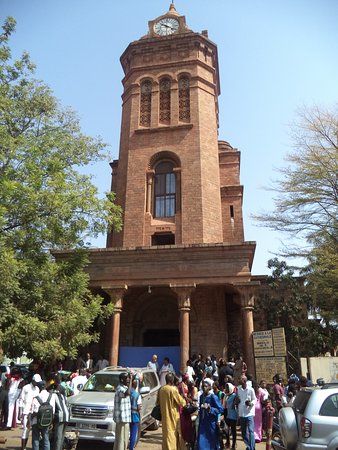
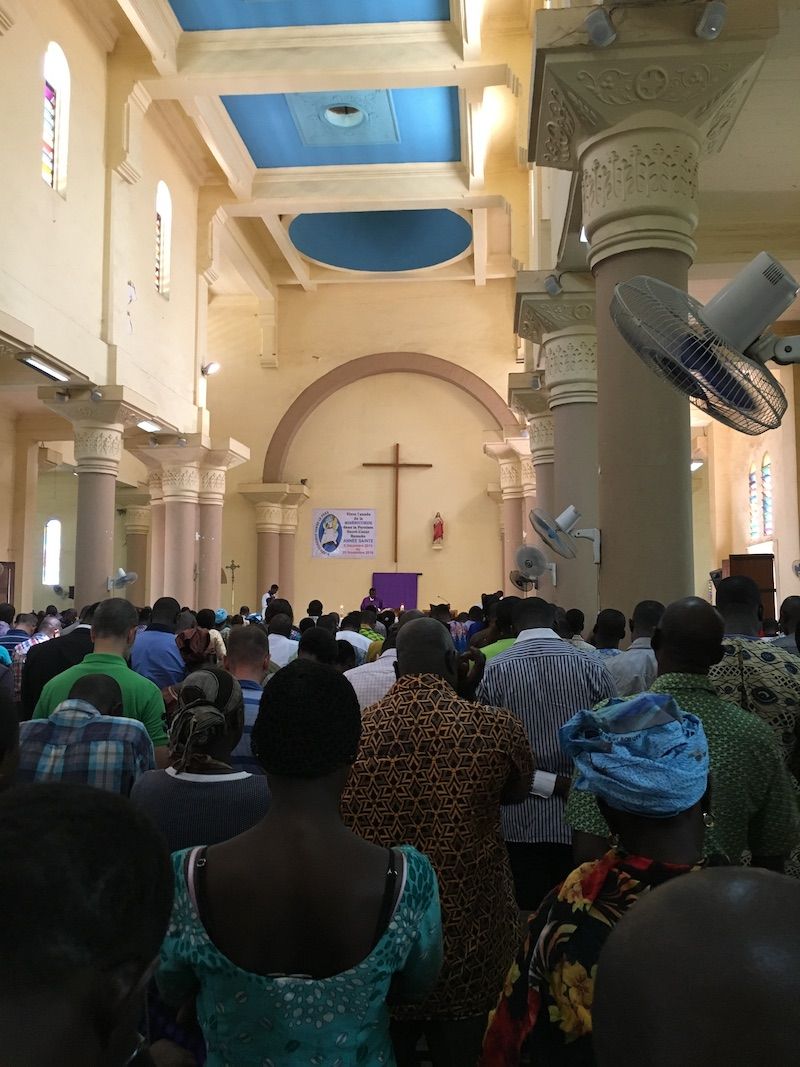
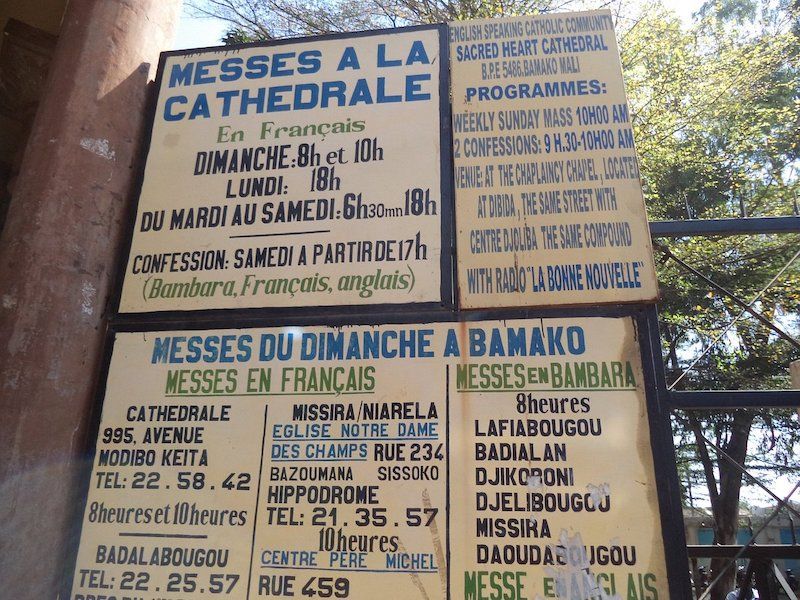
Sacred Heart Cathedral in Bamako, Mali
Mamadou grew up in Bamako. His father owned a small electrical shop in the Dibida marché. They sold wire for new home construction. Since the coup d'état in 2012, their business had declined significantly. In the past, the city was growing, and the West invested heavily in its infrastructure. But with the conflict in the North, new construction had come to a stop, and his father's business had suffered greatly. They were surviving, but there was not enough work to cover all of the family's needs. His father had saved some money over the years with a dream of expanding the business, but now their goal was to survive. The politics in Mali certainly did not look favorable for things to get better anytime soon.
Mamadou had spoken with his father about going to Europe to find work. His father's brother had moved to Italy years ago, and it was through him that the family had made the connections to import the wire for their business. He had done well for himself and often suggested that Mamadou could get a job if he were to ever come. The difficulty was that Italy had closed its borders and, with the rise of COVID infections, was not apt to open them any time soon.
But there were other ways.
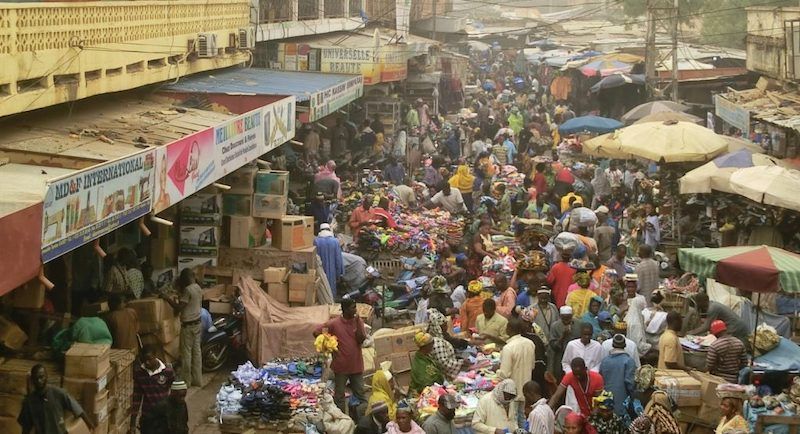
Being in the markets, Mamadou had made a lot of connections with people who were all very experienced travelers. All the boutique owners imported their supplies, and many knew of ways to go places. Everyone knew that going to Italy was dangerous, but the trip could be arranged with a measure of safety if you had the right contacts and the money in hand. After a while, Mamadou's father began to soften to the idea of such an effort. He, too, had heard the stories and knew that if he handled things correctly, the chances of success could be high. After a bit of negotiation, he found a reliable agent who could guide the process. The cost in total from Bamako to Rome would cost about 1.8 million CFA, or roughly $3,000 USD. Together, they decided that it was worth the risk.
The Road to Agadez
As Mamadou prepared for the move, he began sharing his ambition with his friend. It would be great if the two could go together. Of course, the idea sounded good to Abdoulaye. Bamako was a place to live, but he would not be able to build much of a life there. On the other hand, Europe would be a great place to find work, and he could support his mother back in Ouagadougou. The only challenge was the money.
When Abdoulaye told his brother about the opportunity, he was hesitant. Stories were common of those who had tried to make the journey and had failed. But it seemed that in this case, there were inside connections that could make the trip much safer. And so the brother in Bamako called the brother in Ouagadougou, and together they decided that the money from the sale of the family farm would be well invested in the third son. If successful, he could make that much money in just a few months and begin to support his mother back home. And with that, the decision was made.
The one who would help them get to Italy was a man named Udad. He was a Tuareg from the North and held deep connections across the Sahel. The arrangement was to give him half the money upfront, which would get them to a safe house in Tripoli. When they arrived, the rest would be wired to them and used to pay for the boat to Lampedusa. From there, they would be transported to Italy. Udad would handle all the arrangements, and his agents would pay all the necessary expenses along the way. On the front end, it seemed simple enough.
After a few weeks, Abdoulaye and Mamadou were at the bus station. There are several ways to get to Libya. One would be to take a bus to Gao, and then pay smugglers to make the drive through Algeria and into Libya. The other would be to take a bus to Niamey in Niger, then to Agadez in the North. Each has its associated risks. The former passes through territories far from stable, filled with bandits and groups vying for control. The latter is much more established, although much more controlled by the government of Niger. This would be their route and was one of the reasons why their cost was a bit higher.
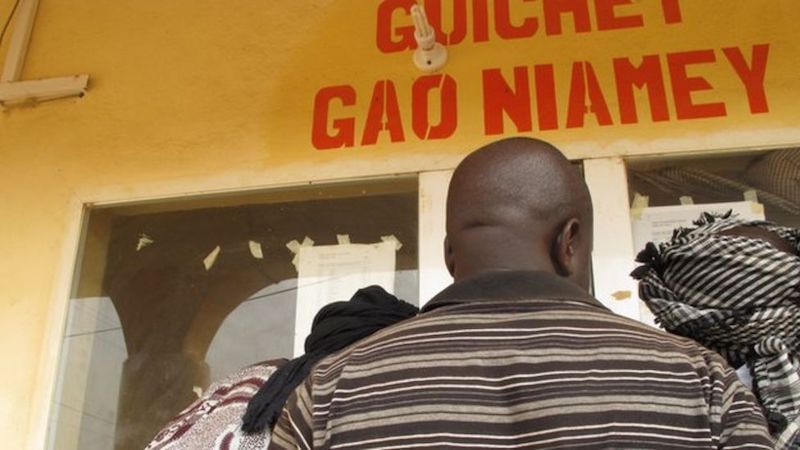
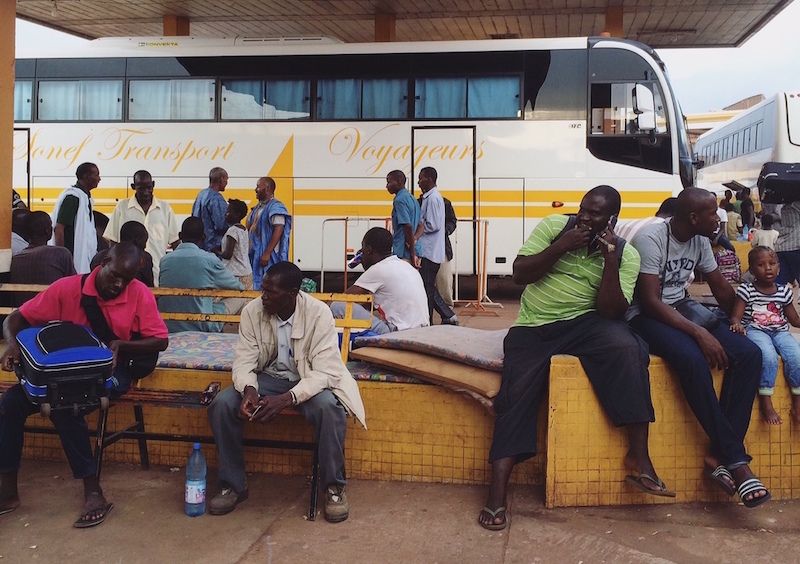
Bus Station in Gao, Mali
The trip to Agadez was long but relatively uncomplicated. The bus was actually quite nice; it even had air conditioning for a while. They were stopped several times at police checkpoints, and they changed buses several times. They stayed one evening in Gao in a shed owned by one of the bus drivers. They then had to wait two days in Niamey while their bus to Agadez was being repaired. As promised, the drivers had been given the money to pay the required "fees" to the authorities to let them pass. If asked, they were to say that they were traveling to visit family. They had been given names and phone numbers of people in Gao, Niamey, and Agadez that they could show authorities if needed. In reality, these were also their contacts if something happened, causing them to get separated from each other or the buses.
Within a week, they were in Agadez. From the perspective of Abdoulaye and Mamadou, things were going very well. They arrived in good form, with all their belongings and relatively little discomfort. They were taken to a house on the outskirts of town and told they would have to stay there until a broker could make arrangements to cross the desert. What they didn't know was that this would take about two weeks. There was a bucket inside for a restroom, and their food, if you could call it that, would be brought to them. During that time, they would not be allowed to go outside, lest authorities spot them. An armed guard was at their door to ensure everyone followed the rules.
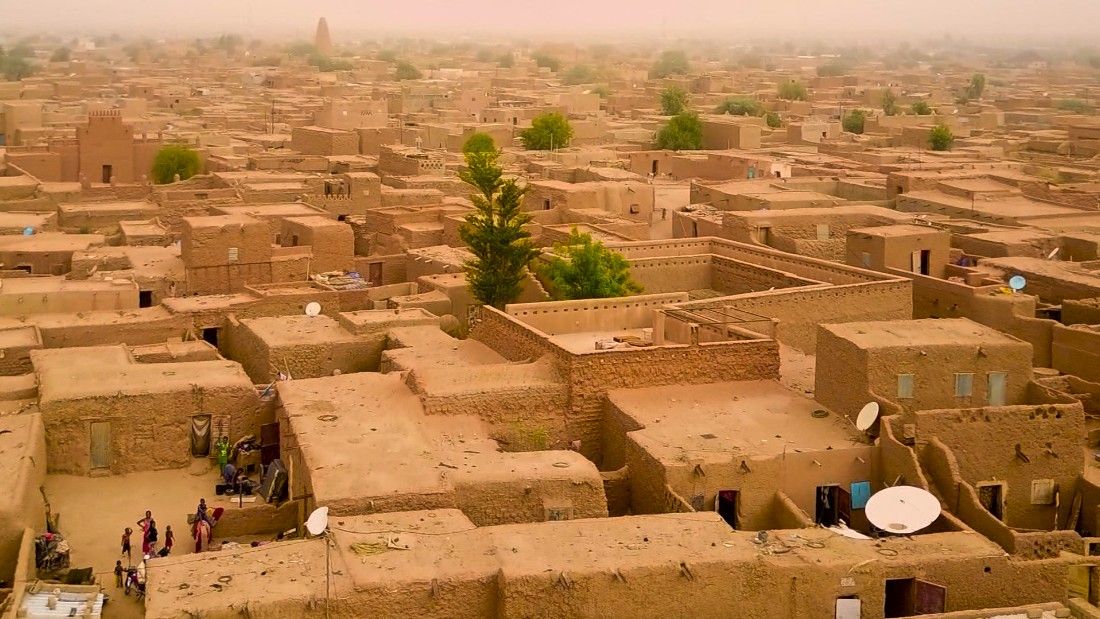
It was in Agadez that Abdoulaye and Mamadou began to wonder if they had made the right choice.
Conclusion:
People migrate for a lot of reasons. For some, it is out of necessity. For most, it is by choice. Matthew 7:13-14 speaks of two roads. One is broad and leads to destruction. The other is narrow and leads to life. As a pastor, I used to tell people that the former is by default, and the latter is by choice. The challenge for most is that they can see the road they have chosen but may not understand the destination. It is important to understand that a lack of comprehension does not in any way change the destination of the roads. Every road goes somewhere… even if it is not where you want to go.
Migratory decisions are often made more on perception than on proper comprehension. These two boys represent thousands who have made a similar choice, and it often took them to places they never intended. I often hear people say that if the migrants had a better understanding, they would make better choices. While it is true that these two young men had access to good information, they and their families were also biased in their hopes for a good outcome. It would not have mattered what they were told; they still would have made this trip in the belief that they would either avoid the bad outcomes or would be insulated by the assurances of a smuggler.
I have spoken to many pastors in places of origin and transition, working hard to share the gospel with migrants in their communities. They report that talking people out of a plan they believe will have a good outcome is almost impossible. But those very same people will often listen if you were to offer them a better plan. (Especially high-risk-takers like migrants!) Most are simply taking the option that is in front of them. The road to life is indeed a choice, and there are few who will decide to pass through that narrow gate. But some will if given the option. And if, after coming to faith, they still choose to get on a bus for Agadez, they will do so with the presence of God and the capacity to manage whatever may come their way.
1France 24, "Six Killed in Attack on Catholic Church in Burkina Faso" https://tinyurl.com/yckvezcz (accessed June 25, 2022).