30 – No One Plans To Be A Victim of Human Trafficking
2022 No 30
The Spirit of the Lord GOD is upon me, because the LORD has anointed me to bring good news to the afflicted; He has sent me to bind up the brokenhearted, to proclaim liberty to captives and freedom to prisoners.
—Isaiah 61:1
As Isaiah wrote these words, his audience was a nation in exile. Many were afflicted, brokenhearted, imprisoned, and enslaved because of the actions of others. He could have brought a message of judgment, with a sense of "you brought this upon yourself". What the people truly needed to hear, however, was a message of compassion, one of hope, one of a future. Our goal in this post is to help the reader understand more than just the context of sub-Saharan migration. My desire is for you to hear the voices of those on the road. For many, their movements are voluntary. Others, however, have become victims of the darker side of humanity. Like the children of Israel, they also need to hear a message of hope.
This post and the video attached at the end are not for everyone. It is pretty raw and challenging not only to write, but also to read and watch. I encourage you to use discretion in how this particular post is shared. But I also encourage you not to close your eyes to the realities that are taking place along these migratory pathways. What follows is the story of a fictitious young lady named Blessing. Her testimony represents many who have been trafficked into Europe. Today we will tell the first part of her story. The other half will come with time.
A Young University Graduate
Blessing grew up in Benin City, in the Edo state of Nigeria. Her family was not wealthy by any means, but they had enough money to send her to a private Christian school. When she graduated, she was able to go to nursing school in Lagos. She soon found a church to attend, and although the pastor was a bit controlling, many of her classmates were members. After several years of dedicated study, she graduated with her degree from Lagos University. Like most graduates, she was excited to enter the labor market and embark upon her new career.
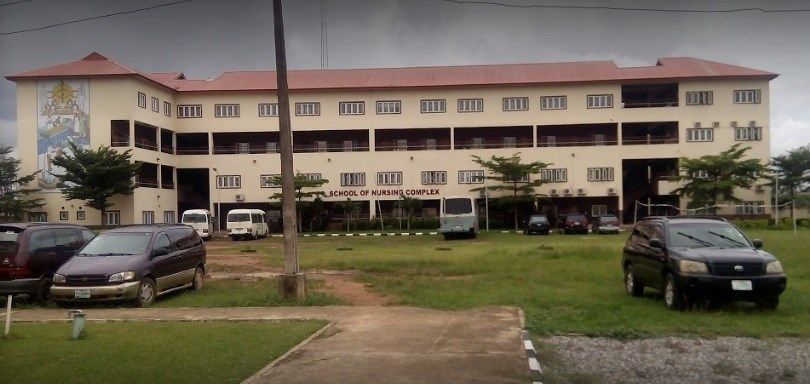
She knew that jobs were hard to find, but she didn't expect to be rejected so many times. The difficulty was a lack of experience. Many told her that if she had any expectations of finding work, she should be ready to move. There were jobs available in the interior of Nigeria, but those were typically midwives in rural areas. She desired to work in a hospital in a larger city along the coast. Unfortunately, those jobs were not easy to find.
She had several times shared her prayer request for a job at church. She was praying that God would open the door somewhere. She was surprised one day when one of the church elders told her he knew of an opportunity. It seemed that he had connections in Europe and that there were clinics in Italy hiring African nurses to work with immigrants. If willing to relocate, she could work for a couple of years while learning Italian and ultimately gain an Italian nursing license. That license would allow her to work anywhere in Europe. It certainly was not what she expected, but it was an incredible opportunity.
If It Is Too Good To Be True...
The elder told her that if she were interested, he could put her in contact with people who could make it happen. There would be costs associated with the move, but they would pay them up front, and she could reimburse them after she started work. After talking to her family, she decided to follow the lead. After all, who would turn down a job offer from Europe? In hindsight, Blessing can now see that she had missed numerous red flags.
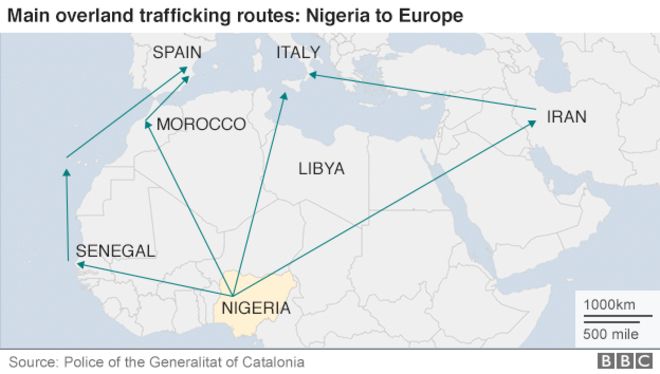
The very first flag was the contract that she was asked to sign. It said that the total cost of the journey would be around 6.3 million Naira. ($15,000) She would be obligated, culturally and legally, to pay that amount back within the first year of her time in Italy. It also stated that rather than fly, she had to take the land and sea route for visa purposes. That meant she would take a bus to Libya and then a ferry across to Italy. Once there, she would work for a health care company that provided services for Italy's immigration department. Some of it seemed odd, given that she would be coming at the invitation of the Italian government, but by that time, her eyes were set on Europe.
A second red flag was the cultural contract she was expected to endorse. The elder at the church told her that she had to attend a special religious service. Two things would happen at that service. One, she would receive the prayers and blessings of those sending her. Second, she would enter into a covenant with the healthcare company to follow their rules and repay her debt. Because the offer to her was "special," the elder told her to keep the ceremony secret and not disclose the meeting or invite anyone to attend. She thought it would be a Christian ceremony, much like the ones offered to those who were sent off to be missionaries. Little could have prepared her for what was to happen next.
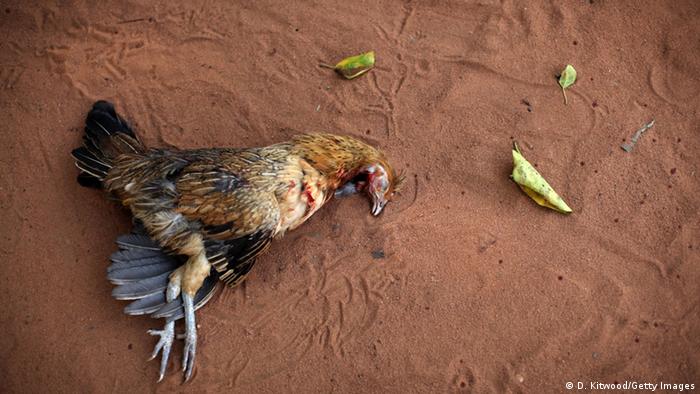
When Blessing arrived at the church, there was not a gathering of members. It was only she and two other women. The elder was present, as well as one who identified himself as a local marabout. (A marabout is a local holy man, versed in the Quran and traditional religion.) She assumed that he was there for the other women. There were a few others from the church there, but she did not know them. The ceremony began with prayers for their success, for the anointing of God in their lives, and the capacity to fulfill their requirements. But then the tenor changed dramatically. The marabout told her to repeat an oath that invoked the wrath of her ancestors if she did not obey, if she did not repay, or if she abandoned her agreement. The service may have started as a Christian service but ended as one would expect in a traditional village. The marabout sacrificed a chicken, and they had to make a mark in blood. In this ceremony, it was decreed that her family's life was at stake if she were to break this contract.
When the ceremony ended, Blessing had severe reservations about the arrangements. She wanted to back out of everything, but she had just sworn to secrecy… at the risk of her family's lives. She was told to go home, pack her bags, and be ready to leave in three days. That was her opportunity to back out, but she lacked the courage to do so. She spoke to the elder the next day about her feelings, particularly about the nature of the ceremony the evening prior. He assured her that the marabout was there for the other two women and that everything was normal and natural. But he also reminded her that even though she was Christian, the oaths she made at the ceremony were binding.
A Tragic Choice
And so Blessing made a choice. She packed her bags, said her goodbyes to family, and got into a bus for Agadez.
That day was the beginning of her nightmare. She had heard that the pathway to Italy through Libya was complicated. People had spoken of the costs associated with the trip, the bribes necessary to get through police checkpoints, and the risks of bandits. But in her mind, that was all a part of the money she had "borrowed" to get her to Italy. The first day went well. She visited with the other two women who were at the ceremony on the bus. Their names were Idara and Aisha. They were sweet girls, very young, and neither had been to university. It seemed that they had been offered jobs as maids in an Italian hotel. Blessing thought it to be odd but kept her feelings to herself. They made it to Kaduna in northern Nigeria without incident and stayed at a "hotel" for the evening.
That night, a man came to the room and asked Idara to follow him. She looked scared when she left the room. An hour later, she came back in uncontrollable tears. The three men at the hotel had raped her. They told her that her services were payment for the rooms for the night. Aisha and Blessing wanted to call the police, but they found someone had locked the door from the outside. They spent the remainder of the night consoling and caring for Idara. The following day, men with guns came and put them in a different, much smaller bus. The driver told them to remain quiet and to not tell anyone about what had happened the night before. At the time, they could only imagine that they had been kidnapped and that the people who had invested in their trip to Italy would soon rescue them.
But such would not be the case. That day, they would cross into Niger, the country just to the North. The bus they were in was small and uncomfortable, and the men were always watching. Although the three women watched for an opportunity, there was no means of escape. After two days, they arrived in Agadez in northern Niger. Only then did they realize that they had not been kidnapped at all. It was in Agadez that they learned that everything that their recruiters had told them was a lie.
The driver took the three women to a house on the outskirts of town and told them they would have to stay there until arrangements could be made to cross the desert. (Sound familiar?) As with Abdoulaye and Mamadou of our previous post, they could not leave the room, and an armed guard was at the door to ensure they obeyed. There were other women in the room when they arrived, and more were added over the next few weeks. All of their stories were the same. They had been promised a job in Europe, had signed a contract to repay the costs, and had been brought to Agadez in a manner that was very different from what they expected. A few, like Idara, had been raped along the way. Rumors floated around the room that they were being sold into slavery and would all be forced to work in the brothels. That, however, was beyond anyone's capacity to believe.
Conclusion:
Even while reading this, you may find the above scenario hard to believe. I am attaching a link to a YouTube video that further explains the human trafficking situation in Nigeria and Italy. When you watch the video, you may think that I watched the video first. In reality, I found it after I had written the above narrative. If nothing else, let it remind you that things are, at times, much worse than I have described in this post.
On a recent trip to Italy, we visited a community called Castel Volturno. It is an enclave of Nigerian and Ghanaian migrants. It is controlled by a Nigerian mafia known as the Camorra. (We will talk more about them in the days to come.) There are tens of thousands of migrants living in this community, and many of the women have been trafficked in the sex trade. They have arrived by the most difficult of pathways, and culturally and physically have little capacity to escape. It truly breaks one's heart. One can only imagine how our Lord feels. If He had a message to proclaim in that community, I suspect it would be the same message that Isaiah brought to the children of Israel.
The only question is, who will bring that message? The good news is that the church is alive and well in many places across Italy. She may be few in number, but so was Isaiah! As her people grow to love their neighbors, they will be in the best position to share such a message of hope. The church around the world is also alive and well. There are many who have been called to come alongside the Italian church to be a part of her work. She could certainly use more; on our last trip, she asked us to help facilitate that process. As you pray for the church in Italy, also pray for your capacity to hear the voice of the Lord. You may hear the same message that Isaiah heard, "Whom shall I send, and who will go for Us?" (Is. 6:3) Do you remember his response? "Here am I, Send me!" Perhaps that should be our response as well.