62 – Morocco: The Story of Oumar
2023 No 62
Have I not commanded you? Be strong and courageous! Do not tremble or be dismayed, for the LORD your God is with you wherever you go.”
—Joshua 1:9
In our previous posts, we sought to describe the journey of Babacar from Senegal to the Canary Islands, having taken the southern route. That trajectory required a voyage of over a thousand miles and the loss of many in his boat. It has been estimated that one in three boats that make this crossing is lost entirely.² For Babacar, it was an unbelievably traumatic experience. But upon arrival on the islands, he discovered that many had come along a different route. They still came by boat... but had made their way through Morocco.
Some eighty percent of all arrivals in the Canary Islands come from Morocco.3 The route is one-tenth the distance and can be accomplished in as little as two days. It is still dangerous, with the loss of one in five boats compared to one in three when they leave Senegal. But it is also more expensive. The cost of this route can easily exceed six thousand dollars.4 Sub-Saharans of means share this route with Moroccans. As we shared in our last post, many from North Africa desire to go to Spain but cannot do so legally. Because these routes are typically "homegrown" by the Moroccans, sub-Saharans are recruited to fill empty seats.
To illustrate this northern route, I would like to introduce you to Oumar, a young man from Dakar, Senegal. Like Babacar, Oumar is a university graduate who cannot find work. He is a Christian and attends church regularly. His family is not wealthy but they are a part of a growing middle class in Senegal. His friends in Paris tell him he can find work if he can get there. They seem to be making a lot of money, and their social media profiles all show them with nice clothes and even nicer cars. He decides to make the journey himself. This is his story.
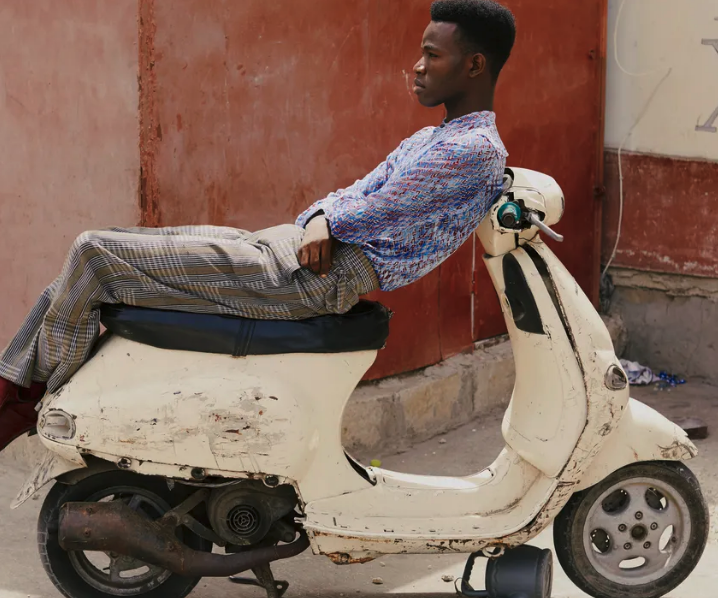
From Senegal to Morocco
Several of Oumar's friends had made the journey from Senegal to France. The preferred route was to fly to Morocco, take a boat to the Canaries, fly to Spain, and then catch a train to Paris. In total, the cost should be around five thousand dollars. For a young African from Dakar, that was a lot of money. He knew that his parents would not support his effort, so he saved as much money as possible and sold everything he had, including his motorcycle. In the end, he did not have quite enough money to make the entire trip, but he had enough to get him to the Canaries. He figured once he was there, his parents would have no choice but to pay for the remainder of the trip.
One can get from Senegal to Morocco relatively easily. For three or four hundred dollars, you can find a group who are traveling by bus. The challenge comes at the border crossings of Mauritania and Morocco. One might be able to get through without a hassle, but there is always a risk of having to pay a bribe… or worse… being detained. Senegalese have a disdain, if not a fear, of Mauritania. But that is another story.
With eight hundred dollars, you can fly directly to Casablanca. There are no visas required to enter Morocco from Senegal. All that is needed is a passport, a round-trip ticket, and proof of enough money to pay for food and hotel for the duration of your stay. Upon arrival, there are "chairmen" and their "agents" who will handle the details of getting a boat to the Canaries.
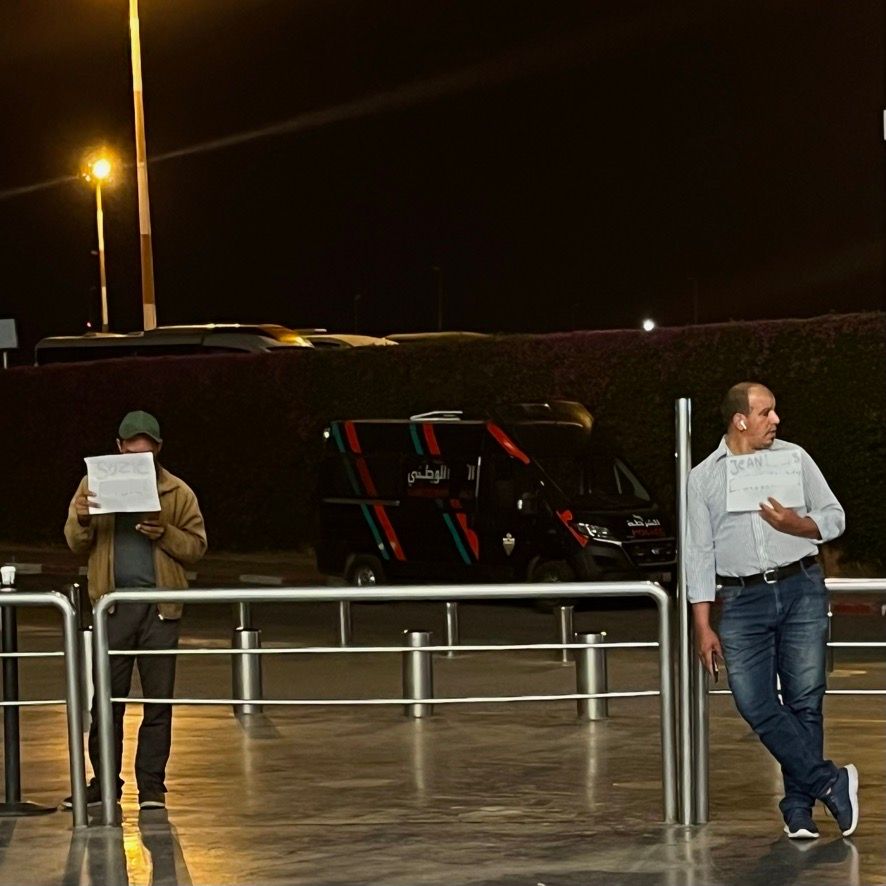
From Morocco to Spain
Through friends he made on social media, Oumar had found a connection, an agent, who was willing to facilitate the trip to the Canaries. It all seemed straightforward. After a few conversations, some money was sent through Western Union, a few goodbyes, and Oumar was off to Morocco on "holiday". When he arrived, someone met him at the airport and held a sign with his name. As far as anyone knew, he was a tourist with a ride to a hotel. But he didn't go to a hotel. He went to a secluded apartment in a neighborhood in Casablanca. He was somewhat astonished that everywhere he looked, he could see Africans. They were mixed in with the Moroccans on the street, and everyone looked poor.
It was here that he learned that there were a variety of options for the trip. All were based upon the risk Oumar was willing to take and how much money he was ready to spend. He was told that, on average, one in five boats will be lost at sea. They said the failure was often due to mechanical failure, lack of GPS, or the absence of a satellite phone to call the Spanish Coast Guard upon arrival to their territorial waters. What they should have told him was that many, if not most, were lost due to the wind, waves, and strong currents. But that truth would not sell seats or encourage him to spend more money. So, they pressed that the increased cost would help to buy better equipment. They went on to tell him that of the remaining four boats that left, three would be intercepted by Moroccan authorities. To ensure passage, money needed to be paid. The more money, the greater the chance of avoiding detection. Once again, if they had been honest, they would have told him that nothing was guaranteed.
There is a tiered system to all of this. The cost for the trip will typically range from one to two thousand dollars, assuming you pay in advance (tué pour tué). The risk is that the travel agent may take the money and disappear. Since these agents are Moroccans taking money from Africans, that occurs often. What can they do... call the police? Or, you can put the money on a bank card for an extra thousand dollars... and only give the PIN number upon a successful arrival (arrivée payé). In this scenario, it is in the agent's best interest for you to make it all the way. But if you don’t make it and return to Morocco, the agent still holds the card, and you must re-negotiate the next trip. But for even more money, you can pay for a guaranteed arrival (arrivée garantie). In this scheme, you pay up to five or six thousand dollars and are allowed as many trips as necessary to arrive in the Canaries. This scenario, while new, is starting to become popular.
Oumar did not have the money to pay for the more advanced options. The cost for his seat in the boat was two thousand dollars. It was the most he could afford, and still have enough money to get to France. He spent the night in the apartment, and the next day he took a bus to Laayoune in southern Morocco. He had a hotel reservation as a part of his tourist visa, so he knew he could arrive easily. Besides, the agent had made arrangements with the driver in the event that they were stopped.
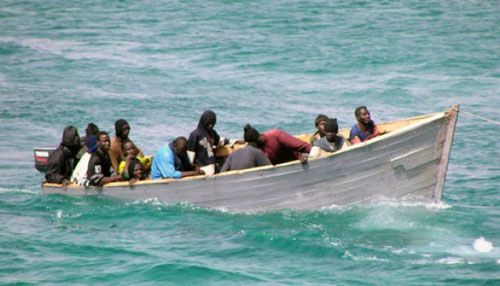
The Crossing
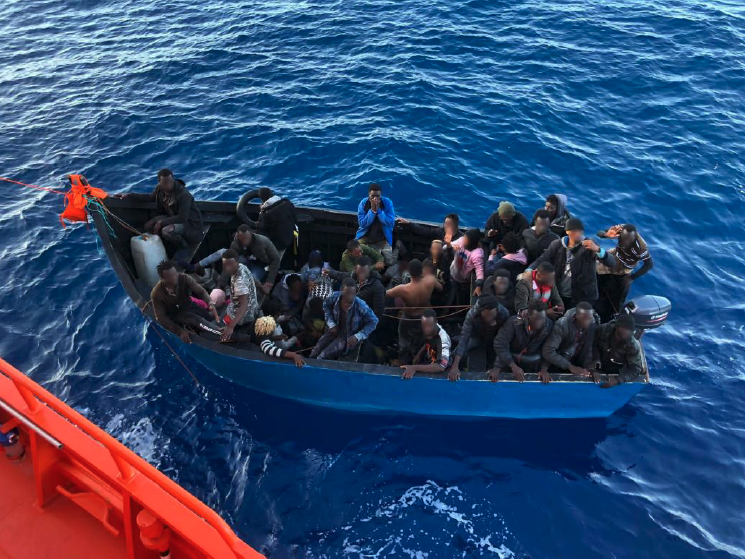
A small bus picked up Omar and about ten other men that evening. They took them to a secluded beach near Tan Tan where a fishing boat was waiting. The boats in Morocco are different from the boats in Senegal. In Senegal, they have large wooden pirogues called cayucos. They can be as long as 120 feet. Here they use a boat called a pateras. These are much smaller fishing boats that can hold between 15-30 people. A small outboard motor powers them. Omar looked at the boat and the rough waves just off the beach and began to have second thoughts. But it was too late now. He had already paid the money; not getting into the boat would mean losing everything.
Most of the people in the boat were Africans. It looked like the majority were from Senegal, but some were from Mali. Several were women with small children. There were also a few Moroccans. One of the Moroccans was the captain. He told everyone he knew the route well because he was a fisherman. He said they could arrive on the island of Fuerteventura within two days, but everyone had to follow his instructions.
He explained that the initial two hundred yards of the journey would be the most dangerous. They had to get away from the beach. Most of the Moroccan shoreline is comprised of rocky cliffs. In some places, erosion has created gaps in the embankments, creating small beaches. The boats can launch from these areas, but if something happens and they are washed back, they will likely land on the rocks, and everyone could drown. The second part of the journey was to travel some fifty miles in open water. But they had to go diagonally across the waves in many places. If those waves were too high, they would run the risk of capsizing. Even worse, if the motor were to quit, they could quickly be in trouble. The third part of the journey was to get close enough to the islands to call for help. The goal was for the Spanish Guardia Civil to find them and then take them to the processing centers. If they were found by the Moroccan Coast Guard, they would be returned to Laayoune... or worse. He told them that if they can arrive in Spanish waters, however, they could make their appeal to stay in the Canaries with the intention of being sent forward to Europe.
The most important thing for everyone to remember was to stay in their assigned space in the boat. If everyone were to move at once, it would shift the balance and be at a greater risk of capsizing. Had they all been fishermen and accustomed to the sea, it might not be that hard. But these people had never been in a boat before in their lives. Everyone was frightened, and the children were crying. As Oumar soon discovered, they had very good reason to be afraid.
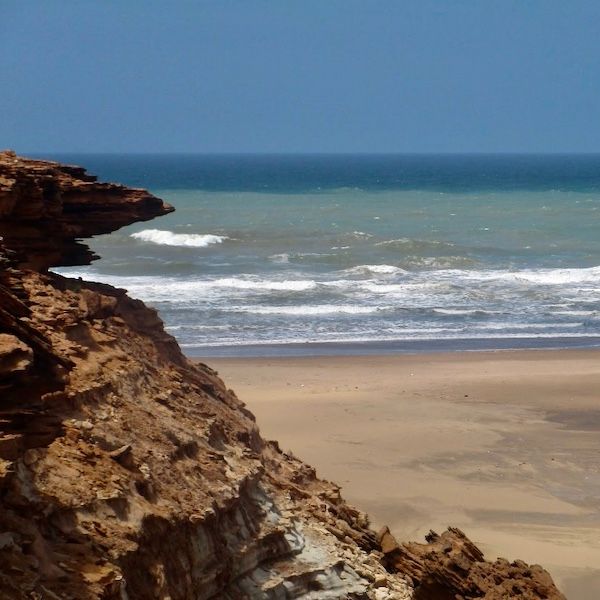
Try to Imagine Launching a Boat in This Kind of Surf... at Night.
They waited for low tide, but the waves at the beach were still high. There were thirteen people in the boat, and it was obvious that the weight was more than the little motor could handle. The captain picked a moment when he thought it best and hit the waves as hard and fast as he could. One of the breaking waves caught the boat, and when it rocked sideways, everyone fell in that direction. They did not realize how hard they would have to work to hold on and not lose their place. The captain yelled for everyone to return to their seats, but it was almost too late. A second wave hit the boat, and it nearly turned over. How the captain managed to get the boat pointed back into the waves was the grace of God. With that, they powered through the next few breakers and were off the beach.
But all was not well. One of the women began to scream frantically as she searched for her young daughter. One moment she had been beside her; the next, she was gone. Evidently, when the boat turned sideways, the little girl was thrown overboard. The distraught mother begged the captain to turn around to find her daughter, but it was too late. There was no going back. Others in the boat had to restrain her, believing she would jump into the water herself. Oumar could not believe what had just happened. Doubts quickly crept in as fear filled the boat. What was he doing there? Why did he think it would be simple… or safe?
The following 36 hours were a nightmare. Even though the skies were clear, the wind was strong and the waves were at least ten feet high. One moment the boat would be on top of the waves, and they could see the horizon. Then, they were between the waves, and it was as if the water would cover them. Everyone was cold, wet, and nauseous. There was food and water, but no one could keep it down. The loss of the child had filled everyone's hearts with fear, and most believed that the voyage had become cursed. Oumar prayed more than he had ever prayed in his entire life throughout the second night. Thankfully, on the morning of the next day, they saw the mountains of the Canary Islands.
At this point, the captain used his satellite phone to call for help. He gave their GPS coordinates to the operator and told everyone that they would soon be on land. Oumar was grateful. What he did not know was that the worst part still lay ahead. After a few hours, they saw a helicopter painted red with a white stripe. It was the Guardia Civil. As it flew overhead, everyone waved and shouted. Soon they could see a large ship approaching from the island. When it was close, they could tell that it was the Spanish police. As they waited to be picked up, Oumar realized the difficulty would be the waves. They were still high, and it was hard for the big ship to get close without smashing their little boat. They launched a smaller boat that could come close enough to give instructions. The policemen told them they had to remain calm and that everyone needed to wear a life jacket. But when they started throwing the life jackets to the people in the patera, everyone moved to the side simultaneously to catch one. In an instant, the boat turned over.
Oumar could not believe what had just happened. One minute he was in the boat; the next, he was in the ocean. People were screaming, many without life jackets. Remember, these were not fishermen who knew how to swim. They were people from the city or from the country who were simply trying to find a better life. They were exhausted, sick, and in shock. They were all dressed in heavy clothes to stay warm. Oumar held on to the side of the boat as the policemen tried to pull people from the water. He watched as several drowned before his eyes. In the end, only nine people were rescued alive.
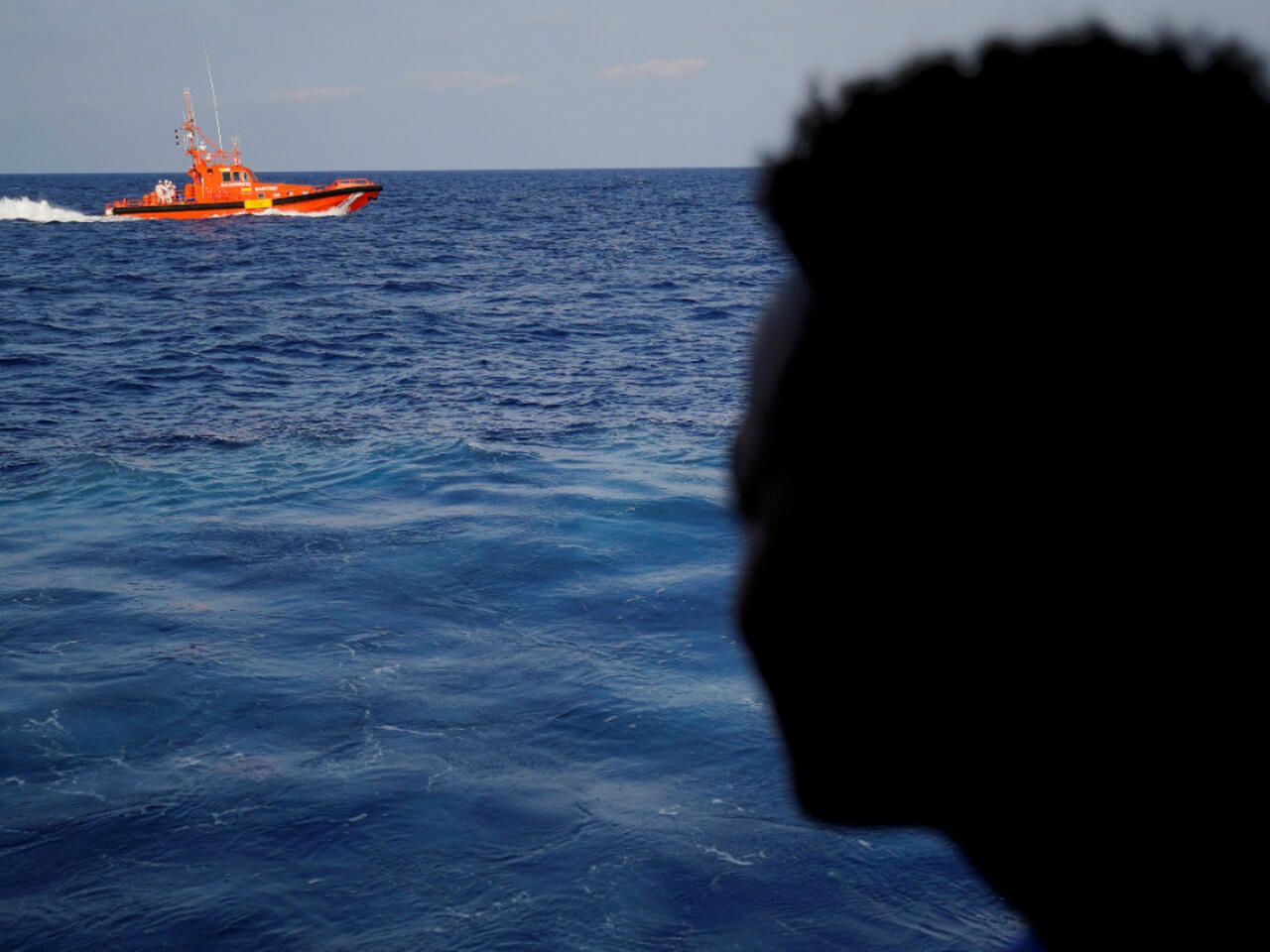
So close… and yet so far…
The trip to the harbor did not take long. The policemen gave them warm blankets and water. There was a doctor who was caring for those who had been hurt when the boat capsized. Most were bleeding, and a few had broken bones. It was obvious that several had died. They lay on the deck motionless, covered with a blanket. Some of the women were crying, but most were in shock. Had Oumar known it would be like this, he would have never left Dakar. Less than a week ago, he was with his family and friends. Now, he was surrounded only by pain and death. It was not what he expected.
Once at the dock, there were more doctors and more police. Everyone was separated, and each person was interviewed. There were several hundred migrants at the pier, apparently having come on other boats. The women and children were sent to one area, those from Senegal to another, and those from different parts of Africa to yet another place. The smugglers had coached him in Morocco on what to tell the police during the interview. After he had been questioned, he was transferred to a detention center. There, he would wait for the next stage of his journey. And it was there that he met another Senegalese man... named Babacar.
Conclusion:
Once again, I find myself tearing up as I write this story. These events are real, and they happen far too often. We are tempted to judge the people in the boats, but to what end? Most are good people simply pursuing a dream, often through a desperate step of faith. Most are God-fearing people, trusting that He will guide their way. Some are followers of Christ, seeking only to honor Him and their families. Some, like Oumar, are just young and naïve. But like the pick-up trucks that pass through the Sahara, the cayucos and the pateras in the Atlantic are filled with people from many places, different backgrounds, and different stories.
It is hard to be strong and courageous, even when you know that God is with you. When the Lord spoke to Joshua, he had an advantage. Moses had mentored him for most of his life. He had watched God move in mighty ways. And he had the first five books of the Bible to guide his footsteps. But Oumar was young, immature, and impulsive. Like many on these migratory routes, he is a Christian. But his faith is weak, and he has yet to learn to discern the voice of the Lord. As we pray for those in the desert and the sea, may we pray for those who know our Lord. May God grant them grace, safety, and a pathway that leads to Him.
1 This image was posted in several news articles. The origin is unknown, but it certainly represents a Moroccan pateras. "Cyprus Helps Rescue 300 Migrants Aboard Italy-Bound Boat", Arab News https://www.arabnews.com/node/2166151/middle-east (accessed April 12, 2023).
2 ANSA, "Corpse-Laden Boat Found in Caribbean “Drifted from Africa”", InfoMigrants https://www.infomigrants.net/en/post/32818/corpseladen-boat-found-in-caribbean-drifted-from-africa (accessed May 4, 2022). See also Emma Wallis, "Dying to Reach Europe: The Atlantic Crossing", InfoMigrants https://www.infomigrants.net/en/post/34189/dying-to-reach-europe-the-atlantic-crossing (accessed May 4, 2022).
3 Maria Martin; Javier Bauluz, "Canarias, Un Año Despuès", El Pais https://elpais.com/espana/2021-12-03/canarias-la-crisis-migratoria-un-ano-despues.html. (According to this report, 72.5% come from Morocco and Western Sahara, 23.5% from Mauritania, and only 4% from Senegal and the Gambia – See graphic in photos.) See also AlarmPhone, "Border Business - How the EU’s Militarisation Fuels Smuggling Networks Between North Africa and Spain", Watch the Med https://alarmphone.org/en/2022/03/31/border-business/?post_type_release_type=post (accessed May 4, 2022). By their estimates, only 20% come from Mauritania or further south towards Senegal.
4 AlarmPhone.
5 Fanny Latour-Lambert, "We Went to Dakar, Senegal and Cast This Seasons Most Epic Fashion Shoot", GQ (accessed April 12, 2023). If you may remember, for security reasons, it is difficult to show the pictures of people we have met. In this case, we pulled the photo from the internet.
6 AlarmPhone.
7 Arezo Malakooti; Chiara Fall, Migration Trends Across the Mediterranean: Piecing Together the Shifting Dynamics (Global Initiative Against Transnational Organized Crime (GI-TOC), 2020), 49.
8 "Dramatic Increase in Illegal Immigrants to Spain", the ARXXIDUC https://arxxiduc.wordpress.com/2007/08/17/dramatic-increase-in-illegal-immigrants-to-spain/ (accessed April 12, 2023).
9 Ermitte St. Jacques, “Economic Mobility and the Transnational Practices of West Africans in Catalonia, Spain” (Ph.D. Dissertation, University of Florida, 2009), 94.
"Photo of Migrant Rescue", France 24 https://s.france24.com/media/display/48d9c334-9e84-11e9-8ef1-005056bf87d6/w:1280/p:4x3/tunisia-migrants.jpg (accessed April 12, 2023).
