63 - Destination: What Did You Expect?
2023 No 63
The heart knows its own bitterness, and a stranger does not share its joy.
--Proverbs 14:10
In my counseling, I have often explained to people that frustration is nothing more than a response to unmet expectations. Things don't go as planned, and we are quickly disappointed. Frustration is really pretty normal. But... one needs to deal with frustrations when they occur. Why? Because unresolved frustrations can soon turn into bitterness. In the West, that bitterness can then lead to a whole host of psychological challenges. Unfortunately, most pastors have to deal with it every day in their congregations.
In my experience, African migrants who suffer from bitterness are rare. I think it is because they have different expectations in life. Africans tend to live day by day. They were born in a world of harsh realities. From childhood, they have learned to live with uncertainty. In 1960, across sub-Saharan Africa, fifteen out of every one hundred infants died. Back then, their life expectancy was only around forty years. Today, infant mortality stands at 5%, and most will live past age 60. Of course, these numbers are aggregates for all of Africa. They grow worse by a factor of three in West Africa. Depending on the country and rural location, they can then diminish by another factor of three. When you get past the statistics and talk to the people, you realize just how much death is a common part of life. Don't misunderstand… they mourn and grieve like all of us… but their culture has taught them to accept it and move forward.
Other unfortunate events are also a part of African life. People are poor, can go hungry, and can get sick. The government is corrupt, politicians lie, judges accept bribes, and police abuse their power. For the farmer, it floods when it rains, and the crops die when it doesn’t. For the teachers, sometimes you get paid, sometimes you don’t… like for a year! Most Africans live on the very edge of disaster. All it takes is one poorly timed event or unfortunate circumstance, and your world can change forever. If you live very long in Africa, you can see the fruit of disaster begging on every street corner.
Such an existence is difficult for us in the West to comprehend. Sub-Saharans handle life very differently than we do. They tend to process events in a context that is almost always spiritual. If you want something good to happen, you must honor your ancestors, pay a holy man, appease the spirits who have control… or fast and pray. If something bad happens, it simply means you missed a step somewhere. Moroccans have a word for this, Inshallah.[I] It is proclaimed whenever something desirable is spoken of in the future. It means “God wills it” and is a public acknowledgment that everything is subject to the will of God. If something good happens… inshallah. If something bad happens… inshallah!
This is not to imply that Africans are fatalistic. Why? Because although Africans may view the world through spiritual eyes, they know that it will require effort in the physical world if something good is going to happen. Such creates a weird dichotomy. Africans will pursue something with vigor. They have an incredible capacity to endure. If it happens… wonderful. If it doesn’t… such is life! Either way, they tend to live that life one day at a time. This allows them to measure their victories and failures in much shorter temporal increments. When the sun goes down today, it closes the ledger. Everything starts fresh and new with the sunrise tomorrow. Inshallah!
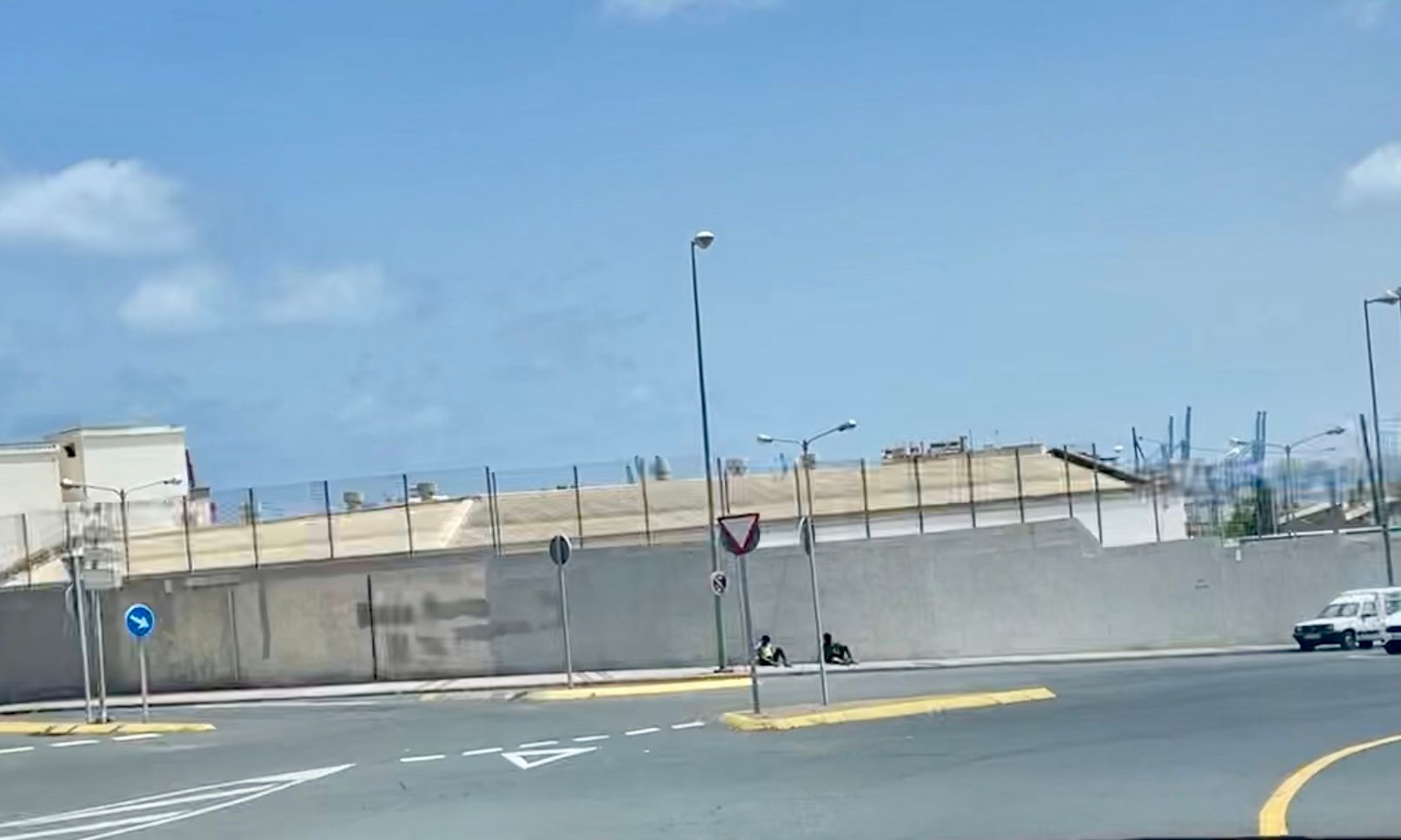
Migrant Detention Center in the Canaries
If you can somehow get your arms around this, then you may be prepared to continue the story of Babacar and Oumar. When we left each of them, they were in a detention center in Tenerife, one of the Canary Islands. Babacar had arrived after a strenuous voyage from Senegal. They were thirteen days in the water, and 35 people had died in their boat. He nearly died himself of dehydration and hypothermia, spending over a week in the hospital upon landing. When he was released from the medical center, he was transferred to a detention camp. It was there that he met a young man named Oumar.
Oumar’s story was different. Rather than take the longer voyage from a beach in Senegal, he had flown to Casablanca and paid a smuggler for a seat in a boat from the Moroccan coast. He had been in the boat for less than 28 hours and had witnessed the deaths of four people. He was rescued on the same day as several other boats. It was mayhem on the dock, and he was processed very quickly before being sent to the detention center. That evening, he found himself in a room with a bed next to a man named Babacar.
They quickly became friends and quietly shared their stories. By God's grace, they had both survived. Since Oumar still had his phone, they called their families back in Senegal. A group of men in Babacar's boat had shared photos and videos they had taken along the way, and Oumar sent some of those back as well. While people back home were grateful that they had survived, not everyone was pleased. Oumar's family was distraught that he had chosen to go to Spain. His mother had not stopped crying since he left. Their church had been praying for him, and everyone was concerned. His father told him that although he disagreed with his decision, he would try to support him as he moved on to Spain. Such would not be easy.
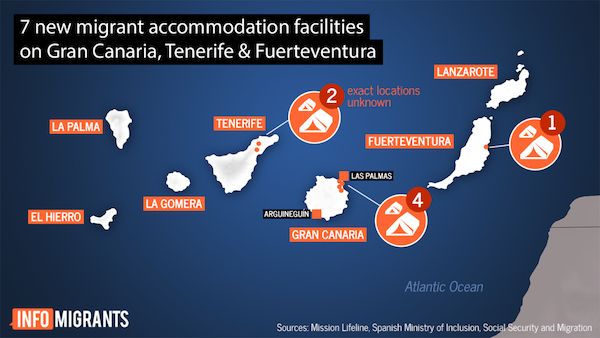
The Asylum Process
The goal of every migrant to the Canary Islands is to be granted asylum… or at least for their application for asylum to be accepted. Once their application is accepted, they should receive what is called a "red card."[iii] And that card allows them, in theory, freedom of movement across the Spanish territories. From the Canaries, this would mean one could freely purchase a plane ticket and fly to the Spanish mainland. That, at least, is what they were told by the smugglers and those who had come and gone before them. But things can change quickly.
The conditions for seeking asylum are strict. According to the UNHCR, you may qualify as a refugee if you are unable to return because...
“you run the risk of threats against your life, liberty or safety… violence, abuse or discrimination because of your race, religion, nationality, political opinions, sexual orientation or identity… threat of sexual exploitation, genital mutilation, forced marriage or violence by family members or others… forced recruitment to participate in wars or conflicts or to use weapons…torture or inhumane treatment… or you have fled because of war, conflict or violence in your country and are at risk if you return".[iv]
Needless to say, that is a difficult standard to reach, especially if one is coming from a country like Senegal.[v] But, if you can think it through, it is possible. Both Babacar and Oumar decided to craft a story around political persecution and threats against their lives due to their opposition to the current president.[vi] They had been advised that if they could tell a believable story, placing themselves in a few areas of conflict as reported in the news, they could at least get their application accepted. Even still, such would be a tall hill to climb.
Across the EU, there is what is known as a "deportation imperative."[vii] The goal is to create a containment and immobilization zone at Europe’s border. This zone becomes a front-line defense against illegal entry and often plays a cat-and-mouse game with the law. If governments can find ways to prevent applications from being successfully submitted, then migrants can be “repatriated” much more easily. This is most commonly accomplished by exploiting those migrants who are not aware of their rights. In the past, the Spanish National Police interpreted the rules to mean that one must request asylum… immediately upon detention. The migrants could not just talk about asylum or ask for asylum in their language. They must have said the words "asilo politico... in Spanish."[viii] Who would know this if they were not coached by someone else? In reality, an asylum claim can be made at any time… and in any language… within the first month.[ix] But most migrants do not know this.
The law also states that illegal immigrants can only be detained for up to 72 hours.[x] During this time, it is the responsibility of the National Police to determine the next step, which could include a return to their country of origin. Any detention longer than four days would require an order from the court. If they cannot be returned in that time, the migrant must be released. The volume of arrivals in the Canary Islands is such that maintaining such a deadline is not possible. Until 2021, most were typically released into the communities, especially if the courts were watching. But as we have noted before, the impact on the island residents and tourism industry was catastrophic… particularly during the pandemic.
Starting in 2022, illegal migrants were quickly moved to an obscure detention center. Even so, the general interpretation of the asylum rule has been applied to mean that the migrant must still claim asylum during the first 72 hours on the island, or they lose the right to file an application. In some cases, migrants have been required to fill out an application… once again in Spanish. Such is difficult when one is detained, no one is present to hear their claim, or there is no interpreter to assist with the paperwork.[xi] One may argue that the authorities are not following the law, but the laws were not written for this kind of volume. Ultimately, gaining asylum and being transferred to Spain is not always a guarantee. One of every three migrants will be sent back home.[xii] Only those who are well informed in advance or can find good legal counsel will make it through the system.
Once on the island, everyone has to undergo a series of interviews.[xiii] The first generally occurs immediately upon arrival. The National Police Force handles this. Few realize that what they say at these interviews/interrogations would determine if the migrant could move forward or be sent back home. Both Oumar and Babacar had been informed of what to expect. But, almost to their advantage, both missed the interview at the dock. Babacar had been taken directly to the hospital upon his arrival. For Oumar, so many were on the dock when he arrived that they simply moved him to the detention center.
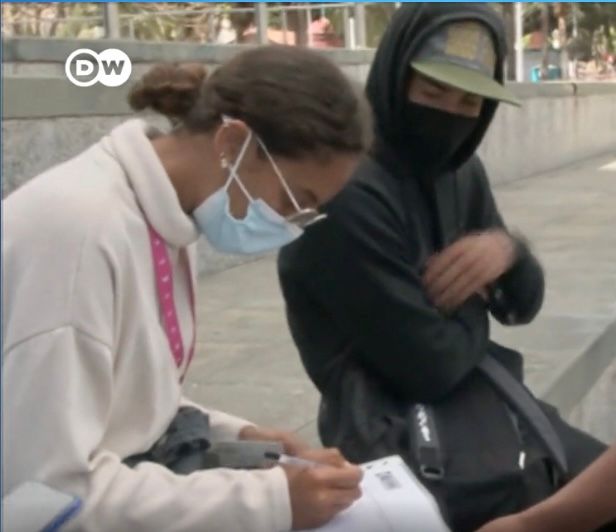
The Interview
Even so, there is a time when every migrant is supposed to attend a formal interview. At every meeting, migrants must work through interpreters. It is a powerful position. We interviewed one of these translators in 2022, revealing the bias in the system. He told us that his job was to gather the kind of information that could be used to send migrants back to Senegal. Since none of the authorities understood African languages, he could interpret the story however he desired. Since the government paid him, they expected him to get to the truth… or at least a truth that would justify sending the migrant back home. He implied that a bit of money under the table would go a long way to getting through the system for some interpreters. Of course, he would never do that!
At every interview, there is also supposed to be legal counsel.[xv] They are mandated by the EU to protect the rights of migrants and to ensure that everyone follows the rules. This is supposed to level the playing field, allowing the migrants to have what they need to claim asylum. But that assumes that the attorney is provided and is qualified. The challenge is that the vast number of migrants greatly outnumbers available counsel. Often, migrants are processed in groups rather than individually. Such works against the migrants and the practice has been heavily criticized by both the EU and human rights organizations.
Such was the case for Oumar and Babacar. After a few days in the center, they were transported by bus to the courthouse. They were taken in groups of 20 before the magistrate. The hearings were in Spanish, but an interpreter spoke French. They were each required to provide their names, countries of origin and to present their identity documents. They were then asked if they intended to claim asylum… and if they had their applications prepared to submit to the court. Everyone wanted asylum, but only a few had anything to give to the magistrate. Our two men had secured copies of the applications while at the center and had tried to fill them out using their limited access to Spanish. But that was the key… they had something to give the court. Everyone else was empty-handed.
With that, their applications were accepted, and they were both given paperwork for the cherished red card. What happened with the others is hard to say. Some, women and children, had a very high chance of getting accepted. Others were likely sent back to West Africa. For Oumar and Babacar, it didn't mean they were declared refugees. It only meant that their asylum application was now official. And that meant they now had legal protection and could travel to Spain.
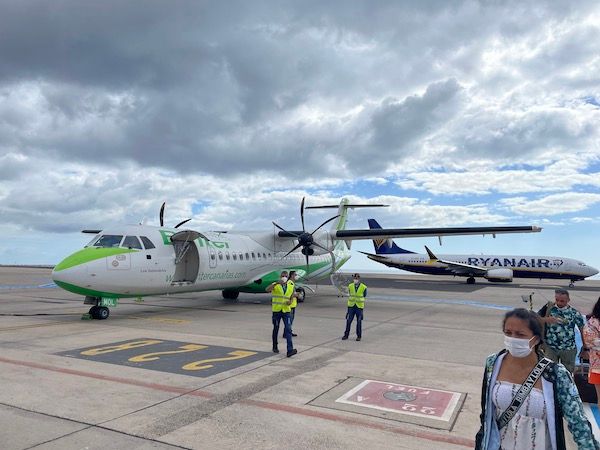
The Journey to Spain
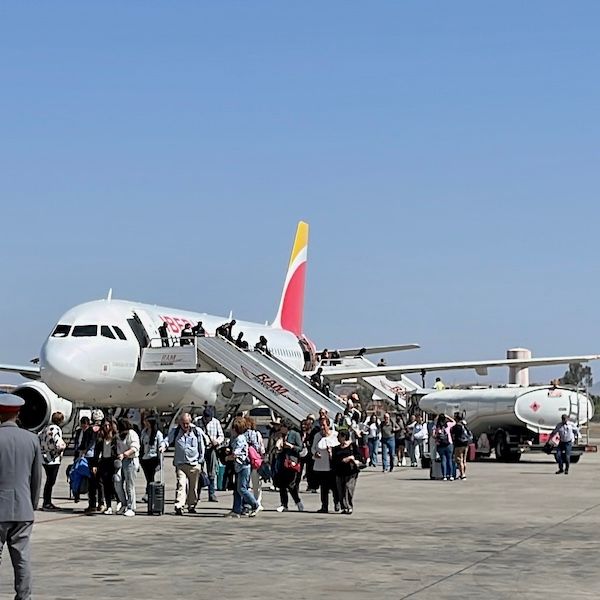
Back at the center, there was talk about purchasing an airline ticket to Madrid. Some said the government would pay the fare, just to get migrants off the island. Others said that waiting on a free ticket could take months, and in the meantime, their application could be denied. Oumar and Babacar decided that the best plan was to purchase the tickets themselves. The fare, at the time, was around 150 USD. Compared to their other expenses, this was not much. With little effort, they and several others booked their flights for the next day.
At every turn, they faced challenges. Once at the airport, they were detained by the police. Even though they held valid passports and court documents stating that their asylum application had been accepted and was being processed, they were held for nearly six hours. By then, their plane had departed, and they had lost their tickets.[xvi] Undaunted, they purchased another set of tickets… this time with a two-day departure date. They packed their belongings again the next day and arrived at the airport 24 hours early. They were once again detained, but the police realized that they could not hold them for a full day. Ultimately, they spent the night at the airport and caught their flight to Spain.
Conclusion
We will leave the remainder of the story of Babacar and Oumar to your imagination. I have met many “Babacars" on the streets of Paris. Once they landed in Spain, they were not supposed to leave the country. Since he knew that his asylum application would be ultimately denied, there was no reason not to go on to meet with his cousin in France. All it took was a train ticket to the border. From there, he could walk across. After that, it was another train to Paris. He was there within a day. As for Oumar, we can only assume that he used the resources offered by the Spanish government until they ran out. He then evaporated into the vast African immigrant community of Madrid.
The key to all of this is that they found a way to Europe. Of those who choose to take a cayuco from Senegal, very few make it. Of those who pay smugglers to get them to the Canaries via a pateras from Morocco, there is a much higher level of success. Regardless, for a sub-Saharan African to land in Madrid means that they are very lucky. Most would not admit they were traumatized by the journey, but that has to do with being African. All of that is in the past… and their eyes are toward the future… inshallah!
Proverbs 14:10 reminds us that the heart can know both bitterness and joy. But it also reminds us that both of these emotions remain hidden from the outsider. As noted above, the challenge for Africans is seldom how they manage their emotions. Rather, it is the isolation. Africans are communal people, meaning that their greatest struggle is to be away from their family structures. Such becomes a way of life for men like Oumar and Babacar. When they land in a neighborhood, one like yours, they are especially receptive to anything that looks like family. My prayer is that this is where… as God’s people… we can excel.
[i] Samuel Gonzalez, "The Meaning of “Inshallah” in Arabic", Quranic https://www.getquranic.com/the-meaning-of-inshallah/ (accessed April 14, 2023).
[ii] Marco Wolter and Benjamin Bathke, "What’s the Accomodation Situation for Migrants on the Canary Islands? (Part Iii)", InfoMigrants https://www.infomigrants.net/en/post/29269/whats-the-accommodation-situation-for-migrants-on-the-canary-islands-part-iii (accessed May 21, 2023).
[iii] IAS, "Asylum in Spain", Immigration Advice Service https://tinyurl.com/2p8t9fv6 (accessed April 14, 2023).
[iv] UNHCR, "Seeking Asylum in Spain", United Nations High Commissioner For Refugees https://help.unhcr.org/spain/en/solicitar-asilo-en-espana/el-asilo-y-otras-formas-de-proteccion-internacional/ (accessed April 14, 2023).
[v] Ibid.
[vi] U. S. Department of State, 2022 Country Reports on Human Rights Practices: Senegal (Washington D.C.: Bureau of Democracy, Human Rights, and Labor, 2022).
[vii] Samuel Allan, "The Canary Cage: The Making of Deportation Islands on Spain’s Atlantic Border", Statewatch https://www.statewatch.org/analyses/2021/the-canary-cage-the-making-of-deportation-islands-on-spain-s-atlantic-border/ (accessed April 14, 2023).
[viii]Julie Chadbourne, The Other Face of the Canary Islands: Rights Violations against Migrants and Asylum Seekers (New York: Human Rights Watch, 2002), 26-27.
[ix] UNHCR.
[x] Francisco Marugan, Migration on the Canary Islands (Madrid: Defensor del Pueblo, Spanish Ombudsman, 2021), 24.
[xi] Ibid., 56-58.
[xii] Ibid., 62.
[xiii]Ibid.
[xiv] Jan-Philipp Scholz, "Court Overturns Canary Islands Migration Policy", Deutsche Welle https://www.dw.com/en/court-overturns-spanish-island-migration-policy/video-57676938 (accessed May 21, 2023).
[xv] Marugan, 27, 51.
[xvi]See Allan. See also Marugan, 61.