7 - European Migration: We Were Refugees
2022 No 7
The Lord is good, a stronghold in the day of trouble,
and He knows those who take refuge in Him.
--Nahum 1:7
As we saw in the previous post, there is a rich history of European migration. It began in the late Middle Ages as navigational technology allowed for movements to Africa and ultimately to the Americas. During the 19th and 20th centuries, over 50 million people migrated west. Most were searching for a better life, seeking an escape from poverty, and bearing a hope of prosperity with their movements. Not all would find success, but the stories of those who did would motivate others to follow in their footsteps.
There was yet another movement associated with the Great European Migration, only this time it was born out of the suffering of war. Between 1914 and 1945, Europe experienced two major conflicts, each of which conscripted some 70 million soldiers. The human cost was beyond calculation. Between the two wars, Europe saw as many as 100 million casualties with a similar number of wounded.1 The machines of war had completely destroyed cities, and in some places, entire ethnic groups were the victims of mass genocide. In the end, WWI and WWII had displaced between eighteen and twenty-seven million Europeans, created over three million refugees, and left countless orphans and widows.2 Many would never return to their places of birth.
Before this time, European migration had been characterized by autonomous movements, individual decisions fostered by the ambition of finding economic success. These two global conflicts, however, introduced a level of forced displacement that was previously unknown. There was an entire generation that experienced profound loss and who would be forced to rebuild from nothing. It was in a post-war context that further decisions to migrate were forced upon many. One could stay on the farm, but there was no way to earn a living. Or, one could move to the city and hope to find work, find a home, and provide a semblance of a life for one's family. The war had taught Europeans how to migrate; it was their need that gave the impetus. During and after the war, these movements added yet another layer, another story that would be passed down to future generations.
The damage inflicted upon Western Europe by an industrialized war was beyond what most thought possible. And… it was beyond what many thought could be rebuilt, at least by the following generation. Amazingly, most countries had built their economies to pre-war conditions within five years.3 Reconstruction would also play a decisive role in the re-assimilation of the defeated powers of Germany, Italy, Austria, Greece, and Spain. As the West invested in their economies, they were able to overcome their defeat and internal conflicts. Even though their losses during the war were significant, the rest of Europe could not dismiss their centrality to the whole.
Economic Prosperity and Recession
The next twenty-five years would be known as the "golden age" of economic growth in Europe. During the war, nations had learned how to mobilize their people for demanding tasks. This capacity for movement would continue as European countries sought to rebuild their infrastructures, supply laborers for construction, and workers for the factories. Many of the workers were migrants who came by the thousands from both near and far. Because the need was great, non-European migrants from places such as Africa were well received. They found jobs, places to live, and a place in society.
Eastern Europe, on the other hand, fell into total disarray. The rise of the Soviet Union did not encourage Western investment in those areas. Soviet bloc countries fell far behind as they could not recuperate wartime losses and as entire populations were being repulsed from their homelands. Many would flee to the West, finding jobs and hope for the future. Those without means were trapped behind an "iron curtain," a barrier of fences, walls, minefields, and watchtowers that extended for some 7,000 kilometers.4
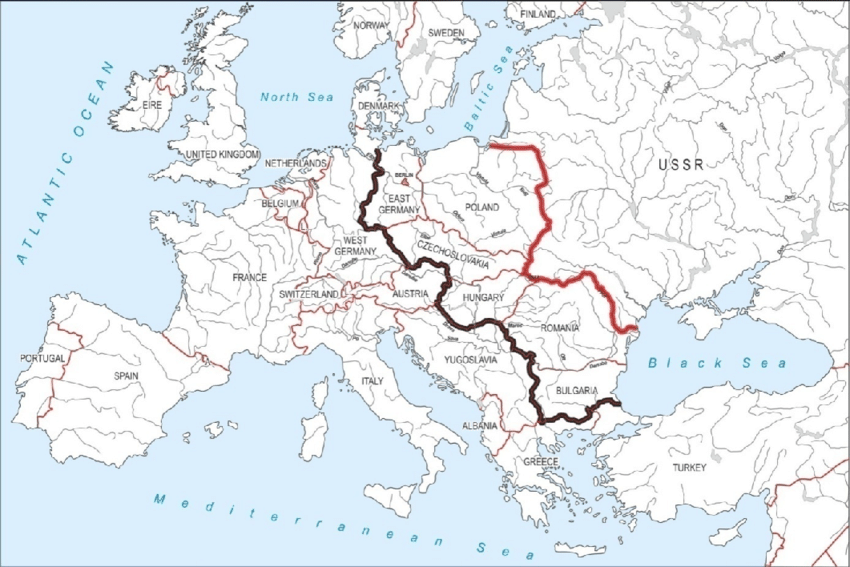
For a quarter of a century after WWII, western Europe grew at a remarkable pace. Her economy was strong, and as a leader among industrialized nations, the demand for labor was insatiable. She had an almost open border structure that encouraged guest migration (temporary labor), return migration from former colonies, and refugee migration, particularly from the East.5 Initially, geography played a crucial role in movements. Countries would recruit workers from peripheral countries. Those with highly industrialized economies became attractive to those regions with pre-industrial, agrarian economies. Over time, and partially due to Cold War restrictions on movements between Eastern and Western Europe, countries began recruiting from elsewhere. Europe would sign labor migration agreements with other countries during these years, particularly in Africa. All of which would create massive movements of people. But that would change in the early 1970s.
It is evident that the post-war years were prosperous, but the extent of European economic policy goes far beyond the scope of this article. Suffice it to say, however, that two historical components were instrumental in the change of European migration policy. First shift came with the economic crisis of 1973. Between January 1973 and December 1974, the US stock market lost over 45% of its value. It was the worst financial collapse since the depression. This event had an obvious global impact, particularly in Great Britain and Europe.6 At the same time, during the 1973 Arab-Israeli War, support of Israel from the West caused members of the Organization of Petroleum Exporting Countries (OPEC) to impose an oil embargo. Consequently, the cost of petroleum rose nearly 300%. The impact upon the European economy was catastrophic.
The crisis of 1973 led to a second shift that practically ended all migration to Europe. For nearly a decade before the economic crisis, Europe had begun a transition from manufacturing to a more service-based society. The above recession hit industrialized markets the hardest, and as they collapsed, they would not find a means of revival. The subsequent diversification of the market into a service economy created a massive surplus of labor. Suddenly, migrants were no longer needed for their labor capacities and they ranked among the highest of the unemployed. They soon became a burden to existing social systems.7
Policies were developed almost immediately to renounce labor agreements and stop what had become a strong circular (labor) migration mechanism. The result, however, had a different effect than intended. Circular migration was soon replaced by chain migration as laborers feared losing their residency permits if they returned home. Instead, they remained in their host countries, and rather than forwarding remittances, they simply brought their families to them. Keep in mind that at this point, Europe still lacked any coherent policies to manage family reunifications.8
This aspect would become a foundational component for future migration efforts. These resident migrants had become embedded, providing the necessary resources, logistics, and networks for continued migration, even if it were irregular. Migrants could, in good faith, say to their families, "if you can get here, we can take care of you." Such opened the floodgates of migration from the African continent and eastern Europe. Those with resources, and who could come legally, bought plane tickets and became lost in the growing metropoles. Those who could not come by accessible routes came by any means possible. The conflict in Eastern Europe prior to the fall of the Berlin Wall in 1989 pushed many from that region to flee to the West. From the early '70s to 2000, asylum requests in western Europe increased from 15,000 to over 300,000 per year.9 Africans simply piggybacked on those networks and came by the tens of thousands.
Despite most European restrictions, labor migration continued in Southern Europe. Places like Spain and Italy were highly agrarian, had experienced significant levels of emigration to previously industrialized countries, had low birth rates, and were consequently in need of low-skilled labor. Most importantly, they were within proximity to non-European regions that were quite capable of facilitating irregular migration. Borders were relatively open between European countries, and there was not a unified effort to patrol entry points along the Mediterranean coastline. Consequently, open migration routes existed between Spain and Morocco, Italy and Libya, Greece, and Turkey.
European Union and Border Control
As each European country began to develop more robust border controls, the challenge of limiting migration while not hindering economic movement became evident. There was a need to abolish internal borders for EU citizens while instituting a functional visa process for others. The ultimate solution was the Schengen Agreement, named after the village in Luxembourg where it was signed.10 It created the Schengen Area, where individual controls were abolished along their mutual borders. Initially, in 1985, there were only five signatories of what was then European Economic Community: France, Germany, Belgium, Luxembourg, and the Netherlands. Over the next two decades, however, twenty-one other countries would join. Member states signed the Treaty of Amsterdam in 1999, and it laid the final stone in the foundation for the European Union.11
As the EU was becoming organized, there was an ever-present need to manage migration issues. The Dublin Regulations were initially put in place to control the asylum process as the eastern borders of Europe were being overwhelmed in the 1990s.12 Migrants would arrive and seek refugee status in multiple countries at once, hoping that one of them would be receptive. Often governments would shuttle migrants from country to country, creating a population known as “refugees in orbit”. Dublin II was subsequently signed in 2003, creating a process by which one could determine which EU member state was responsible for processing asylum applications.13 In principle, that was to occur at the first point of entry. This approach, however, only increased the clandestine movements of migrants. Why? Because their goal was now to be registered into the system (fingerprint/computer) in the country where they desired to live, not where they had entered. As today, this rise in illegal activity often led to governmental abuse of those who were truly refugees. In an attempt to address such issues, yet another treaty, Dublin III, was put into effect in 2013 and initiated reforms to protect the rights of asylum seekers.14
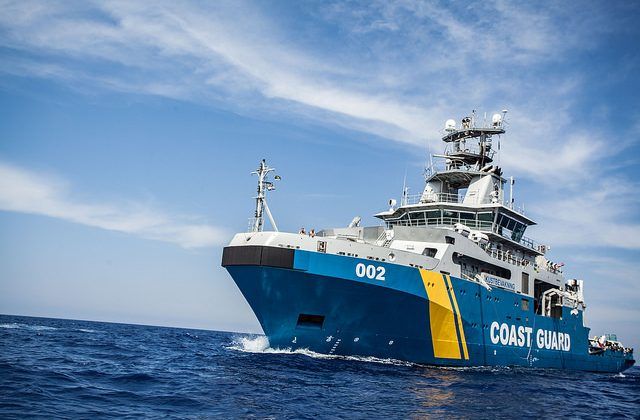
The EU currently consists of 28 states who enjoy a single economic and legal market, and it allows for the freedom of movement of people, goods, services, and money. Citizens of the EU have complete freedom to live their lives in or through any European Union country. From a migration perspective, however, the Schengen Agreement established “international” borders for member states on the outer edges, and it was up to the EU to create the capacity for enforcement. That enforcement arm was called the European Border and Coast Guard (Frontex), formed in 2004. One must keep in mind that the creation of Frontex was mostly symbolic, and as such, was woefully underfunded.
These developments would set the stage for a subsequent phase of migration history to be presented in the next post. Despite the economic recession of the 1970s, Europe had remained a destination for many. For some, it was because they had family who lived in Europe and was encouraging their immigration. For others, it was a perception of opportunity and wealth created by the recurring oral traditions from their friends, family, and neighbors who had been there. For still others, it was the harsh realities of their own circumstances that forced them to become mobile. Regardless of the motivation, their only direction of movement was towards Europe.
In the same way, Europe had not just acclimated to migration; she had become dependent upon migration. There were jobs in agriculture and service industries that migrants had historically filled. An aging population was leaving voids in other sectors that younger Europeans were hesitant to fill. They were more interested in the higher-paying jobs that could now be found across the European Union. So, it was not that her populace was opposed to immigration, but rather that she was simply not prepared for the tsunami that was headed her way.
In hindsight however, it is obvious that God was prepared, and He would use His church to stand in the pathways and care for those who were coming. The journey has not been easy, but she has effectively touched untold thousands as they left their homes in search of a better life, and a future for their children.
1 John Graham Royde-Smith, "World War I", Britanica Encyclopedia https://www.britannica.com/event/World-War-I (accessed November 25, 2021). See also "Research Starters: Worldwide Deaths in World War II", The National WWII Museum https://www.nationalww2museum.org/ (accessed November 25, 2021).
2 Mark Wyman, "Dps: Europe's Displaced Persons, 1945-1951," (Ithaca: Cornell University Press,, 2014).
3 Tamas Vonyo, "Recovery and Reconstruction: Europe after WWII", The Centre for Economic Policy Research https://voxeu.org/article/recovery-and-reconstruction-europe-after-wwii (accessed November 25, 2021).
4 Wikipedia, "Iron Curtain", Wikipedia https://en.wikipedia.org/wiki/Iron_Curtain (accessed December 1, 2021).
5 Christof Van Mol and Helga de Valk, "Migration and Immigrants in Europe: A Historical and Demographic Perspective," in Integration Processes and Policies in Europe., ed. Garcés-Mascareñas B. and Penninx R. (Copenhagen: Springer, Cham, 2016).
6 U. S. Department of State, Oil Embargo, 1973–1974.
7 Mol and Valk, Migration and Immigrants in Europe: A Historical and Demographic Perspective.
8 Hein de Haas, European Migrations: Dynamics, Drivers, and the Role of Policies 2018. Vol. EUR 29060 EN. 39.
9 See Göran Therborn and others, "The 1970s and 1980s as a Turning Point in European History?," Journal of Modern European History 9, no. 18-26 (2011). See also Mol and Valk, Migration and Immigrants in Europe: A Historical and Demographic Perspective.
10 "Schengen Agreement", https://www.schengenvisainfo.com/ (accessed November 22, 2021).
11 Oxford Research Encyclopedia of Politics (Oxford Research Encyclopedia, 2000), s.v. "The Amsterdam Treaty."
12 Mol and Valk, Migration and Immigrants in Europe: A Historical and Demographic Perspective.
13 Council of the European Union, Council Regulation (Ec) No. 343/2003 2003. Vol. 50. pt. 1.
14 Bridget Carr, "Refugees without Borders: Legal Implications of the Refugee Crisis in the Schengen Zone," Michigan Journal of International Law 38, no. 1 (2016).