8 - European Migration: Our Place In Today’s Crisis
2022 No 8
For I was hungry, and you gave Me something to eat; I was thirsty, and you gave Me something to drink; I was a stranger, and you invited Me in; naked, and you clothed Me; I was sick, and you visited Me; I was in prison, and you came to Me.
--Matthew 25:35-36
When one speaks of a "migrant crisis" in Europe, it can be challenging to discern the subject of the crisis. Is it a crisis for 6.25 million asylum seekers who have arrived since 2011, the two million-plus refugees from the Ukrainian war that began in late February 2022, or is it a crisis for the 28 European States seeking to manage and assimilate these migrants?1 In many respects, it can be all three. It truly is a human crisis. If we were a governmental organization such as the United Nations, or even a non-governmental organization such as Médecins sans Frontières, the policy and humanitarian challenges would fall directly at our doorstep. But we are not policymakers, and the church’s humanitarian role is very different from that of other NGOs. We are God’s people, and we have been called to love the strangers in our land and to serve them regardless of how or why they may have arrived.
As such, we should neither be ignorant of the stories of migrants nor lack empathy for their situations. When they arrive, they have needs. Perhaps their greatest need is to find a community that cares. Let us not forget that relationships are built out of compassion amid crisis, and it is in those relationships, the gospel is most naturally transmitted. Because of that, their stories are essential. For the pastor in Europe who prays over his community each day, he would do well to know his neighbor and the roads they have traveled.
The Prelude to 2015
The European Migrant Crisis has its origins in Central Asia. Conflict has been present in Afghanistan since the Russian occupation in 1979. When they withdrew in 1989, an extremely conservative Islamic group called the Taliban filled the void.2 They were a militant movement, and by 1998 had captured and were dominating most of the country. The Taliban made life difficult for many and created massive flows of refugees to the neighboring countries. There was a bit of a reprieve in 2001, but the ongoing war with NATO-led forces further displaced another 2.5 million people. By 2010, Afghanis were one of the world’s largest migrant groups accounting for one out of four refugees.3 But they were not the only ones facing difficulties in the region. Conflict and repression had also forced citizens from Iraq, Iran, and Pakistan to flee their homelands. For many, the only direction they could go was West. Most found their way to the Mediterranean Rim, landing in Lebanon, Jordan, Syria, and Turkey. Those with some measure of resource could pay smugglers to get them into Europe, where they could then claim asylum.
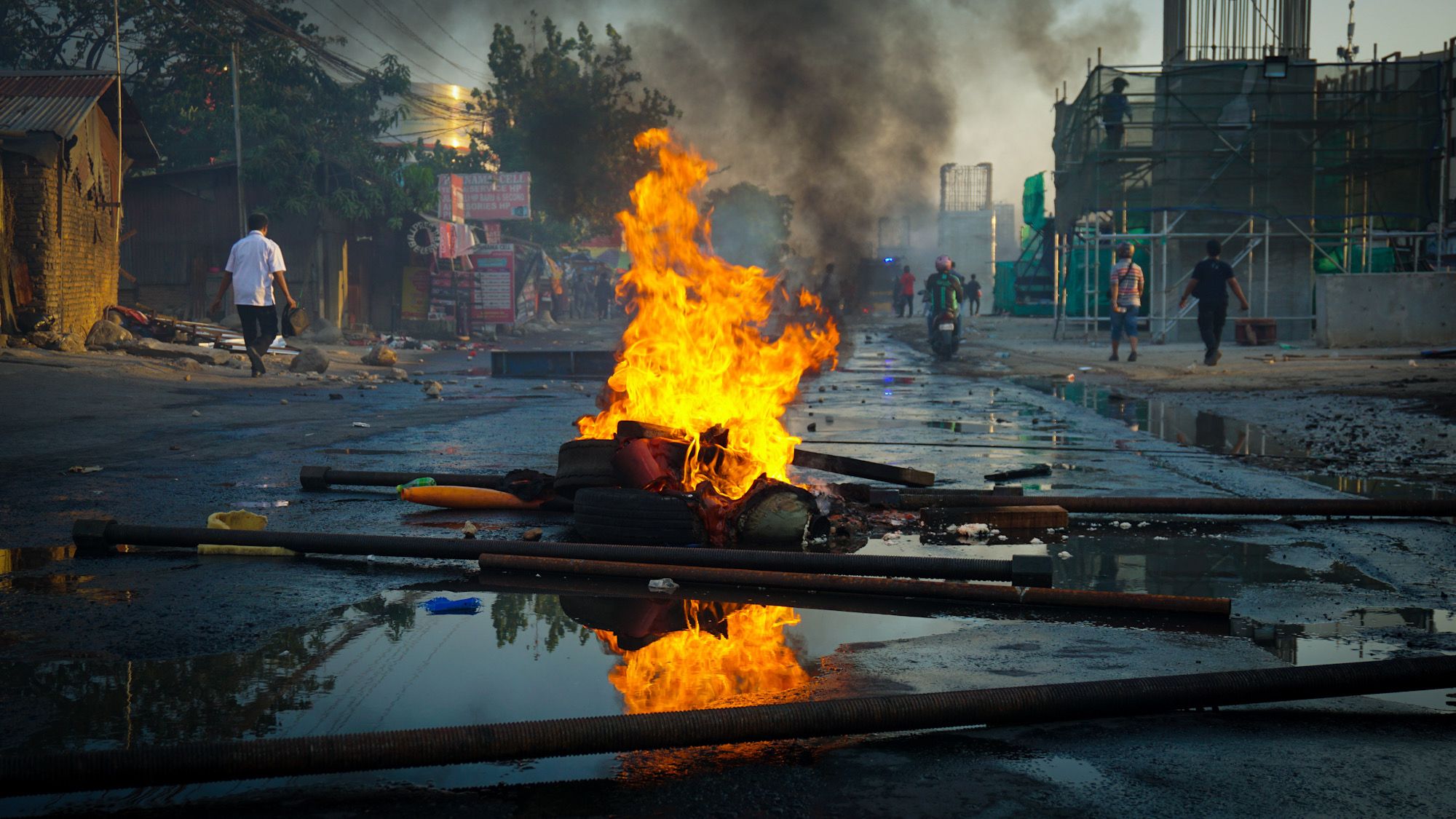
Things took a dramatic shift in 2010-2011 in what has come to be known as the Arab Spring. It began as a political movement in Tunisia. It took the form of civil protest in the face of governmental corruption and poor economic conditions. Within months, similar demonstrations... often violent, erupted in Libya, Egypt, Yemen, Syria, and Bahrain. The movement would ultimately affect nearly every Arab state. Across the region, the unrest led to several coups d’états and civil wars, which in turn displaced millions of people.
The most significant of these civil wars, from the view of refugees, was in Syria. To give an idea of scale, the Syrian population before the conflict in 2011 was estimated to be 22 million people. Within a decade, the war had displaced over half of the populace, with some 6.7 million fleeing to other countries. Turkey had historically maintained an open border with Syria and became a natural destination for many.4 At the beginning of 2014, there were 560,000 registered refugees in Turkey. By the end of the year, that number had grown by a million. It would grow yet another million by the end of 2015.5 The number of unregistered asylum seekers was unknown. Although the government of Turkey sought to hold back the tide, there were numerous pressures, political and pragmatic, that made such nearly impossible.
Others fled south to Jordan, Lebanon, and beyond. At the beginning of the Syrian civil war, Egypt welcomed 100,000 refugees under President Mohamed Morsi. After the 2013 coup d'état, however, Syrian asylum seekers were viewed as hostile by the new government, and many were forced to go elsewhere.6 Not able to return along the pathways that had brought them to Egypt, a steady stream of migrants began to make their way west towards Libya and Tunisia in hopes of finding a path across the Mediterranean towards Europe.
The compassion of God's people has a way of looking above the politics, past the fear, and beyond the differences. And it is often by that compassion that the doors are opened to share the love of Christ, and the grace of His redemption.
For the most part, Europe remained insulated from the most recent of these migrant flows. In the past, there had been a measure of governmental control concerning organized crime and smuggling networks. As some of the surrounding governments began to collapse, such restraints evaporated. Such was the case for Libya. The death of Muammar Gaddafi in October 2011 was profound and allowed the country to descend into chaos. Conflict and fighting continued between those loyal to Gaddafi, rebel leaders, and local militias. There was a brief season of diminished conflict. Unfortunately, the country fell into a second civil war in 2014.
Undoubtedly, the conflict in Libya created its own share of refugees. In 2011, more than a million people fled to Tunisia.7 Perhaps another million fled towards Egypt. Many had returned home before the second war in 2014, but by then the lack of control by the governmental factions allowed trafficking and smuggling networks to flourish.8 Word quickly spread that the doors to Europe were open for a price. Many of the boats that carried migrants towards Lampedusa (Italy) were initially owned by Libyan fishermen who had sold their ships for profit. They were often piloted by experienced captains from Libya, Tunisia, or Egypt who were compensated by making the voyage for free.9 This central Mediterranean route became attractive for many who were also displaced by conflict in Central Asia and Syria. Even more so, it opened the door for tens of thousands of migrants from Africa who would begin to make their way towards Europe.
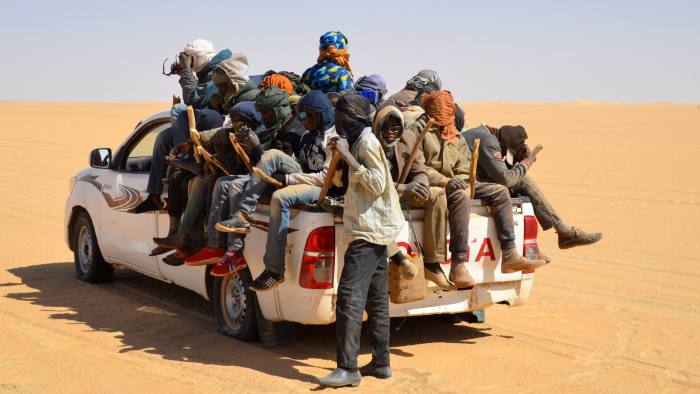
As for these Africans, they mostly fell into one of two groups. First, there was a vast pool of refugees abiding in African conflict zones. They were from places like Sudan (1,100,000), Somalia (660,000), the Democratic Republic of the Congo (517,000), the Central African Republic (412,000), along with Mali, Burkina Faso, and Nigeria (500,000).10 Having left home, many were now in search of a better life in Europe. Second, there were those who were simply impoverished and lacked any other means of escape. The perception of wealth, accompanied by a promise from the smugglers that they would find asylum, drove many towards the North. Migrants from sub-Saharan Africa can be complicated to understand, particularly their motivations for movement. Attempting to do so will become the content of many posts yet to come.
Regardless, migratory pressures were building around the Mediterranean Rim. Refugees from Syria and Central Asia were stacking up in Turkey. They were joined by a host of Africans who had the resources to fly to Istanbul with the intention of continuing Greece. Turkey had become saturated and was ready for Europe to carry some of the burdens. Others, predominantly sub-Saharan Africans, were moving towards Libya through a variety of smuggling networks. Upon arrival, a few would find work. Others, however, faced horrific conditions in a country of conflict. Few found a reason to remain and most were willing to do whatever was necessary to catch a boat towards Italy.
2015: The Dam Bursts
The height of the crisis came in 2015 when over 1.3 million asylum seekers crossed into Europe. Three-fourths of them crossed the Aegean Sea from Turkey into Greece. The remainder came through North Africa, crossing the Mediterranean into Italy and Spain. When they landed, they immediately claimed asylum, whether they qualified or not. European law and United Nations regulations required processing all who applied and the giving of specific support measures to all asylum seekers until authorities decided their case. In the meantime, however, they were in Europe, and most were not necessarily interested in following European regulations. Many would attempt to relocate to join friends and families in their desired cities of destination.
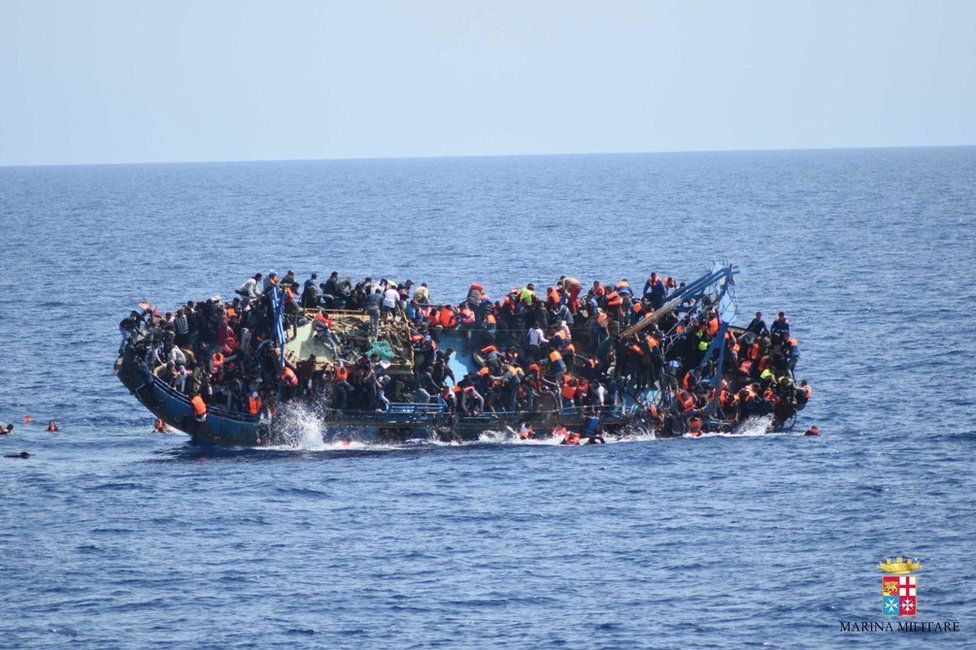
One could best describe the response as chaotic. Initially, Europeans were sympathetic to the migrants. Authorities opened reception centers, countries offered to accept refugees, and people opened their homes. Germany had received over one million refugees by the end of 2015. The number of migrants dying in the Aegean and Mediterranean Seas was staggering. In April, two boats capsized with over 1,250 people on board. Over a thousand drowned.11 Then in September, a photographer for the Dogan News Agency photographed the lifeless body of 3-year-old Syrian Alan Shenu on a Turkish beach.12 Before the year was over, more than 3,700 people would be lost at sea.13 Even a cold world had taken notice. But despite the horrific nature of the losses, compassion fatigue would soon limit both the ability and the desire to help.14 For many in Europe, the crisis had simply become an invasion. The chart below helps to visualize the movements.15
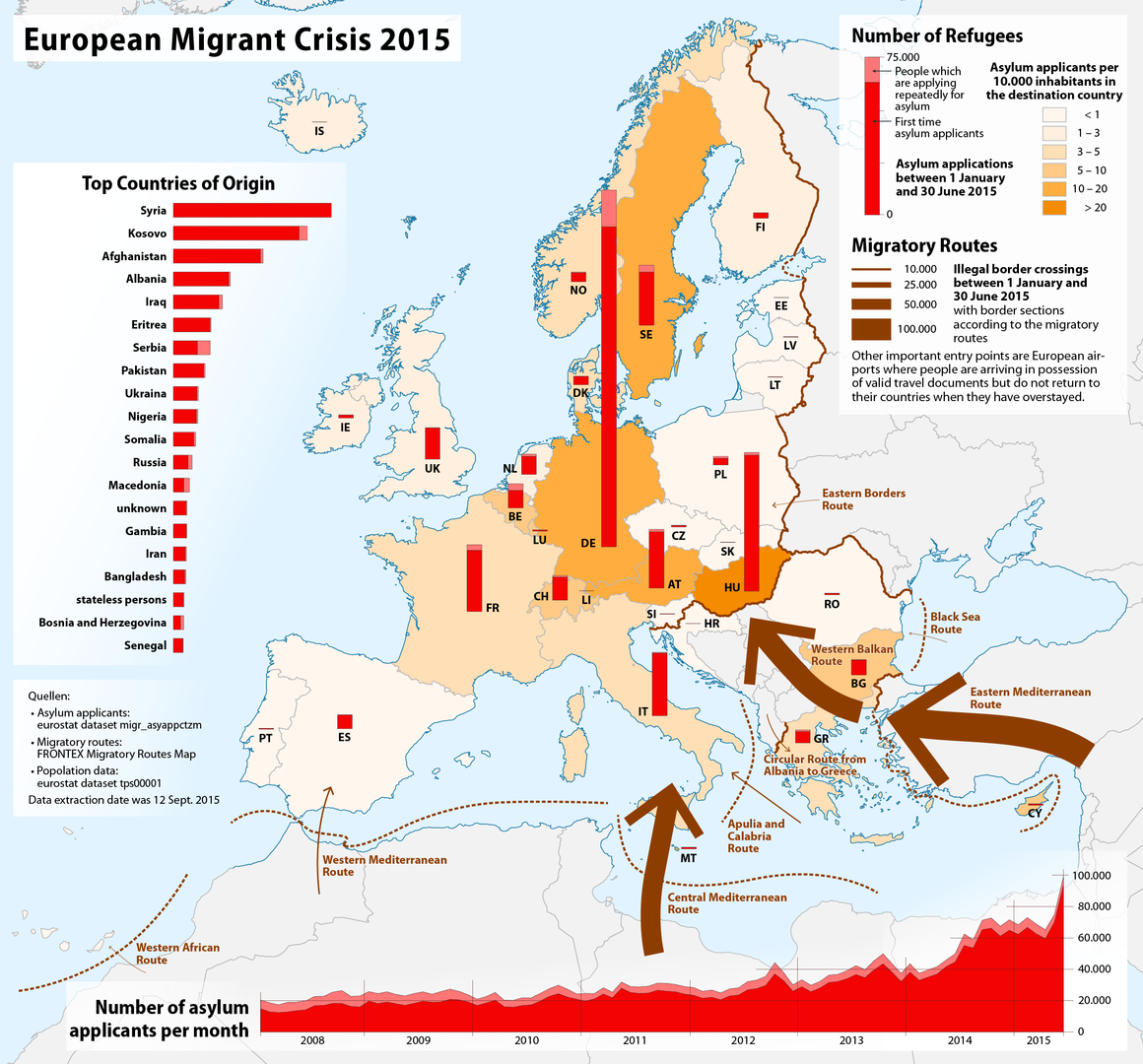
Southern European Union member states on the outer margins caught the brunt of the increased migratory flows. They were poorly equipped to handle the masses who were arriving on their beaches. Those in the interior did not want to engage in such challenges and consequently began to re-impose border controls to prevent movements. Countries such as Hungary built fences along their borders. Conflicts often became violent. The EU was in a full-blown crisis, with seemingly no end. Frontex, the European Coast Guard, was deployed to initially offer rescue missions to those in distress at sea, along with numerous NGOs. But the more the rescue boats seemed to save, the more the smugglers pushed migrants into the sea.16 There is no way to honestly know how many lives were lost in 2015. The 3,700 listed above represent only those who authorities could locate. Countless others are buried in the Mediterranean and may never be recognized on official lists.
One can hardly read anything on the news or on social media today without generating an incredible sense of sympathy for migrants, particularly those who have been forcibly displaced. At the time of this writing, over two million people, mostly women and children, have been pushed out of Ukraine.17 They have captured the attention of a global audience in a way that is unlike most of their predecessors. And although this blog is about sub-Saharan migration, they are inextricably blended and mixed within a larger context of European migration. The stories of the future are being experienced today, and they will most certainly the context of migration for decades to come.
Most of those who survive the journey are either currently, or soon will be living in the houses and apartments surrounding the churches of Europe. Rather than politicians and NGOs, it will be their pastors, their members, who will engage their communities and will care for their new neighbors every day. These immigrants will be fortunate, having beat the odds, endured the suffering, and found a new home. Many will desire to assimilate into European culture. They are learning new languages, striving to find work, and seeking answers to the questions the trials have brought into their lives. Many are doing so while still mourning their losses. Their hearts and spirits are indeed open. The compassion of God's people has always had a way of looking above the politics, past the fear, and beyond the differences. And, it is often by that compassion that the doors are opened to share the love of Christ, and the grace of His redemption.
1 EUROSTAT, "Asylum Applicants by Type of Applicant, Citizenship, Age and Sex - Annual Aggregated Data," (Geneva, EUROSTAT, 2021.)
2 BBC, "Who Are the Taliban?", BBC News https://www.bbc.com/news/world-south-asia-11451718 (accessed November 28, 2021).
3 UNHCR, 2009 Global Trends: Refugees, Asylum-Seekers, Returnees, Internally Displaced and Stateless Persons (Geneva: UNHCR, 2010).
4 https://www.unhcr.org/statistics/unhcrstats/5ee200e37/unhcr-global-trends-2019.html
5 UNHCR, "Registered Syrian Refugees: Turkey", UNHCR https://data2.unhcr.org/en/situations/syria/location/113 (accessed November 28, 2021).
6 See David Kenner, "Latest Victims of Egypt’s Coup: 70,000 Syrian Refugees", Foreign Policy https://foreignpolicy.com/2013/07/11/latest-victims-of-egypts-coup-70000-syrian-refugees/ (accessed November 28, 2021). The new government believed that the Syrians were providing support to the Muslim Brotherhood. Although some 100,000 Syrians were in Egypt, only 70,000 had obtained refugee status. As it became evident that the remaining would not be granted asylum, they began to look to go to Europe through Libya.
7 See Omer Karasapan, "The Impact of Libyan Middle-Class Refugees in Tunisia", The Brookings Institution https://www.brookings.edu/blog/future-development/2015/03/17/the-impact-of-libyan-middle-class-refugees-in-tunisia/ (accessed November 29, 2021).
8 See Tuesday Reitano and Mark Shaw, "Libya: A Patchwork State Sewn Together Along Trafficking Lines", Global Initiative Against Transnational Organized Crime https://globalinitiative.net/analysis/libya-a-patchwork-state-sewn-together-along-trafficking-lines/ (accessed November 29, 2021). See also Tuesday Reitano and Mark Shaw, Libya: The Politics of Power, Protection, Identity and Illicit Trade 2017. Vol. 3. 6.
9 Patrick Kingsley, "Libya's People Smugglers: Inside the Trade That Sells Refugees Hopes of a Better Life", The Guardian https://www.theguardian.com/world/2015/apr/24/libyas-people-smugglers-how-will-they-catch-us-theyll-soon-move-on (November 30, 2021).
10 UNHCR, Global Trends: Forced Displacement in 2014 2015.
11 Julian Miglierini, "Migrant Tragedy: Anatomy of a Shipwreck", British Broadcasting Company https://www.bbc.com/news/world-europe-36278529 (accessed November 29, 2021).
12 Gordon Rayner, "Aylan and Galip Kurdi: Everything We Know About Drowned Syrian Refugee Boys", The Telegraph https://www.telegraph.co.uk/news/worldnews/europe/11841802/eu-migrant-crisis-refugee-boys-aylan-galip-kurdi.html (accessed November 29, 2021). See also Bryan Walsh, "Alan Kurdi's Story: Behind the Most Heartbreaking Photo of 2015", TIme https://time.com/4162306/alan-kurdi-syria-drowned-boy-refugee-crisis/ (accessed November 30, 2021).
13 BBC, "Migrant Crisis: Over One Million Reach Europe by Sea", British Broadcasting Company https://www.bbc.com/news/world-europe-35194360 (accessed November 29, 2021).
14 Gareth Evans, "Europe's Migrant Crisis: The Year That Changed a Continent", British Broadcasting Company https://www.bbc.com/news/world-europe-53925209 (accessed November 29, 2021).
15 See Maximilian Dörrbecker, "European Migrant Crisis. Asylum Applicants in Europe between 1 January and 30 June 2015.", Wikipedia https://commons.wikimedia.org/w/index.php?curid=43280936 (accessed November 25, 2021).
16 Kingsley.
17 Floren Zandt, "2.5 Million Seeking Refuge from Russia's Invasion, Statistica https://www.statista.com/chart/26960/number-of-ukrainian-refugees-by-target-country/ (accessed March 11, 2022).