9 - Migration: A Christian View
2022 No 9
Now the LORD said to Abram, “Go forth from your country, and from your relatives and from your father’s house, to the land which I will show you…and I will bless you.
--Genesis 12:1-2
I spend a lot of time with immigrants. Many are believers. When I ask them why they have come so far, at such great expense and potentially such significant risk, I often hear them say that God led them. I have heard this same story from missionary pastors, university students, and economic migrants. They were in their home village or city (what we would call a point of origin), and they sensed that God was leading them to a better place. Armed with that hope and often a testimony of God’s provision, they set out for an unknown land. How could one deny that God was directing their paths?
At the same time, I have met many immigrants (unbelievers) who were far from home and perhaps in a place that was not of their choosing. War and violence displaced some; evil people trafficked others. Was God not also with them, guiding their footsteps? What of those who had paid a smuggler out of desperation, and now are living “without papers”, having arrived “irregularly”, and were by all accounts “illegal"? Can we honestly say that God was not also active in their lives? And if He were indeed guiding their footsteps… to what end?
Migration may be complicated, but no more so than any other facet of human life. If you desire simplicity, I suggest that you remain at home and cancel your internet! But if you want to get your hands dirty and do kingdom work, you have to wrestle with what to do with the foreigner or the stranger in your midst. And at some point, you may even have to recognize that the migrant… is you!
Perhaps now may be a good time to briefly review some fundamental Biblical truths concerning migration. It is good to be reminded of God’s view on things from time to time. Such may help orient your thoughts and put a few things back into perspective.
In the Beginning
If we are to understand how God views migration, we must start at the beginning. I mean the very beginning. It all begins with the creation of the heavens and the earth in the first chapter of Genesis. He then created Adam and Eve and gave them the role of caretakers.
God blessed them, and God said to them, “Be fruitful and multiply, and fill the earth, and subdue it; and rule over the fish of the sea and over the birds of the sky and over every living thing that moves on the earth.” (Genesis 1:28)
While it may be easily missed, there is a place in that verse where God says to “fill the earth.” Remember that this was before the fall, before sin entered the world, and before they had been pushed from the garden. By God’s design, they were to be fruitful and multiply. That is to say... that they were to have many children and grandchildren, for generation upon generation, and the natural result would be that the world would become populated. Such would not be possible without migration. People must move to get around this big ball of rock and water. One might imagine that these movements would be for commerce, work, education, to live with extended families, and perhaps even vacation. (And no… vacations were not a part of the curse… they were a part of God’s original plan!)
All of this is to say that migration is not an evil construct. Actually, it is pretty standard and should be considered a part of human existence. People are on the move today, and the vast majority of those movements are for appropriate reasons. Chances are, you are a migrant. You grew up in one community; you then moved to another town for school and another place for work. In fact, you have probably lived in many places, perhaps even internationally. I would suspect that the motivation for many of those movements was to improve either your life, or the life of your family. If it was good for you, why would it not be suitable for someone else? So let us, therefore, begin with a foundation that from the beginning, migration has been a natural and blessed part of God’s plan for humanity.
So What Happened?
If you keep reading in Genesis, you must only go two chapters before you encounter the sin of Adam and Eve. That sin infected every aspect of their lives and would do so for every generation to follow. It most certainly had its consequential effects related to movement.
So He drove the man out, and at the east of the garden of Eden He stationed the cherubim and the flaming sword which turned every direction to guard the way to the tree of life. (Genesis 3:24)
This one verse sets the stage for certain types of migration yet to come. One of the consequential effects of sin is that it brings a loss. In this case, the first family lost the privilege of living in the Garden of Eden. They now had to go into the fields where the work was much harder. But we can also see God’s redemptive hand in this same verse. Why were they pushed away from the tree of life? Perhaps it was because eating of the tree would have greatly complicated God’s plan to restore His relationship with man. Thus, from the beginning, we can see a connection between what might be called punitive and redemptive migration.
Adamic Migration
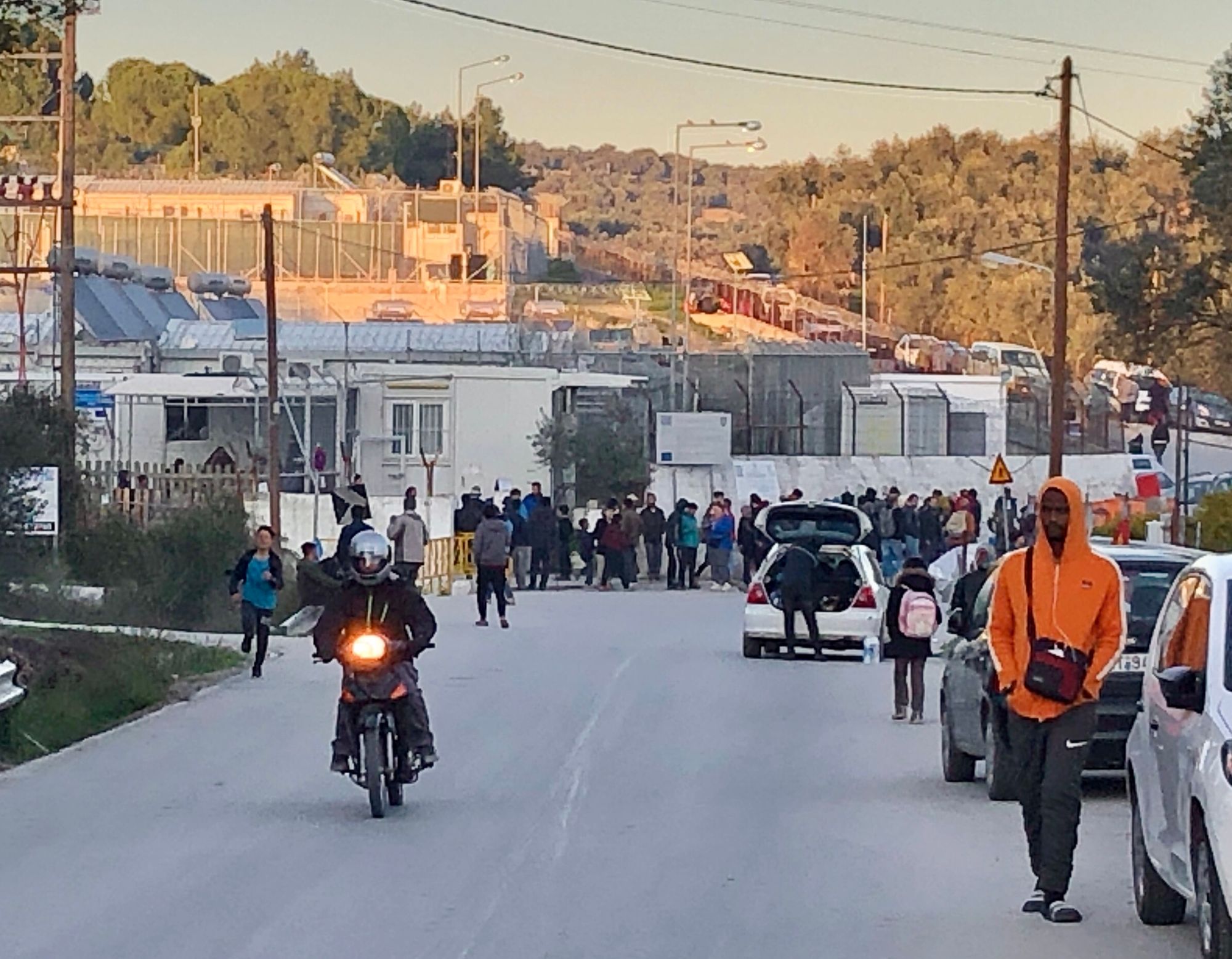
Scripture documents movements of God’s people in two broad categories. “Adamic,” where people move due to disaster, deprivation, or loss, and “Abrahamic,” where people move as a means of escape to a superlatively better future.1 The first of which (punitive) recognizes that displacement can be one of the consequential effects of sin in this world. Sometimes it is due to personal sin, but often it is due to the actions of others. War, human trafficking, and natural disasters can push people to move who normally would have stayed close to home. Such was the case for Joseph, Moses, Naomi, and even the nation of Israel.² The process can also be seen in the New Testament. Jesus Himself was forced to flee to Egypt, and He warned His disciples that they would also face such pressures.3 The trend indeed continues today. It is estimated that there are some 90 million people in the world today who have been forcibly displaced from their homes.4 For the vast majority, they are the victims of someone else’s sin.
Abrahamic Migration
But it is also essential to recognize that most of all migration is for the purpose of finding a better life. One could see how this has come to be called redemptive migration. It is life-changing at two levels. The first, as mentioned above, is to make our physical lives better. In the Scriptures, we also find individuals migrating for no other reason than personal improvement.5 Often, the foreigner mentioned in the Old Testament is simply someone who has come to Israel to do business. Even Saul was a migrant long before he became the Apostle Paul. He was born in Tarsus but had educational and economic pursuits across the middle east.6
But there is another level of movement that is evident in scripture. It is much more in line with the spiritual notion of redemption. Abraham migrated because he was a part of God’s redemptive plan.7 He could have stayed with his father’s family and would have enjoyed a good life. Migration could have been a wrong move for Abraham in so many ways. Except, of course, it was a part of God’s redemptive plan.
In the same way, Joseph’s displacement to Egypt was a consequential effect of his brother’s sin. In the end, however, we learn that it was also a part of the redemptive plan of God.8 Perhaps the most remarkable illustration of this kind of movement is found in Jesus Christ Himself. He left heaven to dwell on the earth, that He might redeem man unto Himself.9
And so, we come back to the reality that like a coin, migration has two sides. On one side, it is destructive, painful, and often filled with suffering. This kind of movement was not a part of God’s plan and is always a consequential effect of personal sin, the sin of someone else, or the impact of sin on this world. On the other side, migration can often be redemptive. This kind of movement has indeed been a part of God’s plan from the beginning. It allows us to do exactly what God has called us to do, that is, to be fruitful and to multiply.
So is there a meeting point on this proverbial coin of migration? Absolutely! Because sin has entered this world and has separated us from God, He became a migrant to bring about our redemption. Think about that. Jesus became a migrant, so a world could be saved! Therefore, is it not fitting that His followers are often moved beyond the comforts of their own homes to share a message of hope in the gospel in a moving world?

A Biblical Response
Across our world today, people are struggling to understand how to respond to migration. Governmental organizations (GOs), when functioning as God designed, should be developing and enforcing policies that serve to control migration. Non-Governmental Organizations (NGOs) serve a humanitarian role, particularly in crisis zones and among displaced peoples. Faith-Based Organizations (FBOs) and the church certainly play a humanitarian role, but we also have a supremely spiritual purpose. We are called to be a people of compassion.10 We are to be a people who serve.11 But we are also to be a people who share the good news of Jesus Christ.
We could spend a lot of time here discussing the politics of migration or the shortcomings of humanitarian agencies. Such is not our role. Our responsibility as the church is to love our neighbors, regardless of how they arrived. Why? Because God has directed them to us. Paul made it crystal clear to the Athenians that God was in the process of drawing people unto Himself.12 He reminded the Romans that the message could not be heard unless someone were in a position to share.13 Migration has a way of putting people together. Jesus could have addressed the social evils of His day, but that was not His goal. His goal was to seek and save the lost.14 Paul could have focused on the inequities of the Roman empire, but that was not his goal either. His focus was on Christ, and Him crucified.15
Conclusion
Neither Jesus nor Paul would be pleased if we were to ignore human needs and the suffering that comes with forced displacement. Nor are we to turn a blind eye to those suffering due to circumstances or perhaps bad decisions. The church has a considerable role in serving humanitarian needs around the world. But let us recognize that the most effective service of the church is when she loves her neighbor… the one who lives next door… the one who is now a part of our community. If they are hungry, feed them. If they are sick, care for them. If they are illegal, visit them in prison. We are to have compassion for their needs just as we would for anyone else. Some will be open and receptive to the gospel, and others will not. But for those who are, your interaction in their time of need may well be the key to them coming to faith. And that, my friend, will supply their greatest need.
1 Andrew F. Walls, “Mission and Migration: The Diaspora Factor in Christian History,” Journal of African Christian Thought 5, no. 2 (2002): 3. Andrew Walls was an early scholar in the modern World Christian Studies Movement. His studies have greatly augmented our knowledge and understanding of Biblical migration.
² Genesis 37:18-36, Exodus 2:15, Ruth 1:1, 2 Kings 24:14
3 Matthew 2:13-14, 10:16-18
4 M.; Triandafylidou A. McAuliff, World Migration Report 2022 (Geneva: International Organization for Migration (IOM), 2021), 4.
5 As today, the people of the Bible were mobile. There were merchants (Gen 41), laborers (1 Kings 5), people seeking medical care (2 Kings 5), diplomats (Acts 8), mariners (Jonah 1), soldiers (Matthew 8), etc.
6 Acts 22:3 It is well known that Paul was from Tarsus, but was sent to Jerusalem at a young age to study under Gamaliel.
7 Genesis 12:1-3
8 Genesis 50:20
9 Philippians 2:4-8
10 Luke 10:27, Deut. 10:19
11 Matthew 25:35, Romans 12:13
12 Acts 17:26-27
13 Romans 10:14
14 Luke 19:10
15 1 Corinthians 2:2