100 - Nordic Routes: Refuge, Safety, and the Weight of Staying
For the Lord will not reject forever, for if He causes grief, then He will have compassion according to His abundant lovingkindness. For He does not afflict willingly or grieve the sons of men.
— Lamentations 3:31–33
2026 No. 100
As I write this post, it is humbling to realize that it is number one hundred. Such is difficult to imagine. I am currently attending the Refugee Highway Partnership annual conference in Malaga, Spain.1 So much of their focus is subject of what follows. As you work your way through this post, I want to encourage you to forget what you hear in the bias of secular media. Rather, discover how God is working through His children around the world.
The Northern Routes are not always dramatic, and they are rarely urgent in the way we tend to think about migration. They do not always involve desperate crossings or moments of obvious crisis. More often, they unfold quietly… after protection has already been granted and after the journey is supposed to be over. What drives people north at this stage is not fear, but something more challenging to define. It is the slow realization that being safe isn’t the same as being able to live.
Lamentations provides language for such moments. It addresses a grief that is real, a journey that isn’t punishment, and a God whose compassion remains even when hope falls short. The text doesn’t rush toward resolution. It simply affirms that the burden being carried is meaningful and that suffering, no matter how difficult to reconcile, isn’t inflicted without care.
In the previous post, we followed a highly visible Northern Route toward the UK… a journey marked by frustration and the hope that movement itself might bring renewal. The path we are exploring here is different. It doesn’t cross open water or make headlines. Instead, it goes through politics and policies. It depends on placement decisions and systems that are generally organized and functional. It leads into cities that are safe and well-resourced, yet still foreign enough that feeling a sense of belonging takes time.
As with many of our stories, what follows is not a single biography. It is a composite story, drawn from years of fieldwork and conversation, shaped by patterns that repeat themselves in people’s lives, even as details change. Names have been changed, and locations have been blended. But the movement itself… and the waiting that accompanies it… is very real.
I want you to meet Ibrahim.
Leaving, Arriving, and Leaving Again
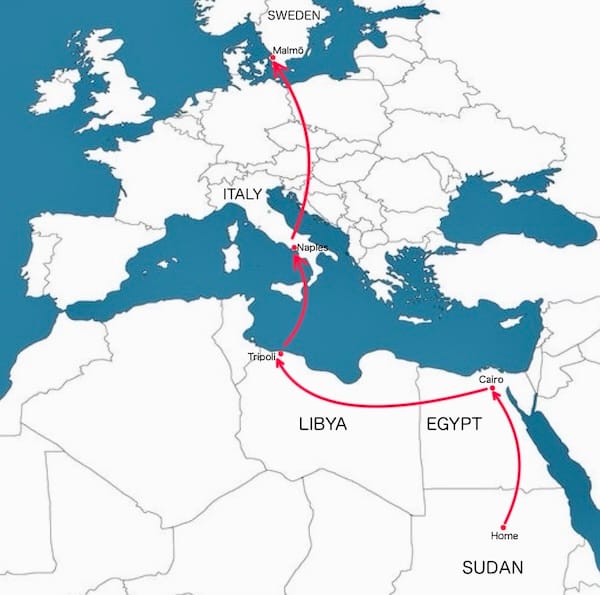
Ibrahim did not leave Sudan thinking about Europe, and he didn’t go easily. For most of his life, his movements stayed close to home. Like many Sudanese men, he learned to adapt to political shifts, manage a changing economy, and to live cautiously. He never expected to move away. Leaving only became unavoidable when military violence broke out in his community, and it became known that he was on the wrong side of the conflict.
Prayer accompanied that season, not as a dramatic turning point but as a steady practice that had always been a part of his life. As circumstances tightened, prayer became less about seeking direction and more about having endurance and wisdom. When he did leave, it was northward into Egypt, following routes that Sudanese Christians and Muslims alike have traveled for generations. But there was no substantive work in Cairo.
From there, the journey carried him west into Libya. He settled into a church in Tripoli and found odd jobs to sustain him. Time passed slowly there. Money was scarce, and he made decisions slowly… with partial information and few guarantees. When the opportunity to cross the Mediterranean finally came, it did not feel like courage so much as release.
Italy was the first place where his journey slowed enough to become administrative in nature. Ibrahim applied for asylum and entered a system that was overwhelmed but functional. Italy offered documents, temporary housing, and basic assistance while asking him to wait once more. He learned enough Italian to manage daily life and found irregular work when it was available. He attended church whenever he could, but language limited connection and relationships remained thin. The services reminded him that he was not alone, though the fellowship often felt superficial. He had found safety, but stability still felt distant.
When his refugee status was approved, the relief was real. Recognition changed how officials addressed him and removed the constant anxiety of removal. He thanked God for that openly and without hesitation. Yet recognition did not resolve the questions that had been forming quietly during months of waiting. How do I live here? How do I build a new life that has any future? Italy had offered protection, but direction remained elusive, and the long pauses between administrative steps began to weigh more heavily than the dangers he had already passed through.
It was through careful conversations with other believers, often men who had arrived earlier and spoke with a restraint shaped by experience, that the possibility of moving north began to take form. They spoke honestly about life in Italy… about always being an outsider and about systems that allowed life but struggled to offer a future. They also spoke of other places, where processes were slow but predictable, where language learning connected more clearly to work, and where churches were easier to find and remain part of. Sweden entered the conversation not as a promise or an escape, but as a place where a future might at least become possible.
Ibrahim did not decide quickly. He prayed again, sought counsel, and waited longer than many expected. He was aware that leaving Italy could feel ungrateful, almost disloyal to the protection he had been given. Yet staying without movement felt like another kind of loss, quieter but no less real. In time, the decision settled without drama. He put his name on a list at the immigration office and left it in God's hands.
Dispersal and Social Distance
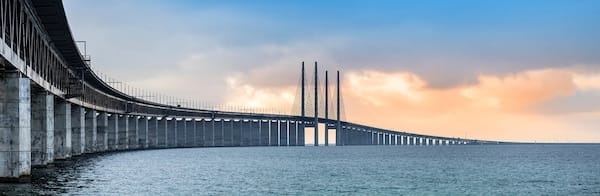
As part of a United Nations Sudanese resettlement program, Ibrahim was offered a placement in Sweden, a chance to begin again in a country he mostly knew by reputation. Malmö sits at Sweden’s southern edge, just across the Øresund Strait from Copenhagen. It is close enough to the continent to feel connected and yet far enough to feel set apart. At the time, the decision seemed obvious. Safety was assured, the opportunity was real, and he accepted the offer.
It was only after arriving that the weight of the move began to settle in. He told me that things are never as one imagines. His housing was assigned, determined by processes entirely outside his control. The apartment he was given was small, clean, and quiet. Almost too quiet. It sat in a neighborhood he had not chosen, away from others who shared his language or history. He was surrounded by people, but it appeared he was the only black man in the area.
He learned the city rhythms quickly… the sound of buses in the early morning, neighbors who nodded politely but rarely lingered, and evenings that came way too early. Daily life narrowed to simple routines: walking to the tram, shopping carefully, cooking alone, returning home to silence. Added to this were changes he had not fully anticipated… a colder climate, dramatic shifts in daylight, the unfamiliar scale of the city, and a sense of isolation that made even ordinary days feel as if they would never end.
The contrast between life in Sudan and in Italy had already been significant, but the difference with Malmö was sharper still. Back home, life had been communal, built around extended family, shared meals, and constant interaction. Everyone knew everyone else’s story, which once offered a sense of belonging… and later became one of the reasons his life there grew dangerous. Italy, for all its instability, still carried echoes of that communal life. People lingered in public spaces. Conversation spilled easily across boundaries. There were other Sudanese, familiar foods, and at least fragments of shared experience.
Malmö felt different. Life moved inward. People were kind and courteous, but distance was woven into daily interactions. Even more so, the language barrier placed Ibrahim outside the emotional texture of the culture. Learning what made people laugh, what shaped their grief, or how they marked joy proved difficult when the words themselves were still unfamiliar. His needs were met through housing and a modest government stipend. And yet, relationships remained few, and community took time to form.
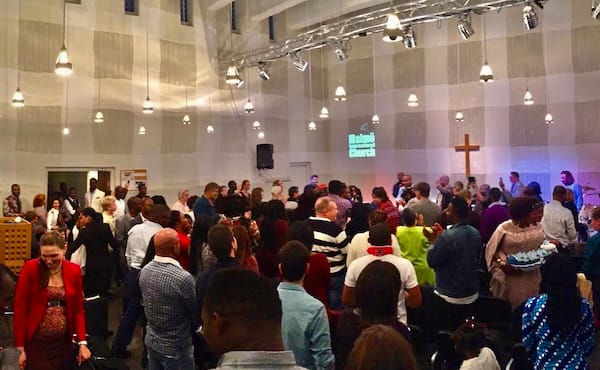
A measure of stability began to return when Ibrahim found a Sudanese church on the other side of the city. Reaching it meant a long tram and bus ride, often close to an hour each way. But, he went anyway. There he found familiar language, shared prayers, and people who understood both what he had lost and what he was trying to hold together. The friendships he formed there did not erase the contrasts he faced in daily life. Still, they gave him the capacity to endure them… to return to his apartment with something steadier than silence… and to carry the distance of Malmö without being undone by it.
Life Inside the System
There was another aspect to the distance Ibrahim sensed, one that was less about people and more about pace. Italy had become used to migrants, refugees, movement, and the chaos that comes with years of continuous arrivals. Since 2012, its systems had been shaped by improvisation and urgency, learning to respond in the moment even as the political winds shifted.
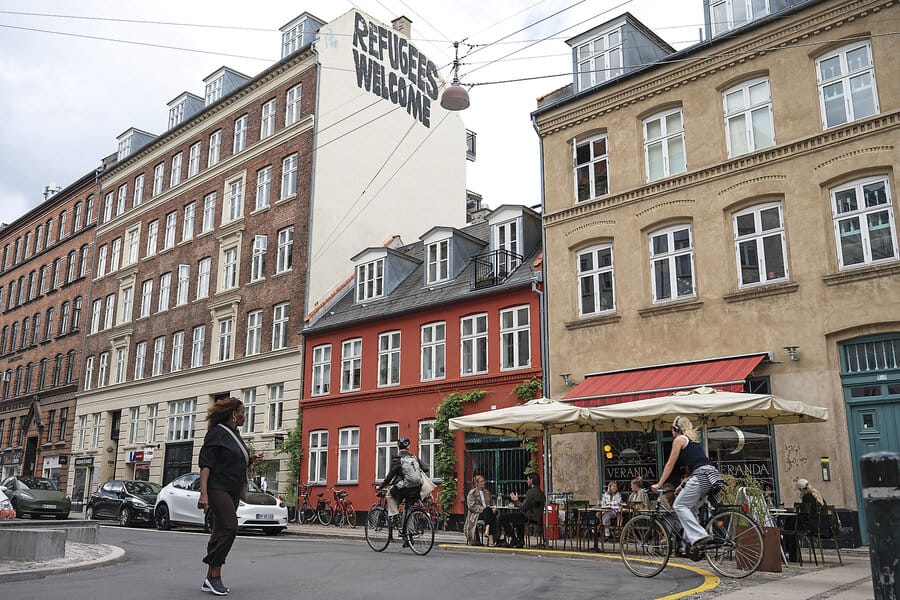
Sweden felt different from the start. Life in Malmö followed more straightforward rules and stricter schedules. Government offices, public transportation, and even grocery stores operated with precision. Nothing happened quickly, but everything went as expected. The city was orderly and undeniably safe, and Ibrahim was genuinely grateful for that. But it was indeed a different place from anything he had ever experienced.
Sweden’s refugee system reflected the same stance. For many years, it was shaped by a strong commitment to protection and social welfare. This set it apart from neighboring Nordic countries in both size and intentionality. Those granted asylum received housing, language classes, healthcare, and a clear administrative path into society. This was certainly better than Ibrahim had experienced elsewhere in Europe. Sweden was different… in a good way… at least for a while.
It is hard to understand all of this without a bit of context. Between 2010 and 2020, Sweden welcomed over half a million refugees. The country managed the situation well, but not without some stress. Denmark, on the other hand, received only a fifth of that number and faced significant challenges. Living in Malmö, just across the Øresund Bridge from Copenhagen, makes comparison unavoidable. Denmark moved earlier and more decisively toward immigration restrictions, clearly setting limits and adjusting expectations in unmistakable ways. Sweden’s shift was more subtle, layered onto systems built initially on trust and inclusion. Support was still present, safety was assumed, but belonging took time.
Within that system, Ibrahim did what he could to move forward. He enrolled in language classes and attended diligently, grateful for the progress they enabled him to achieve. He looked for ways to volunteer. He chose to engage with his neighborhood and to participate rather than withdraw. Still, the feeling of being an outsider persisted.
Sweden had opened its doors and offered what it thought refugees would need, but accommodation did not always mean integration. Proper integration would require a merging of worldviews, which proved much more challenging. Ibrahim was expected to settle into life, to be thankful for the support he received, and to focus on moving ahead. Yet the boundaries of that “life” remained unclear. There were no obvious job paths, no steady plans for family, and no clear direction forward. What had unsettled him during his wait in Italy gradually became a familiar companion in Sweden… a feeling that time was passing… as life remained unstable.
Yet, the future still seemed just out of reach.
Learning to Live Forward
Ibrahim slowly came to realize that he was living at the end of a long road. There was no returning to Italy, and certainly no going back to Sudan. He knew others who had left Sweden for England, hoping that a different place might finally resolve what still felt unfinished. In his heart, however, he knew that moving again would not change the longing in his heart. With that realization came a quiet decision. If God had led him to Malmö, then God would also meet him there and help him face what remained.
Around that same time, he began to grasp something about Sweden that changed his expectations. Being Swedish, he came to understand, was not about skin color… it was about contribution. It was about giving something of oneself so that the whole community might benefit. That idea resonated deeply with him. It felt familiar, closer to the communal instincts of Sudan than he had expected. Strengthened by his church and guided by friends and spiritual mentors, he began to see that purpose was not waiting for him at the end of the process. It was being formed in the present.
As he leaned into his faith and into this new understanding, his days grew calmer, his expectations more grounded, and the rhythms of life in the North slowly became livable.
Over time, Ibrahim also learned that integration into Swedish society did not come through programs or sweeping cultural change, but through repetition, humility, and persistence. Language classes mattered, and as his fluency improved, small doors began to open. He realized that many of the people around him had not been distant because they were cold or indifferent, but because they lacked a shared frame of reference… and a way to bridge the gap.
When he found work at a local garage, that perception deepened. The job was not just about income. It was about participation. Showing up on time, doing his work well, and being reliable allowed him to give something back rather than only receive support. In that space, he was no longer living alongside the community; he was contributing to it. Relationships grew naturally from shared work and repeated presence. Even when opportunities arose to move to another part of town, he chose to stay. What he was building in Malmö now carried weight. In giving of himself, he began to feel part of the community. More importantly, he sensed that the community was starting to see him as part of them.
In time, Ibrahim became someone others turned to, not because he had arrived or mastered the system, but because he understood the road. He could recognize a new arrival from a distance… the uncertainty in their movements giving them away. A simple Sudanese greeting was enough to draw them close, and many clung to him as if he were a lifeline in unfamiliar waters. He helped them make sense of Swedish systems, explaining expectations, limits, and the slow logic of how things worked.
In doing so, he was contributing again… not only to individuals, but to the fabric of the community itself. Helping others was no longer just kindness or a matter of shared survival. It was participation. Through this steady giving of himself, Ibrahim discovered a more profound sense of purpose. Looking back, he could finally see how God had been at work through circumstances that once felt oppressive. He was shaping him not only to endure life in Malmö, but also to belong within it, and to help others do the same.
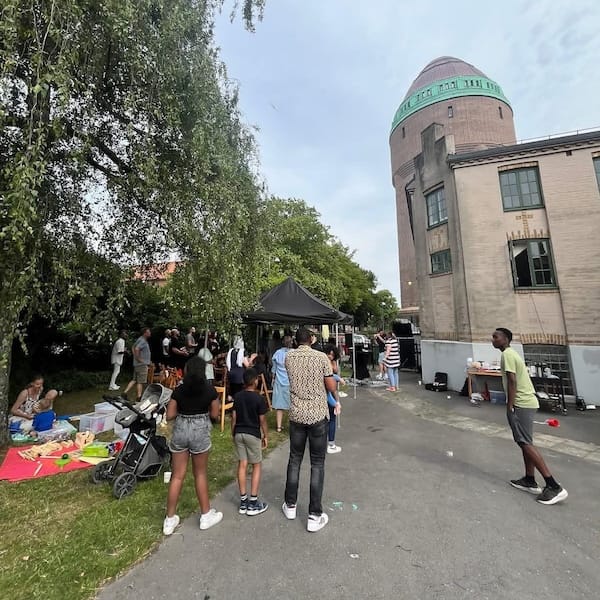
A Life Takes Shape
By the time I met Ibrahim at a conference, he had been in Malmö for nearly ten years. (Yes, he is a real person!) As he shared his story, I felt truly honored to have the chance to meet someone of such strong character and spiritual depth. His journey had seasoned him, and his testimony reflected someone who had experienced the faithful lovingkindness of the Lord.
He shared his migration story because I pressed him, but what he truly wanted to talk about was how God had been with him throughout the entire journey. Ibrahim had a spiritual experience that needed to be shared. He described how his prayer life changed from one based on needs to a more relational and conversational connection. He spoke of church not just as a place to gather and worship, but as a space where God could reach and transform those who are lost and disillusioned. He marveled at God’s compassion, not because of what he had received, but because of who God is.
He serves as an elder at his church, which has opened many doors for ministry in Malmö. When he arrived, he felt alone. But in reality, there are hundreds if not thousands of people just like him. Their church has established outreach points throughout the city, providing support not only to those on government assistance but also to the many who are living on the streets. They come from around the world, and he shared how his experiences have created multiple opportunities to share his faith with others.
Ibrahim described himself as “PSudo-Swedish”. We both laughed. He has found a new home without losing his heritage. He changed apartments but still lives in the same area. All of his neighbors know him by name. He now volunteers at one of the immigrant reception centers. The administrators have come to value his ability to mentor new arrivals and his remarkable capacity to bring peace and patience to those he meets. They praise him as a success story of integration. He sees himself as just a truly blessed child of God.
Conclusion
Ibrahim’s story does not end here. I suspect it is still unfolding, alongside the lives of many others who have made their way into the Nordic countries. Some are rediscovering a faith they once carried quietly. Others are encountering faith for the first time. This is often how God works. Hard seasons come. Displacement is real. Suffering becomes part of the journey. Yet it is not empty or wasted. God walks within that suffering, guiding steps that often feel uncertain. And He does so for a reason… that people might come to know Him.
In our next Deep Dive post, we will examine more closely how God continues to work along the Northern Routes. From Finland to Norway and into the United Kingdom, the church continues to appear in these stories… not as an institution, but as a refuge. How she is learning to serve weary travelers and how she is being shaped in the process is a story still unfolding.
1 RHP Europe is an incredible organization that is committed to engaging refugee populations with the gospel. If you would like more information, go to their website https://rhpeurope.net