23 - Summary: A Window of Opportunity
2022 No 23
As for you, you meant evil against me, but God meant it for good in order to bring about this present result, to preserve many people alive. —Genesis 50:20
Congratulations, you have made it to the end of another section of this blog series! If this were a book, you would be at the conclusion. (Of at least a book whose objective was to introduce migration.) In our case, you have just finished a critical part of our study. That is, to understand the foundational principles behind almost all migration and place those constructs within the context of African movements. Such would be great if you were a church leader working along one of the primary sub-Saharan migration routes into Europe. But… these principles also have value for anyone living in any urban context worldwide.
If you look outside your door, you likely will see that most of your neighbors are migrants. They will have various needs, but their greatest need is to find salvation through Jesus Christ. God arranged their journey so they would arrive in your community for a reason… that they might find Him! And for that to happen, they needed to get next to someone who would care enough about them to share the good news of the gospel. If you are reading this, then I suspect that person is you!
In the previous dozen posts, I have talked about the five underlying principles of almost every movement. They are essential... because when you understand these realities... you will better understand your neighbor. They are:
Everyone is on the move. Over eighty percent of our world is migratory; that is to say, they do not live in the city of their birth. Migration is not an aberration; it is the norm. If you are not in the city of your birth, then you are a migrant also.
Everyone moves for a reason. Seldom if ever, do people go through the effort of relocation without a good reason. Not surprisingly, those reasons evolve with time. Perhaps the first move was to go to school, the second was to find a job, and the third was to get a better job. Some movements are voluntary; others are involuntary. But… everyone has a story for why they left home.
No one moves alone. Migration is not an isolated event. By that I mean that movement requires help. The more distant the journey, the more assistance is needed. Rural to urban movements often have the support of friends and family. Transcontinental movements require complex networks along the way. Most are legal, but others can be quite nefarious. Getting from point A to point B may not have needed much support... but point C and beyond is very difficult to do alone.
Money directs the way. It is pretty simple. People only go where they can afford to go. You may have always dreamed of going to Hawaii, but if you only have enough money for a bus ticket, you won't get much further than California! Even for those with resources, migration routes are controlled by systems designed to collect those resources. In the end, however, the more money one has at their disposal, the more choices they have.
Migrants are never in control. You may think you are in control of where you will go, how you will live your life, and what you will ultimately do. Unfortunately, there are always circumstances and systems that may directly challenge your desires. Very few migrants are fortunate enough to maintain control of their destiny. Most are like a leaf in a stream, going where the currents take them.
So why are these five principles so important? Why have we spent so much time and effort to keep them in front of us? It is because they are more than just principles; they are the realities of life. They are valid for Africans, true for Asians, true for Europeans, and true for Americans. We don't have to ask what motivated someone to seek a good education for their children, find a better job, or move to a nicer apartment. It is just what anyone would do if given the opportunity. And in that realization, we begin to recognize that the migrants in our neighborhood are not that much different from us. Sure, they may be further from home and may have come from an entirely different culture, but at the core, they are not that much different from anyone reading this post.

Judgment or Compassion
Human nature has a way of giving grace to those we know and love… and offering judgment to those we do not know and perhaps do not like. I wish it were different in the church, but after four decades of serving God's people worldwide, I have found that believers have retained the capacity to judge. We just dress it up in spiritual language! Please don't misunderstand my intention here. Judgment has a place. Generally, however, it is reserved for God… and governments. Both are in a great place to evaluate circumstances, policies, and people. If you do wrong, there is a reason to fear the judgment of both. Such makes Romans 13:3-5 an easy passage to preach.
For rulers are not a cause of fear for good behavior, but for evil. Do you want to have no fear of authority? Do what is good and you will have praise from the same; for it is a minister of God to you for good. But if you do what is evil, be afraid; for it does not bear the sword for nothing; for it is a minister of God, an avenger who brings wrath on the one who practices evil.
But what about verse 8 in the same passage?
Owe nothing to anyone except to love one another;
for he who loves his neighbor has fulfilled the law.
This verse sounds an awful lot like Matthew 22:39-40
You shall love your neighbor as yourself.
(On these two commandments depend the whole Law and the Prophets.)
So how do you love your neighbor? Compassion generally begins with understanding. And, as you come to know your neighbor, you will find that they are not that much different from anyone else. Sure, they may have made some regrettable decisions, but who hasn’t? And are we not grateful that God demonstrated His “own love toward us, in that while we were yet sinners, Christ died for us.”? (Romans 5:8) It was in that love that Christ offered us the grace to be saved. Judgment was not diminished, but compassion created a pathway to His grace. In our work, we have to be cautious. It is challenging to separate government policy from community response. As God's people, we must be especially careful to stay away from those things which are not our responsibility (judgment) and lean into those things given directly to us by God (compassion).
Humanizing Migration
Understanding how and why our neighbors arrived at our doorsteps has a considerable impact on humanizing migration. Many of these people did not ever imagine that they would be in their current situation. Even in the best of circumstances, many of us could not have imagined we would be where we are today... at least not when we first began our journeys. For those less fortunate, that which started as a dream has now become a nightmare.
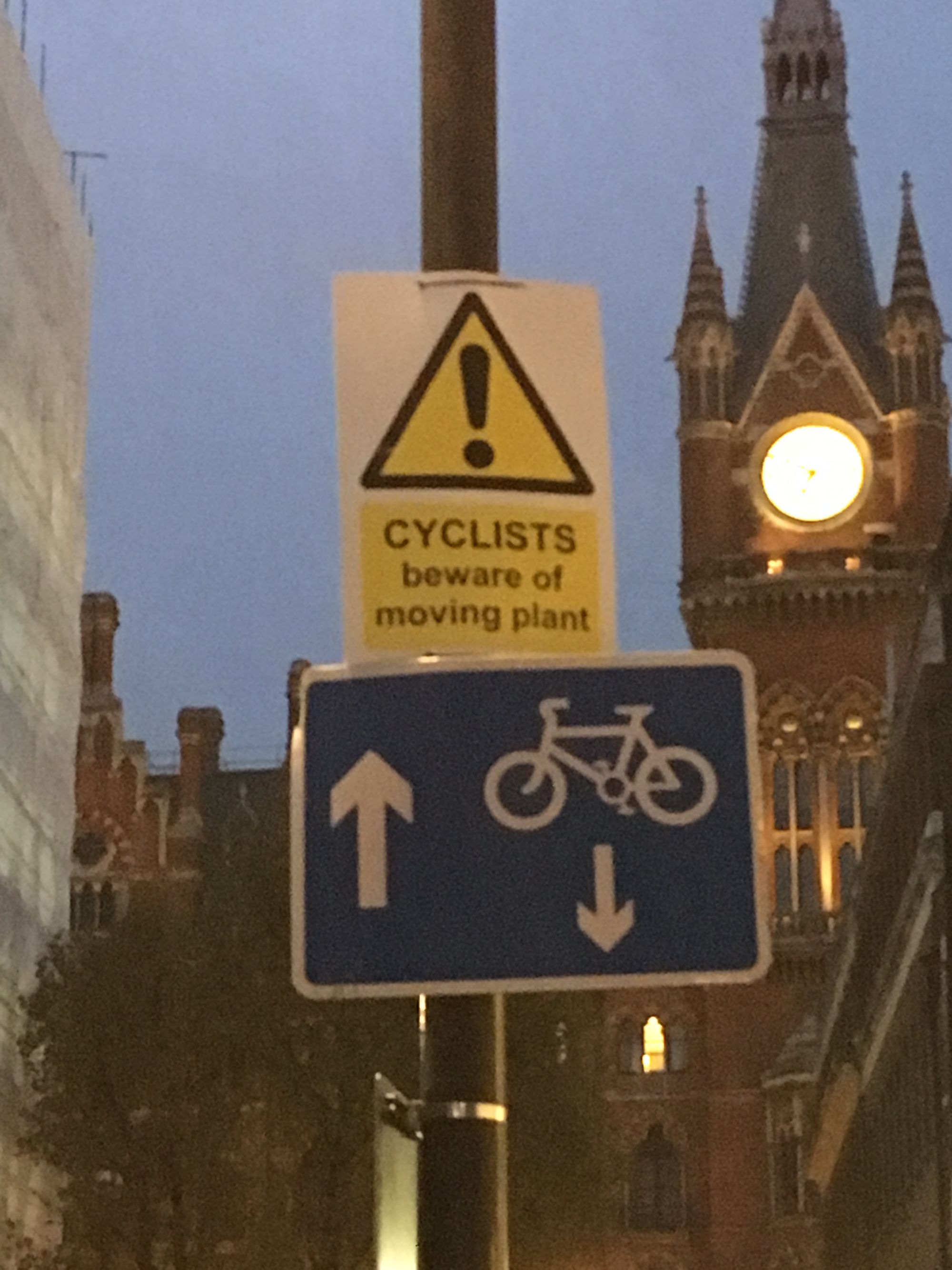
One does not have to be a refugee or a victim of trafficking to become a victim of migratory stressors. Many are in a strange land where they do not understand the rules. Try driving a car in a place like Mali… or London! Try buying a loaf of bread when you do not speak the language. You may have a wallet filled with money, but that does not do much good if you do not know where to find a grocery or how to navigate the self-service check-out stand. Even after several years in a new land, many migrants struggle to find meaningful, healthy relationships outside their ethnic group. Isolation is often the word of the day, and such is incredibly painful for someone who grew up in a communal culture.
Incredible Opportunities
By the time Joseph stood in Pharaoh's court, he had spent all his adult life as a slave and a prisoner of Egyptian culture. His brothers had forsaken him; for all he knew, he would die a refugee from his own home. He could have easily fallen into despair and bitterness. And yet, he kept his eyes on God and put his faith in Him. Soon he would rule all of Egypt, preserve an entire nation from famine, and be used by God to save his own family. There had been much evil along the way. But God had a plan in the midst of the journey.
Joseph could have easily judged his brothers when they first appeared. After all, he was in a position of authority in the government of Egypt, and migratory spies could easily have been put into prison… or worse! And yet, Joseph had compassion for his brothers. Why? Because his walk with God gave him the ability to look past their history and see what God had for them in the future. It would be through them that their people, Joseph's people, would be saved.
Every pastor understands what it is like to share the bread of life in a context where there are strangers… i.e. visitors from distant places. He also knows what it is like to pray over a city that shelters a multitude of ethnic groups. They are university students, businessmen, health care professionals, government workers, day laborers, and at times, the destitute. Each has a story of their past, and each has a potential future with God.
Of all the people one may meet in this world, these moving people are perhaps the most open to the hope of Christ. Many have moved into this new place and are eager to learn about her culture, language, and people. Their needs are often simple, relational, and remarkably easy to meet. And yet the fruit of such effort can be profound.
I am not arguing in this post that every church should somehow create a new ministry to migrants. In fact, if such is your first step, it will quickly become a social project and will not endure long. I would propose that everyone in the church try to meet a neighbor who is new to the community. If they are a migrant, you already know the key elements of their journey. Ask them to share their story… most will not mind at all. And as you get to know them, as a believer, you will undoubtedly begin to like them, if not love them in Christ. If that were to occur, the rest would take care of itself.