26 - The Central Route: The Historical Context of the Sahel
2022 No 26
The seeds shrivel under their clods; the storehouses are desolate, the barns are torn down, for the grain is dried up. How the beasts groan! The herds of cattle wander aimlessly because there is no pasture for them; even the flocks of sheep suffer. To You, O LORD, I cry; for fire has devoured the pastures of the wilderness and the flame has burned up all the trees of the field. Even the beasts of the field pant for You; for the water brooks are dried up and fire has devoured the pastures of the wilderness.
—Joel 1:17-20
Introduction
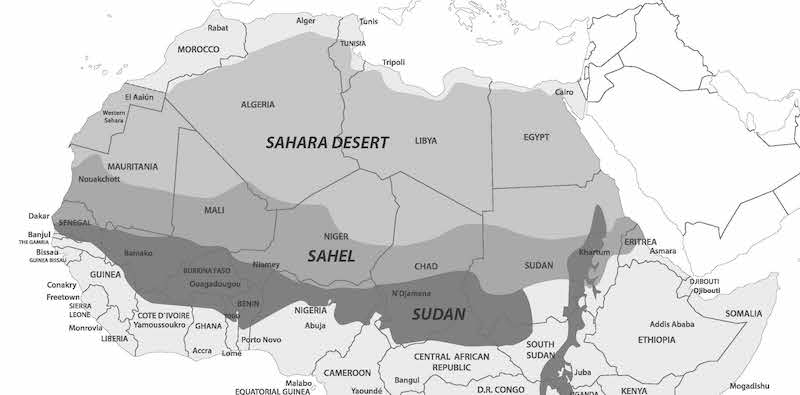
As we begin to dig deeper into the Central Mediterranean Route (CMR), it will be helpful to gain a bit of regional context. Much of this area is geographically distant from many of our readers, and it is not a destination location for tourists. Such is sad. This part of Africa holds some of the most breathtaking landscapes, and her people and culture are incredibly rich. Consequently, it becomes necessary for us to paint a picture for the audience and to help explain why migration has always been a defining characteristic of the areas surrounding the Sahara Desert. Our goal for this post is to gain a better view of the Sahel, the region sandwiched between the sands of the desert and the forests of the Sudan.1
Understanding the Sahel is critical for understanding the CMR. Why, because everyone who follows this migration route must pass through the Sahel. Many will originate from this region. It is a vast area that encompasses over 45 million people and more than 215 people groups. The majority are of Muslim faith of various degrees of religious commitment. There are also many who hold to Christianity, and almost everyone has an underpinning of traditional religion. The people of the Sahel have a long and rich history of migration, which only grew in intensity with colonial occupation. It should be of no surprise then that many modern migrants who cross the sea of sand today draw from a heritage from which movement is normal.
Geography
If you refer to the map abo e, you will notice that the Sahel traverses the width of Africa and represents an arid semi-desert strip between the sands of the Sahara Desert to the north and the grasslands of the Sudanese savannah to the south. The Sahel includes portions of Mauritania, Senegal, Mali, Algeria, Niger, Libya, Chad, and Sudan. Dry, sandy plains with occasional vegetation characterize the region. The average temperature ranges between 73°F and 94°F, and the area can receive between 8 and 20 inches of rainfall per year.² One may think of the Sahel as being the southern coast of a great ocean of sand.3 Its name comes from the Arabic sahil meaning shore or borderland. In the end, it can be a harsh environment, one that can change quickly.
Historical Migration Patterns
For most of its history, the economy of the Sahel has been based on the grain produced by the sedentary farmers in the South and the livestock-herding nomadic pastoralists to the North. This created a natural rhythm of seasonal movements along north-south corridors.4 During the colonial period, labor migration became an additional motivator for movement. As the barter system began to fade and the need for currency arose, young men began to move laterally (east-west) across the region in search of better jobs at coastal European outposts.5
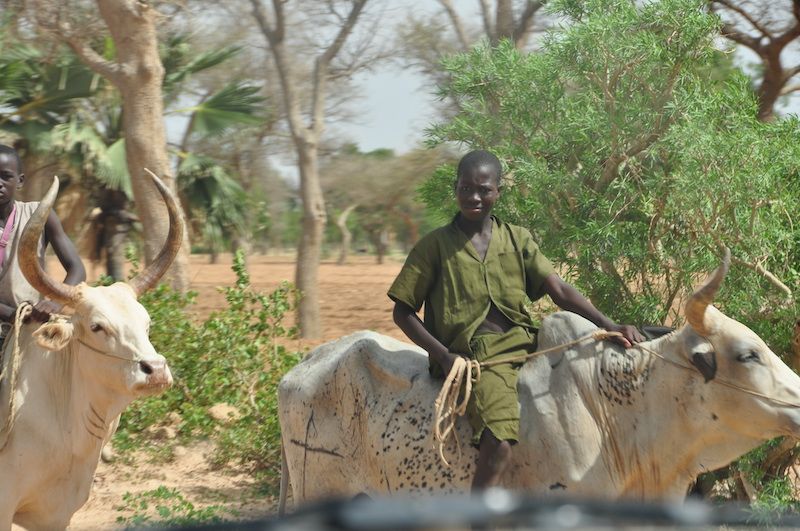
Trade has also helped to create movements that extended beyond the region for centuries. Vast gold reserves in the southern highlands of Mali created strong economic incentives for engagement by people north of the Sahara.6 Roman influence on North Africa, followed by Islamic mercantile trade, created a hunger for the gold of Sudan. In turn, salt was a rare commodity in the regions south of the Sahel. Access to this salt in volume from the mines in the North provided excellent opportunities to establish trading relationships.7 These relationships were very profitable for those who lived in the middle territories. Entire people groups would build their culture around migration, and empires arose in West Africa that would rival their contemporaries in Europe. At one point, Mansa Musa (1312-1337), ruler of the kingdom of Mali, was perhaps one of the richest people to ever walk the face of the earth!8
As in much of sub-Saharan Africa, forced displacements have always plagued the region. In the past, they were mostly due to natural disasters. Such events have always pushed people to new places. The Sahelian drought of 1972-1974 was perhaps one of the most severe in the previous century and led to a great loss of life among both people and livestock.9 Millions of people were displaced, leaving their homelands, and seeking refuge in the growing urban centers of West Africa. Some would return home after the crisis subsided, and many would be forced to build a new life in the city.
But life in an African slum is little better than the parched earth of the village. There is high unemployment, little to eat, and many are forced to beg on the streets. I have spoken to many migrants in North Africa and Europe…and have watched them tremble with emotion as they shared how their parents had become such mendiants in order to survive.10 The shame was often too much to bear, and many of these young men chose to migrate north with the hope of providing food for their families. And in many cases, that decision was indeed the right choice.
Contemporary Migration Patterns
Perhaps the best way to think of Sahelian migration today is in terms of evolution. As we have discovered in previous posts, people migrate for a multitude of reasons. Most are simply searching for a better life. For some, it is the pursuit of educational opportunities. For others, it is the search for a job. Commercial travel routes across the Sahara Desert have been in place for nearly two millennia, and the effort has only been made easier with the construction of modern highways. In the recent past, many would make the journey north towards the Mediterranean with minimal difficulty. And, as we have also noted, there were a host of networks available to make that journey in a way that was profitable for all.
Things began to change dramatically with the collapse of Libya (2010 -2014). As the Arab Spring brought conflict and violence around the Mediterranean, refugees from these countries began to flow toward Europe. These movements reached a point of crisis in 2015 when over a million immigrants landed on European soil. Many of the sub-Saharan peoples who made the journey into Italy at that time were not new to migration. They were those who had first made a life in North Africa and were now seeking the security of Europe. Because most had been working good jobs in Libya, they had the resources for the voyage. It wasn’t until later, 2016-2017, that movements from the Sahel (south of the desert) began to increase dramatically.
In one sense, sub-Saharan migration through post-Gaddafi Libya was counterintuitive. In the past, the government had maintained a measure of security and control of smuggling networks from the South, allowing for relatively safe and open migration across the Sahara. In the vacuum, however, such movements had become more expensive and much more dangerous.11 This, by nature, would lead to fewer people choosing this route. At the same time, however, smugglers were taking advantage of the European crisis and promising easier access to the asylum processes. Their message was compelling, and many, with few other options, believed what they were being told.
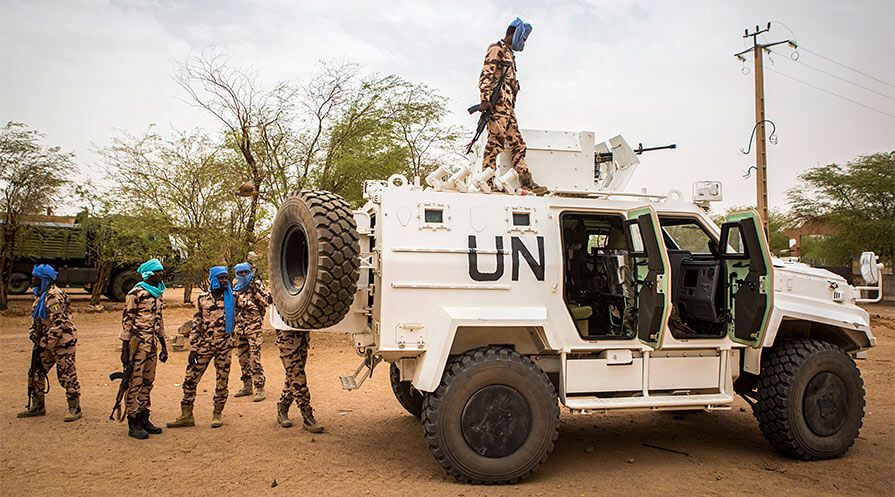
The loss of Libyan stability had a significant and detrimental impact on the Sahel. Secondary conflicts began to emerge in the region. Radical Islamic actors took advantage of the situation and sought to gain control of the corridor into the South. Such led to a coup d’état in Mali and increased violence in places like Nigeria, Burkina Faso, and Niger. It is those conflicts that are continuing to devastate many communities in the Sahel, even today. These insecurities have greatly increased the number of internal displacements, leading to a greater interest in northern migration.
Summary
One cannot understand the Central Mediterranean Route without giving a bit of focus to the Sahel. Many communities in West Africa still remember the wealth of resources that were sent home by laborers in Libya prior to the fall of Gaddafi. Those who were able to endure the conflict or were able to immigrate into Europe successfully are still supporting their families back in Africa. Such can be a strong motivation for migration, particularly when there are daily text messages that promote the continued success of those who made the journey. Smugglers are good salesmen, and all it takes is one winning lottery ticket to boost sales among the desperate.
Such is especially true among the poor. Those who travel this route are often the sons of farmers and shepherds. Many were sent to the urban centers to find work to sustain their families in the village. Even those who may complete their university studies struggle to find work and are looking for greener pastures. A promise to find work in Libyan construction or European agriculture can be too much to ignore… even if the risks are high. As one migrant remarked, “I may die along the way, but my family will certainly die if I don’t go.”.
It is hard to argue with such logic.
1There is a difference between “the Sudan” and “the Republic of Sudan”. The former is a geographical region to the south of the Sahel. The latter is a country to the east of Chad and south of Egypt.
2Dorothea Elisabeth Schulz, Culture and Customs of Mali, Culture and Customs of Africa (Santa Barbara, Calif.: Greenwood, 2012), 3.
3Roderick J. McIntosh, The Peoples of the Middle Niger: The Island of Gold, The Peoples of Africa (Malden, MA: Blackwell Publishers, 1998), 195-6.
4David Rain, Eaters of the Dry Season: Circular Labor Migration in the West African Sahel (Boulder: Westview Press, 1999), 42.
5A. M. Simone, For the City yet to Come: Changing African Life in Four Cities (Durham: Duke University Press, 2004), 147-149. See also Bruce Whitehouse, “Exile Knows No Dignity: African Transnational Migrants and the Anchoring of Identity” (Ph.D. diss., Brown University, 2007), 157. See also M. Augustus Hamilton, “Analysis of the Dynamic Relationship between Globalization and the Transmission of the Gospel: A Case Study of Soninke Transmigrants in Africa and Europe” (Southwestern Baptist Theological Seminary, 2017), 166.
6Claude Meillassoux, Urbanization of an African Community: Voluntary Associations in Bamako, American Ethnological Society Monograph, vol. 45 (Seattle: University of Washington Press, 1968), 76.
7See François Manchuelle, “Background to Black African Immigration to France: The Labor Migrations of the Soninke 1848-1987” (University of California, 1987), 32. He writes, “The importance of salt cannot be overestimated. Salt is almost a necessity under African climates, to avoid dehydration, and it is nowhere to be found in Sub-Saharan West Africa, except for maritime salt on the coast. Quite apart from the fact that maritime salt was of a lesser quality than desert salt, it was also unavailable to the majority of consumers: the great populated Manding group of peoples in the Upper Niger region, which was isolated from the coast by the tropical forest barrier.”
8Adrian Hartrick Dominika Ozynska, "The Richest Person Who Ever Lived", British Broadcasting Company https://tinyurl.com/4u88exbx (accessed June 23, 2022).
9Jonathan Derrick, "The Great West African Drought, 1972-1974," African Affairs 76 (1977): 549.
10“Mendiant” is a French word for a beggar.
11See Tuesday Reitano and Mark Shaw, "Libya: A Patchwork State Sewn Together Along Trafficking Lines", Global Initiative Against Transnational Organized Crime https://tinyurl.com/2p8rfz84 (accessed November 29, 2021). See also Tuesday Reitano and Mark Shaw, Libya: The Politics of Power, Protection, Identity and Illicit Trade 2017. Vol. 3. 6.