37 - Church on the Move – The Challenge in Italy
2022 No 37
For I know the plans that I have for you,’ declares the LORD, ‘plans for welfare and not for calamity to give you a future and a hope. Then you will call upon Me and come and pray to Me, and I will listen to you. You will seek Me and find Me when you search for Me with all your heart. I will be found by you,’ declares the LORD.
—Jeremiah 29:11-14
Now there was a man at Caesarea named Cornelius, a centurion of what was called the Italian cohort… and Peter said, “I most certainly understand now that God is not one to show partiality, but in every nation the man who fears Him and does what is right is welcome to Him.”
—Acts 10:1, 34-35
Within these two passages is found an incredible Biblical reality. Jeremiah declares the principle. God's plan is for people to find Him. He is the only place where one can have both a future and hope. And if you search for Him, you will find Him. In the book of Acts, we see the application of this principle. Cornelius was an Italian migrant searching for God in a city of Israel. God made a special effort to ensure that the gospel was available through His servant Peter. Why? Because God desired for Italians to come to faith! If you skip forward to today, you can understand why this message resonates throughout the church in Italy.1
We have been to Italy many times over the past three years, visited her churches, and have known and served alongside her missionaries around the Mediterranean Rim. These workers come from various traditions, evangelical, pentecostal, and even catholic. The common thread has been their passion for people on the move. It seems that Italy understands migration. Perhaps it is because almost every Italian has either migrated... or has a close friend... or a family member who lives outside the country.² Nearly every community in Italy has a high concentration of immigrants, and almost every church serves them to some degree. For that, we have been exceedingly encouraged.
But we must recognize that the church in Italy also faces difficulty. Like Peter above, it often takes the hand of our Lord to intervene to help overcome internal challenges, biases, and at times, logistics. This blog is read by hundreds of believers each week who are spread across the globe. I write this post to lift and encourage the church in Italy, inform our readers, and offer tangible points of prayer. With that heart, allow me to share some of the strengths enjoyed and challenges faced by our brothers and sisters in Italy.
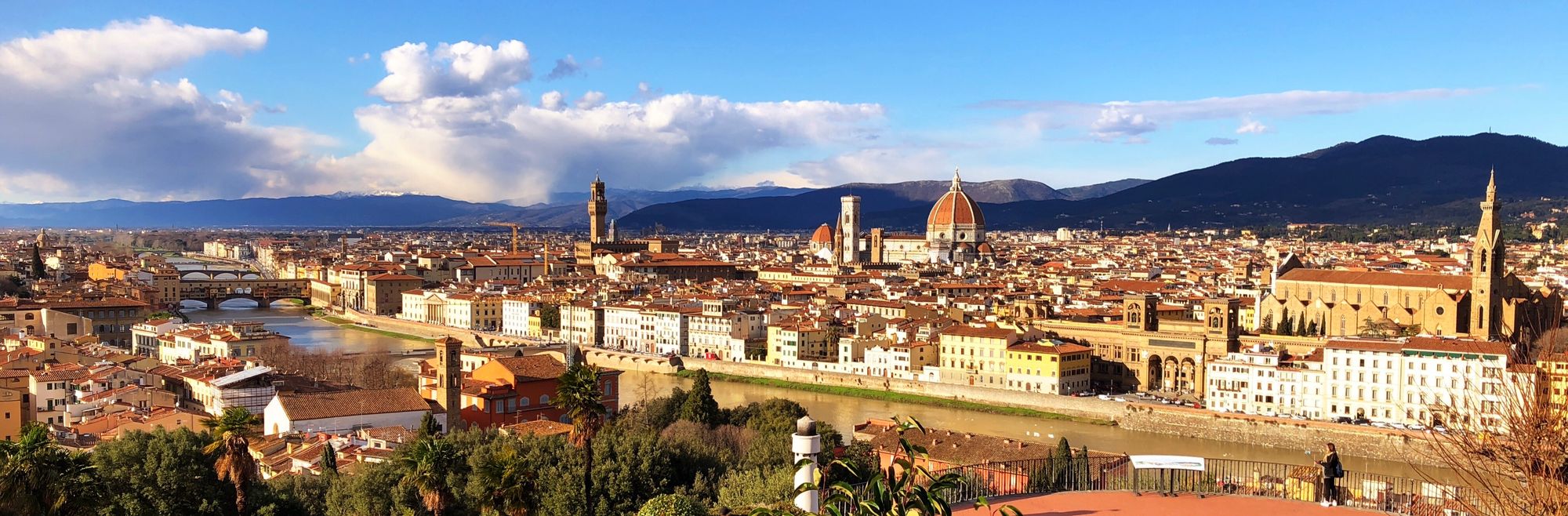
Traditional and Theological Diversity
When you think of the church in Italy, perhaps your first thought is of the Vatican. Undoubtedly, the Catholic church is the largest in the country. Italy has a population of 60 million people. Of that number, 40.7 million are Christian, and of that number, 39.7 million are Catholic. Caritas is a Catholic international aid agency doing incredible work among immigrants.3 Her workers are found around the Mediterranean and she serves the multitudes who arrive in Italy each year. While it is true that her vision of social ministry and gospel proclamation differs dramatically from ours, I have found that many within her ranks are much more evangelical than one might imagine. I have worked with, prayed with, and cried with many priests and Carritos workers who have a genuine heart for the immigrant community and a true passion for sharing the gospel.
If the statistics are correct, that still leaves nearly a million non-Catholic believers in Italy. They can be found in many expressions of "church," including Evangelical, Pentecostal, Adventist, and what sometimes gets termed as "Traditional Protestant". Each fellowship serves its members and engages its community with the gospel... to one degree or another. Sadly, the challenge for the Protestant Church in Italy is often one of division due to theological differences. As across much of Europe, there are certainly those churches that have become unimaginably secular, abandoning practically anything that would resemble Biblical Christianity. But in every city, there are also those churches that are vibrant expressions of biblical faith, shining lights in their communities. They may not look like your church, but it is evident that the Spirit of God is moving among their members.
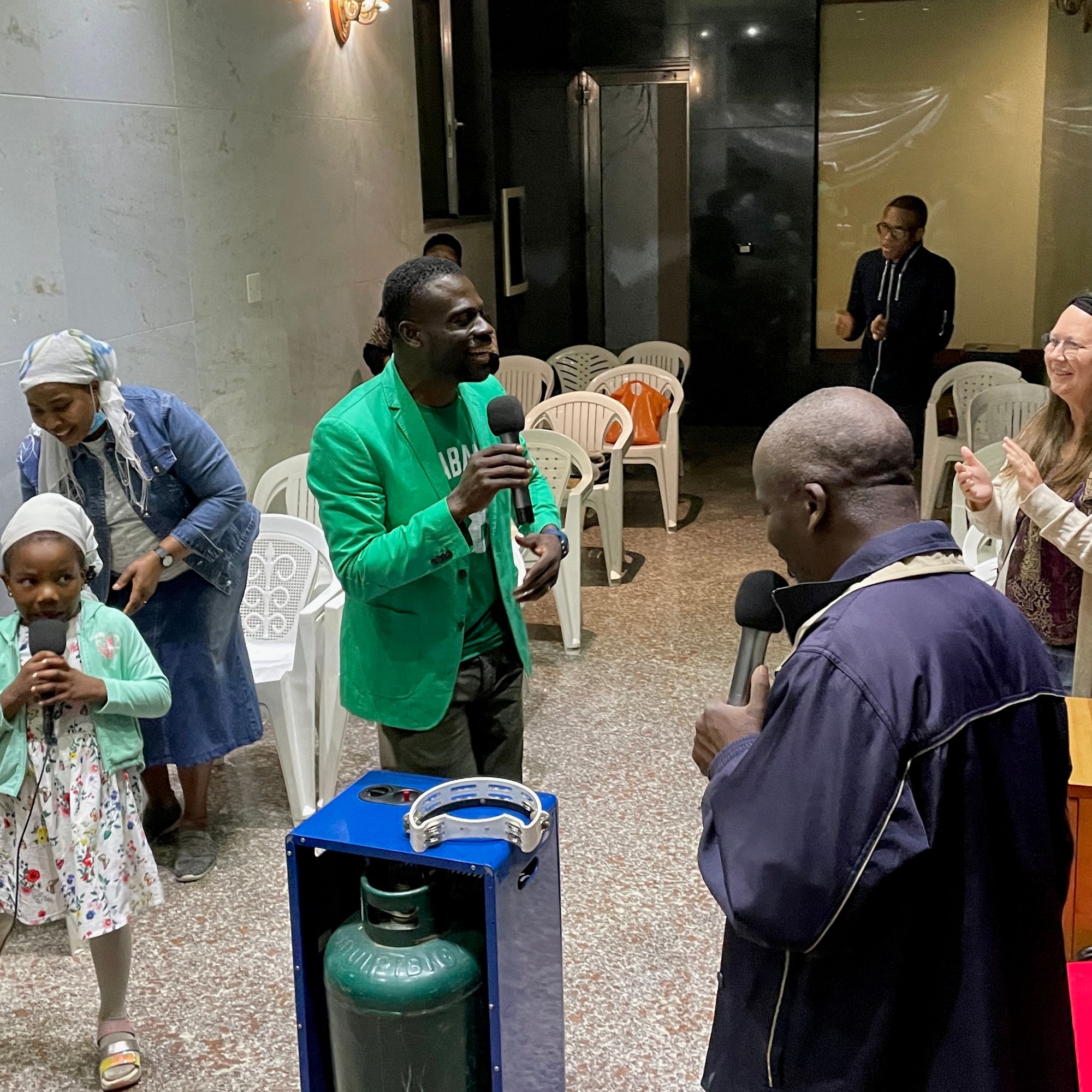
Standing beside these Italian churches are a host of immigrant churches. Those from Africa are typically small, theologically pentecostal, and quite often isolated. We shouldn’t be surprised. Jehu Hanciles reminds us that, "when people move, they carry their ideas, beliefs, and religious practices with them ".4 In other words, immigrants do not leave their faith behind. When they arrive in their new homes, they establish churches. These churches are present in almost every location where one might find immigrants. Many are African-led, following the language, theological practice, and occasionally the missional directions of their churches back home. These churches have become a haven for migrants, a place where they can find security, stability, and comfort while living in a challenging cultural context.
In the end, these differences have a way of separating and isolating the church's work in Italy. There can be value in diversity, but it becomes problematic when being different gets in the way of cooperative ministry. As we have noted in the past, collaboration requires relationship. Such takes time and effort. For those on the outside, such as Western and perhaps African mission agencies, it will take an even higher level of intentionality. In the end, however, the effort will pay rich dividends.
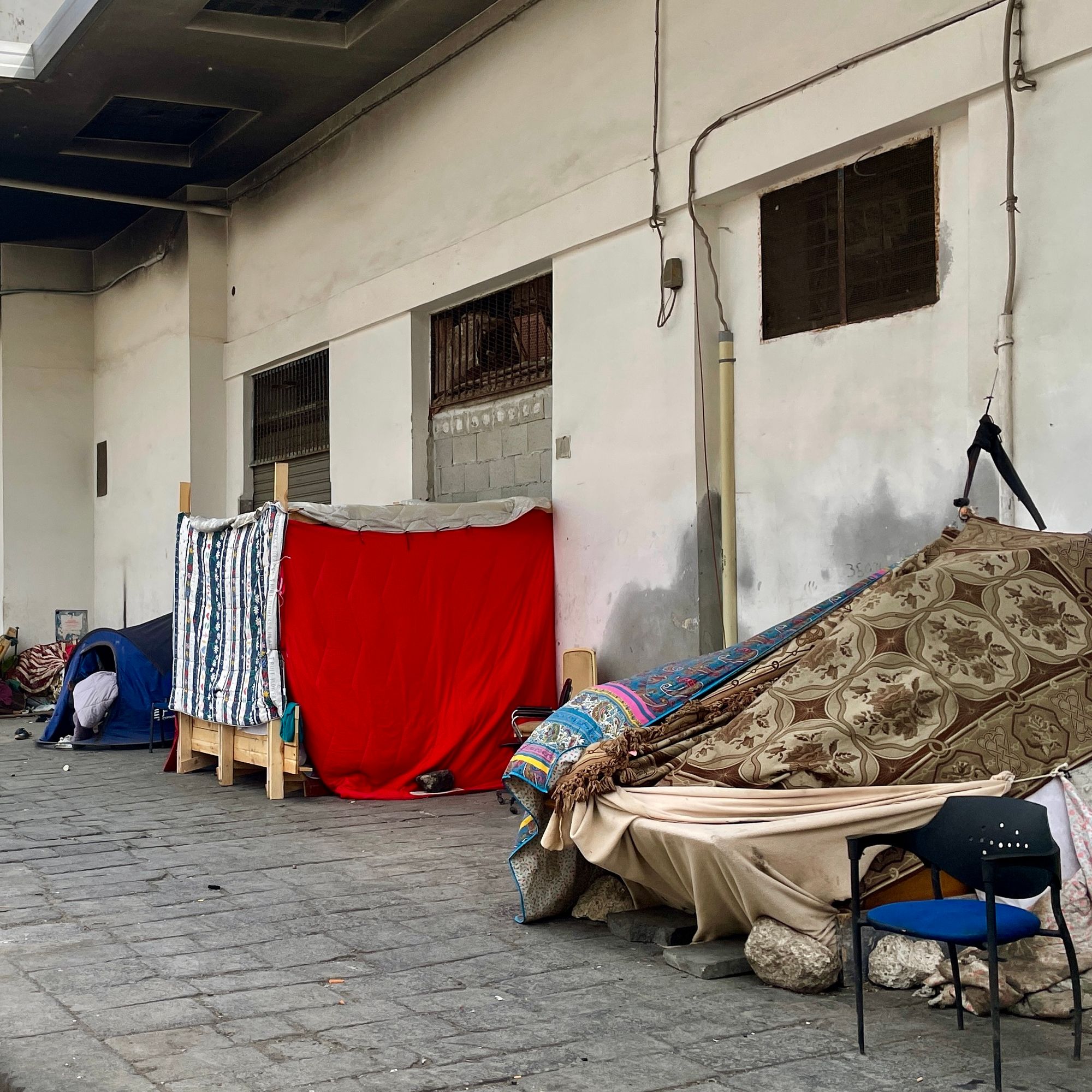
Overwhelming Tangible Needs
If you have kept up with the past dozen posts, you will recognize that most migrants struggle to simply survive. Moving peoples bring a host of needs to the table. In the early days of the migrant crisis, the Italian government found ways to support those who were being rescued. The sympathy and compassion of the Italian people created pathways for new arrivals to have a place to live, food to eat, and even schools for their children. The church often filled the gaps where the government was lacking and was a model of pragmatic ministry in so many ways. But as in most migrant situations, time took its toll, and people grew tired. It is called compassion fatigue, which happens when people and systems become overwhelmed for a significant length of time. In Italy, the migrants began to arrive in mass nearly ten years ago and have been coming ever since.
Adding to the difficulty is the segmentation of migration in Italy. There are four kinds of migrants. First, there are legal migrants. These are those with a long history in Italy or who have somehow obtained their identity papers. Second, there are those who are awaiting judgment on their asylum application. They have been accepted into the social support system but struggle to be connected to service providers. The classic example is the migrant eligible for housing, but no accommodation is available. Third, there are those who have been denied asylum and are now in the country illegally. Then fourth, there are those who are under the control of traffickers and are working in either the farms or the brothels. And while these categories may seem logical in print, they become tough to separate on the ground. These migrants can all be found in the same neighborhood, blending in ways that make them indistinguishable to a local church. And if asked, all would tell a story, and each would have significant needs.
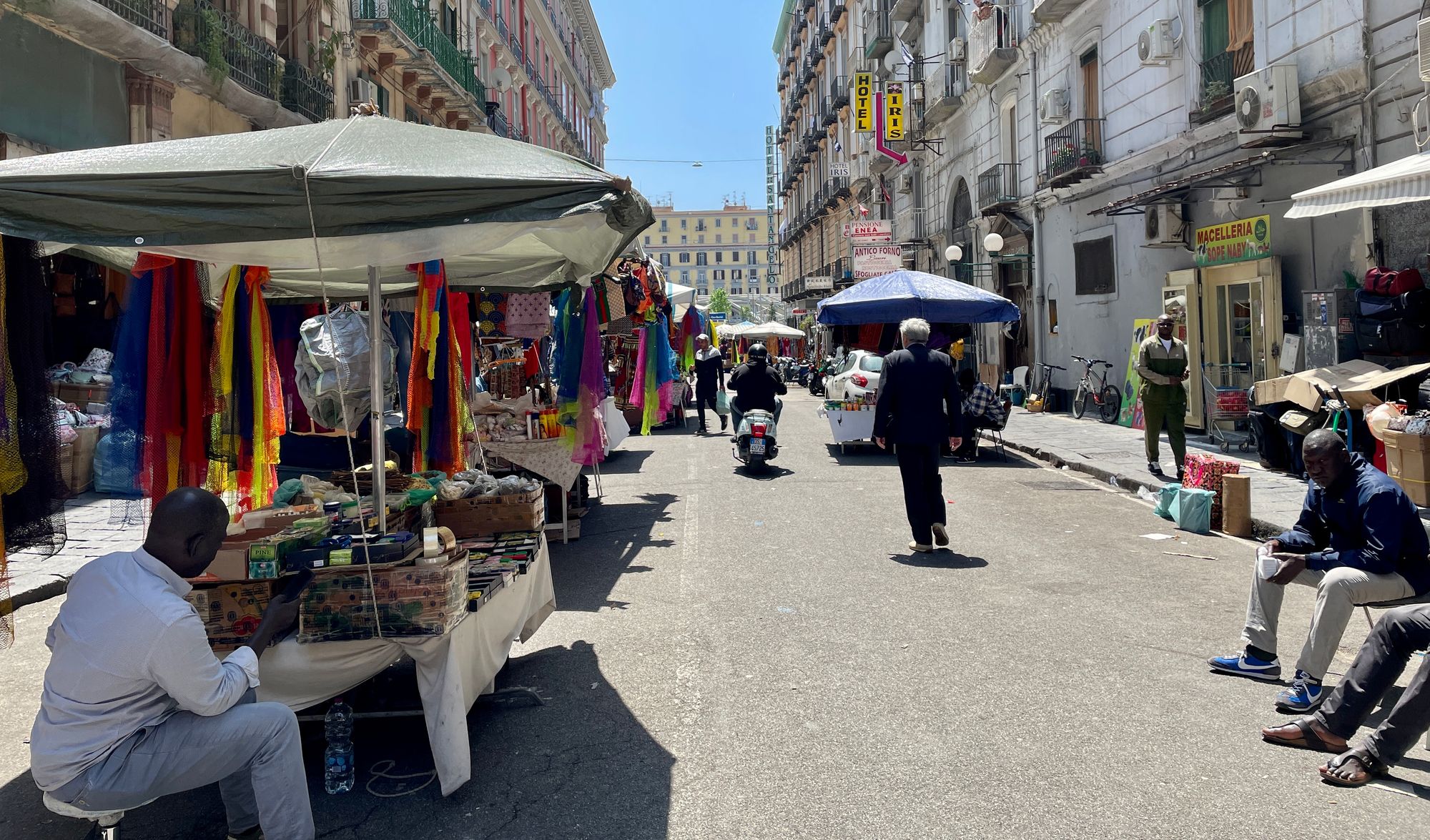
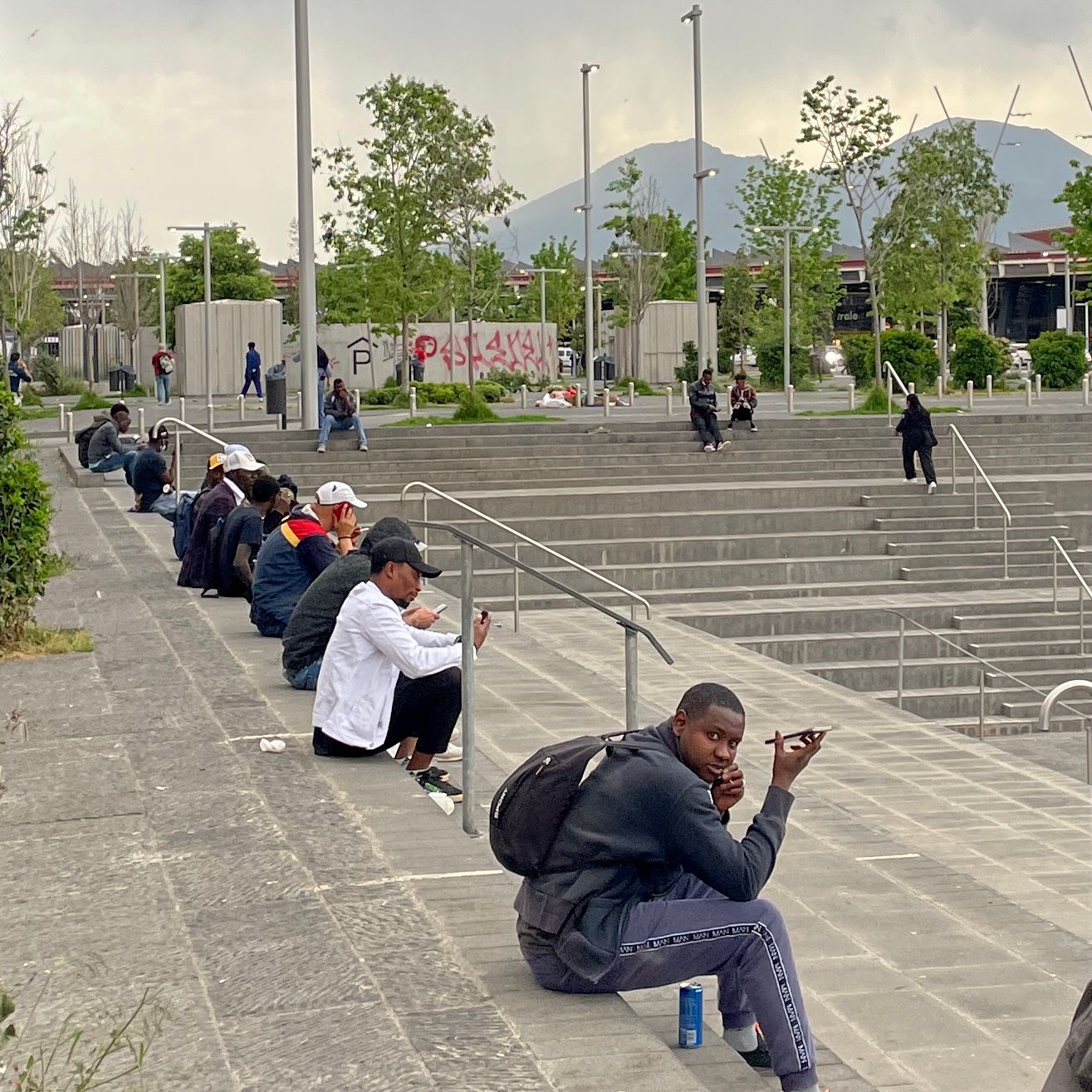
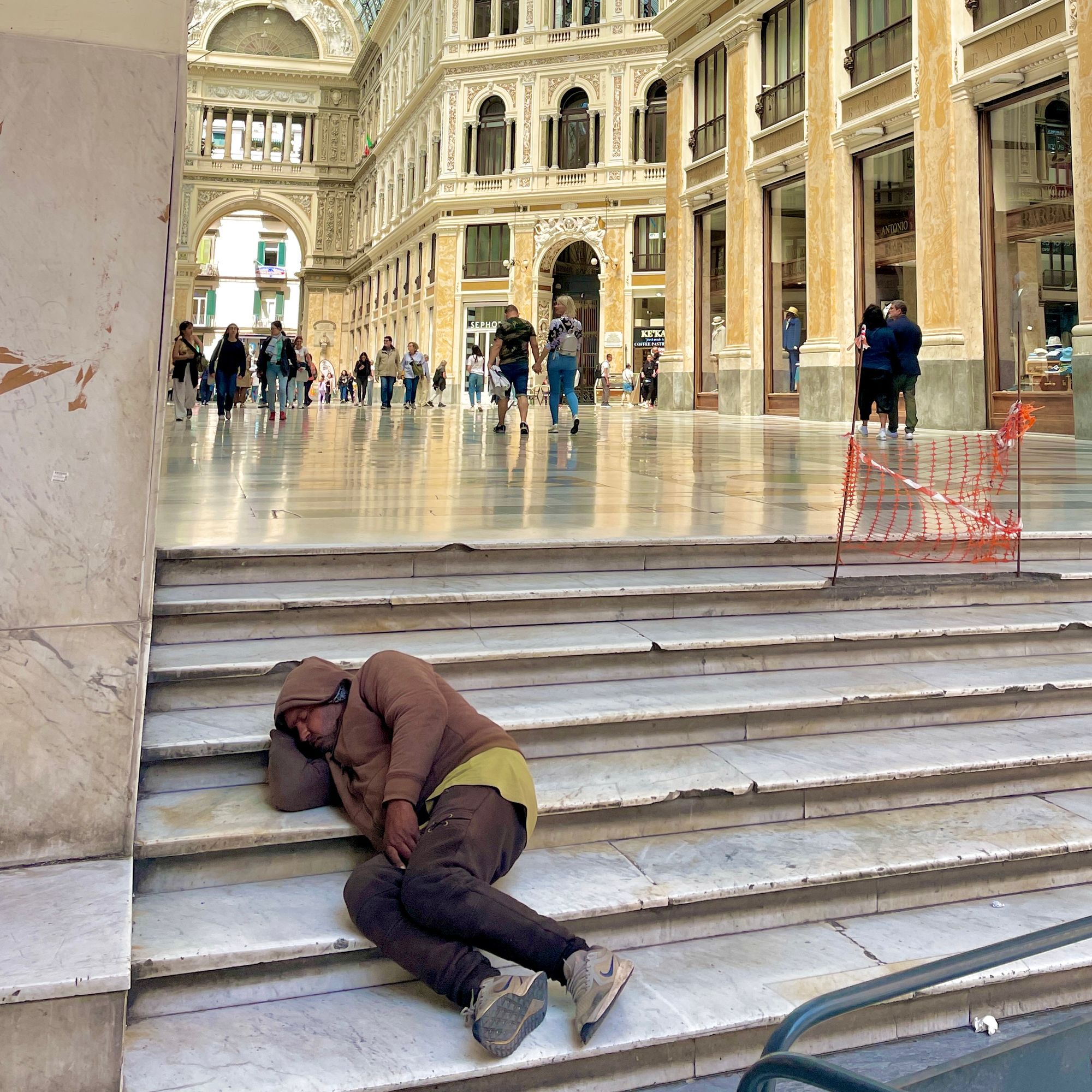
Senegalese district in Naples with migrants of all categories.
Those needs are more than any one individual or church could possibly support. God's people can quickly be overwhelmed by the conditions in their communities. If they meet the need of one today, ten more will arrive tomorrow asking for the same treatment. Most churches have already given their best effort and were forced to retreat by the sheer scope of the need and suffering in their communities. Finding a way to work together on appropriate ministry goals will become critical as the church seeks to engage immigrant families in the future.5
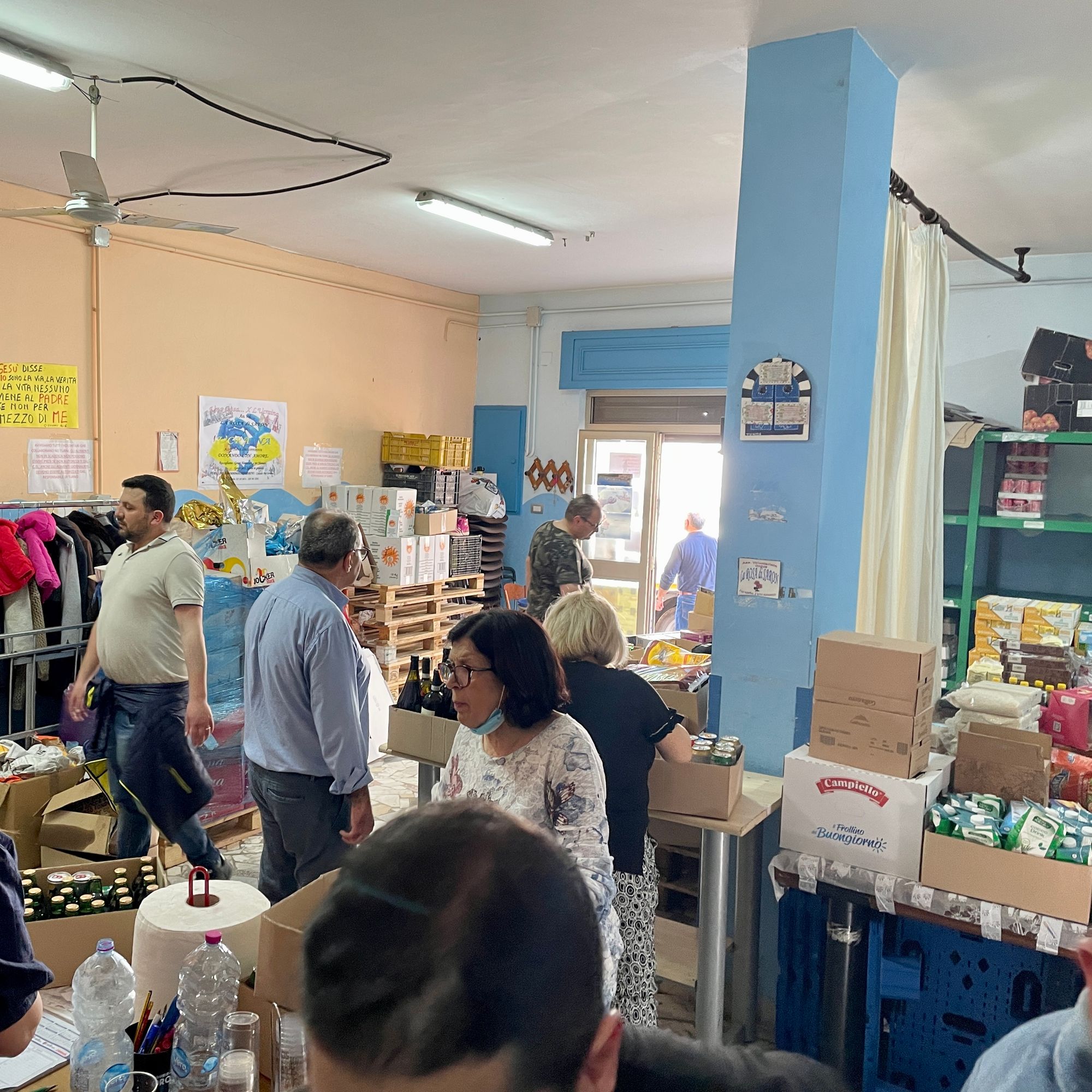
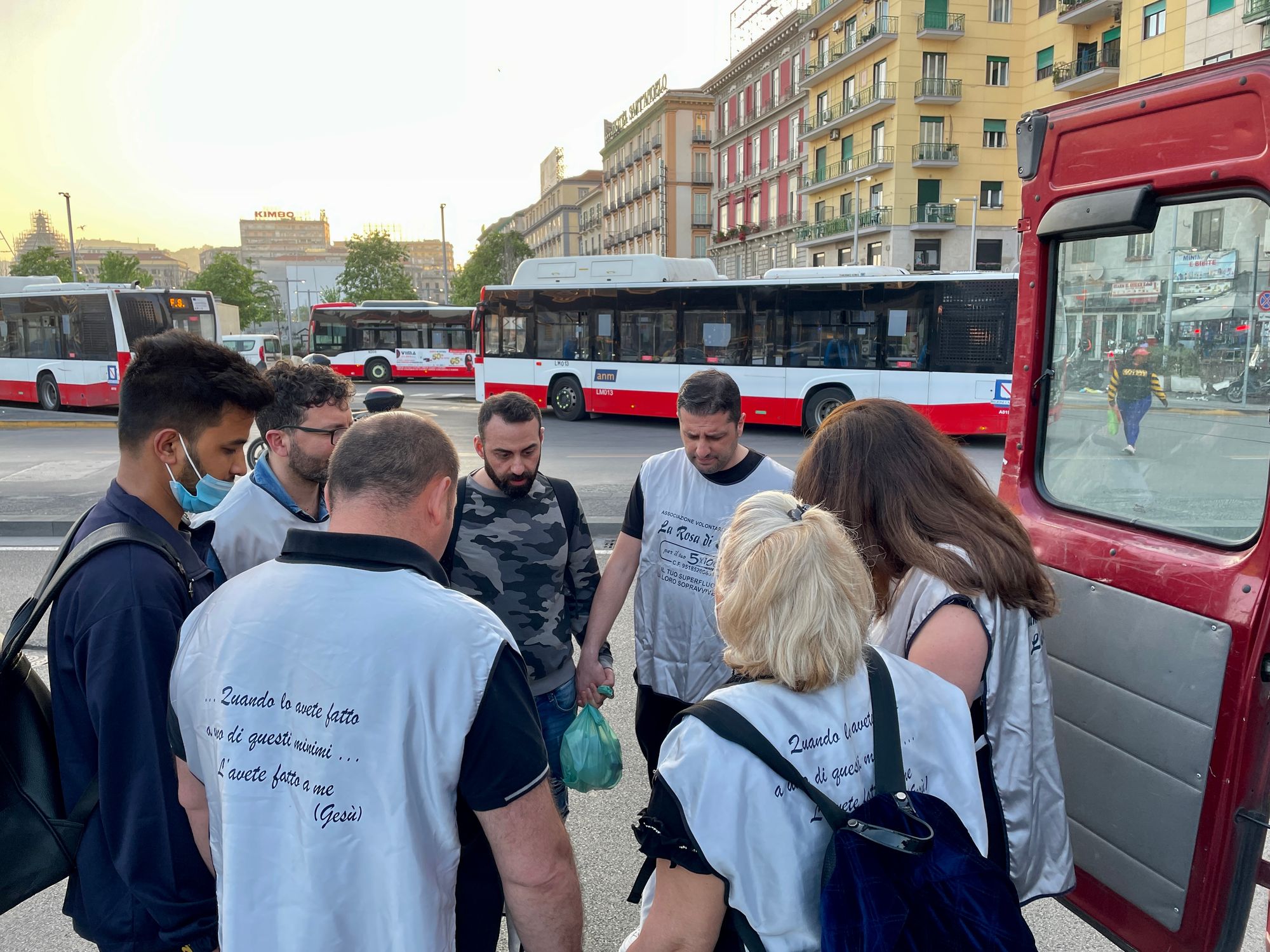
Association of Italian Churches, Meeting Physical and Spiritual Needs on the Streets of Naples.
Need for External Assistance
Yet another challenge for the church in Italy is to find a way for others to join her in the work. No one church, in any one place, can be all things to all people. Her primary responsibility is to create an environment where lost people can come to faith, and saved people can grow to look like Christ. She is there to do more than just engage a segment of her neighborhood and she has a purpose that goes beyond just humanitarian relief. There is an old adage that we can do more working together than by working alone.6 Such is certainly true in this context. Personally, I can see three ways that those on the outside can help the Italian church fulfill her desire to engage her migrant neighbors.
First, there needs to be better networking among Mediterranean churches. No one church is alone in its quest. Many are doing very similar work and learning valuable lessons along the way. I have met with pastors from every country around the Mediterranean and many in sub-Saharan Africa. Each has something to contribute, has an answer to a question, and has found a way of maintaining the balance necessary to engage a hurting community without burning out. I have sensed a hunger among Italian pastors for a greater fellowship and a deeper relationship with others who have their hands on the same plow. Pray that we can help to facilitate this kind of network.
Second, the global church needs to recognize that there is a place for missions in Italy. Reaching immigrants in their places of origin or transition is becoming increasingly restricted for Western workers. From a missional perspective, there are significant strategic advantages to an effort in Italy. As noted above, the Italian church stands ready to receive and support those willing to come. Even more so, the migrants themselves are in a position where they are incredibly receptive. They have been searching for God, and God is working to be found. Cultural constraints may have limited their access to the gospel in their places of origin, and their focus on movement may have limited their attention in places of transition. Now that they are in Europe, many are asking an earnest question… "What next?". This may require a different kind of prayer on your part. It may actually require that you pack your bags!
Third, the African church in Italy needs to become much more intentional about engaging and partnering with the indigenous Italian churches. It is evident that near-culture believers have a much better capacity to connect with migrants relationally and will play a key role in guiding people to faith. And... I am speaking of more than just the African church in Italy. Churches in Africa should grasp the opportunity to train and equip their members who can legally enter either Malta or Italy. They will then be able to serve as intermediaries, and lead migrant churches to trust the indigenous churches in their communities. The doors are open for African missionaries in Italy, and the Italian church is ready to assist with many of the logistical challenges.
Conclusion:
There is a life-and-death transition zone between the beaches of the Maghreb and the European continent. Those who survive are often transported to the Italian mainland, only to be abandoned in a new land with little support. Many were victimized before they ever left North Africa, and the risk of continued abuse continues upon arrival. And yet, in some of the darkest places can be found a flicker of light, a candle held in the hands of the Italian church. By our Lord's incredible grace, it shines brightest on the darkest nights.
In our seven years of service on the African continent, having traversed the Mediterranean many times and visited with hundreds of pastors, I have been humbled and blessed by what I have observed. It is an exciting testimony. The Bride of Christ is strong, vibrant, and actively engaging her community with the gospel. The church in Italy is no exception. She may have her challenges, but her people… our brothers and sisters… are rising to the occasion. I would dare say that she does not need our advice. But I am confident she covets our prayers... and is certainly open to others joining her in the work.
1Cindy Wooden, "Refusal to Help Migrants Is “Sinful, Criminal” Pope Says at Canonization", Catholic News Service https://catholicnews.com/refusal-to-help-migrants-is-sinful-criminal-pope-says-at-canonization/ (accessed October 22, 2022).
2 https://m2m3.org/28-the-historical-context-of-italy-all-roads-lead-to-rome/
3 "Caritas Programmes for Migrants", Caritas Internationalis https://www.caritas.org/caritas-programmes-for-migrants (accessed October 22, 2022).
4 Jehu Hanciles, "Migration and Mission: Some Implications for the Twenty-First-Century Church," International Bulletin of Missionary Research 27, no. 4 (2003): 146.
5 https://m2m3.org/2-in-the-world-but-not-of-the-world/
6 Andrew Whitby, "Who First Said: If You Want to Go Fast, Go Alone; If You Want to Go Far, Go Together?" https://andrewwhitby.com/2020/12/25/if-you-want-to-go-fast/ (accessed October 22, 2022). I really wanted to use this as an African proverb, but it quickly became evident that it is a cliché of unknown origins. However, I still like it!