47 – To Climb a Fence
2023 No 47
And besides all this, between us and you there is a great chasm fixed, so that those who wish to come over from here to you will not be able, and that none may cross over from there to us.
—Luke 16:26
I find that there is a general sense of dissatisfaction in the West. We live in a world where we are told that more is better, change is good, and advancement is a mark of success. Everyone seems to be anticipating the next opportunity just over the horizon. It is more than a philosophy; it is a worldview that consumes many… even in the church. Somehow I think the Lord intends for us to value things differently. Paul told us that he had "learned the secret of contentment." (Phil. 4:11) That passage, in context, contrasts much of what the West teaches and models to their children.
It seems a bit hypocritical when sub-Saharan migrants are judged for their desire to have a better life for their families and their children. We tend to scold them using platitudes such as, "the grass is not always greener on the other side of the fence." We encourage them to learn to be content with the circumstances in which they were born. It is no wonder that our counsel falls on deaf ears.
The story of the rich man and Lazarus in Luke 16 may help us to understand the heart of the migrants better, and it may guide us to a more straightforward approach to ministry. When we look at the poor man, few will criticize those who laid him at the rich man's gate or his longing to be fed. Even in their day, there was a "chasm" between the classes that was difficult for Lazarus to cross. We also perceive that judgment did not fall on the poor man for his efforts, but rather upon the rich man for his blindness. In fact, when all of his riches were stripped away, even he begged that someone go to open the eyes of his brothers, lest they suffer his fate.
History has taught us that there are many walls that were once deemed impenetrable but would eventually collapse. Empires have fallen, borders have been successfully crossed, and there are indeed times of social justice. But the only wall that is truly fixed is between lostness and glory. For this reason, Jesus came (Luke 19:10).
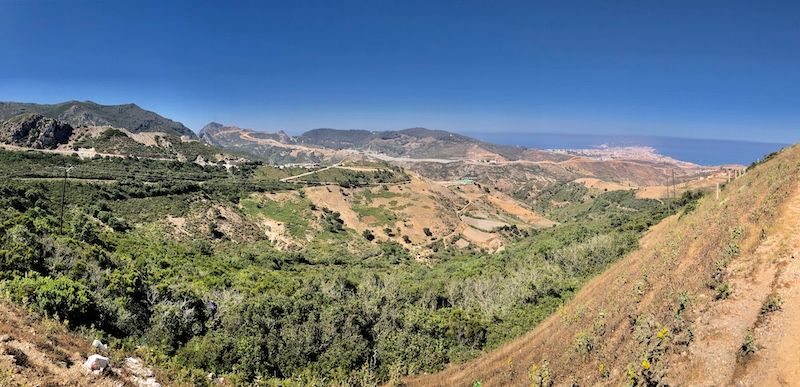
The Fences of Spain
There are two European enclaves on the continent of Africa. They are Ceuta and Melilla, territories of Spain in Morocco. If a migrant can gain access to either of these small pieces of ground, it is the same as landing on a Spanish beach. Success means they must be processed according to EU regulations, which also means they have a chance of making a life in Europe. The distance from Libya to Italy via Malta or Lampedusa is 2-300 miles. The distance from Morocco to Spain across the Strait of Gibraltar is 9 miles. The distance from Morocco to these Spanish territories is only 30 feet. Access to the former costs thousands of dollars and requires a boat. Access to the latter costs very little, and only requires a bit of coordination and luck.
European authorities, however, are doing their part to make such a crossing very difficult. As noted in a prior post, Spain began building fences to control illegal entries in 1993.² Today, there is a double row of barricades, six meters high, topped with razor wire. These fences extend for some ten miles, utilizing over 1,500 border patrol agents to secure the two enclaves. Needless to say, it is practically impossible for an individual or even a small group of individuals to cross. The migrants have discovered, however, that other ways exist to achieve their goals.
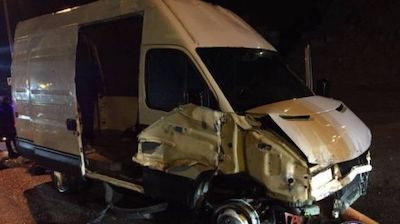
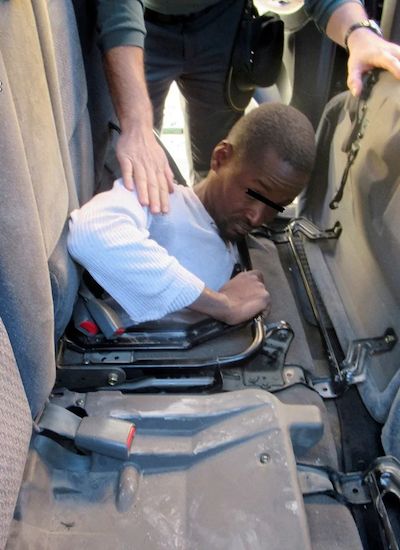
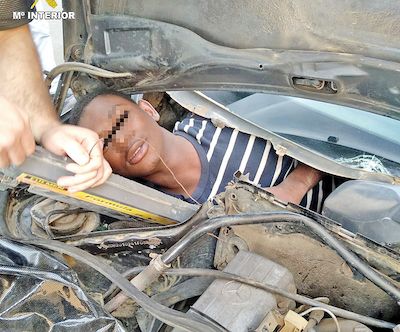
Options for Entering Spain – Courtesy Various Sources3
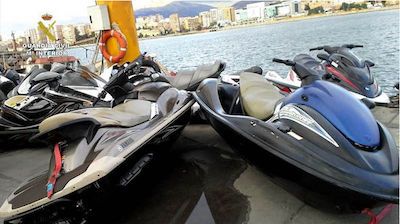
In 2019, a van with 52 sub-Saharan migrants crashed through the gates at Ceuta. Thirty-four were men, and the remaining were women and children.4 Several were injured, but all were processed as having arrived in Spain. Each year, hundreds of migrants attempt to cross the border hidden inside cars. Both Moroccan and Spanish authorities now use devices that can detect the sound of heartbeats inside vehicles for detection. Then, of course, some seek to go around the fences and land on the beaches of Ceuta and Melilla. For a certain price, smugglers on jet skis will drop the migrants off in the waters offshore to swim in. They will take them all the way to the Spanish mainland for a much higher price.5
The most effective strategy, by far, is to storm the fence in overwhelming numbers. It is an effort that requires significant coordination and a bit of inside information. Perhaps it is best to allow a migrant to describe his effort.
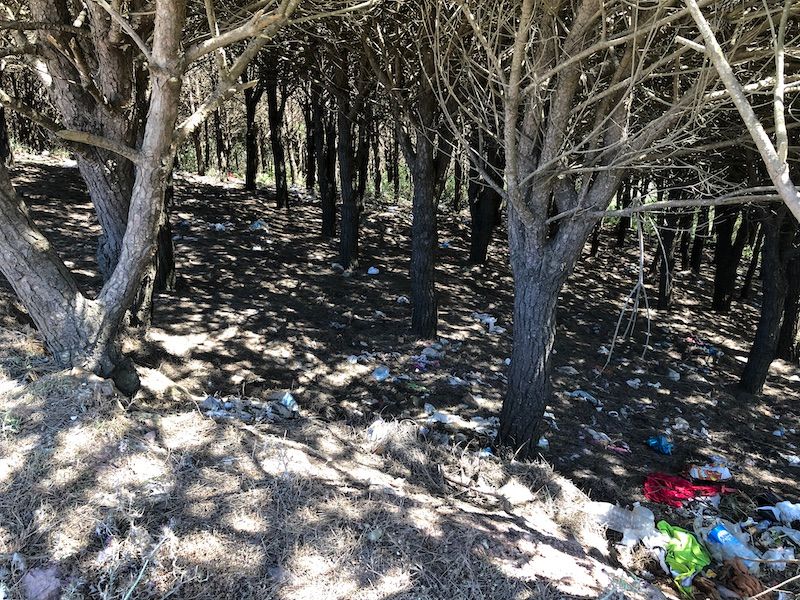
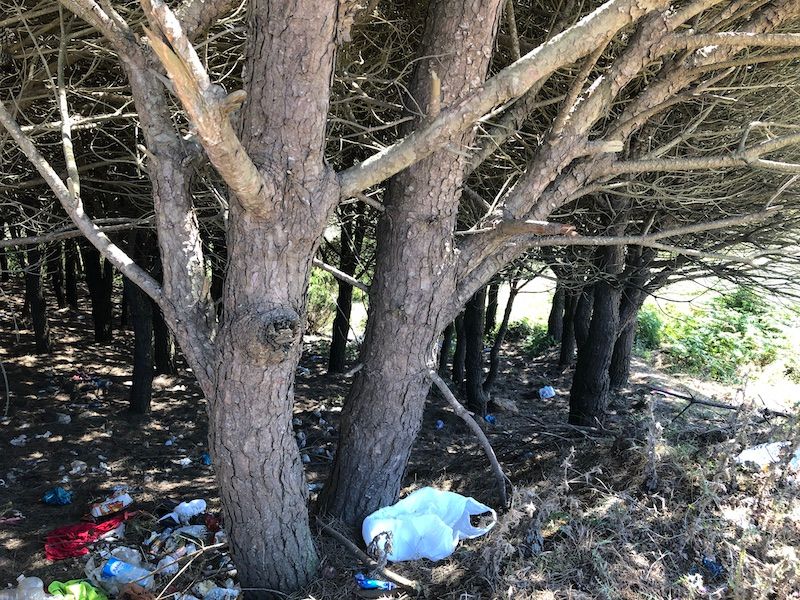
Remnants of a Forest Camp, Ceuta – Courtesy Author
The Story of Samba
Samba grew up in Matam, along the river in far eastern Senegal. He came across the desert of Algeria in 2019 and has been living in a migrant camp in the forests of Morocco ever since. From the outside, someone might think the campsites are just a series of makeshift shelters. But, according to Samba, they are very well organized.
First, the camps can hold hundreds of people. They are built in places that would make it hard for the police to access them. No one wants to hike several miles through this terrain, much less the police. This is not to say that it doesn't happen. In fact, raids upon the camps are a common occurrence. But they are spread out, so the others can continue if one camp is found and destroyed.
Second, the camps have leaders, just like the villages back in the Sahel. They control the community, create order, and provide a measure of security. Each section of the camp is divided by nationality and religion. People are grouped based on their language, culture, and whether they are Christian or Muslim. If anyone causes trouble, such as by stealing, they are dealt with swiftly by leadership. Getting kicked out of the camp can be catastrophic for a migrant, so most will toe the line.
Oddly, this organization grants a measure of relief from the authorities. Without the camps, the migrants would be scattered across northern Morocco, creating havoc within the region. This way, they are controlled and are in known locations. The authorities may harass the migrants... if only to send a message that migrating to Morocco is not a good idea. Direct action only comes as a result of a problem not managed by camp leaders.
Third, the camp leadership creates the strategies for assaulting the fences. They know, through inside sources, when and where the police will be at their weakest. They know how many migrants to send and what they need to have at their disposal to climb the fences. They also prepare the resources and spaces required back in the camp to care for those who will be injured during the assault. The razor wire will cut many, some will be beaten, and others may even be shot.
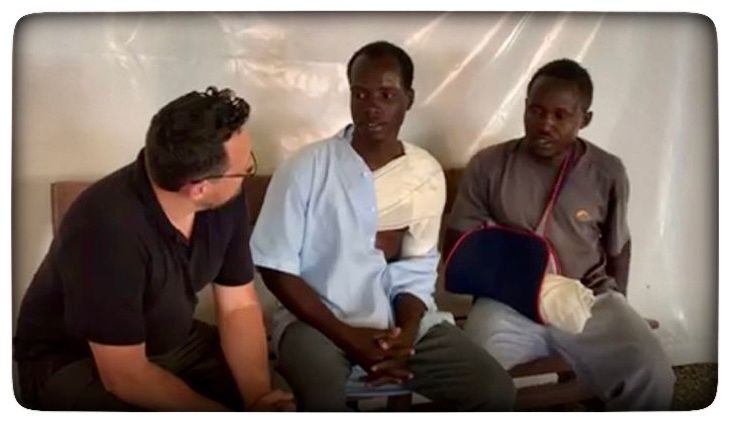
I visited with Samba about a year after his effort to storm the fence in March 2020. He shared that there were about 200 who made an attempt, with perhaps 50 being successful. He was not.6
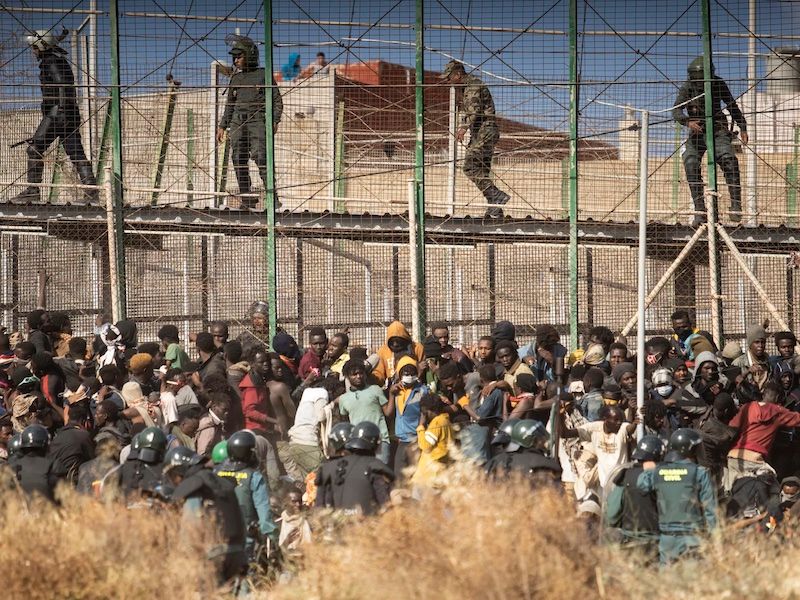
The planning for the crossing began about a month in advance. Rumor was spreading through the camp that an attempt would be made. One of the leaders had felt that the new COVID virus in Europe would be enough of a distraction that Spanish and Moroccan Border patrol would have a more substantial presence near the gates. Having fewer guards along the fence and being distracted might give them the edge.
Every migrant attempting the crossing was required to pay fifty euros to the camp leader. This individual was well experienced, having lived in the camp for over ten years. Every year, he directed two or three attempts to storm the fences. Many had been successful because of him. The money was considered payment for his services, allowing him to purchase supplies… and perhaps pay an official to look the other way.
Having the right supplies was critical to success. There was a need for specially prepared shoes. They needed cleats that could give them the advantage of climbing the fence. They also required gloves and hooks to help get over the top. There was also a need for blankets to cover the razor wire. But supplies were only some of what was necessary.
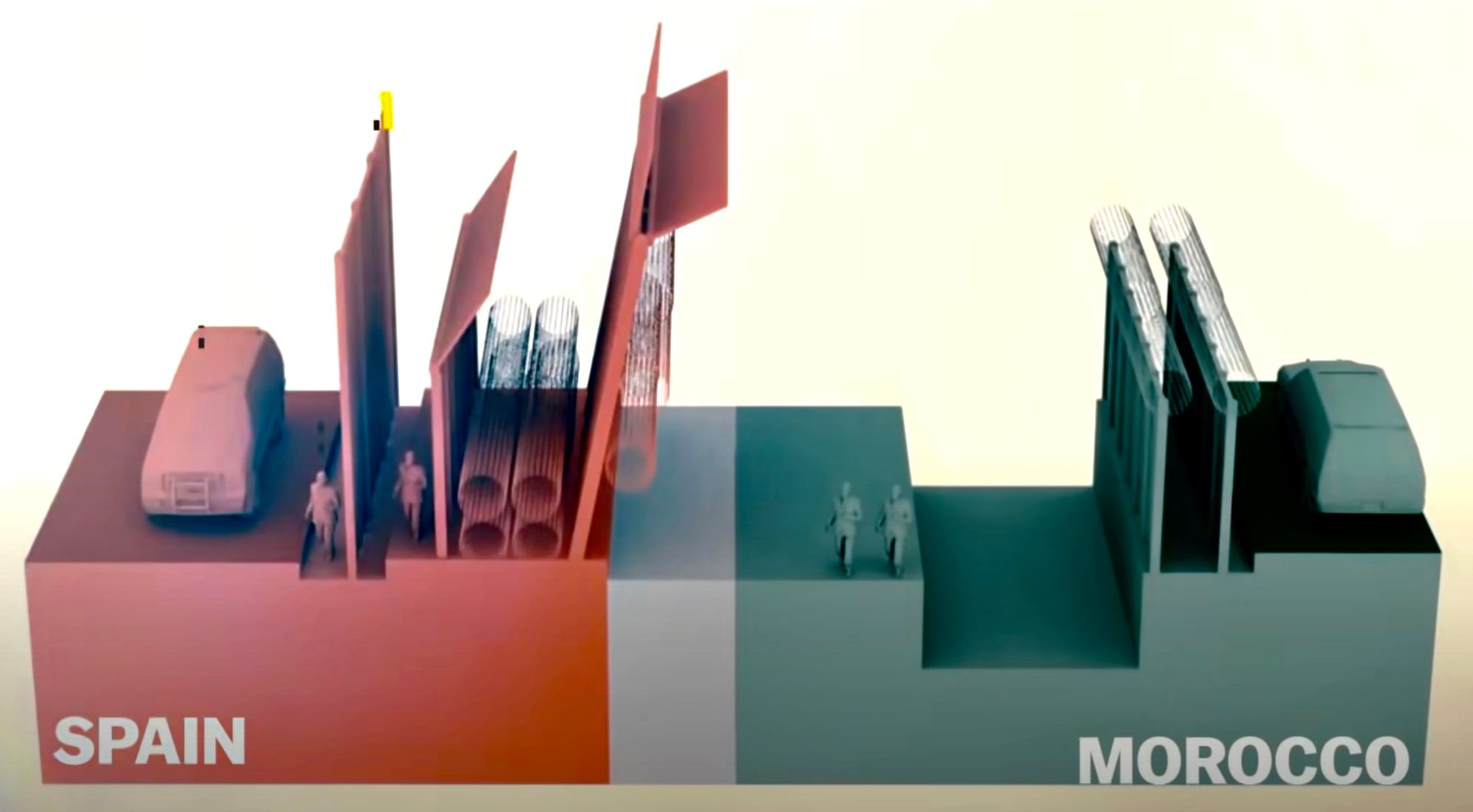
They also needed training. The fence was complex, having two separate components. Not only did they need supplies to cross the first fence, but they also had to carry the items required to cross the second fence. They had to learn how to do this quickly and efficiently because time would be their enemy. Once they began their assault, they would only have a few minutes before hundreds of police and border control agents would be there. Everyone was taught how to become a distraction for the police, particularly if they saw that they would not make it across. In so doing, they would create a better opportunity for others to be successful.
When the evening came for the assault, some 200 men from the camp left their belongings behind and made their way to the rendezvous. Another group of about 50 men also left, but went to a part of the fence some three kilometers away. At about 1:00 AM, their job was to pretend to storm the fence. In so doing, they would draw the border guards away from the main point of attack. This distraction was intended to give the actual group a few more moments before the full weight of the Spanish Civil Guard could reorganize and arrive.
Samba was wearing shoes with nails sticking out the bottom, having been inserted from the inside. He was told that this would allow him to climb the fence easier. He had gloves but chose not to wear a shirt, fearing it would become entangled in the razor wire at the top. He only brought one blanket, knowing it would be needed for the first fence. What he would do for the second fence was unknown. His strategy was to get over the first fence as fast as possible, and he was hoping someone else would have covered the wire on the second fence by the time he arrived.
When the first group assaulted the fence, it was as if the Civil Guard was waiting for them. They were immediately hit with water canons as the lights came on and the sirens began to wail. An informant had tipped them off, and the Guard had reinforced that part of the fence. But… this was a part of the migrant's plan. They knew that by informing the police of the first, if not bogus attempt, they would pull their resources together at that spot. This would perhaps create an advantage at the location of the actual crossing.
As soon as the lights came on, the 200 migrants began climbing the fence. Samos had trouble from the beginning. First, the nails in his shoes were not strong enough to hold his weight. They just folded over and pulled out of his shoes. When he reached the top of the first fence, he did not place his blanket well. That meant when he tried to climb over, he became entangled in the razor wire, suffering severe cuts to his arms. They were so bad that he could not hold on, and he fell to the ground. Luckily, he was outside the fence. Many of those who made it to the second fence were pulled down and beaten by the police. Some of those who made it to the top of the second fence were also caught up in the razor wire. They, however, would fall onto the Spanish side.
Once on the ground, other Africans helped Samba wrap up his arms and return to the camp. He was not the only one with severe cuts; some had become very weak from blood loss. There were those who had some medical training, and they cleaned and bandaged his wounds. It would take many months for his arms to heal, and during that time, he decided not ever to try that again. It was simply too terrifying, and difficult, and carried too much risk.
Conclusion:
In recent years, I have often been asked about my thoughts on fences, or walls, to secure borders. It is such a political topic that I hesitate to respond and often look for a way out of any definitive answer. Our research has demonstrated, however, that no barrier can be placed to prevent human movements. If migrants can cross the Sahara Desert... or the Mediterranean Sea... please tell me how a fence or a wall will stop them. These obstacles may slow down movement and increase human costs, but they do not address the reasons for migration. And… in the absence of reasonable, rational governmental migration policy… they do little to secure borders.
There is, however, a spiritual barrier that stands between people and their most profound need. One man suffered greatly in this world, but in his poverty, he found Christ. Another man had everything in this world, and his riches were of little value once he died. Be careful here; it was not his riches that failed him. He trusted that his wealth would bridge the chasm only faith can cross. He was wrong and found himself on the wrong side of the fence.
The Western church would do well to see herself in this story. We are on the side of riches. We have our wealth, healthcare, and status in this world. The things we throw away, crumbs on the table, would give life to many in this world. As we watch our fellow human beings suffer, we have this unique capacity to criticize their "grass is greener" efforts. I want to remind all of us that, in many cases, the grass is indeed greener on our side of the fence. There are many who would cross a desert in a pickup, traverse an ocean in a raft, and climb a razorwire fence with a blanket just to have a taste of our life.
Ten thousand years from now, all of the above constructs will have become a distant memory. I wonder if we, like the rich man, will have spiritual regret for the multitudes who died without Christ. I wonder if we will consider those on the other side of that great chasm, longing for just a taste of the waters of life. I suspect that on that day, our worldly riches will seem small in comparison.
Excellent Video... Well Worth the Time to View. 9
1 Alba Sanz, "Morocco Builds a New Border Fence in Order to Control Illegal Immigration", Atalayar https://atalayar.com/en/content/morocco-builds-new-border-fence-order-control-illegal-immigration (accessed February 14, 2023).
²M. Augustus Hamilton, "43 – Historical Context of Spain", M2M3 https://m2m3.org/43-historical-context-of-spain/ (accessed February 14, 2023).
3 Ciràn Giles, "Van with 52 Migrants Smashes through Spanish Enclave Border", AP News https://apnews.com/article/866ba49e93d743f5b19e5f009762282d (accessed February 14, 2023).
4 Photos courtesy of "Van Carrying Migrants Smashes into Spain's Ceuta", Deutsche Welle https://www.dw.com/en/van-carrying-migrants-smashes-into-spanish-enclave-border/a-51298790 (accessed February 14, 2023)., and Oz Katerji, "Migrants Found Hiding in Glove Box and under Back Seats of a Car in Bid to Enter Europe", Express Digest https://expressdigest.com/migrants-found-hiding-in-glove-box-and-under-back-seats-of-a-car-in-bid-to-enter-europe/ (accessed February 14, 2023)., and "Three Migrants Hidden in Cars at Spain-Morocco Border", Kuwait Times https://www.kuwaittimes.com/3-migrants-hidden-in-cars-at-spain-morocco-border/ (accessed February 14, 2023)., and "Fifteen Arrested in Spain for Smuggling Migrants on Jet Skis from Morocco", The Loocalo https://www.thelocal.es/20150830/15-held-in-spain-for-smuggling-moroccan-migrants-on-jet-skis/ (accessed February 14, 2023).
5 "Two Algerians Illegally Taken to Ceuta by Moroccan-Origin Jet Ski", Morocco World News https://www.moroccoworldnews.com/2017/07/224196/two-algerians-illegally-taken-ceuta-moroccan-origin-jet-ski-illegal-immigration (accessed February 14, 2023). See also John Cody, "Illegal Migrants Paying up to €10,000 to Jet Ski from Morocco to Spain", ReMix https://rmx.news/article/illegal-migrants-paying-up-to-e10000-to-jet-ski-from-morocco-to-spain/ (accessed February 14, 2023).
6 "North Africa: Dozens Climb Border Fence into Spanish Enclave", InfoMigrants https://www.infomigrants.net/en/post/23928/north-africa-dozens-climb-border-fence-into-spanish-enclave (accessed February 14, 2023).
7 "At Least 18 Migrants Die in Surge to Cross Moroccan Border Fence into Spain’s Melilla.", NPR https://www.npr.org/2022/06/25/1107620889/morocco-migrants-die-stampede-spain-border-fence (accessed February 14, 2023).
8 VOX. (2017, December 5). Europe’s most fortified border is in Africa. [Video]. YouTube. https://youtu.be/LY_Yiu2U2Ts?t=138
9 Ibid.