46 - A Beggars Life
2023 No 46
From want and famine they are gaunt who gnaw the dry ground by night in waste and desolation.
—Job 30:3
In our past few posts, I have sought to introduce you to the Western Atlantic Route. We have also discussed the historical context of West Africa, Morocco, and Spain. Although the points of origin are very similar to those of the Central Route, the places of transition and destination turn out to be very different. Such is true for all the migration routes we will present in this blog. It is a crucial point that we pray makes these articles helpful. When we tell people we work with African migration, they immediately have this large, all-encompassing image. Our objective is to break that image into much more accurate components. Our goal is to both inform and humanize their stories.
For this reason, I would like to begin to share the story of the Western Mediterranean Route through the eyes of the migrants themselves. For obvious reasons, I will refrain from sharing actual names. For the sake of brevity, I may combine several experiences into one testimony. Ultimately, my goal is to remain faithful to their testimonies with the prayer that the reader can better understand the actual situation of these migrants. I will begin with Christopher.
The Route to Morocco
Although Christopher was born in the Gambia, he spent most of his growing-up years in Ziguinchor, Senegal. His uncle was a cotton farmer and had been relatively successful. Compared to others in the region, they were economically considered middle class. That is to say… they had a house big enough for the extended family… and a pick-up truck.
The challenge for Christopher was that he was a nephew in the family, not a son. That meant that he could work on the farm but would not ever have any ownership of the land. It was a good life if one wanted to be a cotton farmer. Christopher, however, had taller goals. He wanted to have his own farm. That meant he would have to find enough money to buy some property and enough equipment to produce a crop. He knew that this kind of money was not available in southern Senegal.
He had heard stories of the farms in Spain. Other migrants had made their way there and had earned a lot of money. Or at least that is what he had been told. Migrant families were building new houses in the city, so he knew some were successful. It seemed reasonable that with his experience, he could easily find work. He even imagined that he could become a foreman and make much better wages. Eventually, he would have enough to purchase a farm back home.
So, his dream became a plan, which was triggered much sooner than he thought. He had been reading posts by other migrants who had made their way to Spain. They told of the abundance of jobs and the high wages employers were offering. Scattered among the posts were those who advertised their services to help migrants get there. After a few private messages, he was connected to a "chasseur", or someone who could make things happen. He was offering transit to Morocco for $800. For that amount, he was guaranteed to arrive safely in Tangier, all within a few weeks.
Christopher would have to take all his savings and sell his small motorcycle to get the money. It would take everything, but getting to North Africa would be worth it. According to his contact, he could easily find work in Tangier to raise another $800. That would pay the cost of a boat into Spain. It was supposed to be simple. But as we all know, nothing along these pathways is as promised.
Having paid the smuggler the money, he boarded a bus to Gao in Mali. Then, after a few days, he was put into the back of a Hilux for the journey across the desert. As with others who cross the desert, Christopher’s story took a dark turn. (The journey for Christopher across the desert is, unfortunately, quite familiar to that of others. To gain a better understanding of what this trip is like, I refer you to a previous blog.)²The route to Oujda from Gao (WMR) is about 20% further than the route from Agadez to Tripoli (CMR). It also traverses more remote regions than the route to Libya. This makes the crossing very dangerous, requiring better equipment, more fuel, and more water. Along the way, they passed several vehicles surrounded by dead bodies. They lost four of their own as they succumbed to dehydration. He shared that they are buried somewhere in the sand.
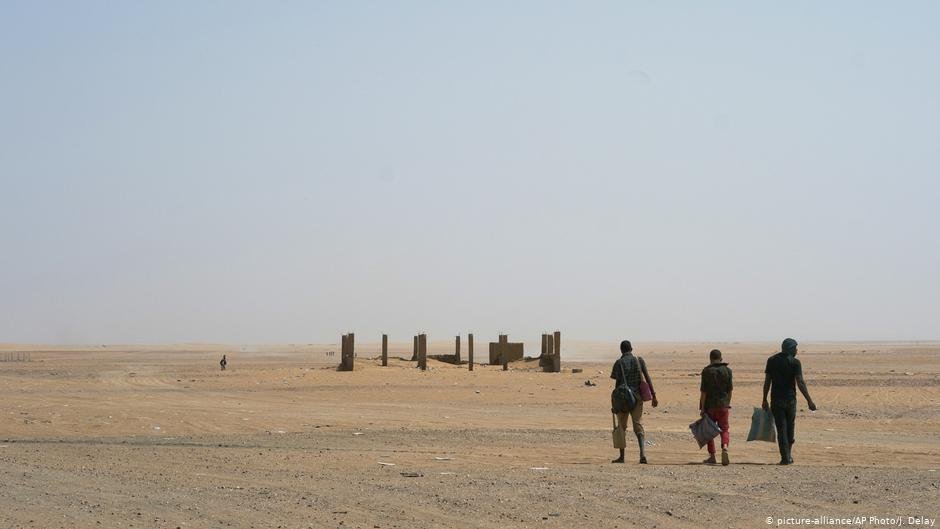
When he arrived in Mekmene, Algeria, the driver told them they were only 175 kilometers from Oujda, in Morocco. That put them about an hour from the Moroccan border and another hour to the safe house. That is... if they were in a vehicle. To the surprise of everyone, their handlers told them they would have to walk the rest of the way. The smugglers feared that if they took them by truck, they would be captured by border patrol, and their vehicles would be confiscated. They were also told they would need an extra $100 to pay the guards to pass into Morocco. That would take nearly everything Christopher had in his pocket. He tried to argue that he had paid for a complete trip to Morocco, but no one cared. He had nothing to do but pay the extra money and start walking.
It took nearly a whole day to get to the border. There were four in his group, and they tried to conserve their water, but it wasn't easy in the heat. At one point, a truck stopped and offered them a ride. The driver wanted twenty dollars, and they readily paid. He took them to within a mile of the border crossing, where some officials were waiting. It was obvious that they had done this before. The guards "suggested" each pay a $100 transfer fee to cross the border. Each paid and was given a paper "pass ."They were then to walk the rest of the way and show their pass to the guards at the gate. After they paid, they started walking again.
Everyone feared that their money had been taken and that the guards at the border would arrest them. But what else could they do? When they arrived in line at the border crossing, they showed their identity cards and their "pass ."To everyone's surprise, they walked into Morocco without any hassle. It took another full day to walk to Oujda, in northeast Morocco. The road was more manageable in that they could find more water along the way. They filled up their jugs at the border crossing, and there were farms every so often. As in Algeria, they were picked up by Moroccans who would give them a ride for a few kilometers… for a price. By the time they reached Oujda, they were exhausted and practically broke.
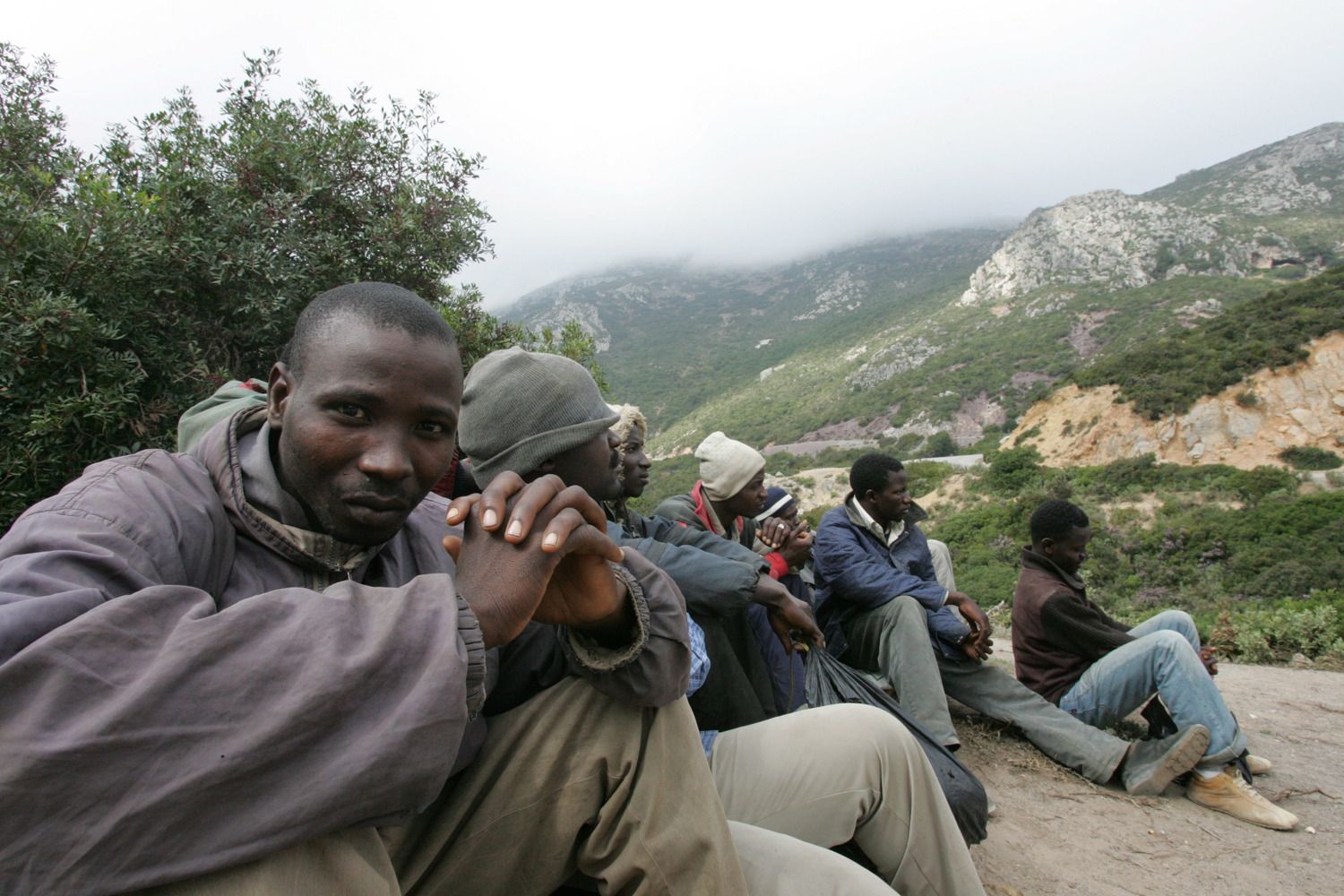
There is something to be said for the migrants in Morocco. They stick together. When Christopher walked into town, Africans were on almost every street corner. They were asking for money from the people in the cars. Christopher knew their type well, because the same kind of people was in Senegal. They were called "mendiants" in French. It means a beggar, someone who is absolutely impoverished. He never dreamed that he would be asking a mendiant for help, but he knew that without the help of someone, he would be in serious trouble.
As he visited with some of the men on the street corners, he learned that their stories were remarkably similar. They had paid for transit into Morocco… were now simply trying to survive… and raising money for a seat in a boat that would take him into Spain. Consistent with African hospitality, they invited him to their camp, offered him food, and showed him where he could sleep. At least he had arrived.
That was seven years ago.
The Hope for a Boat… The Life of a Beggar
When I met Christopher, he was working a street corner in Marrakech. Once he understood that I was not with the authorities and got over the shock that an American would take time to visit, our relationship began to develop. (I use the word “relationship” very loosely!) But he was willing to share his story with me. I should mention that migrants who fall into begging learn quickly to distrust everyone. They also enter every conversation with an underlying motivation to receive something. There have been so many stories on SSA migration that they consider every "western inquirer" to be a reporter. Thus, there is always an expectation to be paid for talking... and one must always be aware that their stories are easily embellished. Even the Africans know that good stories sell!
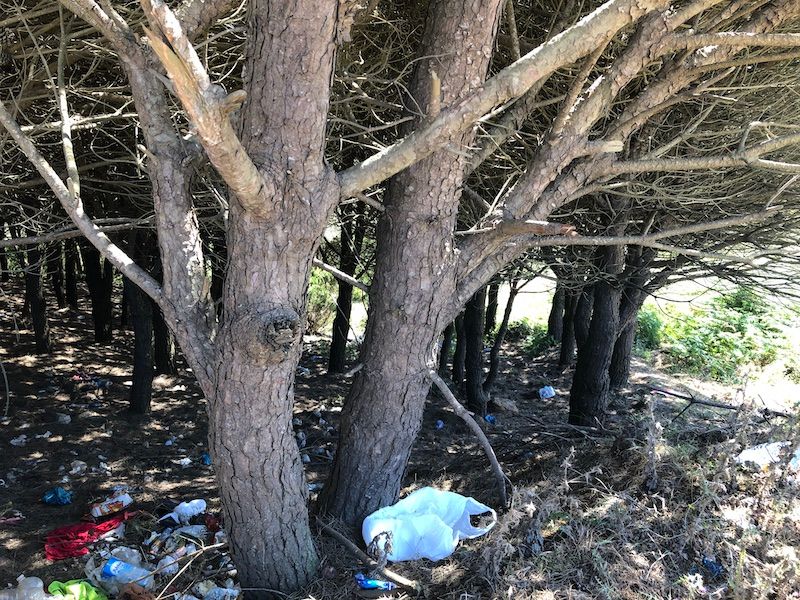
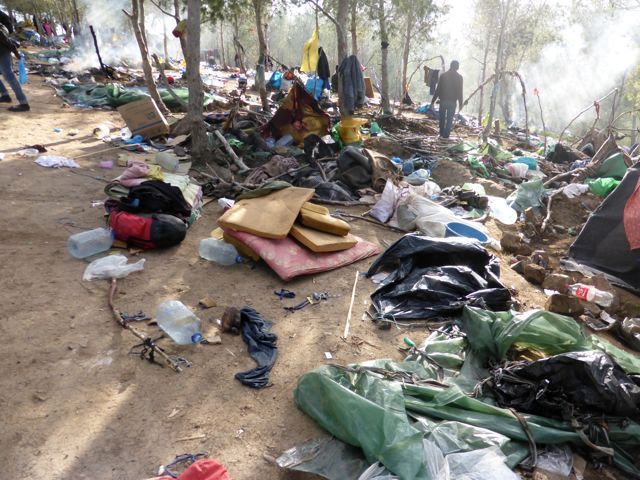
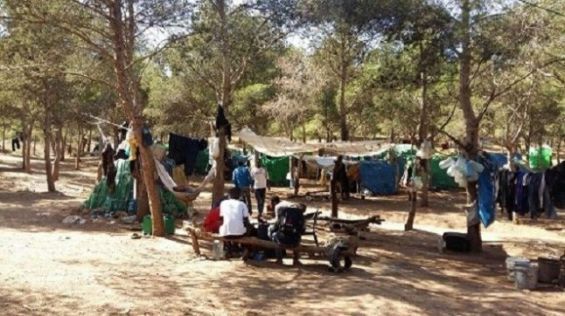
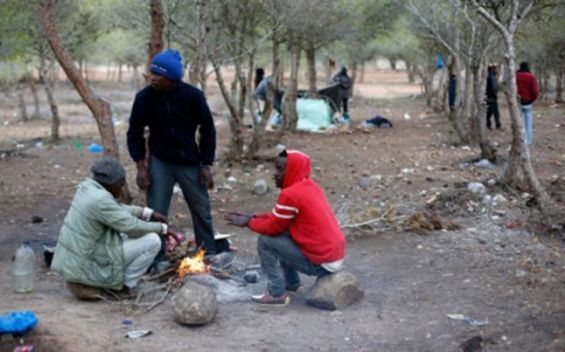
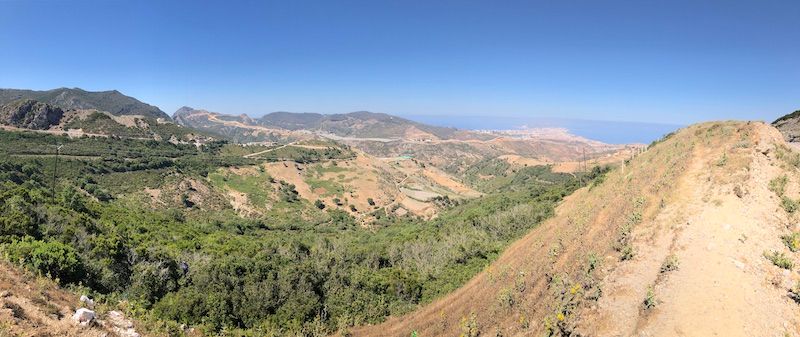
Migrant Camp in the Forrests near Nador – Courtesy No Borders Morocco and Others
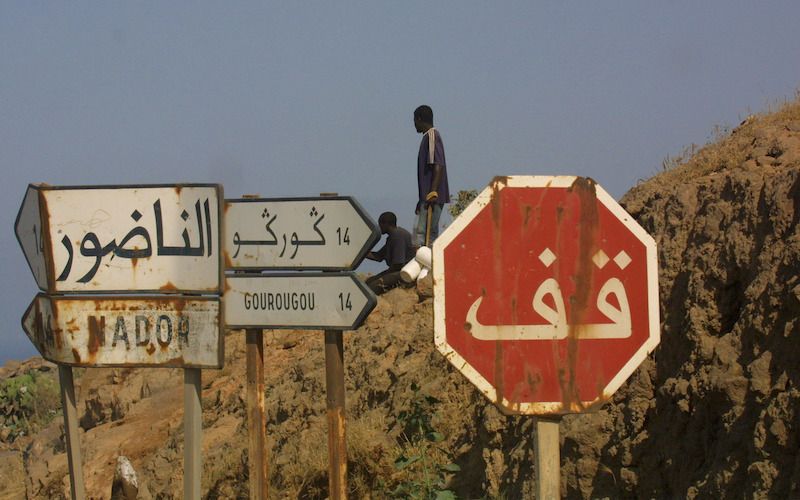
Christopher had lived in Nador (close to Oujda) for a few months with the migrants he met. They taught him how to live on the streets, beg for money, and avoid the authorities. He quickly discerned that his hopes for a job were unfounded, so he knew his opportunities would be limited. Begging allowed him to eat, and he could sleep in the African community with little expense. What he needed was the money for a boat.
Surprisingly, the boats themselves were relatively easy to find. There were multiple options, but all started at a price of $3,000. He had heard that a cheaper boat could be found, and there were plenty of stories of those who had been ripped off. Some of those more affordable boats were nothing more than inflatable life rafts, hardly suitable for crossing the Strait of Gibraltar. He knew he needed a good boat with a good captain, who had enough money to pay the border patrol to look the other way. Those boats started at $3,000.
Christopher knew he would only get one shot at borrowing the money from his family. That much cash was more than anyone else could secure… except his uncle. But, because he was a nephew and not a son, the chances of him providing the money were slim. He knew that he had to wait for the right opportunity. In the meantime, he wisely stayed low, saved what he could, and tried simply to survive.
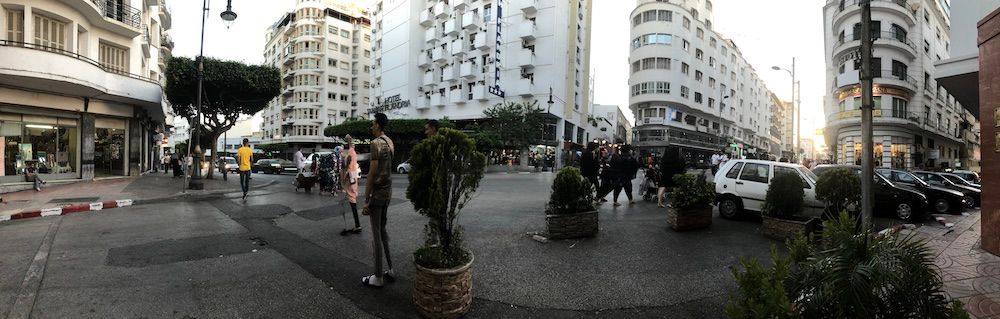
By this time, he had moved to Tangier and was learning the ropes about boat crossings. He discovered that each boat would often be filled with migrants who knew each other. That was just one means of protecting one another from the police. Knowing each other helped to weed out the spies. If an informant got into the group, the police would raid them just as they held all their money. After six months in Tangiers, he had built enough trust in the community to start hearing about specific boats that were leaving. The time had come to call his uncle.
Needless to say, his uncle was not an easy person to convince. He had witnessed young men leave for Europe and never heard from them again. But he knew Christopher, and he knew that he planned to return to Senegal, buy some land, and join the family farming business. He also knew that Christopher was smart. Because he had made it so far and was so close to success, he offered him $2,000. Christopher had saved nearly $500 already and felt like he could save another $500 if careful. That took almost a year.
Christopher shared the next part of his story with me without any emotion. He paid for the boat and met everyone at the designated launch site to the East of Tangiers. It wasn't much, but it had a motor. The man who was supposed to drive the boat was Moroccan. He told them not to worry, that he was a fisherman and knew the waters well. Once they were all there, the captain left to use the restroom and never returned. Before they knew it, the police had surrounded them. They were arrested, and the police left the boat on the beach.
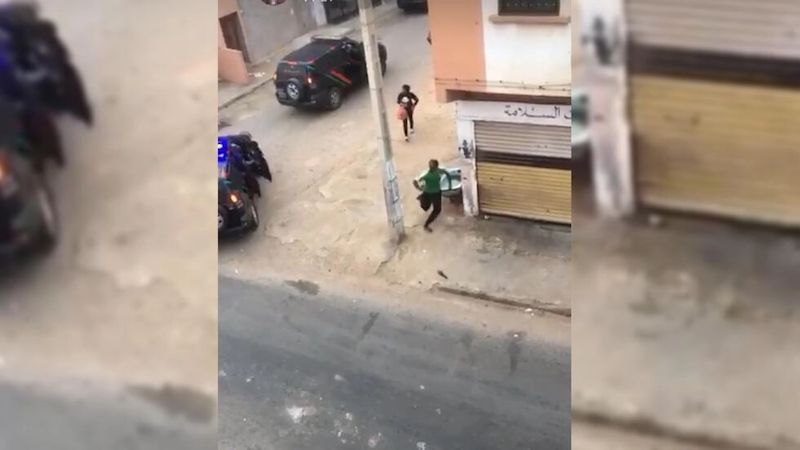
After their arrest, they were placed into a police van and driven to a desolate stretch outside Laayoune, Morocco. (For the record, that is an 18-hour drive… non-stop.) They were released beside the road with one bottle of water and instructions not to return to Tangier. All they could do was start walking back North.
Evidently, this happens often to migrants.3 Locals would pick them up and take them for some distance before turning off the road. Sometimes, they would give them food, water, and a little money. Once they arrived in Agadir, they could catch a bus to other parts of Morocco. Some went back to Tangiers with the intent of raising enough money to make another attempt. Christopher knew better. One cannot raise enough money by begging, and there were no jobs that far north.
Conclusion:
Christopher resolved to go to Marrakech, to look for work, and to continue begging. He has now been there for several years. He told me that he could find a job occasionally, but most of his income comes from begging on the street. He lives in a tiny apartment where five other men pay him to sleep at night. He told me that it was not much of a life, but after losing his uncle's money, there was nothing for him back in Senegal.
We pray for men like Christopher. Every time I see him, I think of the passage in Job that describes the "gauntness" of a beggar's life. Christopher is a survivor. I suspect that he will one day find his way to Spain. However, if he does, I fear his life will not be much better. We pray that he can find the hope that extends beyond this world and this life. In Christ, he would find a peace that would allow him to settle in Morocco, and perhaps even return to his family in Senegal.
1 Teresa Palomo, "In Pictures: Migrant Women Survive at the Gates of Europe", Al Jazeera https://www.aljazeera.com/gallery/2020/4/26/in-pictures-migrant-women-survive-at-the-gates-of-europe (accessed Feb 7, 2023).
² M. Augustus Hamilton, "A Journey across the Desert", M2M3 https://m2m3.org/31-a-journey-across-the-desert/ (accessed February 4, 2023).
3 Djamel Belayachi, "Migrants Ffom Sub-Saharan Africa Flee Wave of Police Raids in Morocco", France 24 https://observers.france24.com/en/africa/20220624-migrants-from-sub-saharan-africa-flee-wave-of-police-raids-in-morocco (accessed Feb 7, 2023).