60 - Senegal: The Story of Babacar - Part Two
2022 No 60
For if you remain silent at this time, relief and deliverance will arise for the Jews from another place and you and your father’s house will perish. And who knows whether you have not attained royalty for such a time as this?”
—Esther 4:14
In our last post, we examined a migration decision by a young man named Babacar. He is an unemployed Senegalese university graduate whose family has faced difficult times.
As the firstborn, he is responsible for supporting the family after his father's untimely death. As things grow progressively worse, his uncle offers to buy the family business to provide Babacar with enough money to purchase a seat on a boat to the Canary Islands.
If he can land there, the EU will supposedly pay for his flight to Spain, where he can then make his way north to France. He has a cousin there who says he can help him find work.
When we left the story, Babacar had decided to go.
In this post, I want to pick up his story and allow you to learn more about the journey. And while our young man may be somewhat fictitious, the details are not.
Many migrants have repeated them in my presence. It is a familiar story, and I pray that it may help you to gain a sense of the mechanics of this kind of migration.
The Network
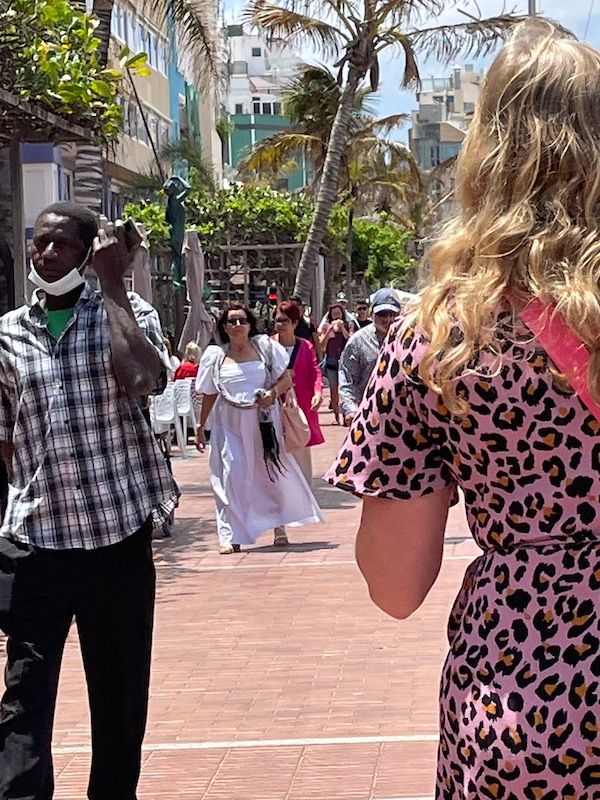
Finding a place on a boat is different from purchasing a bus ticket. Because these boats are illegal, those who direct these activities are quite clandestine.
First and foremost, those at the top are extremely well-connected within both community and governmental circles. They have the money to underwrite a trip and purchase boats, motors, and supplies.
They have the relationships necessary to get past the police and border patrols. Sometimes they are individuals, sometimes they are gang bosses, and sometimes they are top leaders in criminal networks.
But these movements would not happen without their involvement. In some circles, they are called “chairmen”.1 It is a term that we will use also.
It is important to recognize that the chairmen do not often get involved at a level where they could be arrested and charged with international crimes. In other words, they guide the processes from a distance while others get their hands dirty.
People refer to these mid-level workers as "agents." They are the true organizers of any trip. They have a strong social media presence and are known as the point person for any crossing.
They are the ones who negotiate the prices, handle the money, purchase the supplies, and pay the bribes. These agents, in turn, work with all the individuals necessary to make a trip successful. These are the transport drivers, boat owners, boat captains, and all those supplying the equipment for the journey.
At this lowest level, these "smugglers” are truly just members of the community trying to make a living off people who are willing to pay.
The Process
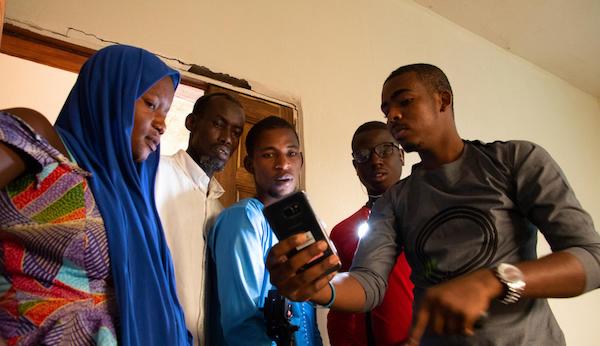
For Babacar, finding a seat was relatively easy. His uncle knew someone who had a connection with an agent.
Between the two of them, they came to an agreement that Babacar could leave on a boat in about two weeks. The ticket cost was 1,250,000 CFA ($2,000)... almost double the average price. It was expensive, but the extra money was paying for a few "guarantees."
First, the boat would be an established fishing boat, not a newly constructed boat.
Second, the boat would have two motors, one that was brand new. That way, if one quit, there would be a backup motor.
Third, the boat would have two GPS units and a satellite phone to call for help when they were close to the Canaries.
Finally, the boat would have an experienced captain.
Since the distance was slightly over one thousand miles, these extra expenses would greatly increase their chances of arriving safely.
With the ticket purchased, Babacar's family began to prepare for his departure. Initially, there was the mourning and the tears that always accompany separation. But as the time approached, there was increasing anticipation of success and a growing sense of approval from the community. It was as if he had officially become the head of the household and had restored honor to his family. There was a family celebration, a communal meal, and the obligatory protection ceremony given by the local marabou.3
All of their hopes rested on his shoulders, and he was sent off as if he were a young soldier going to war. Little did he know, but that description was not very far from the truth.
The Beginning
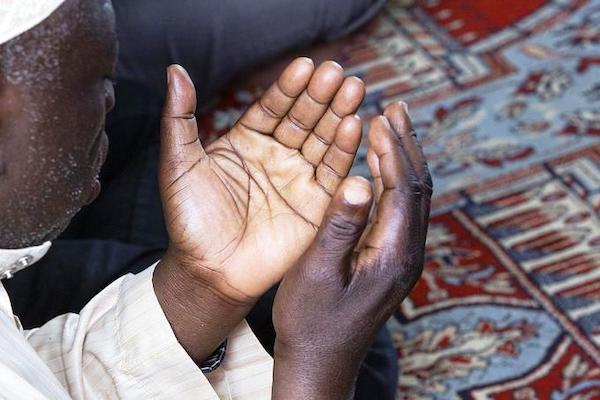
When the day came for his departure, he went to the mosque for a final prayer. He said his goodbyes and left with the hope and promise that he would soon be in Europe. He caught a bus to a village on the coast and waited at a designated location to be picked up by a driver. A man soon arrived on a moto and took him to a building where the fishermen cleaned fish.
It was here that he learned that there would be a delay. It seemed that the weather was not good, and they would have to wait on a better forecast. That would take nearly a week.
Babacar was not a fisherman. Even though he had gone to school in Dakar, he had never spent the night on a beach. It was much colder than he anticipated, and the air was very damp compared to his village. He soon realized he had not brought enough warm clothes and had nothing to protect him from the moisture.
Before the trip was over, that miscalculation would nearly cost him his life.
After six days, the weather cleared, and it was time to leave. There were only six of them, and they, along with two fishermen, got into a pirogue of about 20 feet in length. It seemed small to make such a long journey.
Babacar soon learned they had to go out in small boats because the coast guard was stopping any vessel with more than ten people. In their case, they simply looked like fishermen going out to fish in the evening.
This was his first time in a boat, and before long, he was very seasick. After about an hour, he started throwing up. His nausea would become an issue as the journey progressed.
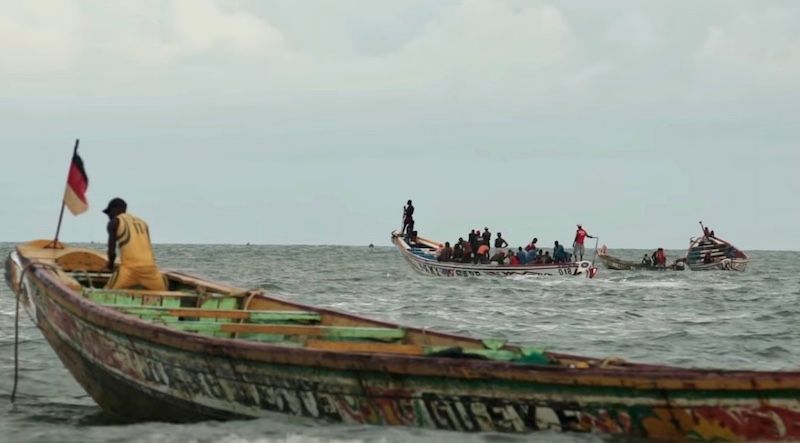
Much to his relief, once they were beyond sight of land, they joined a group of other small boats and made their way to a much larger pirogue. It was about 90 feet long, perhaps ten feet wide, and approximately six feet deep. Much of the boat was covered with a tarp.
Once everyone was inside, there was a crowd. In reality, they were packed in this boat very tightly. It was so tight that there was little room to stand or move around. The captain told everyone to remain seated because if everyone were to shift their weight too much, the boat could capsize. By this time, Babacar was soaked from the ride out, cold from the wind, and still nauseous. As he looked around, many seemed to be just as uncomfortable.
The captain was young, but he seemed to know what he was doing.
Before they ever began, he informed them that he had complete authority. Anyone who did not do exactly as he said would be thrown overboard. His language was harsh and forceful.
He told them that the trip would be challenging, dangerous, and that any disobedience could cost all of them their lives. He would not hesitate to sacrifice one… or ten… to ensure the voyage and to keep the others alive. In a way, he brought a sense of security to Babacar.
With that, he started the motor, and they made their way North.
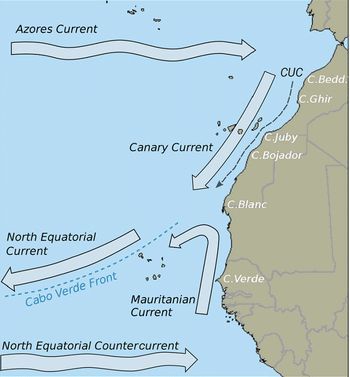
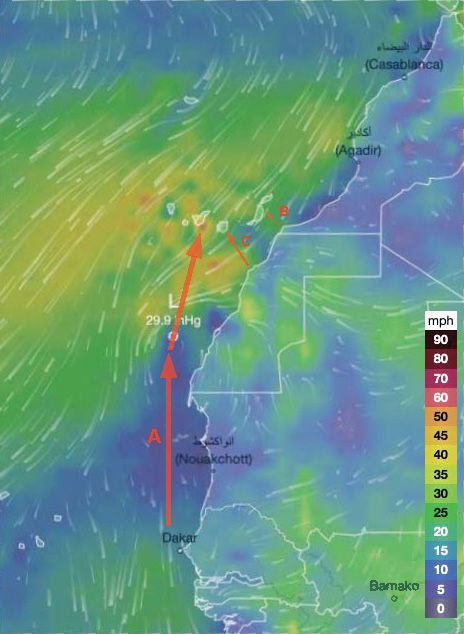
Currents and Winds Along West African Coastline5
We should pause at this moment to try to understand the true challenges afforded by this route. We have spent some time with mariners who were very familiar with navigating these waters.
There are reasons why this route is so dangerous. If you take a look at the two maps, you will see that the passage is relatively easy between Dakar and Cape Blanc (Arrow A). The area is generally protected from the wind, and the Mauritanian current assists with the travel north.
But once one passes Mauritania, the currents run against mariners, and boats can easily be pushed into the Atlantic. If one moves too far from the coast to avoid detection, there is a high risk of getting caught in these westward currents.
You will also notice that the winds increase significantly as one gets closer to the Canaries. This can push the wave heights to over ten feet. Those coming from Senegal must power through the waves until they get to the leeward side of the islands. Their greatest risk at this point is a mechanical failure, or missing the islands entirely.
For those who are coming from Morocco (Arrows B and C), they must run perpendicular to the wind, waves, and currents. As we will see in future posts, this creates incredible challenges for those in smaller boats.
There are times of the year when either of these passages is nearly impossible.
A recent article on the BBC highlights this danger. In mid-August 2023, a pirogue with over one hundred people from Fass Boye, Senegal became caught in the North Equatorial Current. They were miraculously spotted by a Spanish fishing vessel north of the Cape Verde islands. Of 101 people, only 39 survived. Had they not been found, all would have perished.6
The Journey
The trip was supposed to take seven days. There were supposed to be enough supplies and fuel for ten. That is why his uncle had paid the extra money. But it soon became apparent that things were not as they had been promised.
Babacar estimated that there were well over one hundred people in the boat. Most were men, but there were also women and even a few babies. A few were from the fishing villages, but most were from the interior.
You could quickly tell the difference because the fishermen were not seasick, and they had rubber boots and plastic jackets. Everyone else was nauseous and shivering from the cold. It seemed to Babacar that the amount of food and water they were handing out was much less than everyone needed. After three days, some were looking very weak and very sick.
Along the way, he heard some of the fishermen begin to complain.
It would seem that they didn’t bring enough supplies because of the weight. The pirogue had an extra twenty people, more than they had anticipated, so they had left some of the water behind. And with the excess weight, the boat was heavier, moving slower and using more fuel. They were getting concerned.
As the rations became smaller and smaller, the passengers began to get angrier and angrier. There was no room to move about, so people had to relieve themselves in a bucket where they sat. The same was true for men and women. Several villagers had become very ill, not just seasick, and on the fourth morning, they found that two had died.
The captain ordered that they be thrown overboard.
For many, this was more than they could imagine. Everyone deserved a proper burial, and several demanded that the captain make space for the bodies. As things became more tense, the captain ordered everyone to sit down and to be quiet. Anyone who disobeyed was to be thrown overboard themselves.
Four of the captain's men, very large men, stood up to enforce his command. With that, the dead were thrown over the side. They would not be the last.
By the end of their trip, over a third of the people on that boat would die.
On day six, one of the two motors stopped working. When they pulled out the spare, it was obviously not a new motor. In fact, it was smaller, made a lot of noise, and smoked a lot. The boat was lighter because there was less water, fuel, and unfortunately, people.
Over the next two days, another ten people died of dehydration and hypothermia. Babacar thought he would soon be next. By this time, everything he ate and anything he drank did not stay in his system very long. He was weak and lost most awareness of what was happening around him.
On day eight, the second motor failed. Despite having a satellite phone, they drifted for nearly five more days before the Spanish Coast Guard responded to their calls for help.
When they were finally rescued, 35 people had died, including four children and two babies.
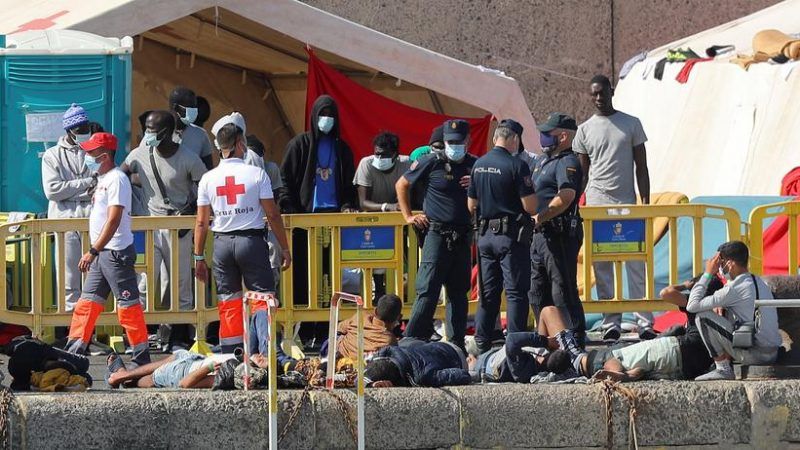
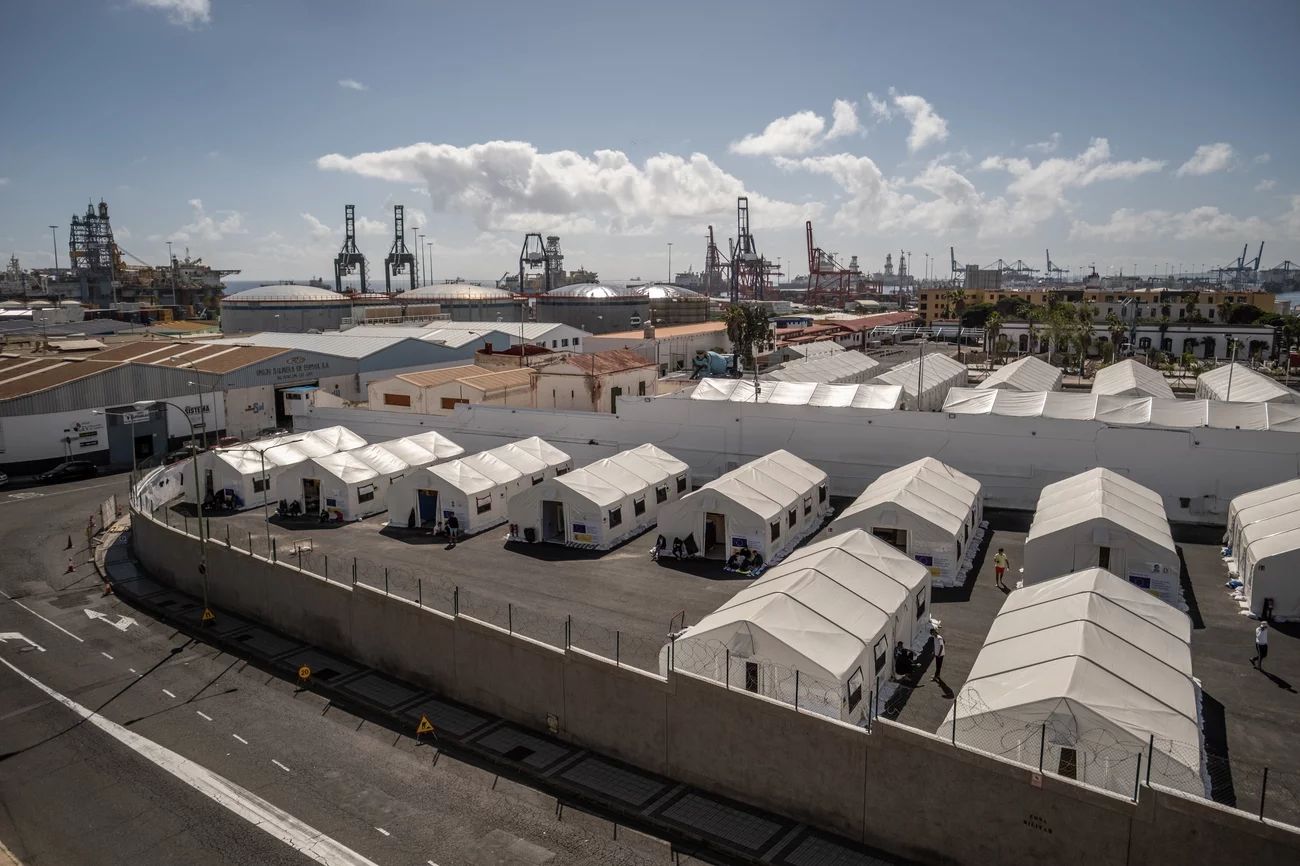
Canary Islands: Medical Response and Detention Center7
Gran Canarias
Babacar spent nearly a week in a Spanish hospital before he was released into a detention center. There, he learned that things were still not as described in the beginning. According to the agent, he would physically be in Spain once he landed in the Canaries.
As a part of the European Union, this would mean that they would fly him directly to the mainland. What he didn't know was that the Canary Islands are an autonomous territory of Spain, which means that they are not required and are, at times, prohibited from moving migrants forward. It also means that they have bilateral agreements with countries such as Senegal. In other words, they could just as easily put him on a plane and send him back to Dakar.8
In the meantime, however, he could only wait to see how they would handle his case. He would be allowed to stay until there was a final disposition, and the government would supply his basic needs. He had a bed, he had food, and he was given a little money.
The center where he was housed was for men. The authorities handled women, children, and minors differently. He heard that many of them stayed on the island for a short time before they were sent to Spain. In his case, however, his future was uncertain.
One thing he did know, however, was that nothing in front of him could be as bad as the two weeks he spent on the water.
For now, however, he would place his trust in the system and try to stay optimistic.
Other migrants had told him to say very little and not to call his family back in Senegal. The authorities were watching everything they did, listening to everything he said, and looking for a reason to send him back. He believed he would soon be on his way if he remained quiet and followed the rules.
Actual Video... of a Good Day
Conclusion:
We will pick up Babacar’s journey in a future post. But as you process his story, take a moment to pray for others who are very much like him and are in boats even now.
It is hard to imagine what it is like, but there is a popular movie that does a pretty good job. It is called "The Pirogue," and it was produced in 2012.9 While the movie is in French, it has English subtitles. I would highly recommend that you watch the film. It can be found through multiple sources. If this were a seminary class on migration, the film would be required.
If you have made it this far with the blog series… do yourself a favor and rent the movie. If you do, just keep in mind that they had to present it in a way that would be acceptable to the public. As you watch the movie, just imagine that the boat is filled with people, as in the above video. That would be closer to reality.
The Pirogue
1 AlarmPhone, "Border Business - How the EU’s Militarisation Fuels Smuggling Networks between North Africa and Spain", Watch the Med https://alarmphone.org/en/2022/03/31/border-business/?post_type_release_type=post (accessed May 4, 2022).
2 IOM, "What Is Migrants as Messengers?", International Organization for Migration https://www.migrantsasmessengers.org/about (accessed April 12, 2023).
3 Doudou Gueye; Priya Deshingkar, "Irregular Migration in Senegal: Faith, Dreams and Human Smuggling through the Desert and Sea," (2020), May 4, 2022; Available from http://www.migratingoutofpoverty.org/documents/wp67-gueye-and-deshingkar-2020-irregular-migration-in-senegal.pdf.
4 "A Journey into Islam in Senegal", SouthWorld https://www.southworld.net/a-journey-into-islam-in-senegal/ (accessed April 12, 2023).
5 See "Wind Conditions of West Africa", Ventusky https://www.ventusky.com/?p=24.4;-18.1;4&l=gust (accessed April 12, 2023). This is a real time chart of wind conditions off the coast of West Africa. You can pick a date of any migrant crisis to the Canary Islands and view the offshore conditions.
6 Joel Gunter, "Four Sons Set out on a Perilous Migration Route. Only One Came Home.", BBC https://www.bbc.com/news/world-africa-66665299 (accessed September 3, 2023).
7 See Elvira Urquijo, "Conditions in Canary Islands Migrant Center “Inhumane” Says HRW", Euractiv https://www.euractiv.com/section/politics/short_news/conditions-in-canary-islands-migrant-centre-inhumane-says-hrw/ (accessed April 12, 2023). See also Sophie Eastaugh, "In Canary Islands, Tensions Are High over African Migration", NPR https://www.npr.org/2021/03/26/974007502/in-canary-islands-tensions-are-high-over-african-migration (accessed April 12, 2023).
8 Jessamy Garver-Affeldt; Mackenzie Seaman, A Gateway Re-Opens: The Growing Popularity of the Atlantic Route, as Told by Those Who Risk It (Mixed Migration Center, 2021). See also Beatriz de León Cobo, "Spain-Senegal Relations: Beyond the Repatriation Agreement", Atalayar https://atalayar.com/en/content/spain-senegal-relations-beyond-repatriation-agreement (accessed May 4, 2022).
9 Moussa Touré, "The Pirogue," (Senegal, A Rezo Films, 2012.)