59 - Senegal: The Story of Babacar - Part One
2023 No 59
Then Jehoshaphat slept with his fathers and was buried with his fathers in the city of David, and Jehoram his son became king in his place. He had brothers, the sons of Jehoshaphat: Azariah, Jehiel, Zechariah, Azaryahu, Michael and Shephatiah. All these were the sons of Jehoshaphat king of Israel. Their father gave them many gifts of silver, gold and precious things, with fortified cities in Judah, but he gave the kingdom to Jehoram because he was the firstborn.
—2 Chronicles 21:1-3
The challenge of a blog site like this is that it can sometimes go too deep.
Too much data without context can often make for a difficult read. We must be careful to do our research in cycles. One part of the cycle is searching through the troves of information on the internet, in NGO reports, and in academic libraries. Another aspect of the process is traveling to where migrants originate, transition, or finally land. While on that journey, we often meet migrants, pastors, and the various actors who make all of this happen. That part is interesting simply because it is so relational. And as you might imagine, it is undoubtedly our favorite part.
Yet another part of the cycle is to write. Somehow, we must take what we are learning and hearing… and present it in a way that is helpful to the reader. That part is perhaps the most difficult. How well we are doing lies beyond our capacity to measure. We leave that to you to discern.
A good example can be found in a study of the Atlantic Migration Route. Much has been written on the topic from an academic or governmental perspective. Statistics abound, and information, albeit biased, is relatively easy to secure. In the same way, one can find enough news stories on the tragedies at sea to create a sense of despair… even among those who have never been to Senegal or met an African migrant.
While necessary, these data sources cannot replace the voices of the migrants.
I recently met with a Western pastor who expressed that if someone could simply explain to the migrants in Senegal and Morocco what the journey would be like and how great the risks were, they would not come. It sounds correct, but we know that migratory decisions simply are not made that way.
The migrants already know the risks, and yet they still come. Why? To understand that reality, we must take the time to listen. Perhaps the example of a young Senegalese man named Babacar can help to explain.
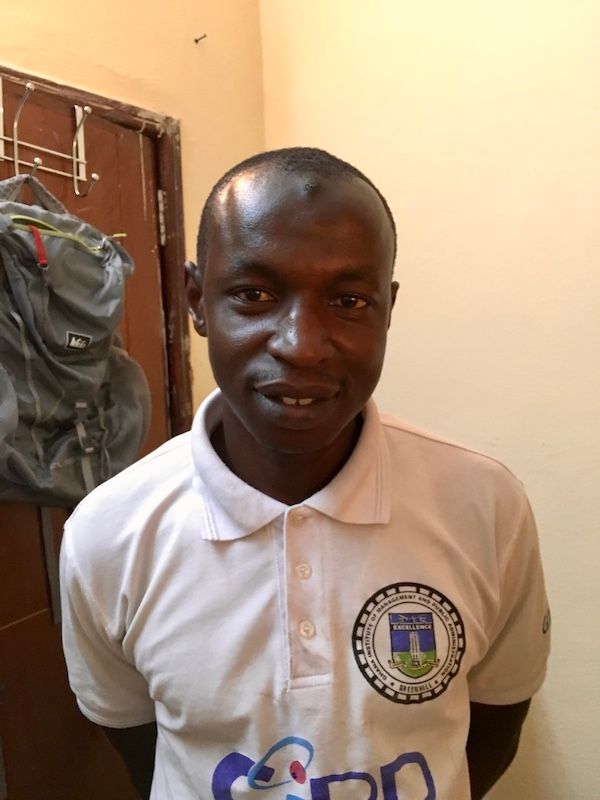
The Story of Babacar
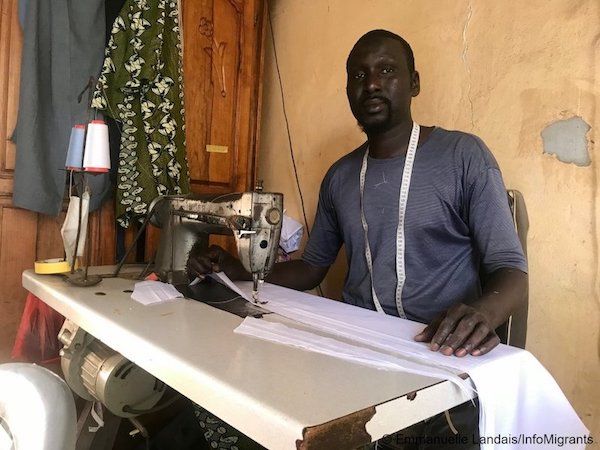
Babacar is the firstborn of five in his family. His father was a tailor in their village, about 65 km east of Mbour, Senegal. They were not truly poor by Senegalese standards. His father made enough to support the family and to allow the three oldest children to attend school beyond a primary level.
Being the oldest, Babacar had the privilege to finish high school, make good grades on his graduate exams, and have enough of a scholarship to attend the university in Dakar.
He was about to complete his third year of studies in computer science when he received word that his father had passed away. He had managed recurrent malarial infections for many years, but this year was worse for some reason.
When he became sick this time, he never really regained his strength. Then one morning, he was gone. It was a tragedy with profound implications for his family. Without his father's income, things would soon become very difficult.
Head of Family
The pressures and expectations upon Babacar were immediate.
He was the oldest, he was the firstborn, and he was responsible. His immediate reaction was to quit school and return home to care for the family. But his mother would not have it. Her son had made it further than any other family member and was finally completing his university studies. With that degree, there was hope that he could find a good-paying job, and through that income, he could provide support. Besides, his brother and sister had been apprentices under his father and could continue with the family business.
Reluctantly, Babacar stayed at school another year and was able to graduate. It was a personal achievement, and he felt that he had brought honor to the family name… and to his father.
Unfortunately, there were no job offers after school. Dakar has a very high unemployment rate. He labored hard to find work, but there were simply too many college graduates and too few jobs. Without the scholarship that helped pay his rent, he was soon forced to return home. But... there certainly were not any computer jobs there.
When he returned home, he realized how difficult things had become for his family. His brother and sister could make clothes; the challenge was that they were not their father. He had built his reputation over years of hard work… and they did not carry that benefit. In the end, business was very slow.
Unknown to Babacar, they had been selling the family possessions to support his final year of university. Like his mother, they had thought he would find work. Coming home and unemployed, he was now just one more person to consume their precious resources. Before long, they had to ask extended family for help.
He tried to make things better, but after a year of not finding work, he struggled to overcome desperation and shame.
It Is At Least An Option
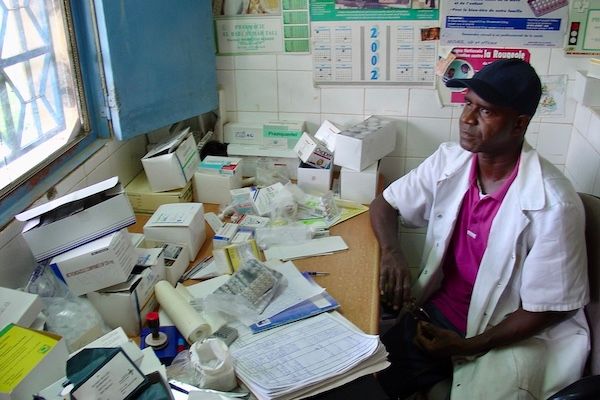
There was one week that was especially difficult. Babacar's mother had become sick with malaria and had become severely dehydrated. They took her to the local medical clinic, but as in most of West Africa, you must pay for treatment in advance. This time, the cost was more than they had available.
Babacar was forced to visit his uncle (her brother) to borrow money to buy the medicine. He gave the money, but with the gift came a rebuke. He reminded Babacar that he was the firstborn and responsible for caring for his family, his brothers and sisters, and especially his mother. If he could not find work in their town, he should have left months ago to find a job elsewhere.
Babacar explained that there was no work to be found… anywhere.
His uncle told him that it didn’t matter that there was not any work in their village or in Dakar. He should look beyond Senegal. Surely there was work in Europe for someone with a university degree in computers! He suggested that they call a cousin who lived in Paris. Perhaps he could help him to find a job there. Although Babacar had no idea how to get to France, he agreed they could make contact and ask.
And so, they made the call. And to Babacar's surprise, his cousin was encouraging. He said that things were difficult in France but that they were better than in Senegal.
He did not know if a job could be found working with computers, but he felt confident that if Babacar could only get there, he could find work. He even offered to give him a place to stay until he could earn enough money to find his own apartment. He made it clear, however, that he could not do anything to help him get to France. But once there, there were others from their village who might show him around.
Babacar had heard rumors about the “roads” to Europe.
They were expensive, dangerous, and something he had said he would never try. Just the thought of such an effort seemed ridiculous. And yet, his uncle persisted. He reminded him that he could stay home, watch their family resources dwindle to nothing, and perhaps even watch his mother have to beg on the streets. Did he desire to continue to be a part of the problem rather than be a part of the solution? Such would bring dishonor to himself and ultimately to his father.
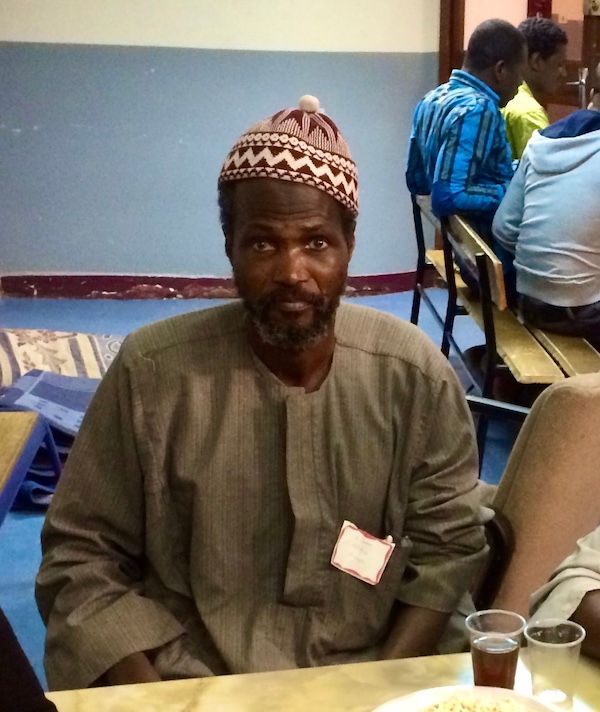
Where to Get The Money
But even if Babacar were to consider such a trip, how could he do so? He had heard stories of those who made their way through Mali, across the desert, and into Libya. That pathway often took several years and cost more than their family had to give.
He could go to Morocco but knew he would never qualify for more than a tourist visa. Once there, the smugglers would still demand more money than he could ever hope to find. While the prospects of working in Europe sounded attractive, he saw no way to get there. And so, he let the idea fade.
A few months later, his mother became sick again. She needed to see the doctor, but they already knew that it would require more money than the family had earned in an entire month. His only recourse was to see his uncle again.
He gave the money, but the rebuke was even stronger this time. When a job was available, begging for money for medicine was beneath Babacar and his father's name. Something had to change. But if you had to beg for 30,000 CFA ($50) for a doctor, where on earth would he get 600,000 CFA ($1,000), or more, to pay an agent to get him to France?
It was here that his uncle made an offer.
He said that he would buy his father's tailor business for the price of a trip. That would include the small shop and all of the equipment. He would allow his brother and sister to continue to work, but they would have to pay him something for rent. But the money from the sale would let him take a boat to the Canary Islands and then on to Spain. If he could get there, he should not have a problem making his way to France. In many respects, it was a gracious offer.
I Have To Try
We need to pause for a minute here. It is easy to step into Babacar's shoes and believe that we would somehow create different options. But that, plain and simple, is a luxury he does not possess. He lives in a world where the pressures on the firstborn are immense. His job options are practically zero, and there is little hope for improvement. And in all reality, his family is only going to get poorer, and his mother is at high risk of dying from something that could be typically treated.
All eyes and all expectations are on him. What should he do? What would you do… if you were truly in his shoes?
I know what he did. He did what thousands of others have done. He allowed his uncle to help him buy a seat on a boat that would go to Europe. It would be a journey that would forever change his life.
We will share that part of the story in a future post. But for now, we need to take a moment and ask if there is any way that God's people could have an impact on Babacar or the thousands of others just like him.

Love your neighbor…
There are so many factors that play into Babacar's story.
One is undoubtedly economic. He was born in poverty, but he was doing all the right things to secure a better life. He took advantage of the opportunities to go to school. He was more than willing to work. He possessed a sense of responsibility for his family. In most places, that would be enough. But this is Senegal, where most are only one life crisis from disaster.
His life might have been different if his father had lived. But he didn't. In Senegal, as in much of West Africa, the system works against you more than it helps. Life is hard, and hope is often lost. Most decisions are made from desperation and seldom have the luxury of being considered as “bad – better – best” choices. In our next post, we will follow Babacar into one of the boats.
I am not sure that anyone could do anything to change the above. What we do have, however, is the presence of Christ in our lives and the capacity to show compassion to those around us.
Had Babacar a Christian neighbor, they could have walked the road with his family. They may not have been able to contribute financially, but they could have offered Babacar much-needed encouragement and honor. They could have prayed with him, and if migration were indeed the only option, they could have sought God's guidance in the decision.
I have found that almost everyone will respond positively to such compassion.
Desperate people are, by definition, in very difficult contexts. Such seldom affords the luxury of rejecting the attention of others... especially if that attention is drawn from a foundation of love for one another. People are often responsive to such concern, and it always opens the door for the gospel.
Senegalese pastors understand this. Community, while a high-value aspect of Senegal, does not necessarily equate to compassion. Often, it only adds to the burden.
But among Christians, compassion is an intrinsic part of the community. Where there is community, there is love. Where there is love, people respond. I cannot say that it is changing how many people migrate… but it is undoubtedly changing the hearts of people along the way.
1 Actually, this is a young West African service technician. If you remember from previous posts, it is very difficult to use actual names and photographs of those we interview. First, most would not grant permission for such. Second, it could actually create a security risk. Consequently, we will often substitute similar photographs that are already on the internet, of those who are so generic that it would not be possible to connect them to our story, or of those who have given permission.
2Emma Walls and Emmanuelle Landalis, "Tales from the Border (1/8): Senegal -- Crossing the Vast Atlantic Ocean", InfoMigrants https://www.infomigrants.net/en/post/36196/tales-from-the-border-18-senegal--crossing-the-vast-atlantic-ocean (accessed April 10, 2023).