58 – A Historical Context of the Canaries
2023 No 58
Then it will happen on that day that the Lord will again recover the second time with His hand the remnant of His people, who will remain, from Assyria, Egypt, Pathros, Cush, Elam, Shinar, Hamath, and from the islands of the sea.
—Isaiah 11:11
For most of the Western world, the Canary Islands are a destination location… for vacation!1 These eight islands are a Spanish archipelago located 60 miles off the western coast of Morocco. They have a population of 2.5 million people, but before the COVID pandemic, they received over 12 million visitors each year. It is no wonder that tourism accounts for a third of their GDP. Most of her guests are from Europe. When it is cold up north, people look for a warm beach somewhere. And in the same way that the locals are accommodating along the southern “Sun Coast” of Spain, the same holds true in the Canaries. Sunshine brings tourists... and tourists bring money.
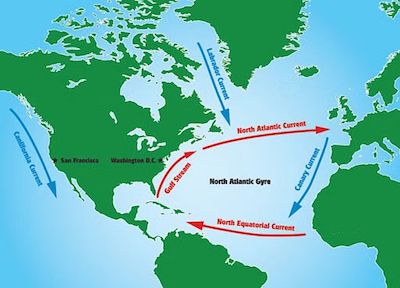
The Canary Islands also have a long history with Africa. In the 400 years between 1450 and 1850, the islands were a part of the so-called Atlantic Triangle.2 It described the pathway in which sailing ships traveled south to West Africa, caught the easterlies to the Caribbean, followed the Gulf Stream to the colonies, and then used the winds to take them back to Europe. The economics of this route led to over 12 million enslaved Africans being transported across the Atlantic to the Americas. The Canary Islands were on that route, providing a safe haven for the Spanish galleons.
Spain made use of the islands for more than just their safe harbors. The land was suitable for sugar cane cultivation, and most of the labor force was African slaves. Ultimately, laws prohibiting slavery would collapse the agricultural economy. This led to massive emigration. Between 1840 and 1890, some 50,000 Canarians left for other Spanish colonies, such as Venezuela, Puerto Rico, and Cuba. Those movements represented roughly one-fifth of the total population at the time. Many Africans, however, remained on the islands. They now represent 25% of the genetic mix of the current indigenous population.3
The Foundation of Contemporary Migration
The Canary Islands continue to represent a stepping stone for contemporary African migration. Since the early 2000s, over one hundred thousand migrants have arrived on her shores. The Islands are a target for several reasons.
First, they are a part of the European Union, which can grant access to perceived riches in the North. Although gaining autonomy in 1982, the Canaries remain a colony of Spain, with full rights and protections as members of the EU. Thus, legal status on any of the islands, while complicated, is perceived to be the same as in continental Spain. That means that migrants believe that once on the islands, they can have freedom of movement across all of Europe. In the same way that migrants strive to enter the EU through Greece, or Italy, landing in Spain is considered a golden ticket.
Keep in mind that perception is always jaded. Many believe that arrival in Europe implies sudden wealth. Moreover, they also believe that standing on a beach grants automatic legal protection. Neither is anywhere close to the truth. The islands are a territory of Spain but are not the same as the Iberian Peninsula. Spain and the rest of the EU hold multiple repatriation agreements with its economic partners. Thus, nothing is guaranteed. This means that migrants must always tell a story that will place them in a category that could offer legal protection… a reason to be granted asylum. If not, the government can quickly return them to their places of origin.
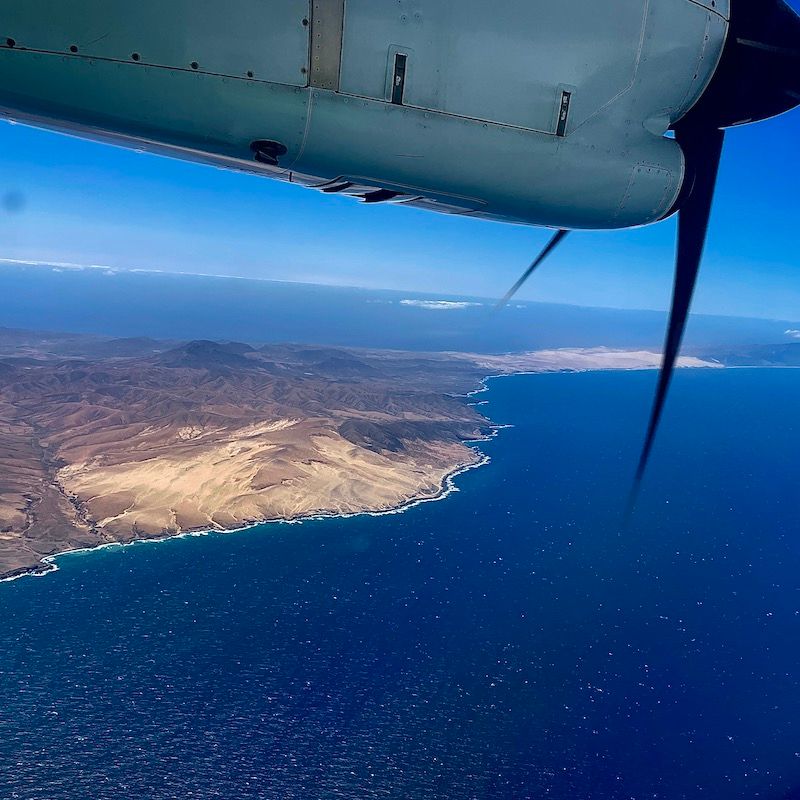
Second, the proximity of the African continent to the Canary Islands makes them very attractive. Fuerteventura is only 105 kilometers from Morocco. Keep in mind that one does not have to land on the beach to technically arrive. In the past, it was not hard to hire a Moroccan fisherman to bring a group of migrants to Spanish territorial waters. They would then be placed into rafts and left in open water. Once inside that zone, rescue operations were required by law to take the migrants to the islands. From there, they would be processed. Consequently, there has always been a steady stream of small boats from North Africa.4
But there is also a sense of proximity with West Africa. Granted, the journey is over a thousand miles, but such is within reach of Senegalese and Gambian mariners. It is common for these fishermen to spend several weeks in the Atlantic as a normal part of their work. The journey takes seven to ten days and must follow a narrow stretch of protected waters on the leeward side of the Canaries. Thus, for the fishermen, the passage lies within the realm of possibility. However, all are very aware that even with good equipment, the journey is dangerous. But it remains attractive because it requires less time and less money than the Western Mediterranean Route through Morocco.
Finally, there is the matter of potential. While the risks are significant, the potential for success is high. Everyone believes that they will arrive safely. Sadly, a third, perhaps more, are lost at sea. Those who come from Morocco use small fishing boats called pateras. These boats are much more susceptible to being capsized in open waters. They must navigate the waters to the north of the islands, meaning that winds and waves can be treacherous. Those arriving from West Africa use a longer pirogue called a cayucos. They are designed for sea travel and are much more reliable. But they must travel further, run the risk of mechanical failure, and have a greater chance of drifting outside the protected corridor. In the end, arrival for anyone is not guaranteed.
However, for those who do arrive, their chances of being flown to Spain are very high. The islands can only sustain a limited number of undocumented migrants and eventually must be moved forward at EU expense. The migrants understand this, and most are prepared for the journey. In the past, once they were released from the detention centers, they could purchase their own plane tickets to Barcelona. Today, the government pays for those tickets. That bit of news has undoubtedly reached the ears of smugglers in West Africa. It is this potential that makes the journey across the sea attractive for so many.
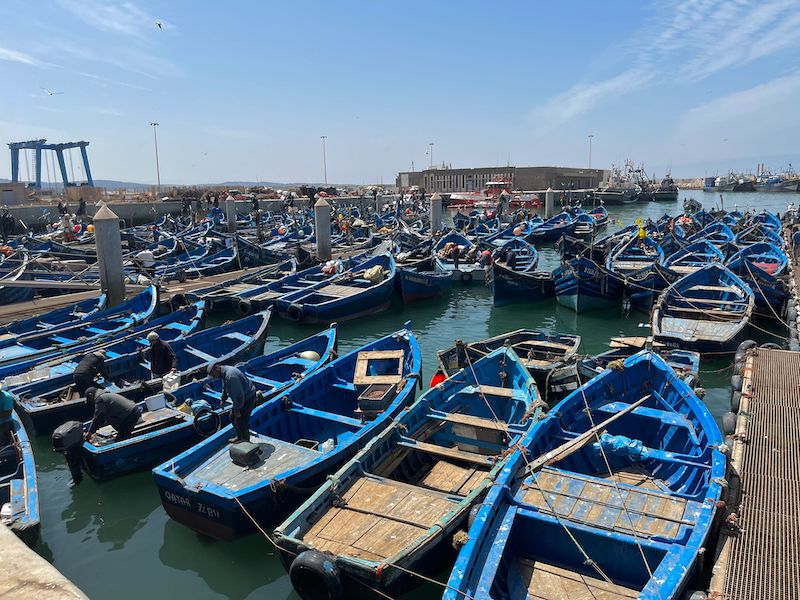
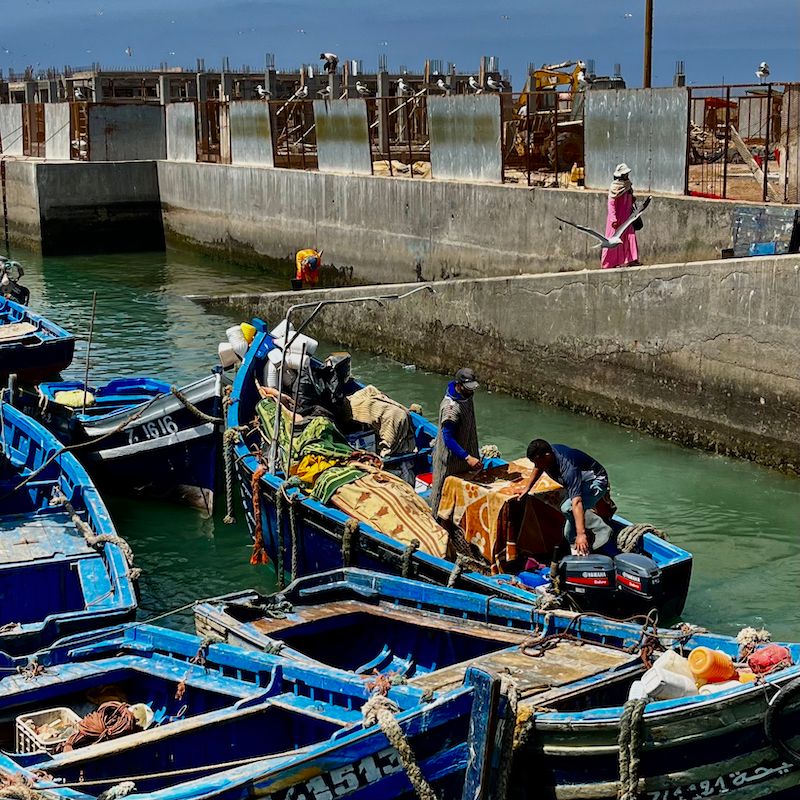
Pateras - Small Moroccan Fishing Boats
Over Two Decades of Crisis
Large-scale migration to the Canary Islands is a relatively new phenomenon. As noted in the previous post, 31,000 immigrants arrived in 2006.5 Many of these migrants came from launch points in Mauretania and Western Morocco. North Africans, Moroccans, and Algerians have a long history of emigration to continental Spain. Many are a part of the annual labor migration to service agricultural fields in Andalusia. But there are also many who seek to immigrate illegally. This developed into a political crisis in 2004. At that time, some 55,000 individuals tried to cross the fences from Morocco into the Spanish enclaves of Ceuta and Melilla.6 As both governments grappled with reinforcing those borders, smugglers took advantage of the lack of attention on the route to the Islands. Consequetly, the flows shifted in that direction. That would also evolve. As the direct sea lanes became more heavily patrolled by respective coast guards, Moroccan boats began to depart from ports further south towards Mauritania. With time, smugglers began to recruit sub-Saharan migrants from the Sahel to come to Morocco and fill vessels destined for the Canaries.7
In many respects, Canarians responded to that first wave of SSA migrants in 2005-2006 with hearts of compassion and accommodation. Reception centers were built, migrants were processed, and they were either moved to Spain or sent back to Africa.8 For the islanders, the crisis was relatively short-lived. Moroccan and Spanish authorities increased surveillance of the routes, and repatriation agreements soon began to reduce the level of migratory success. As such, West African smugglers once again preferred the Western and Central Routes.
The second wave of SSA migration has been very recent. Between September 2020 and January 2021, five months, some 21,000 people arrived in the archipelago.9 As of this post, over 50,000 have arrived. For reasons unknown, the island government was completely unprepared for such an influx. Old reception centers had been closed. Making things more difficult, these arrivals coincided with the COVID-19 pandemic. During those days, the borders of Spain were closed, and they were not allowing any movement between the Canaries and the mainland. Thus, the arrivals were held on the island, increasing the population dramatically.10
Many of the migrants were pushed into makeshift camps, but the deplorable conditions only served to bring condemnation from the international community. Because there were few tourists, the Ministry of Inclusion, Social Security, and Migration made available some 5,500 places in hotels and non-hotel complexes in the region.11 Many locals viewed this as granting luxury status to migration, which certainly played into the hands of the smugglers back in Morocco and Senegal. Economic pressures on the tourist industry and strong nationalistic politics created an explosive situation. There were protests, threats of violence, and demands to export the migrants. In the months following the pandemic, transport options began to open between the islands and the Spanish continent. Migrants were hastily moved to the mainland and thereby reducing the pressures on the islands.
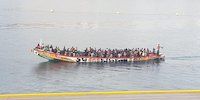

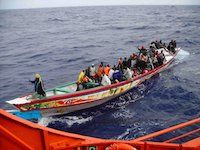
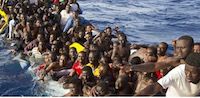
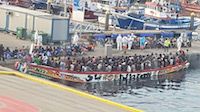
The Challenges of the Atlantic Route12-14
The Current Response
In the first quarter of 2022, over 5,500 migrants arrived in the Canary Islands on perhaps 115 boats.15 More continue to land every week. But if you were to travel to the public sectors of the island, you would never see them. We spent several weeks on Fuerteventura and Gran Canarias islands in April 2022 and saw less than two dozen migrants. Those we did meet were long-term residents of ten to thirty years. Most held residency status and could freely fly back to Senegal when they desired to visit family. It indeed seemed strange at the time to have so many migrants arriving... and for all of them to remain invisible to the public eye.
But that is intentional. The Spanish and Canarian governments have gained enough experience to recognize that clandestine migration needs to remain clandestine. Today, migrants are rescued at sea and brought to holding centers that are inaccessible to any but governmental agencies. They are held in suspension as they are processed. As such, they must be careful, because what they say and do will influence their next steps. Many will be transferred directly to either Barcelona, Madrid, or Valencia, Spain. Some will be flown back to their points of origin. Still, others will live in a state of limbo.
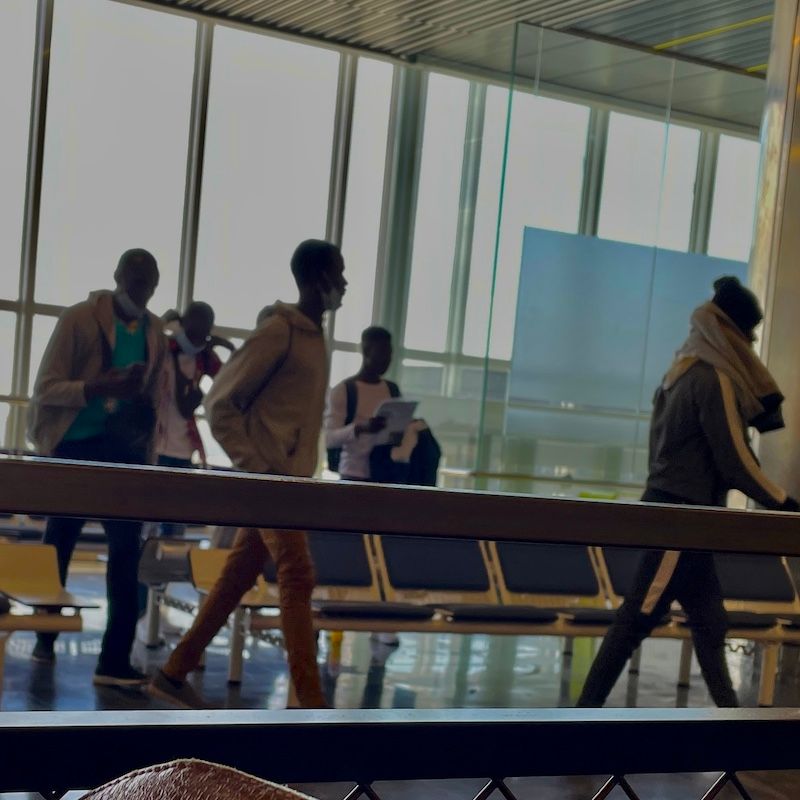
We met seven young Malians at the airport in Las Palomas who had tickets for Malta. They were told they would stay there a week and then be flown to France. I suspect that Spain does not have a repatriation agreement with Mali, so they sent them to Malta, which may have other provisions. I doubt they ever made it to France. Needless to say, the government would like to keep the migrant situation and their response far from public view. For the migrants, however, the Canary Islands are little more than a train station on their journey to Europe. There would be no reason to leave the station to wander the island, even if the officials were to make it possible.
There is some evidence that Spanish efforts in the management of illegal, clandestine migration is indeed slowing down movements… at least towards the Canaries. As we have often noted, migration moves in directions of least resistance and the highest profitability. In late 2022, arrivals to the Canaries were reported to have decreased by more than 25%.16 Whether this is true or not is hard to validate. If so, then they are most likely returning to the Western… if not Central routes. A recent report indicated an expectation that nearly 700,000 migrants will attempt to cross into Italy this year.17
Conclusion
The Atlantic route remains, by far, the most dangerous of all the migration routes for sub-Saharan Africans. Those who make the journey from Morocco will spend as much as $5,000 for the trip, and 20% of those who make the effort will lose their lives. Those from Senegal and the Gambia may pay half that amount, but the loss of life can easily exceed one in three. But the rewards are also high. Being rescued by the Spanish Guardian Civil can mean a ticket to the European continent. The entire journey can take less than two months.
The labor of God's people to reach this group lies predominantly in the places of origin and the places of destination. Ministering to these young men and women before they leave home is perhaps the only way to slow down the migrant flows. But as we have witnessed, there are always people ready to buy a place in a boat and smugglers prepared to sell those seats. As noted previously, ministering to these migrants after they land on the continent is possible, but is certainly challenging.18
But if I believe the prophecy of Isaiah 11, God said that He can recover His people… even from the islands of the sea. I know the context is different, but the truth remains. Our Lord can see the people of this world, even when they are in a boat, or stranded on an island. I have been to the Canaries. God is at work there in mighty ways. His church is strong, His people are already there, and they are often the very ones pulling others from the water.
1 "Canary Islands", Ministerio De Industria, Comercio Y Turismo https://www.spain.info/en/region/canary-islands/ (accessed April 10, 2023).
2 Wikipedia, "The Canary Islands", Wikimedia Foundation https://en.wikipedia.org/wiki/Canary_Islands (accessed April 10, 2023). See also Wikipedia, "Triangular Trade", Wikimedia Foundation https://en.wikipedia.org/wiki/Triangular_trade (accessed April 10, 2023).
3 "Four Canarian Surnames, a Great-Grandfather and Another African", Canarias7 https://www.canarias7.es/sociedad/cuatro-apellidos-canarios-un-bisabuelo-peninsular-y-otro-africano-YH6339320 (accessed April 20, 2022). This was from a genetic study of 400 Canarians, so the 25% number has been extrapolated. Currently, only 3% of the population was born in Africa.
4 Lucia Riz-Benitez de Lugo, North-West Passage: The Resurgence of Maritime Irregular Migration to the Canary Islands (Geneva: Global Initiative Against Transnational Organized Crime, 2022), 5.
5 Jørgen Carling; María Hernández Carretero, Kamikaze Migrants? Understanding and Tackling High-Risk Migration from Africa (Sussex: University of Sussex, 2008).
6 Miranda Poeze, In Search of Greener Pastures? Boat-Migrants from Senegal to the Canary Islands (Enschede: Ipskamp Drukkers, 2010), 2.
7 Dale Fuchs, "Canary Islands Fear Disaster as Number of Migrants Soar", The Guardian https://www.theguardian.com/world/2006/sep/04/spain.mainsection (accessed April 20, 2022).
8 Ibid.
9 Vincente Hernández, Irregular Maritime Migration and Managing Arrivals in the Canary Islands (Tenerife: OBITen, 2021), 6.
10 Amalie Klitgaard, "How Better Migration Management Is Reducing Zenophobia in the Canary Islands", The New Humanitarian https://www.thenewhumanitarian.org/news-feature/2021/11/4/migrant-management-reducing-xenophobia-racism-Canary-Islands-Spain-camp-conditions (accessed April 20, 2022).
11 Hernández, 10.
12 Marion MacGregor, "Canary Islands: More Migrants Risk Deadly Atlantic Route", InfoMigrants https://www.infomigrants.net/fr/post/39667/canary-islands-more-migrants-risk-deadly-atlantic-route (accessed April 9, 2023).
13 El Hadji N’Daou, "Sénégal: Explosion d’Une Pirogue de Migrants, Le Bilan Avoisinerait 150 Morts", Sunuafrik Radio https://sunuafrikradio.com/senegal-explosion-dune-pirogue-de-migrants-le-bilan-avoisinerait-150-morts/ (accessed April 9, 2023).
14 "More Than a Thousand Migrants Disembarked in 48 Hours", Archyde https://www.archyde.com/more-than-a-thousand-migrants-disembarked-in-48-hours-xibaaru/ (accessed April 9, 2023).
15 MMC, Quarterly Mixed Migration Update: North Africa: Quarter 1, 2022 (Dakar: Mixed Migration Center, 2022).
16 Benjamin Bathke, "Irregular Migration to Spain Dropped in 2022, Bucking Eu Trend", InfoMigrants https://www.infomigrants.net/en/post/45884/irregular-migration-to-spain-dropped-in-2022-bucking-eu-trend (accessed April 7, 2023).
17 Frances d’Emilio, "Italy Estimates 680k Migrants Might Cross the Sea from Libya", AP News https://apnews.com/article/migrants-italy-libya-meloni-migration-mediterranean-542625f52053ec0b9ca56474586c5f98 (accessed April 7, 2023).
18 Reference the M2M3 Post on Spain.