65 - Church on the Move – Canary Islands
2023 No 65
Then I saw a new heaven and a new earth; for the first heaven and the first earth passed away, and there is no longer any sea.
—Revelation 21:1
It will be curious to see how the Christians in the Canary Islands respond to this verse when they get to heaven. John was in exile on the Island of Patmos. It was only about 60 miles from his home in Ephesus. But that 60 miles separated him entirely from those he loved the most… the church. Every day, he would look to the East; all he could see was water. Every day, he prayed that God would push the water back and allow him to return to his home, his work, and his family in Christ. And then came the revelation. Amid all the incredible things he saw, one stood out. There would be a day when there was "no longer any sea." Most, especially beach lovers, would agree that this passage has less to do with water and more with the end of separation from loved ones.
If you ask migrants in Spain what they remember the most about their journey, they will tell you about the sea. Theirs was not a cruise with beautiful sunsets and a formal dinner. Theirs was a horrible, horrific experience, marked by death and suffering. The sea was a living, vicious monster that stood between them and their dream of Europe. Today, it stands between them and their families back home. Most do not ever want to see a boat again. The good news is, in Christ, there will come a day when all that separates us will indeed be a thing of the past.
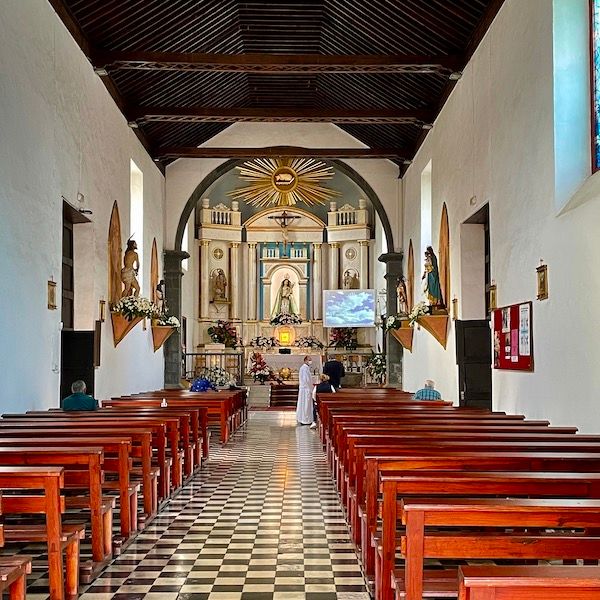
The Religious Complexity of the Canary Islands
The indigenous Guanches populated the Canaries until the Castilian conquests… a long time ago… in the 1400s.1 Catholicism replaced their traditional religion at that time, and this has not changed for over 600 years. Today, three-fourths of the island remains Catholic, following similar traditions and practices of mainland Spain.2 What sets the islands apart from the peninsula is their religious diversity. Nineteen percent consider themselves atheist or agnostic at best. Of the remaining six percent, the majority are Muslims. This is likely due to the proximity of the islands to Africa and the number of Moroccan immigrants.3 The next largest group is Evangelical Protestants, followed by Mormons, Jehovah’s Witnesses, etc.
Though brief, our time on the Canaries gave us incredible exposure to this diversity. We traveled on just two islands, yet we met all the above. The Mormons and the JWs were in the marketplaces. The Muslims, particularly within the Moroccan community, were visible during the times of prayer. We visited with several Senegalese Mourides who had made their home on the islands. We found the Christian community to be very open and active, often going to great lengths to minister to migrant populations. It was among these fellowships that we were most encouraged. Allow me to spend the remainder of our time discussing three groups.
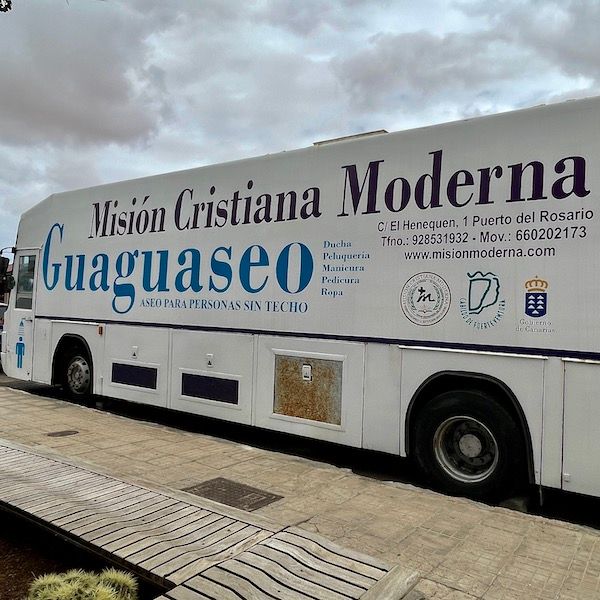
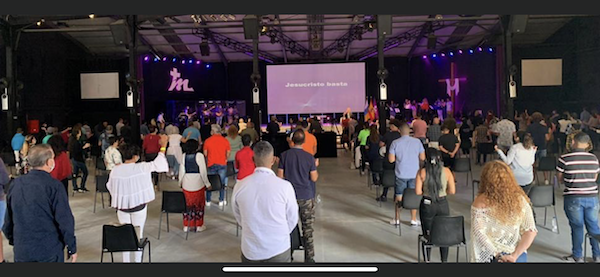
Misión Cristiana Moderna de Fuerteventura
Senior Pastor: Ángel Manuel Hernández Gutiérrez
If you search the internet for churches doing ministry among the migrant populations of the Canary Islands, the page will be populated with stories of Misión Cristiana. They have been on the front lines of this work since the beginning of the crisis. Over the years, they have supported a shelter that provided a place to sleep, fed hundreds of migrants each week, and offered legal assistance for those in need. They have sometimes hosted training events to help migrants learn the skills necessary to survive in a European context. They have received numerous awards and are supported by the local government and the UNHCR.4
I had an opportunity to visit with Pastor Ángel, and he passionately described the heart behind their work. When the migrants first arrived, they were welcomed by the people of Fuerteventura. Most did what they could to help. As time progressed and the numbers increased, it became evident that helping those in need would become one of the primary works of the church. Initially, he led the church to help with food. That quickly grew to a much larger ministry of material support. It was evident that migrants carried much trauma from their time in the sea but always seemed to internalize the pain. That was a need that could only be met by Christ. And yet, he shared that this was often the greatest barrier to the gospel.
It was out of their social ministries that they found incredible opportunities to engage Moroccans and sub-Saharans in spiritual conversations. Along the way, they discovered that many migrants were believers; they just needed a place of fellowship and a church where they could begin to grow. These two realities soon became the foundation of their evangelistic efforts among the immigrants. The challenge was that most migrants did not speak Spanish, and few in their church spoke French or English. However, they recognized that the Christian immigrants could cross cultural and linguistic boundaries and share their faith in ways that touched the hearts of their fellow travelers. With that knowledge, they focused their efforts through available translators on those migrant believers who had the desire to minister to their neighbors. The fruit has been many who have come to faith. Most of those “evangelists” do not stay on the island very long, but Pastor Ángel reported that they continue their labors even after arriving in Spain.
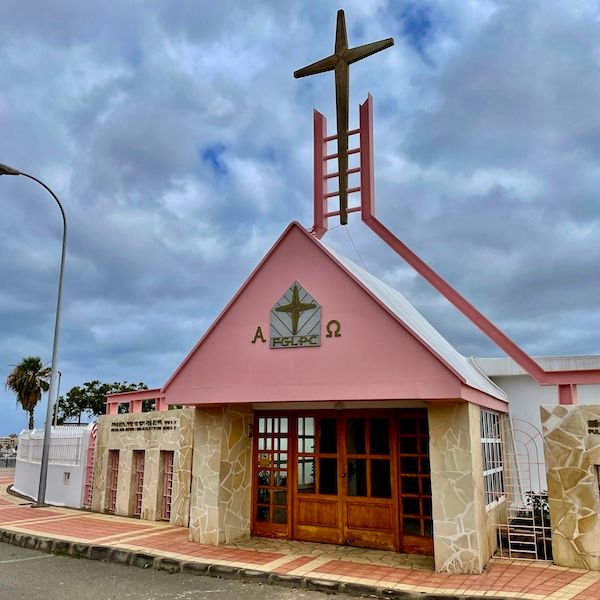
Iglesia Coreana de Altavista
Senior Pastor: Pastor Byeong-Seong Jeong
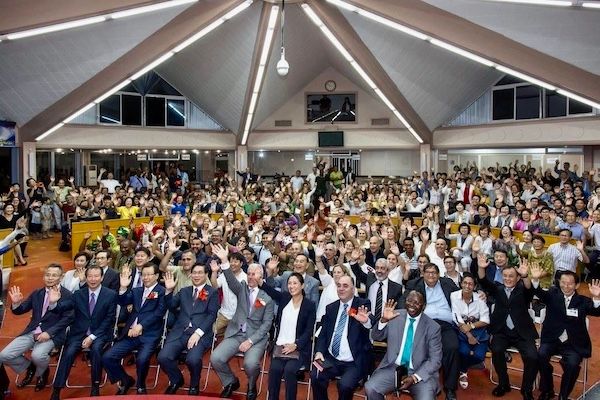
The Full Gospel Church of Las Palomas is a large Korean fellowship in the tradition of the Yoido Full Gospel Church in Seoul. They purchased the building from a disco club in 1986 and, since then, have ministered extensively to their diverse community. Each Sunday, their services are translated into Spanish, Chinese, and English. They have a large section designated for African members, and they provide space for a Nigerian pastor to lead in an African immigrant church. We enjoyed meeting with the church on Sunday morning and speaking at the African service later that afternoon.
As on the island of Fuerteventura, Gran Canarias has struggled with the come-and-go nature of irregular migrants. Few are on the island for any extended period. But the context of the islands is that a host of non-indigenous peoples are well established. Such is especially true for Las Palmas. The population of Gran Canarias is nearly 900,000, with over half living in the capital, a third of those being foreigners.5 The city is quite cosmopolitan and hosts over 117 different ethnic groups. Many of the 38,000 Africans living in the Canary Islands are here.6
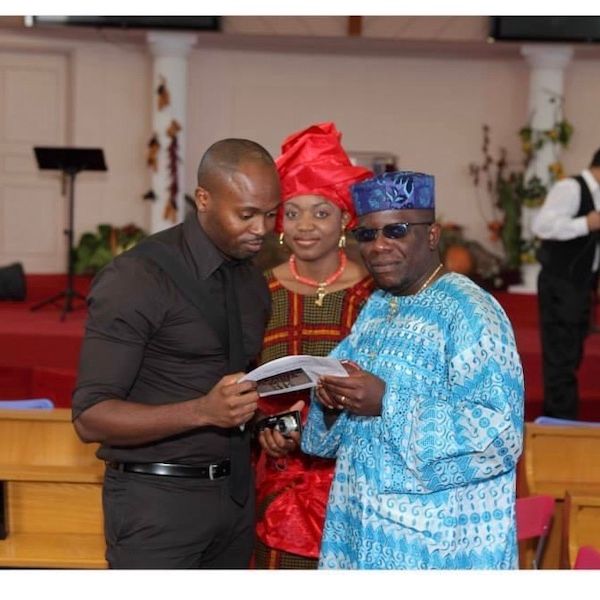
Early on, the church strategically decided to engage the community through her Korean members. The pastor shared that their strength was in the Korean tradition... but that their members lived next door to people from around the globe. Part of their missionary vision was to engage the world at their doorstep. As people came to faith, they would be invited to church and, as new members, would help with translation for others. When the number of attendees became large enough, the church would create space for specific ethnic ministries. Such was how the Nigerian fellowship was created.
Speaking with the pastor of that African fellowship, he had captured the vision of the Koreans. He recognized that a large population of sub-Saharan Africans had been on the island legally for generations. While the Nigerian population was anglophone, and the Senegalese were francophone, both had adopted Spanish as their primary language. For many of their children, it was the only language that they knew. But… because they were residents of the islands, they were always viewed by their relatives on the continent as a possible European transition point. In a strange way, that served to isolate many from their families in West Africa.
Yet on the islands, being black sets one apart, regardless of country of origin. The pastor shared that this created a unique identity that allowed their church to engage many of their African neighbors in ways that would be impossible to others. He had discovered that as they reached their neighbors, natural ministry pathways to the undocumented population also became evident. As such, they had a strong church within the larger Korean church for the island residents… and a unique capacity to minister to the illegal migrants during their brief time on the island.
Catholic Efforts
We would be remiss not to mention the efforts of the Catholic church to engage and minister to the migrant populations of the Canary Islands. We visited the Church of the Holy Christ in Las Palmas and spoke with one of the priests. He was a gracious gentleman who had compassion for those in the community. Like his Protestant counterparts, he had discovered that the key to ministry among immigrants was found among legal African residents. Their church had many African members, several serving in key leadership positions.
As in continental Spain, the Catholic church has a Caritas branch on Gran Canarias.7 Similar to the work of Misión Cristiana Moderna on Fuerteventura, they work with the government to provide humanitarian relief to the migrant population. Their work in the city work depends heavily upon the migrant flows “at the time.” This is something significant to note. Work in any place of transition must remain flexible to these flows. There are seasons when the number of migrants is overwhelming and other times when few are to be found. It was one of those latter seasons when we were on the island. All the migrants were being directly routed to the detention centers, bypassing any possible means of access by the local church. In the case of Caritas, they were using the time to remodel and prepare for the next change of the political winds.
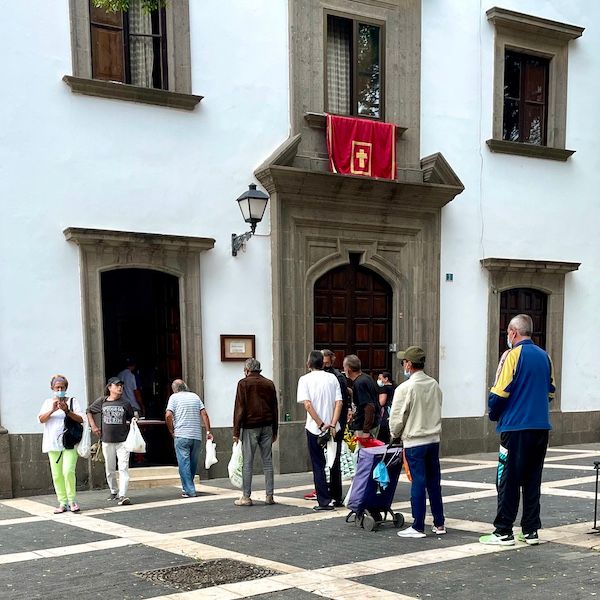
That, however, did not stop the church from engaging in ministry. One of the Church of the Holy Christ ministries was to create locations in neighborhoods where they could give food to those in need. We visited one of their distribution sites. On that day, they were providing meals to the poor in the community. They told us that in the past, they served over a hundred meals a day, primarily to migrants who were homeless.
Conclusion
We began this post pondering a future day when the things that separate us from our loved ones will disappear. That day will be the day of our Lord. To a migrant, particularly those who have just landed on an island, such a vision can be very attractive. However, that day is not here yet. In the meantime, we work to overcome the things that create a division between lostness and the hope of the gospel. Migrants may land on an island, but that doesn’t mean that barriers to the gospel do not still exist. It is a joy to say that the church of the Canary Islands is pressing against those barriers. And… they are modeling a way to engage moving people. As we examine their effort, we can learn at least three things.
First, that migration is always fluid. There are days when the need is overwhelming. In those days, the church can mobilize and do incredible humanitarian work. She can feed the hungry, shelter the homeless, heal the sick, and comfort the fearful. But then, the tides turn, and the number of people to serve can drop to zero. But then, the next month, things can return with vigor. So much of that is out of the control of the church. One government decision can change everything. The churches on the Canaries have recognized this and have strategically balanced their ministries to manage this ebb and flow of need.
Second, migrants will struggle to connect with the church. This can be for a variety of reasons. For some, it is because they come from an entirely different religious background. For others, it is because of language barriers. For yet others, it is due to a lack of trust. Sometimes it is due to governmental restrictions. The need may be present, but those in charge may exclude the faith community. And yet... there are a multitude of ways that individual members of the church can bypass those restrictions. Many will be working for the same NGOs that will not allow church access. Due to the community's closeness and the nature of day-to-day life, others find that they can build trust with their immigrant neighbors... as in across the street. This connection often carries the most power and effectiveness.
Third, near-culture associations provide some of the best conduits for the transmission of the gospel. Moroccan believers can reach Moroccan immigrants more easily than Korean believers. The same is true for sub-Saharans. The churches we visited had long ago made the strategic decision to invest in their African members, to disciple them to maturity, and to allow them to lead the ministries to immigrants. The fruit was evident in each church as they saw people come to faith and incorporate them into Christ's body.
Perhaps the greatest lesson in all of this is found in the stability of the church. Transition spaces are just that… transitional. Like the migrants, the work of NGOs and FBOs will change over the years. Whoever is there today will not likely be present in 3-5 years. Consequently, much of what they build will fall apart. The church, however, will be present for a very long time. Each of the churches we observed above had been present throughout the entirety of the migrant crisis in the Canary Islands. They have served as a consistent source of light in their communities and a refuge for all who come to Christ. We heard many reports of those who had moved on to Europe and still maintained contact with "their" church in the Canaries. In the end, perhaps the most significant work that we on the outside can do... is to support and serve the local church on the inside… as she consistently serves the Lord and her community.
1 Alfred Crosby, "An Ecohistory of the Canary Islands: A Precursor of European Colonialization in the New World and Australasia," Environmental Review 8 (1984).
2 Mitch Hamilton, "43 – Historical Context of Spain", M2M3 https://m2m3.org/43-historical-context-of-spain/ (accessed February 14, 2023).
3 "El Islam Es La Segunda Religión Más Practicada En Canarias", Agencia Islamica de Noticias https://www.ain.com.ar/news-3257-el-islam-es-la-segunda-religión-más-practicada-en-canarias (accessed April 16, 2023).
4 "The UN Congratulates the Evangelical Work with Migrants in the Canary Islands", Evangelical Focus Europe https://evangelicalfocus.com/cities/7264/the-un-congratulates-the-evangelical-work-with-migrants-in-the-canary-islands (accessed April 16, 2023).
5 "Province of Las Palmas", AdminStat https://ugeo.urbistat.com/AdminStat/en/es/demografia/dati-sintesi/las-palmas/35/3 (accessed April 16, 2023).
6 INE, Instituto Nacional de Estadística https://www.ine.es/jaxi/Datos.htm?path=/t20/e245/p04/a2019/&file=000ca006.px (accessed April 16, 2023).
7 Mitch Hamilton, "53 - Receptive Church in Spain", M2M3 https://m2m3.org/53-receptive-church-in-spain/ (accessed April 16, 2023).