66 - Summary – A Window of Opportunity
2023 No 66
The LORD is near to all who call upon Him, to all who call upon Him in truth.
—Psalm 145:18
Introduction
Our world is a world of crisis. For some, their greatest challenge may be to find a new job or to juggle a hectic schedule. For those in Senegal, their challenge could be finding money to buy medicine to treat a family member's malaria. For those in Mali, Niger, or Burkina Faso, their goal is to stay low and avoid the attention of the jihadists. For those migrants crossing the desert or the sea, their concern is survival. These realities are happening every day. We may not see them because we are so focused on our own crises that we cannot see the struggles that others are facing.
Geography has a way of separating most of the scenarios above. People in Atlanta or Paris have difficulty focusing on the African continent's challenges. Such is normal. Why? As the Bible declares, “Each day has enough trouble of its own!” (Matt 6:34) My troubles are real… and human nature says they are much more pressing than yours. But that may be changing. It would seem that as our world gets smaller, the trouble of one is often in close proximity to the trouble of another. We do not have to cross the ocean or watch a foreign news service to learn of the pain of others. Sometimes, all we must do is talk to our neighbor.
Nothing could have made this more evident than the recent events in Morocco. If you have been watching the news lately, or if your neighbor is a Moroccan, you know that a 6.8 magnitude earthquake struck the country's center. The epicenter was only 45 miles southwest of Marrakech. While the damage in the urban centers was relatively mild, the destruction in the mountains was catastrophic. Over three thousand people have lost their lives, and we may never know the number of injured.
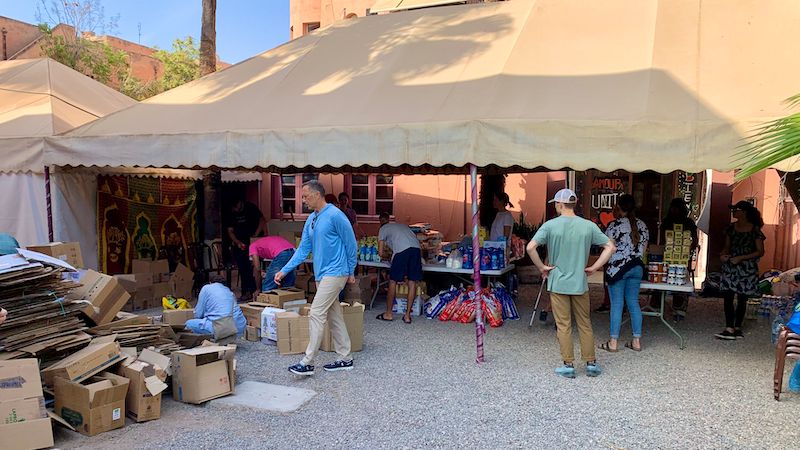
Nearly every family in Morocco had either a family member directly affected by the earthquake or knew someone who was. Their response was immediate. While it took several days for the government to mobilize fully, individuals packed their cars with relief supplies and drove to the mountains by the thousands. Local churches, mosques, and synagogues worked together to gather food, blankets, and clothing to send to reception centers in the affected regions. It was an incredible humanitarian effort. For a brief moment, every eye was focused on those in great need, and they pulled together to find solutions to bring relief.
It was a very human moment.
Times like this allow us better to understand our place in a world of suffering. Such is a critical component in our study of migration. The situation in Morocco helps to reveal five distinct roles that are present in almost every crisis.
The Role of the Government
The role of the government is to care for its people. Those responsibilities have physical boundaries, and we often think of them as borders. The citizens and territory on one side of the border are the responsibility of one country, and those on the other side fall under the responsibility of another. Without a doubt, nations should help one another during extreme events. But… each country should undoubtedly care for those within her borders.
Each government should have systems in place to not only humanely care for her citizens but also for those who cross into her land in times of crisis. This is especially true for those who have been forcibly displaced. And while the politics surrounding illegal entries are complex, each state still must treat such migrants in a just and humane manner. Why should a government care for people in crisis? It is because they are the only ones with the resources to manage the situation appropriately.
Almost every developed country has its own internal structures for responding to crises. Think of them as Governmental Organizations. These GOs are political officials, first responders, hospital workers, military personnel, and even border control. They are staffed by public servants with the knowledge and the capacity to respond in ways that provide direct relief to the people. These GOs and their people are a part of the culture and, as such, play an essential role in responding to the crisis.
The Role of Non-Governmental Organizations
Non-Governmental Organizations (NGOs) are a category that seems to have become a catch-all for everything. Many organizations work alongside governments in times of crisis. They fall into several groups. The first are intergovernmental organizations like the United Nations, the World Food Program, and the International Organization for Migration. The second is societies like The Red Cross and The Red Crescent. These two are indeed the most prominent players when it comes to humanitarian relief. The third group is true NGOs like Doctors Without Borders, The Danish Refugee Council, and Mercy Corps, etc. Then the fourth group is Faith-Based Organizations such as Send Relief, Samaritans Purse, and Caritas.
These groups possess an amazing capacity to assemble and mobilize resources to assist governments in response to crises. Because of this, they often serve as the direct point of care for people in need. In almost every situation, you will find NGO boots on the ground, often at significant risk to themselves. Think of them as the world's "first responders," ready to go on a moment's notice. Their workers are often volunteers who give their time and expertise to care for a hurting world.
As such, NGOs serve as a point of contact for the public. Inherent to humanity is a desire to help people in need. Globalization has dramatically increased the speed at which news travels around the world. Word of a disaster spreads rapidly, and people are moved to help. The cost of humanitarian response is high, and the NGOs have the capacity to convert a global concern into tangible aid for hurting people. Unlike any other time in human history, NGOs serve as a means of connecting the vast financial capacity of the private sector to specific points of crisis. And, for the most part, they do it with a high level of accountability and ethical oversight.
Continuum of Response
At this point, we need to pause and be reminded of how a crisis response evolves. The International Association for Refugees has a staff of incredibly gifted leaders. They developed the following chart, and it applies not only to a refugee crisis but almost every disaster scenario. It helps us understand the role of GOs and NGOs… and puts them in context with a discussion of the church's role to follow.
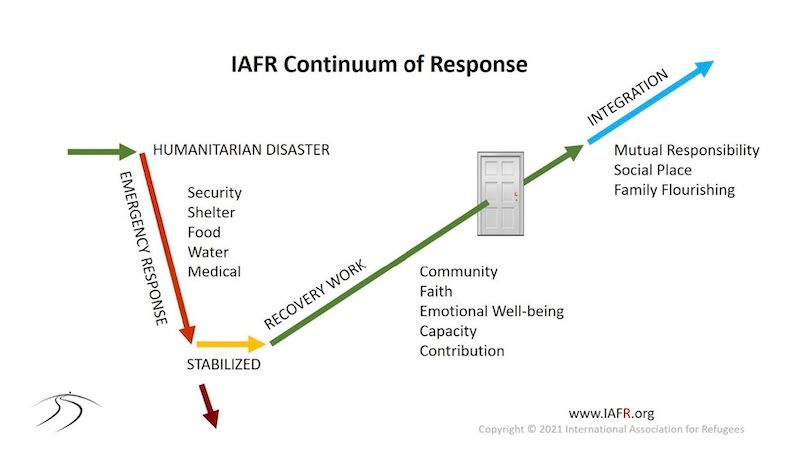
As you look at the chart, notice three fundamental colors. They are red, yellow, and green. In the early stages of a humanitarian crisis… the “red line”…the most significant needs are:
- Security: The need to be safe.
- Shelter: A place to sleep and to be protected from the elements.
- Food / Water: Both of which are necessary for survival.
- Medical Care: The need for injuries to be treated.
Before anything else can happen, these essential elements must be the focus. This is true whether the crisis is an earthquake, an influx of refugees, or even illegal border crossings. This is where GOs and NGOs excel. The “red line” is their domain. They have not just the resources and experience to handle the crisis… but they also have the authority to make critical decisions.
The Role of the Local Church
So now take a look at the “yellow line ." There comes a time in every crisis when things begin to stabilize. The first few days after the earthquake were traumatic for Morocco. In those early moments, everyone was simply trying to survive and serve their neighbors. However, once the government was mobilized and external GOs and NGOs arrived, things stabilized quickly. It is not that things were miraculously better, but these groups could do so much more than any one individual. After a week, the situation was greatly improved. Those trapped had been rescued, the injured transported to hospitals, food had arrived, and tents were being put in place. Keep in mind that, at this point, things remain very fragile. Look back at the chart and take notice of the “brown line.” All it would take would be a strong aftershock or a simple rainstorm, and the people would be back in crisis.
But you should also see a “green line.” This is the season after the initial crisis has stabilized… it is a time when the other needs of the victims become evident. They are a…
- Need for Community: Social structures are often disrupted in disaster, especially if it forces individuals to be displaced. People need to find their place in the community... even if it is a new community.
- Need for Faith: Even in secular cultures, most people turn to God in times of crisis. People of faith turn to their own institutions and leaders, yet the crisis also disrupts many of those structures. Creating stability then becomes a critical need.
- Need for Emotional Health: In the same way that physical injuries must be treated, there is a need to care for those who have been psychologically traumatized. This is true for both the victims, but also for those providing care.
- Need for Capacity: Before the crisis, community members could take care of themselves and their families. Crises can disrupt a sense of capacity, often destroying the means by which individuals could earn a living. It may take months, or even years for many individuals to return to a place of self-sufficiency.
- Need to Contribute: People, even amid crisis, have an inherent need to serve others, to contribute to their family, to make a difference in their community. When they see their neighbors hurting, they "need" to be a part of a solution.
If you think about all of these “green line” needs, they are the things that GOs and NGOs struggle to provide. They try… but their expertise is on the “red line ." Those external to the community are there for the immediate crisis but do not stay for very long. Effective “green line” contributions come out of relationship… and longevity.
It is for that reason that the church excels on the “green line.” The church is a community that was present before the crisis and will be there long after everyone else has left. Most of all, she serves to reinforce one’s faith when all around them is crumbling. A person's relationship with God and their relationship with others is vital in the emotional healing that needs to come. In this kind of community, people are encouraged to step back into the world, earn a living, and give back to their community. Often, those who have no relationship with God are served in the most significant ways. As a Christian community, we know that healing happens most profoundly, and stability is found most quickly when under the guidance of our loving Father and His Son, Jesus Christ.
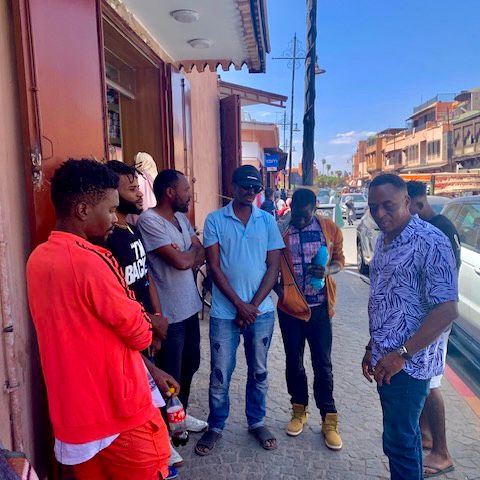
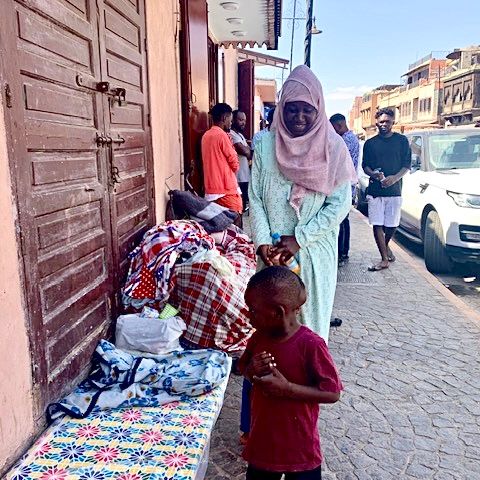
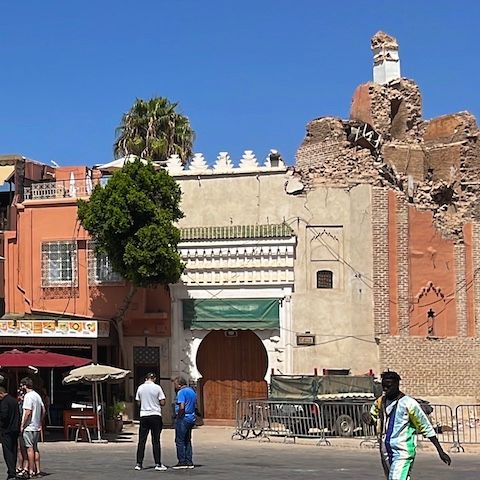
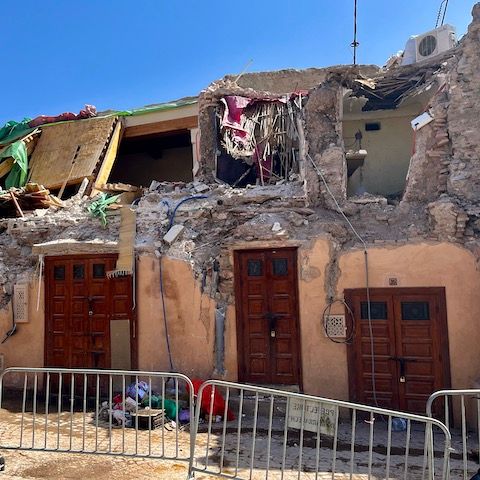
African believers caring for the needs of migrants in Morocco
The Role of the Individual
Always keep in mind that the role of any individual on the “red line” is inherently limited. The heart may be there, but the capacity is not. When the crisis comes, governments function according to established procedures. In many countries, elections allow citizens to have input in policy development. Almost every government has programs and positions that can and should be shaped. Those changes often occur through input from the community. But these changes occur during the seasons of calm... not during the crisis.
This is not to diminish the initial response of citizens as they respond to “red line” events. As in Morocco, people respond to people who are hurting. It takes time for GOs and NGOs to ramp up. In the meantime, citizens step up to the plate and help those in need. But that response will always be limited. Even as a local church, one can only do so much on the “red line.” During this recent earthquake, I watched as people, Christian and Muslim alike, gave sacrificially to provide food, clothing, and warm blankets in the first four days of the crisis. It was a response of compassion and was very much needed.
It is here that I offer a word of caution. Faith communities are most certainly the hands and feet of our Lord in the early days of a crisis. The Moroccan church and her people were truly "first responders" during that time and did incredible things on the "red line" of a humanitarian disaster. But... and this is critical... the church must recognize when to make the transition to "green line" activities.
Far too often, we see churches attempting to provide food, shelter, and medical care long after the government and established NGOs have arrived. In the end, this proves to be an ineffective use of valuable resources and misses the opportunity to build lasting relationships along the "green line" of ministry. Wisdom dictates that the greatest value of the church at the point of stability... the "yellow line,"... is to lead her people to reach their neighbors individually… on the “green line” of relational response.
Why a relational response? Because relationships are everything. It is out of relationship that ministry occurs, needs are met, and hope is shared. It is impossible to have a relationship with a GO or an NGO. Relationships are between people. It is why we have been charged to “love our neighbor as ourselves.” (Mark 12:31) It will be out of that love that one will care for the injured, feed the hungry, shelter the homeless, and share the hope of Christ.
Conclusion
The Western Migration Route represents one of the most misunderstood aspects of modern sub-Saharan migration. Much of the movement is legal. By that, I mean that many of the sub-Saharan people in Morocco and Spain arrived at the airport with both a passport and a visa in hand. Their movements are a blessing to themselves, their families, and their host countries. They represent the best that their nation has to offer, and many will become the leaders of their respective countries in the years to come.
Many migrants are following irregular pathways. Some began their journeys legally and then overstayed their visas. Others entered the country through clandestine means, seeking to find a way to Europe. Their experiences are traumatic and will become more so if they try to cross into Spanish territories via boat or by climbing a fence. Keep this in mind… more die each year along North African migration routes than all natural disasters in the region combined. Hundreds of thousands are stuck in the Maghreb, with neither the means nor the cultural capacity to return home. It truly is a crisis.
Most, if not all of them, are a neighbor to someone.
As we wrap up this segment and prepare to move on to the Eastern Mediterranean Route, we must recognize that a window of opportunity lies before us. It would be easy to become political and focus on our respective governments' actions (good or bad). Such is seldom productive and tends to dehumanize migration. In the end, we spend our time and energy on fruitless commentaries about policies outside our sphere of influence. Or… we can keep the migration issue at arm's length. After all, Africa is a long way away from "my" daily world. We can throw some money at our favored NGO, FBO, or even a blog site like this. Those are not bad things… but if not careful… they miss the main thing.
If this post serves to do anything, I pray that it will cause you to look outside the door of your church… or your house… and see your neighbors. We do so when there is an earthquake. Can we not do so in this day of migration? It does not matter where they came from, how they got there, or the color of their skin. They are people created by God. They may have arrived by making some great decisions and came with an invitation. Or, they may have chosen poorly and are now being driven wherever the currents of water take them. Regardless… they are human beings. As fellow humans and as children of God, we are compelled to love our neighbors.
My challenge for you this day is to seek out your neighbors. Chances are, they are "not from around here ." They may have "red line" needs that are beyond your capacities. But I suspect that most will have “green line” needs that are well within your ability. Take a chance, hold out a hand, and try not to be surprised if someone responds with a smile and gratitude.