78 - Onward to Italy
At the end of three months we set sail on an Alexandrian ship which had wintered at the island, and which had the Twin Brothers for its figurehead. After we put in at Syracuse, we stayed there for three days. From there we sailed around and arrived at Rhegium, and a day later a south wind sprang up, and on the second day we came to Puteoli. There we found some brethren, and were invited to stay with them for seven days; and thus we came to Rome.
—Acts 28:11-14
2024 No 78
Introduction
Paul was on his way to Rome, courtesy of the Roman government. Even with their deep pockets, the journey was fraught with danger. Winter storms made the passage difficult, ultimately leading to a shipwreck and an unexpected experience with an angry snake on Malta. And yet, at every step along the way, God was guiding his path. Passing through several other locations, they finally arrived at their destination.
As we spend more time with the Eastern Mediterranean Route, it becomes evident that traveling to Turkey is relatively simple… moving beyond is much more difficult. One of the principles of migration is that the very poor do not migrate. It takes money to leave home.[1] But even for those with significant resources, the journey is often perilous. It is indeed possible to get from Turkey to Europe. The only question is by what direction and at what cost. One can cross into Greece by land or by sea… only to risk pushbacks, detention, and even loss of life. One can travel into the EU through the Balkans, but as we shall see in a later post, that pathway is also extremely difficult and has low success rates. Few making these journeys are poor… but conversely, they are far from wealthy.
And yet, money does indeed create options. Smugglers have recently begun to offer pathways that bypass Greece entirely and take migrants directly to Italy.[2] From there, they tell clients that they can claim asylum and quickly transfer to their EU country of choice. As with most of these schemes, there is a measure of truth to their message… but much is left out of the conversation. In this post, we will tell the story of George and his family. He is a Nigerian who bought a ticket on a luxury yacht to Italy.
A Good Life
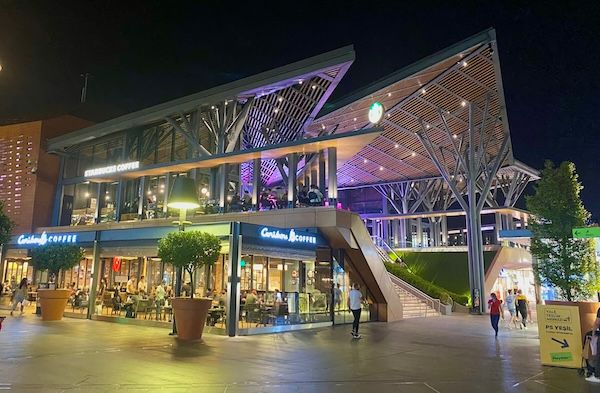
George is a Nigerian who came to Turkey on an academic scholarship. He had grown up in Lagos and went to university there to study law. He was married soon after he graduated and went to work for a firm downtown. His interest was in international trade. The challenge was that it was a competitive marketplace, and many aspiring young attorneys vied for the few potential positions across town. George knew he would have to do something that set him apart if he were to gain the advantage. That is when he fell into the opportunity to go to Turkey for further studies.
As noted previously, Turkey has a financial interest in sub-Saharan Africa.[3] Word was floating around the office that a scholarship might be available for the right person to travel to Istanbul and earn an advanced degree in International Trade Law. On a whim, George made an inquiry and filled out the application. To his great surprise, he was accepted. The offer was to pay his tuition and give him a stipend to cover living expenses. Additionally, he would serve as an apprentice at a law firm there in Istanbul. It was an offer too good to refuse.
George and his family made the transition to Turkey. Things for George were more manageable than for his wife and their small son. He was fully immersed in his studies, and any spare time was given to work at the law office. The family, however, had to integrate into Turkish society and culture... without knowing the language. Despite being legal and living in an academic community, things were difficult. Perhaps the most challenging aspect was the discrimination. His wife was not accustomed to the degradation that came from being black. Seeing their son struggle to find a place in school was especially hard. As much as they appreciated the opportunity in Turkey, they knew it would not be their home.
In fact, that was a part of the agreement with the government. Their objective was to train those sympathetic to Turkish interests and then send them back to Africa to become financial and political allies. It was known upfront that their visa would not extend past their studies. For George and his family, returning to Nigeria had always been a part of the plan… for back in Nigeria, they could use their foreign training and experience to have an advantage over others. Turkey was supposed to be the ticket to a good life back home.
As time progressed, however, George realized that there were not any positions in Lagos that would give him the life he desired… or the life he longed for his family. His time away had created distance with his former employer and with prospective contacts for new jobs. Top positions in Nigeria were often based on family relationships, not candidate qualifications. And in many respects, a student's life in Turkey was better than the life of a lawyer back home. The longer they were in Turkey, the greater the realization that Nigeria would not be best for the family.
Interestingly enough, most of the contacts he made as an apprentice in Istanbul were European. It crossed his mind that European countries with financial interests in Africa might need someone with his skills. His peers encouraged him to seek employment with a firm that might be open to having an African on board. George imagined that with his professional and ethnic background, such might become a reality. The only challenge was to get to Europe. He was well aware of the stories of those who crossed into Greece, or through the Balkans. He knew this was not a pathway he would consider for his family. He still had time… but graduation day was coming fast.

An Opportunity
One day at the office, George met a young lady, Zahra, an attorney from Afghanistan. She had been practicing law there when the Taliban took over. Under threat of death, she and her family fled to Turkey. There was no real work or future for her in Turkey, but she had found a way to travel to Europe. Like George, she was not willing to take the risk of crossing into Greece. With enough money, there were ways to enter Europe with forged documents. But… that could easily be discovered, and any credibility as a lawyer would then be lost. For Zahra, things would be easier since she was an actual refugee fleeing real persecution. Her plan was to take a boat... actually a luxury yacht... to Italy and claim asylum there.
But George was just a student. He knew he had to find a way to be considered a refugee, despite coming from a country that was not in crisis. In fact, George was anything but a refugee. He had a good family and job in Nigeria, and he had been given exceptional treatment in Turkey. If he were to go to Europe and be successful with an asylum application, he would have to create a situation where he and his family would be in danger in both Nigeria and Turkey. Zahra offered an idea that held risk... but just might work.
An essential element of Turkish advanced studies is to be published. By the time most graduate, they have published 6-8 articles in established, peer-reviewed journals. George legitimately knew enough to write an article on how corruption worked between Turkey and Nigeria, particularly in the domain of international trade. In fact, he could cite specific cases. However, if he were to write such an article, the consequences would be severe. If it touched the right spots, it would create significant risk for George and his family in Turkey and back home in Nigeria. If he were to become a true refugee... he would have to create his own crisis.
In the remaining months of George's study, he drafted the article and began to follow Zahra's lead for travel to Italy. She had a contact who could get them onto a private sailboat to bypass Greece and go directly to Italy. Once there, they would claim asylum. Between the two of them, they had even found an immigration lawyer in Rome who had agreed to assist with their paperwork. The only real issue was the price of a seat on the boat. The cost for each adult was 8,500 euros. The cost for their son was 4,000 euros. The agent agreed to take only 20,000 euros for the entire family.[5]
For most migrants, even those from financially independent families, the cost would have been prohibitive. In their case, it would take all their savings and then some. But they rationalized that the journey would only take a week and that they would be able to find work once they were in Italy. They would be starting from zero when they arrived. Still, they imagined that government assistance would be enough until they could land on their feet. In some ways, it was exciting. They never dreamed of simply sailing to Italy on a private yacht. As we have witnessed multiple times in this series, nothing is ever simple.
The Reality of the Operation
When graduation day arrived, everyone was filled with joy. George had accomplished something few of his friends or family could have imagined. All were proud and ready for them to return to Lagos. That is until his article was published. George had done his work well. People in high places were implicated. The word from his Nigerian friends was not to return home. He would indeed be arrested, or worse. On the Turkish side, his apprenticeship was immediately canceled. His exposition had caused great embarrassment to his colleagues, and there was word that the Turkish government had begun an investigation. They were not pleased with his disloyalty and were ready to make him an example. The time was now ripe to leave Turkey, whether he wanted to or not.
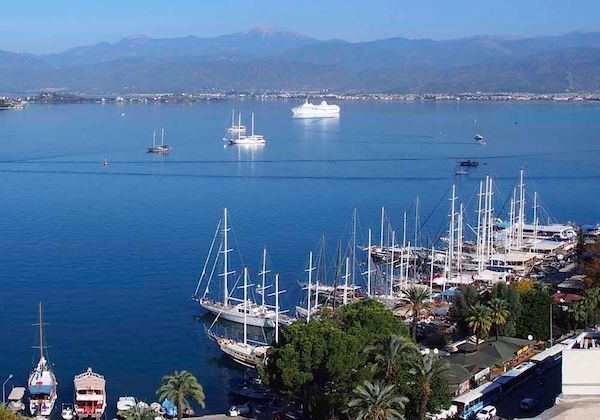
In the months before his graduation, George slowly withdrew the money from his savings accounts in Nigeria. His goal was to avoid attention. He paid the agent the fee and was given a departure date and time from a dock in Izmir. Having sold their car to get extra money, he, Zahra, and their two families took a bus south to the boat. It was to be moored at a private residence just north of the city. When they arrived that evening, they discovered things would be very different from what they expected.
The first thing that he noticed was that there were many people. Too many for one boat. He guessed between 80 and 100. But that was the catch… there was only one boat. It was a big sailboat, somewhere around 18 meters in length. But it was not big enough for all of the people. How could they possibly put that many people in such a boat and expect them to manage for a week? And yet, that was the intention of the smugglers.
Most everyone there was in the same state of shock. Some said that they would not get in the boat under those conditions. George didn't know what to do. If they didn't go… they would lose their money… and undoubtedly face persecution, if not prosecution. He really did not have a choice. When others demanded their money back, the smugglers produced guns and told them that everyone had to get into the boat and that there would be no refunds. Confusion and shock turned into fear and compliance. They got into the boat.
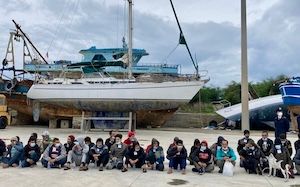
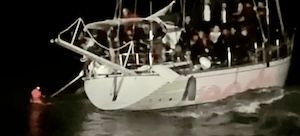
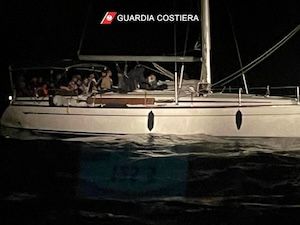
Typical Yachts for Transport [7]
A Horrendous Journey
At one time, the sailboat was indeed a private luxury yacht. Yet, it had been stolen from a nearby marina. On the outside, it looked normal. On the inside, however, everything had been taken out. All that was left was a plywood floor and benches. Nearly 80 adults and children would spend a week inside this fiberglass coffin. They would take turns standing, sitting, and sleeping. Plastic buckets were used for toilets. Food and water were stored under the floor, but it was obvious that the supply was not sufficient for so many people. For George, Zahra, and their families, it was their worst nightmare.
The captain of the boat was a young man from Iran. He did not know much about sailing, as he had always worked on a motorized fishing boat. He understood how to navigate to Italy, but the waters were new, and he had yet to learn if the charts were accurate. But since the boat had a motor and enough fuel for perhaps half of the journey, he figured that they should be able to make the trip easily and in around five days. His willingness to steer the boat gave him a significant discount on the voyage price.
The first three days of the trip went as anticipated. There was a headwind, so the captain used the motor most of the way. Because they were a private vessel and the outside of the boat looked normal, they attracted very little attention. Those below deck were, as one might expect, miserable. Sea sickness was rampant, and people tried to care for their families and neighbors. There was not much air circulation, so the stench became almost unbearable. Privacy was non-existent, so the women designated an area for their toilet and blocked the view with their bodies. Fatigue set in quickly, as many men stood the entire time to allow space for others to sit and sleep.
The challenge was that the boat was very much overloaded. Once they turned west, the wind was from the north, making sailing easier. However, the people's weight caused it to sit low in the water, making it difficult to steer in the wind. The waves were also from the side, making the boat rock much more than before. By this time, the fresh water and food had begun to run out. It seemed that once they rounded Greece, the suffering factor increased ten-fold. The captain said they had two more days, but such would require a monumental level of endurance.
On day five, they saw land. They were off the coast of Calabria, Italy. Here, the captain had to switch back from sail to engine power. And it was here that they got into trouble. The motor ran for a while but then stalled. It was determined that they were out of fuel. The captain’s inexperience on a sailboat became evident as the winds pushed the boat towards the rocky shore. The fear was that the boat would be broken up on the rocks and people would drown before they could get out from below deck.
Hitting the shoreline was violent. Sailboats are unique in their construction, and their keel runs deep. If that keel strikes a rocky bottom in heavy surf, it can instantly break through the floor and flood the boat. When they hit, it literally threw people into one another. Fortunately, it did not break. What it did do, however, was to turn the boat on its side where the waves pushed it further towards the beach.
In some respects, this was fortunate. By turning on its side, it meant that people could easily crawl through the open top hatches. Rather than having to exit the back through one door, they could now escape through an additional eight openings. By God's grace, they were pushed up on a sandy space between some large boulders. In the end, everyone got out of the boat safely. Many were injured, and others were very sick from the voyage. But, they were all alive. [8]
Conclusion
In the end, George and his family arrived in Italy. It was expensive and dangerous, and their asylum request was uncertain. The local police had been alerted to their presence, and rescue workers were on the beach when they landed. All were taken to a local hospital; several were admitted with severe issues. The rest were processed as illegal immigrants. In the next few weeks, most would file an asylum application. Those who were truly refugees would be successful in their efforts. George and his family were able to go to Rome and secure legal aid. That one factor is what likely led to their acceptance as refugees. Such does not happen very often for Africans. They were fortunate.
It has often been said that all roads lead to Rome. That may have been true in Paul's day. He eventually got there, but it took work. The good news was that there were believers in Rome who cared for his needs upon arrival.
Such is also true today. God's people around the Mediterranean have a long history of showing hospitality to those in need. Time and again we hear stories of churches, and Christian neighbors serving the strangers who land on their beaches, or at the doorsteps of their homes and churches. Through their care, many have come to faith.
[1] Mitch Hamilton, "Principle Four: Money Directs the Way", M2M3 https://m2m3.org/21-principle-four-money-directs-the-way/ (accessed Jan 24, 2023).
[2] See post on “First Class Ticket to Hell”
[3] Mitch Hamilton, "Historical Context of Turkey", M2M3 https://m2m3.org/69-historical-context-of-turkey/ (accessed January 6, 2024).
[4] Representative image courtesy of Ruchi Kumar, "Afghanistan’s Female Judges Haunted by Taliban Threats", The National https://www.thenationalnews.com/world/2023/08/09/afghanistan-female-judges-taliban/ (accessed January 7, 2023).
[5] InfoMigrants, "Migrants on Turkey-Italy Route Doubled in 2022" https://www.infomigrants.net/en/post/47176/migrants-on-turkeyitaly-route-doubled-in-2022 (accessed January 6, 2024).
[6] Boats are often stolen from marinas and then converted for use as smuggling vessels. Image courtesy of "International Yacht Charter Group: Turkey Charter", https://www.internationalyachtchartergroup.com/mediterranean/turkey-yacht-charter.php (accessed January 7, 2024).
[7] Images courtesy of "They Steal Boat and Get Rich Transporting Migrants", Vela Magazine https://www.giornaledellavela.com/2022/10/04/they-steal-boat-and-get-rich-transporting-migrants/?lang=en (accessed January 7, 2024). See also InfoMigrants, "More Than 100 People Rescued from Migrant Boat Off Calabria", InfoMigrants https://www.infomigrants.net/en/post/49753/more-than-100-people-rescued-from-migrant-boat-off-calabria (accessed January 7, 2024). See also Nick Squires, "Thousands of “Middle-Class” Migrants Using Stolen Yachts to Sneak into Europe", The Telegraph https://www.telegraph.co.uk/world-news/2021/12/02/graveyard-stolen-yachts-bears-witness-fragile-dreams-thousands/ (accessed January 7, 2024).
[8] "Luxury Boats Smuggle Migrants to Italy", Associated Press https://www.youtube.com/watch?v=MhOXAF2fxQE (accessed January 6, 2023).