79 - Here and No Further
“Thus says the LORD of hosts, the God of Israel, to all the exiles whom I have sent into exile from Jerusalem to Babylon, ‘Build houses and live in them; and plant gardens and eat their produce. Take wives and become the fathers of sons and daughters, and take wives for your sons and give your daughters to husbands, that they may bear sons and daughters; and multiply there and do not decrease. Seek the welfare of the city where I have sent you into exile, and pray to the LORD on its behalf; for in its welfare you will have welfare.’
—Jeremiah 29:4-7
2024 No 79
I always find it interesting when people give me their thoughts on migration. Most know that my role, and that of this blog series, is to examine sub-Saharan migration. However, my wife and I also look at global migration issues in a broad sense. M2M3.org is a specialized arm of that research and is much more focused on Mediterranean routes that are often irregular. They are difficult routes, dangerous routes, the kinds that are seldom what the migrants imagined. They are the kinds of routes that cause deep regrets. Perhaps the most common bit of outsider counsel is, "Just tell them what it will be like… and they won't go."
For centuries, the prophets of Israel had warned the people of God about the consequences of their life choices. They were told what the future would hold if they continued to walk their chosen road. The problem was that no one, at least on the front end, believed them. In hindsight, their efforts were ineffective. This is not to diminish the ministry of the prophets or the need to encourage people to make the right choices. It just means that sinful human nature does not listen to outsiders very well. In the above passage, Jeremiah was explaining that there was no going forward… and no going back. The people needed to accept their new life, settle down, and make the best of a bad situation.
This is an excellent word of advice for many of the migrants along the Eastern Mediterranean Route, and perhaps elsewhere. For a host of reasons, sub-Saharan Africans are drawn to Turkey. Getting there is relatively easy for those with a bit of financial capacity. They just buy a plane ticket. Once there, however, forward progress can come to a grinding halt. It is there that they realize that the image of an easy passage to Europe painted by friends, social media, and smugglers is incorrect. Some may keep pressing, but at best, they land in Greece. There they discover that the economic situation is worse than in Turkey. Many of these migrants will have borrowed the money to get as far as they have. They cannot return home due to shame and the inevitable social ostracization that comes with failure. For them, the best thing they can do is find a way to survive where they are, settle down, and make the best of a bad situation.
That is the message I often preach.
Life in Greece
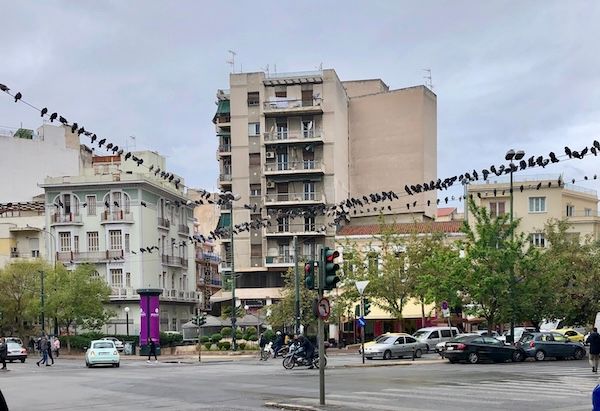
As noted in previous posts, Greece is geographically isolated from the rest of the European Union. You can only get to places like Germany with a plane ticket/visa or by land through the Balkans. As we shall soon see, that route is difficult, dangerous, and very expensive. That cost can sometimes be from four to ten thousand euros.[1] Middle Eastern migrants, those from truly war-torn regions, have a chance at getting their asylum application accepted in Greece. They are then allowed to move forward at EU expense. Those from sub-Saharan Africa only get the pass on very rare exceptions.
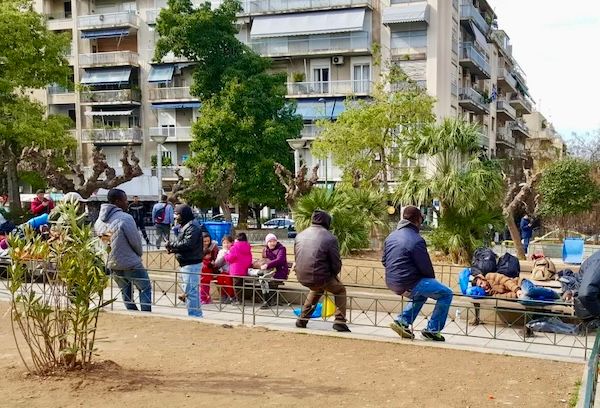
How it typically works is that migrants apply for asylum with a request for relocation to another EU country. As their application is being processed, they cannot go anywhere or do anything... and just have to wait. If they are on one of the islands, they are in limbo. If, for some fortunate reason, they were transferred to the mainland, they have to make do as best they can. Either way, they are not allowed to work, and finding a place to live is challenging. Most will fall into informal migrant communities living in poverty. Those granted asylum will have freedom of movement and travel to other EU countries. But as mentioned above, that is extremely rare for Africans. Those denied are supposed to be repatriated outside of Greece, but that is also rare. Most just disappear into the mass of illegal immigrants and continue as they were before.
But there is a measure of hope. Life is indeed difficult, but Greece has a need for cheap, immigrant labor. Consequently, it is possible to find work in informal sectors. Construction, hotel service, and agriculture are prime opportunities. As time passes, the number of illegal residents becomes too large to manage. So, in the past, Greece has offered amnesty to illegal immigrants, offering those with stable jobs legal residency. Between 1998 and 2001, nearly 600,000 gained their citizenship this way.[2] Another program began in 2014. It allowed immigrants who could demonstrate that they had spent seven continuous years in the country to apply for residency and, ultimately, citizenship. Recently, work permits that could lead to residency were approved for nearly 30,000 migrants.[3]
This means for many that there is a possibility of finding a life in Greece. On the front end, it means staying low and out of trouble. It means finding a way to survive and live at peace with the situation for an extended period of time. That which cannot be gained through ordinary means may become possible for those with the capacity to endure. I have met several African migrants in Athens who have committed to this process. Once they realized they were not going anywhere, they decided to invest in their future by building a life in Greece. Those who pass the test of time have an opportunity to prosper. Remember, Greece is poor. But for many of these young men and women, poverty in Greece is still a middle-class life compared to where they grew up.
Mousa is a young man from Mali. His story is relatively common. He tells people he was born and raised in Gao, which may or may not be correct. When the northern part of Mali collapsed in 2012, he was forced to flee to the capital Bamako. From there, he made his way to Senegal. He planned to live with an uncle, but that did not work out well. Back in Mali, his family was struggling. They sold their property in Gao and gave him the money to go to Europe. Their hope was that he would find work, and be able to support them back in Mali. His story is typical. He traveled by air to Turkey, then by boat to a Greek island. He came in the boats with Syrian refugees, and he was transferred with them to Athens to wait on his asylum application. That was in 2015. Ultimately, the authorities denied his application because he had passed through Senegal, a safe third country.
There was no going back for Mousa. His family had taken a significant financial risk by investing in his effort, and going back would mean a complete loss. His only option was to stay and make the best of his situation. It was not a bad choice. Today, Mousa works on a cleaning crew in a hotel in Athens. He just passed the seven-year mark and could apply for residency and citizenship. Because his employer was willing to write a strong letter of recommendation, his application was accepted, and he now has his papers. It means that he can now apply for government benefits, find a better job, and even travel back home.
Mousa’s life in Greece is not what he or his family had imagined. But, it is good for him, good for Greece, and by sending support home… good for his family.
Life in Turkey
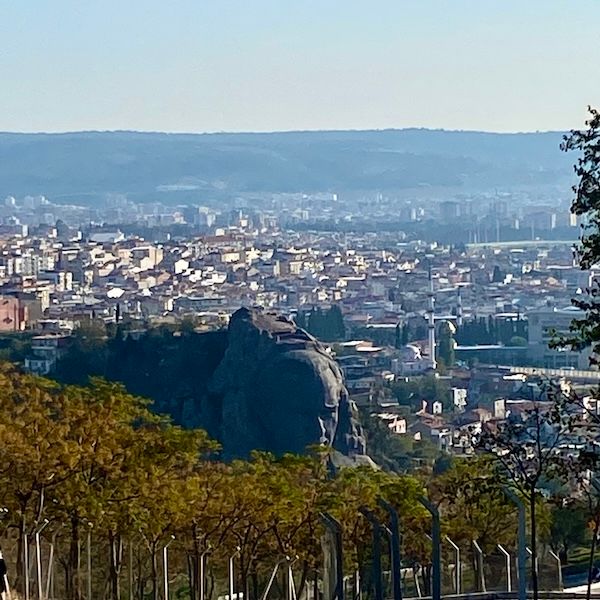
As previously discussed, Turkey is a country of immigration. There are 3.4 million Syrian refugees, many of whom find a permanent life in Turkey. [4] There are another 1.3 million foreigners with short-term residency (students and labor), 300,000 asylum seekers, and unknown hundreds of thousands of irregular migrants. The latter are those who arrived legally but have overstayed their visas. A recent study in 2023 concluded that these immigrant communities were slowly becoming a part of Turkish society, despite living in challenging conditions. Many find jobs in the informal sector and get hired because they are unregistered and are willing to accept lower wages.[5] Another study found that most were in stable jobs within a year, and their salaries were approaching that of native Turks within four years.[6] Both studies concluded that immigrants were more content to stay in Turkey than even her own citizens!
I always remind people that eighty percent of all migration towards Europe is legal. Coming from Africa, nearly 100% arrived in Turkey with a valid visa. Granted, some came intending to migrate to Greece and beyond. Many make the attempt and get pushed back. But there are those who came to Turkey planning not to go any further. The actual numbers are unknown, but they can be found in almost every city we visited. They are among the long-term irregular residents of Turkey. And they have a story to be told
Contrary to the situation in Greece, citizenship in Turkey is very hard to acquire. Those who can invest large sums of money ($400,000) into the economy have a pathway. That excludes almost everyone. The same can be true for those who have been able to live legally in the country for five years without interruption.[7] This creates possibilities for students who choose to remain in Turkey. But for those who arrive illegally and overstay their visas, their chances of becoming citizens are very slim.[8]
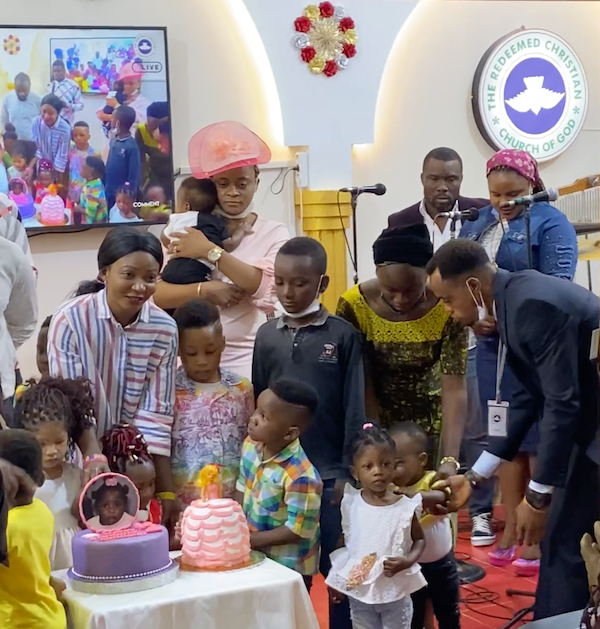
And yet, it is sometimes possible. We met a young lady named Mary at a church in Istanbul. She had traveled to Turkey to go to attend university. She ultimately graduated with a degree in marketing. After finishing her studies, she was able to get a work permit to continue in an internship with a local advertising firm in the city. She shared that she could have returned to her home in Accra, but life in Turkey was much better. Her application was accepted because she had met the requirements for citizenship and because her employer was willing to give her a strong recommendation. She is now a dual citizen of both Ghana and Turkey.
Others choose to stay in Turkey but continue to live as irregular residents. Across the industrial sectors of most major cities, one can find immigrants who have lived for many years without legal papers. The number of illegal African migrants in Istanbul cannot be determined and certainly cannot be controlled by the government. In many respects, the authorities have stopped trying. These migrants fill a pragmatic need, constituting an insignificant percentage of the population. One can walk the streets of Istanbul and have multiple conversations with men who have been in the city for over twenty years, and yet do not have their legal papers. They could be arrested, imprisoned, and deported. That happens sometimes. But for the most part, they are left alone as long as they do not cause any problems.
Conclusion
The challenge in working with irregular migrants is that almost every decision they make is based on their experience and context. Those in places of origin are hard to dissuade. They have their eyes set on a pathway and, while well-informed, always seem to believe that they will be the ones to defy the odds. Those in active transition are also hard to engage. They are on the move and do not have the time, energy, or money to slow down. Seldom do they take advice from outsiders. The rest, however, are usually stuck somewhere. Most have hit a roadblock and cannot go any further. It is here that they have the opportunity to pause and consider their options.
It is also here that most pastors (immigrant, indigenous, and international)… and members of their churches (you)… have the opportunity to engage these migrants in significant ways. They are in our communities, in our churches, and are laborers in our marketplaces. We have the opportunity not just to see them, but to become a part of their world. In other words, we are outsiders who can have a voice in their lives. It is indeed true, that for most, the best decision they could make would be to return home. I give that counsel often. Fortunately, programs exist to help with the logistical expenses.[9] When that is not possible or reasonable, the best counsel is to settle where they are, become content with what they have, and make a life. For that to happen, they will need our help.
It is amazing to see how God can work in the midst of exile. It is here that bad decisions can be remembered and reconciled. It is here where needs turn into prayers, and those prayers turn into a closer relationship with God. It is here where barriers to the gospel seem to collapse, and people respond in positive ways. It is also here where old lives can be left behind, and new lives established. The children of Israel were able to forge a new life in a new country, and God would ultimately bless them. The same is true for many migrants today. Many will come to faith, if we only engage them with the heart of Christ.
[1] EUROPOL, "Joint Raids on the Balkan Route See Migrnt Smugglers Halted" http://tiny.cc/9l0tvz (accessed January 6, 2024).
[2] Leila Bodeaux and Shanon Pfohman, Policy Paper: Demystifying the Regularisation of Undocumented Migrants (Caritas Europa, 2021).
[3] Costas Vasilopoulos, "Greece to Provide Work Permits to 30,000 Migrants to Curb Labor Shortage", Olive Oil Times https://www.oliveoiltimes.com/business/greece-to-provide-work-permits-to-30000-migrants-to-curb-labor-shortage/127650 (accessed January 6, 2024).
[4] Mesut Yeğen, "Amidst Refugee Flows, Irregular Migration, and Authoritarianism: The Politics of Citizenship in Turkey," SWP Comment 62 (2022).
[5] "Refugees Have Become Part of Turkish Society Despite Facing Problems, Research Reveals", Turkish Minute https://www.turkishminute.com/2023/11/29/refugees-have-become-part-turkish-society-despite-facing-problems-research-reveals/ (accessed January 6, 2024). See also Deniz Yüseker and others, Life in Immigrant Neighborhoods: Post-2010 Migrations and Social Participation of Immigrants in Turkey (Istanbul: Heinrich Böll Stiftung Democracy, 2023), 20.
[6] Murat Demirci and Murat Güray Kirdar, The Labor Market Integration of Syrian Refugees in Turkey (Economic Research Forum, 2022).
[7] "Acquisition of Turkish Citizenship", Republic of Turkey Ministry of Interior, Directorate General of Migration Management https://en.goc.gov.tr/kurumlar/en.goc/Brosurler/9_TR_VATANDASLIGI_ENG-2.pdf (accessed January 6, 2024).
[8] I spoke with a pastor in Turkey who reported, "These people wait on the goodwill of the government to make timely policy changes that open up opportunities for them to get permits."
[9] "Return Migration: 2022 at a Glance", Migration Data Portal https://www.migrationdataportal.org/themes/return-migration (accessed January 6, 2024).