96 - Scattered for a Reason: Five Field-Tested Principles of African Migration
2025 No 96
“It is too small a thing that You should be My Servant to raise up the tribes of Jacob and to restore the preserved ones of Israel; I will also make You a light of the nations so that My salvation may reach to the end of the earth.”
--Isaiah 49:6
Introduction – Not Just Movement, But Meaning
Before tracing the Distant Routes, we should pause and review some basics. The ideas we’ll encounter later aren’t new. They are part of a larger conversation, shaped by Scripture, tested through real life, and refined by those who walk it.
Three years ago, we introduced five core principles of migration. At that time, they served more as a framework than a detailed guide. Since then, however, the landscape has become more complex. We have spoken with over a hundred pastors. We’ve walked through neighborhoods in Europe, North Africa, and the Gulf. We’ve listened to migrants in motion and to those who stayed behind. These principles are no longer just theoretical; they have been validated, challenged, and refined through stories that span continents.
So, before we trace the next set of “distant” routes, we need to bring these truths back to the surface. Not just to remember what we said, but to reflect on what still holds true. These principles are more than helpful observations; they are lenses for seeing what God is doing. They remind us that migration is never random and never outside of God’s hand.
Even in scattering, there is a strategy. As Isaiah reminds us, it is too small a thing for God to restore His own people without also making them a light to the nations. Migration may feel chaotic on the surface, but it often plays a role in carrying salvation farther than we imagined. These principles serve as our compass, guiding us as we fly a little higher and look toward what lies ahead.
The Five Principles Revisited
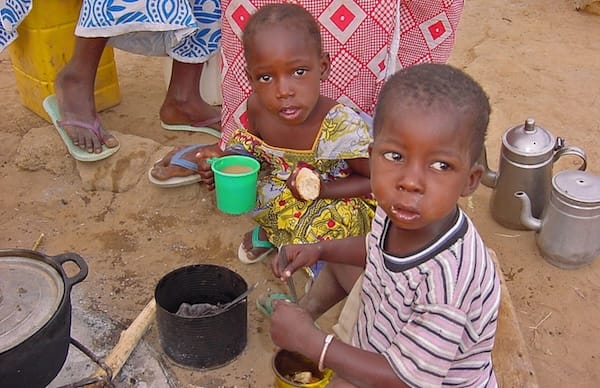
Principle One: Migration is a Human Condition
At the core of this first principle is a truthful yet unsettling fact: migration isn’t just about others. It involves all of us. It’s not merely a problem to fix or a trend to regulate. It’s a condition deeply woven into the fabric of humanity. From the earliest stories in Scripture to today’s changing populations, people have always been on the move. Sometimes voluntarily. Sometimes forcibly. But always for a reason. Whether it’s Ruth leaving Moab, Paul crossing into Macedonia, or your neighbor’s son flying to Canada for school, the goal remains the same: to find something better.
And while headlines often focus on irregular migration and refugee crises, those are just part of the story. Movement is much broader than that. It includes the young couple relocating for work, the student attending university, and the retiree returning home after decades abroad. It involves the pastor relocating to start a new church in a diaspora community. It also includes the nurse taking a job in another country, hoping to send money home. This is what people do. Across Africa, Asia, Europe, and the Americas, movement is constant. The paths vary, but the pattern stays the same.
That’s why this principle matters. Migration isn’t just for those people…over there. It’s a universal human experience. One that crosses all barriers and divides. You may not see yourself as a migrant, but take a moment to think. Have you ever moved for school? For work? For marriage? To follow God’s call? Most of us live far from where we started. We understand what it's like to land in unfamiliar territory and feel homesick. The people we work with are no different. The stories we share aren’t just migrant stories. They’re human stories.
What we’ve observed repeatedly is this: migration demonstrates how people adapt and survive despite the challenges they face. It’s not only a reaction to crisis; it’s how communities grow and cultures evolve. People move when crops fail, schools open, governments change, or opportunity arises. They move when pushed by hardship or drawn by potential benefits. It’s part of living in a broken world, but it’s also part of what it means to reflect the image of a sending God.
We need to stop seeing migration as just someone else’s story. It’s not. It’s your story. It’s mine. The key question isn’t whether migration is normal. It is. The real question is whether we’re willing to see it that way… and what we’ll do once we accept it.
Principle Two: Everyone Moves for a Reason
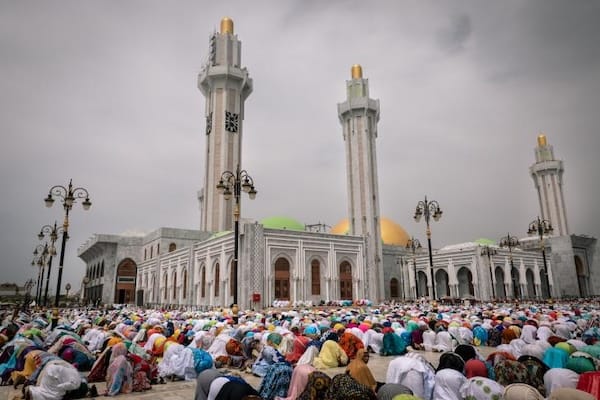
People don’t just wander; they move with purpose, even when the path ahead is uncertain. Across Africa, migration is rarely accidental. It might not always be planned, and it definitely isn’t always safe. But… it is never without reason. In every conversation at a café or in a pastor’s office, that truth keeps coming up. Some leave because it’s expected. Others leave because they have to. But no one moves without a reason.
For many people, culture influences their reasoning. In parts of West Africa, young men are expected to leave home. They are driven to prove themselves and support their families. Entire communities judge success by who has left, how far they have gone, and what they have sent back. Remittances become more than just money; they symbolize loyalty and strength. Others move for education. Parents sacrifice to send their children away, not only for degrees but for a better future. A university degree earned abroad is a victory shared by the whole family. Behind it all is the hope that the journey will change not just one life but the future of an entire family line.
Then there are those who move to survive. Jobs at home are scarce. Systems don’t always reward hard work. Salaries are often unpaid. So, people go into various professions, such as construction, driving taxis, cleaning houses, and starting businesses. They go because staying feels like a dead end. Some leave under even harsher conditions. They flee war or persecution. They walk through deserts or cross dangerous borders because life at home has fallen apart. And even then, they are moving toward something, not just away.
You’ll find these stories in Cairo and Calais, in Nairobi and Naples, in Istanbul and Seoul. You’ll hear different answers when you ask why someone has come. But the pattern remains the same. No one moves without a reason. Everyone has a purpose. Some share it openly. Others keep it to themselves. But the more you listen, the clearer it becomes: migration is not just about moving. It’s about hope. These choices are not random. They are rooted in dreams and promises made to loved ones. That’s why this principle is so important. If we forget that every migrant has a reason, we will miss the core connection. We will miss the story they are trying to tell.
Principle Three: No One Moves Alone
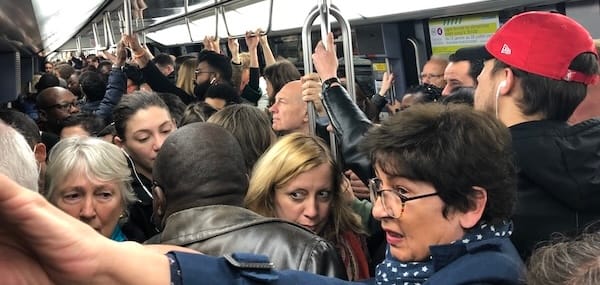
We often see the migrant as a lone figure: one person crossing a border or a woman getting on a plane. But the reality is much more complex. Migration rarely happens alone. Behind every step forward are the voices of those who helped shape the journey. Some offered words of encouragement, others gave money, made introductions, or sent a contact on WhatsApp. And once the journey begins, new names are added. Some are helpful; others are harmful... but no one walks alone.
In the beginning, migration often starts within families. An older cousin who has traveled ahead, a church member with contacts in Europe, or a relative with an extra room in the city. These networks are informal but reliable. In West Africa, religious groups send their members abroad; for example, the Redeemed Christian Church of God in Nigeria does this intentionally, as do the Islamic Mourides of Senegal. These movements are both spiritual and strategic as they mobilize workers, plan settlements, and use internal networks to support migrants along the way. They don’t see this as a secondary event; it’s a core part of their mission.
Because of this, their people are rarely left without a hand to hold.
Of course, not every hand extended is trustworthy. When safe networks break down, others step in. Some simply offer services for a fee, like transportation or a place to stay overnight. Others operate in darker corners. Smugglers and traffickers provide passage, but at a cost far beyond money. Migrants are often abused and exploited, with women and children suffering the most. Entire routes are run under false promises of safety. By the time the truth emerges, it’s often too late to turn back. These systems thrive where desperation grows and rarely appear criminal from the outside. They wear the faces of helpers, but their true motives are driven by profit.
Ultimately, we recognize that God is also walking with these migrants. If we understand Paul correctly, it is God who guides their footsteps for His ultimate purpose: that they may find Him. (Acts 17:26-27) In most places, migrants are either moving into areas of Christian influence or traveling with Christians themselves. Along the way, God often connects migrants… both those with and without faith… to His church and His people. Ultimately, three key points become clear. First, no one moves independently. Second, every migrant is at risk of being exploited by those who prey on vulnerable people. Third, every migrant is also within sight of our Lord, who has placed His people in their paths. Are you that person?
Principle Four: Money Directs the Way
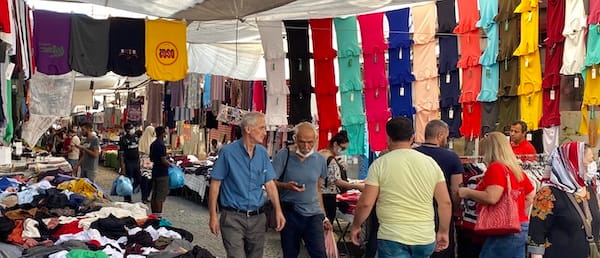
Migration may start with hope, but moving requires money. From the very first step, the journey depends on what a person can afford. A bus to the capital. A passport application. A plane ticket. A visa. Each step has a cost, and those costs determine not only who moves… but also where they go and how far they can go. Some can take a flight and arrive with papers in hand. Others walk across borders, climb into trucks, or find their way onto a boat. The main difference is often money.
Even the direction of migration is influenced by the costs and risks involved in reaching a destination. That's why some prefer Spain over France or Dubai over London. Not because they favor one over the other, but because the route is more affordable and the process is less dangerous. Migration typically follows the path of least resistance, but it only progresses where financial resources allow. When funds run out, movement often comes to a halt. Migrants become stranded in transit countries, and obstacles multiply. In every city we've visited, there are stories of people who simply ran out of options because they ran out of money.
This principle is especially evident across Africa. On a continent where most people survive on less than five dollars a day, a migration journey can cost thousands. That means most migrants are not the poorest of the poor; they are the ones whose families pooled resources, sold land, or borrowed from neighbors.
Migration at this level is not just a personal act; it’s a community investment. And that investment comes with expectations. Those who leave are expected to overcome the challenges and start supporting their families back home. In Africa, failure is not just personal; it is public, and it brings shame.
But money doesn't just influence migrants; it also drives entire industries. There are profits in movement. Everyone, from the bus driver and hotel clerk to border guards and those selling boat seats, makes a living. Politics plays a crucial role in the economy as countries exchange financial packages to limit or redirect migration. Governments depend on remittances to cover internal costs. Traffickers create routes to meet demand. What appears to be a personal choice is often shaped by forces beyond a migrant's control. And unless we understand the role money plays, we'll miss the bigger story behind the movement.
This principle isn’t cynical; it’s honest. If we want to serve well, we must take it seriously. Because behind every decision to move or stay, there’s a spreadsheet few are allowed to see. And behind every safe arrival is someone who found a way to pay the fare.
Principle Five: You Are Never in Control
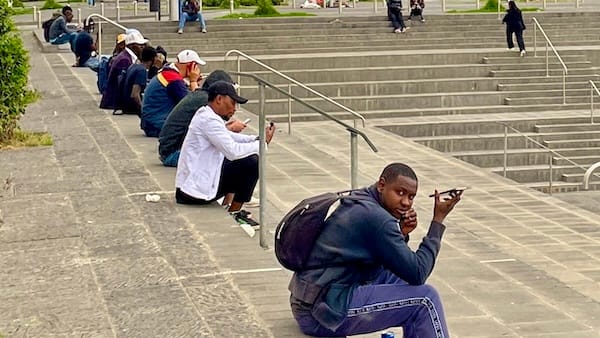
Of all the principles, this one might be the hardest to accept. Migration involves many plans, but it rarely goes as expected. Even for those who prepare thoroughly and follow procedures, something always shifts. Border policies change. Consulates close. Flights get canceled. Visa systems crash. One week, the route is open; the next, it's shut down. Migrants quickly learn that control is an illusion. The rules they followed yesterday may not apply tomorrow, and no one sent an update.
We've heard these stories before. A young man waits six months for a promised work visa, only for the opportunity to vanish when a new administration takes office. A woman boards a bus expecting to reach the capital, but she's rerouted to a distant border with no way to go back. A graduate accepted into a university overseas watches helplessly as the embassy halts all processing. None of these outcomes were part of the plan, but they all are part of the journey.
The main problem is that this lack of control goes far beyond borders. The systems made to handle migration were created with different priorities. Political goals, economic interests, and community acceptance influence decisions more than compassion or consistency. As a result, migrants often live in constant uncertainty. They're unsure who to trust, when things might change, or if they can afford to wait. So they move anyway, risking their lives in the hope that things will turn out okay on the other side.
As a church, our role is not to fix the systems, but we do need to understand the realities they create. We must become places of welcome, rooted in compassion rather than control. Because if we're honest, none of us is truly in control. We are all navigating a world that shifts beneath our feet. Yet God is not shaken, nor is His call to care for the stranger.
Conclusion – The Road Still Teaches
These five principles have guided us for many years. They have helped us interpret our observations and provided language for the movement we’ve followed. What’s impressive is that they still stand firm. Even as routes change and regions evolve, the core truths behind these principles continue to emerge. They remind us that migration is not random. It’s not just about survival. Often, it is layered with purpose and connected through networks, both visible and hidden.
If you have traveled this road with us, you have probably seen these principles at work in your own communities. If we listened to our neighbors’ stories, each of these principles would become clear. But... we don’t need to look that far. Look at your own life, examine your own history. Show me any step you’ve taken that didn’t affirm these principles. Understanding this is crucial, especially if we believe that God wants to use us to impact the lives of those who are moving. Where true principles are found, effective and lasting strategies can be built.
In the next post, we’ll look a little further ahead. We’ll explore what we’ve called the Distant Routes… these global pathways that carry African migrants beyond Europe into the heart of Asia, the Gulf, the Americas, and beyond. However, we won’t abandon these principles. We’ll carry them with us, like a familiar map.
Why? Because the journey still teaches us. And God still guides us. And through it all, His purpose remains the same… that His salvation would reach to the ends of the earth.