M-Moments: In the Land of In-Between
After these things I looked, and behold, a great multitude which no one could count, from every nation and all tribes and peoples and tongues, standing before the throne and before the Lamb, clothed in white robes, and palm branches were in their hands; and they cry out with a loud voice, saying, “Salvation to our God who sits on the throne, and to the Lamb.” —Revelation 7:9-10
I saw this story a few months ago, and it still lingers. Missionaries everywhere talk about it, no matter their country or culture. Why? Because movement changes you. Going back to “what was” or “the way you were” is only an illusion. You always return home different… a little green.
You may, at times, see the acronym TCK when someone is talking about the children of missionaries. It means “Third Culture Kids”. These young adults are in a tough spot. They hold a passport from the country of their parents birth, but they grew up in the land of someone else. Then, when they come back “home” for college, to marry, and to live their life, they are out of place. They often struggle, because they grew up a bit “green”, and struggle to fit anywhere.
This isn’t just true for missionaries. It’s true for anyone walking a diaspora path. The shift from yellow… or blue… to green in those in-between places leaves a lasting mark. And it affects how they live their faith away from home.
We just passed ten years on the field. In just this year alone, we have traveled over 175,000 miles, crossing over 25 countries. This past week, we were in Rovaniemi, Finland. Of all places, there is a small population of Sudanese refugees and Nigerian students.
Here, on the Arctic Circle, they are about as far away from the Equator as you can get. I once heard someone say that if you find a place without Nigerians, it is because it is uninhabitable. Well, Lapland is pretty close. And yet, here they were.
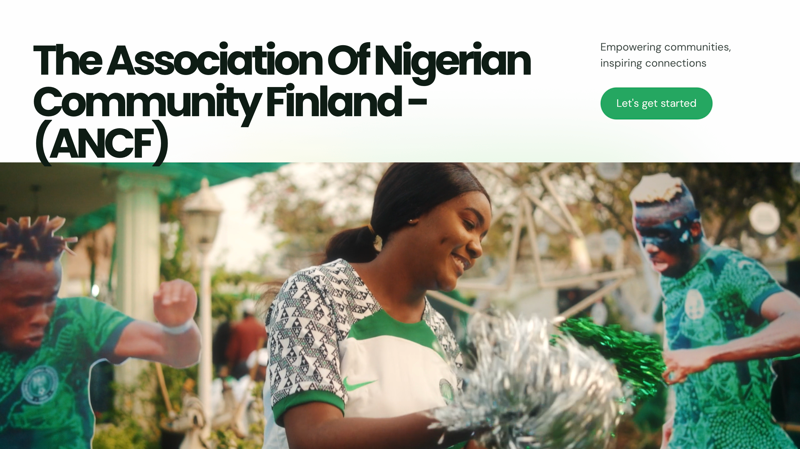
Remember, when people migrate, they take their faith with them. It should therefore be of no surprise that we regularly bump into believers and pastors from every background: Pentecostal, Anglican, Catholic, Evangelical. And what strikes me each time is this: what unites us is deeper than what divides us.
After shared meals or long conversations, I often walk away thinking, they feel as much like family as anyone in our own Baptist fellowship. Why? Because we have all somehow adapted together… taken on a unique shade of green.
But the moment we introduce someone in the pure yellow or the pure blue world by saying, “This is Pastor “so-in-so”; he’s Pentecostal, or Evangelical,” that second label immediately influences perceptions. People quickly judge him based on assumptions about denomination, not heart. I suspect others do the same with us as Baptists. Back home, that’s almost automatic. There, you’re expected to stay yellow… or blue. Denominational identity carries weight; loyalty itself becomes a sign of faithfulness. Green is just too far outside the box.
Yet once believers cross borders, everything begins to blur. In the diaspora, the labels loosen. I’ve seen it again and again: Baptists become Anglican, Anglicans become Pentecostal, Pentecostals become Baptist. Why? Because when you’re far from home, you worship where you can... you embrace fellow believers as brothers and sisters… you plant where there’s soil.
Often, it’s really that simple. On the road, you visit the church in your neighborhood, the one that welcomes you in your language, and you keep going back. We’ve done the same. The Assemblies of God founded the international church we attend. The pastor preaches Scripture with warmth and truth that would fit perfectly in any Baptist pulpit. He’s a pastor, not a label. That’s what connects us: the call, not the color.
That’s one of the quiet lessons of the field: when the church scatters… the essentials rise to the top. Once you’re removed from institutional boundaries, you quickly discover what endures: Scripture, salvation, worship, discipleship, mission. Everything else fades.
I remember standing in a mission tent in Nigeria earlier this year, surrounded by bishops, pastors, and denominational leaders. The Anglican Primate asked a bold question: “Could we work together for the sake of the gospel?” Inside Nigeria, that’s not an easy discussion. Denominational lines and boundaries are pretty strong.
But abroad, it’s already happening. In London, Dubai, Casablanca, and Helsinki, they’re living it every week. Walk into any international congregation and you’ll see it: Ghanaians, Filipinos, Egyptians, Nigerians, and Europeans worshiping under one roof. Singing in different accents, but united in the same Spirit. Praying across the lines that once divided them, working out differences with grace.
I’m not suggesting a new system. I’m just describing what is already happening. Around the world, the scattered church is learning to live as one. It’s messy, imperfect, sometimes unsettling… and a deeply beautiful shade of green.
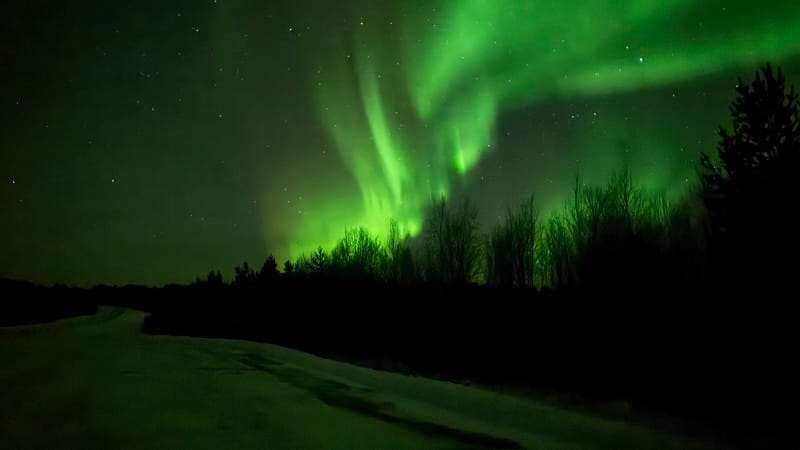
Maybe that’s the glimpse John saw in Revelation 7:9: believers from every nation and tradition, standing together before the Lamb. If that’s where we’re headed, then these blurred lines of the diaspora aren’t a problem to fix.
They’re a preview of glory.