97 - The Journey Ahead: Tracing the Distant Routes
“The mind of man plans his way, but the LORD directs his steps.”
—Proverbs 16:9
2025 No. 97
Some seasons of travel give you enough distance to notice what has been taking shape for a long time. The past few weeks carried me through London, Amsterdam, then across the Baltic States, and finally into Helsinki. Before that, time in Kenya and Nigeria brought me back to familiar ground, and days in the Gulf reminded me how believers gather quietly when circumstances make public worship difficult. None of these places was connected by a single plan, yet each step offered a reminder of Proverbs 16:9. We may plan our way, but the Lord continues to guide what we could not have arranged.
M2M3 began in a similar way. What started as field notes written on ferries and in airports slowly took on shape as the stories accumulated. There was no strategy in the beginning, only the desire to observe what was happening in the lives of migrants and the churches that received them. Over time, specific patterns grew familiar. Movements across borders carried echoes of movements in Scripture. People who left home for practical reasons found themselves in situations where God was at work in ways they had not expected. The more I listened, the more I recognized that these journeys were not isolated events. They were part of a larger story that Scripture has been telling all along.
Acts 17 tells us that God determines the times and places where people live so that they might seek Him. Those words rarely feel theoretical when you sit with someone in a small apartment or meet believers who have traveled through several countries before finding a place to rest. Their stories are often shaped by pressure, hope, or family responsibilities. Yet somewhere in the struggle, they begin to recognize that God has not lost sight of them. In many ways, their movement becomes the setting where faith is tested and deepened. This is not something we impose onto their stories. It is something they say themselves as they look back on the road they have walked.
This post marks a transition for us. For several months, we have been laying foundations. Some of that has been for our new readers, some of it has been to get us ready for what is to come. Now we are prepared to follow the distant routes that shape the African diaspora and the global Church. These routes are not abstract pathways. They are lived journeys, carrying people who bring their faith with them. Before we look at each route in detail in the coming months, we return to what Scripture teaches about movement and how these patterns help us understand what is happening today.
Migration as Divine Movement
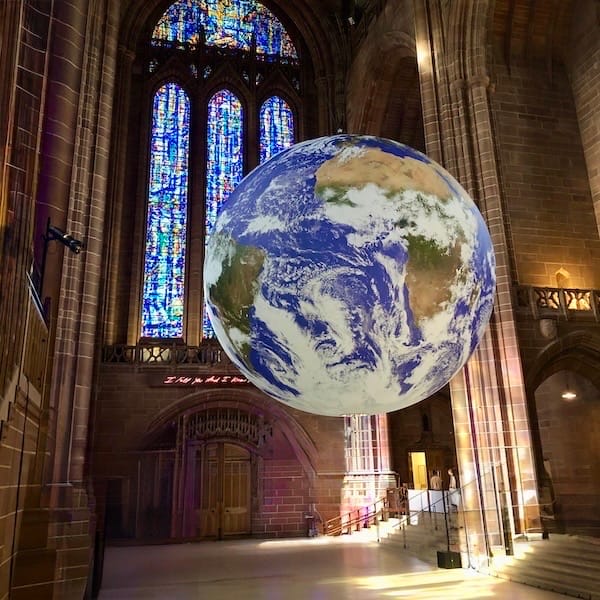
Movement has always been part of God’s work among His people. Two scenes from the early chapters of Acts help us see this more clearly.
In Acts 2, the Spirit descended on a gathering of Jewish pilgrims who had come to Jerusalem from many regions. They were not residents of the city. They were visitors shaped by the languages and communities of the broader Mediterranean world. Many would return to their homes, and some would move again in the years that followed. Their lives remind us that movement in the ancient world was seldom linear or permanent. People traveled, returned, and sometimes resettled elsewhere. Pentecost shows the gospel taking hold among people accustomed to this kind of mobility, and it spread along routes already shaped by secondary and repeated journeys. The message did not remain in one place. It traveled through the paths people were already using.
Acts 8 shows a different moment in the same unfolding story. This time, believers in Jerusalem were forced to leave because persecution made staying impossible. They did not depart with structured plans or organized strategies. They left because they had to, carrying their faith with them into new settings. Philip’s presence in Samaria and his meeting with the Ethiopian official were not arranged outcomes. They came about as displaced believers adjusted to unfamiliar surroundings. They were providential. What began as disruption became part of the way the gospel moved outward.
These two scenes, one shaped by gathering, the other by scattering, stand together in the narrative of Acts. Both reveal how God works through movement, whether people are temporarily gathered from elsewhere or pressed into new regions by circumstances. When I think about recent conversations in London or Helsinki, or earlier ones in the Gulf, I see the same patterns. Some migrants describe departures shaped by pressure. Others speak of opportunities they believe God opened. Many carry elements of both. Their journeys echo these early chapters of Acts, reminding us that migration rarely follows a straight line and that God continues His work through the varied movements of His people.
When Migration Defies Simple Categories
The labels we use in migration... refugee, asylum seeker, student, and worker describe legal categories, but they rarely explain the path a person has taken. A refugee may flee to Southern Europe for safety, then move again to the United Kingdom or Norway because that second location offers stability or the possibility of work. A student may arrive for education and later shift into employment because home responsibilities require it. A worker may speak of economic need while also describing a sense of God’s direction. These journeys do not fit within a single description. They unfold in stages, shaped by circumstances that change over time.
Scripture helps us approach these stories with humility. Joseph’s reflection in Genesis 45 recognizes the harm done to him and the way God worked through it. He did not attempt to resolve the tension. He simply acknowledged it. Many migrants today express something similar. They name the hardship, and they name the grace. When we rely solely on political categories or administrative labels, we lose sight of these deeper dynamics. The Church is called to see beyond the categories and pay attention to the people who carry these stories.
During recent travels, this complexity appeared again and again. In Helsinki, African students spoke of academic pressures, cultural adjustment, and the encouragement they found in small gatherings. In the Gulf, workers described situations that required patience and endurance, yet they also spoke about how fellowship with other believers sustained them. In each case, their stories did not collapse into straightforward explanations. They remained complex, like most stories in Scripture and most stories in life.
Discerning God’s Work Along Today’s Routes
“He made from one man every nation of mankind to live on all the face of the earth, having determined their appointed times and the boundaries of their habitation, that they would seek God, if perhaps they might grope for Him and find Him, though He is not far from each one of us” —Acts 17:26-27
This passage teaches us that God is present in human movement. It does not say that every journey will be smooth or desired. Many are marked by loss or uncertainty. Yet the passage affirms that God remains near and continues His work even in unfamiliar places.
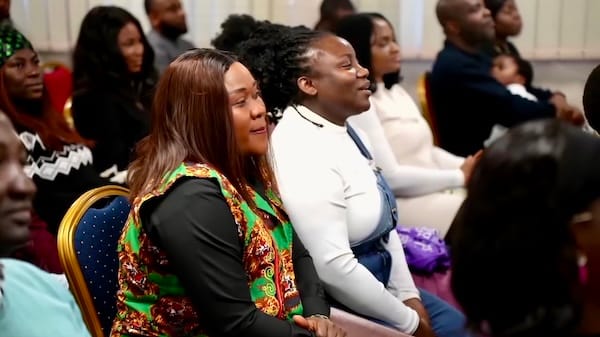
For the Church, this invites careful attention. Migration is not only a social issue. It is a spiritual reality that shapes both congregations and communities. In many places, African believers are quietly yet significantly contributing to the life of churches abroad. Some join existing immigrant congregations. Others find a home in international churches that gather people from a wide range of cultures. These churches often become stabilizing communities for those who arrive without extended networks. They provide teaching, prayer, and the comfort of familiar worship in unfamiliar settings.
These realities remind us that migration is not simply about movement. It is about the way God continues His work through people who bring their faith with them. The question before the Church is not whether migrants are participating in the mission of God. Many already are. The question is whether we are attentive enough to recognize it.
Four Routes, One Story
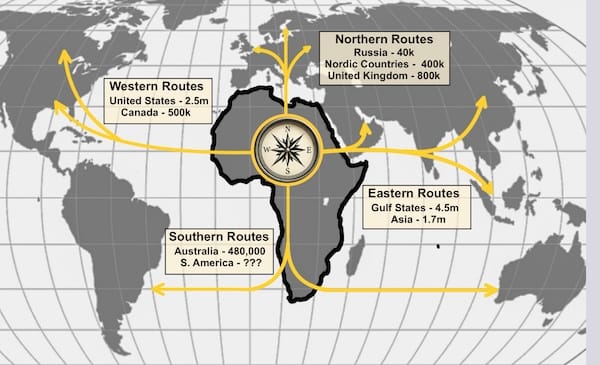
If movement is part of God’s ongoing work, then it is important to follow the routes people are walking today. We have thoroughly covered the routes from Africa to Europe. The Distant Routes we will explore in the coming months represent pathways that shape the African diaspora and influence the global Church. Each route carries its own history and challenges, yet all share a common thread of faith carried across borders.
Northern Routes: Europe’s Secondary Movements
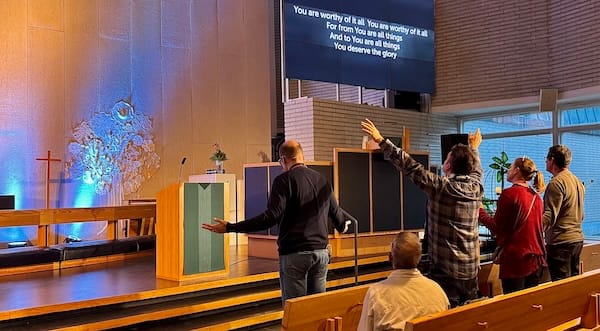
Many African migrants first arrive in southern Europe, but a significant number move north in search of stability and opportunity. Cities such as London, Stockholm, Oslo, and Helsinki have become home to communities that bring together experience from various regions of Africa. These believers adapt to new languages and climates, build families, and form congregations that reflect both their past and their present.
Some of these churches are African-led. Others take on a more international character as they welcome people from different backgrounds. They often meet in rented spaces or in buildings provided by local churches. Their presence is a reminder that the story of Christianity in Northern Europe is broader than the decline narratives that often shape public conversation. These churches are steady communities of prayer and worship, adapting to their context while holding onto practices that have guided them for years.
The Northern Routes also involve less visible but increasingly essential movements. Russia has become part of a transit path that brings migrants toward the Baltic States and then into the wider Schengen region. Today, many are moved through Russia and Belarus by smuggling networks, which then guide them across borders into Lithuania, Latvia, or Estonia. From there, people often continue further north in search of a place to rebuild with some stability. These movements are complex to document, yet they shape the growing African presence in northern Europe and the congregations that are forming quietly within these regions.
Eastern Routes: From the Gulf to the Far East
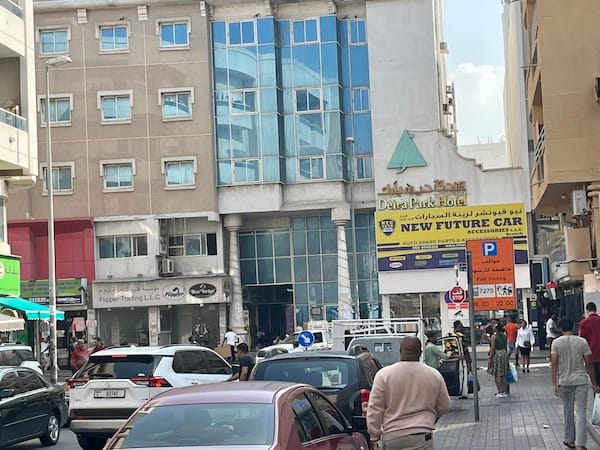
The Eastern Routes cover a wide range of settings. In the Gulf, Africans arrive through various pathways. Many come on work contracts; others arrive as students or professionals seeking experience and opportunity. Yet once in the region, daily life is shaped by systems that can limit mobility and tie one’s status closely to an employer or sponsor. The most common of these is the Kafala structure, which functions in a way similar to indentured servitude, often leaving workers at the mercy of those who hold authority over their employment and residency. Conditions vary widely, but the system itself creates an environment where some gain stability while others face constraints that are difficult to navigate.
In East Asia, African students and workers navigate contexts that can feel isolating. They adjust to unfamiliar cultures, varied academic pressures, and the challenges of building relationships in settings that often move at a different pace from their own. Many rely on apartment fellowships and international congregations that offer support and a sense of home during seasons when they may feel alone.
International and immigrant churches become essential communities along the Eastern Routes. They gather believers from varied backgrounds and offer stability in settings that can feel demanding or uncertain. These congregations provide fellowship and practical support that help people adjust to life far from home. African believers contribute quietly and consistently to the life of these churches, often assisting others to navigate the challenges that come with study, work, or restricted environments.
Preparation before departure strengthens this kind of support. Churches in the Philippines offer an example through the way they disciple members who plan to work abroad, grounding them in Scripture and community before they leave. Their approach shows the value of equipping people at home to better prepare them for the realities they will face overseas. It is a pattern that could serve many African churches as they help members who expect to spend significant periods of their lives in other parts of the world.
Western Routes: New Frontiers in North America
Many of our readers live in North America, and this route may touch closest to your own communities and congregations. What follows is only a brief overview of a landscape that is shifting quickly. We will explore these movements more deeply in future posts, but for now, it may help to trace the broad contours of how African migration is taking shape here and how these changes influence the churches you know best.
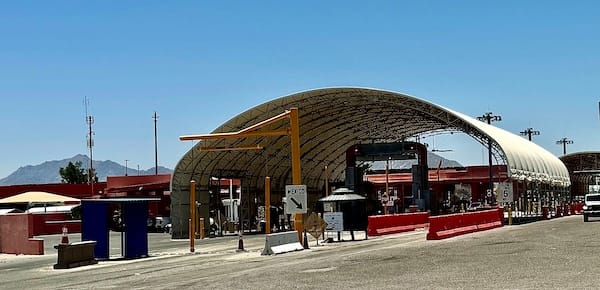
North America continues to receive African migrants through various pathways, but the shape of those pathways has changed dramatically in recent months. Policies at the southern border have reduced irregular entry to some of the lowest levels in years, and smugglers who previously guided people through Central America are now, for the most part, out of business. At the same time, new restrictions on specific visa categories have made legal entry even more difficult.
Those already in the United States face a landscape where visa restrictions, workplace requirements, and changing policies affect their ability to remain. Most are navigating new pressures as they seek stability for themselves and their families.
African-led churches are present in cities like Houston, Atlanta, Seattle, and Minneapolis. These congregations often combine worship, prayer, and mutual support in ways that reflect their origins. They face challenges common to other immigrant churches, including generational differences and the need to adjust to new contexts. Yet they remain steady communities where faith is nurtured.
Many African believers also join established national or multicultural churches in their communities. Their presence often strengthens these congregations, bringing perspectives shaped by experiences of dependence on God in difficult circumstances. These churches become places where believers learn from one another and where the broader mission of God is carried out in everyday ways.
Southern Routes: From São Paulo to Sydney
The Southern Routes include regions that are not always discussed in conversations about African migration. Yet South America has become a destination for African migrants arriving through various pathways. Cities such as São Paulo, Mexico City, Buenos Aires, and Caracas now host small but growing communities of African believers who carve out space for worship in settings far removed from home. Their congregations often meet in apartments, storefronts, borrowed rooms, or even open-air settings. They draw on familiar patterns of prayer, song, and fellowship while learning how to navigate languages, economies, and cultures that differ sharply from their own. These churches may appear modest, but they serve as important centers of community in places where migrants have few established networks.
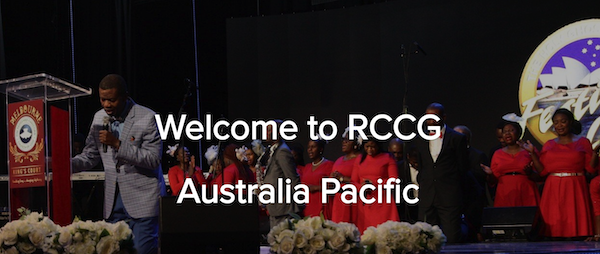
Australia presents another dimension of the Southern Routes. In cities like Sydney, Melbourne, and Perth, African believers contribute to local congregations or form communities that reflect their backgrounds. Some arrive through study or employment; others through humanitarian pathways. They adjust to highly secular urban environments while maintaining practices that have guided them for years. Their churches often function as gathering points for newer arrivals, offering support during periods of transition. These communities may be geographically scattered, but they are not isolated. They remain part of a wider network of relationships that extends across Africa and the diaspora.
Although the Southern Routes receive less attention than movements into Europe or the Gulf, they are increasingly important for understanding global migration. These are south-to-south movements, shaped by the expanding ties between Africa and the wider Majority World. They reflect new economic corridors, new educational opportunities, and new patterns of mobility that are no longer defined by traditional North-bound pathways. For the Church, these settings offer a glimpse of how faith communities adapt when migration routes lead to places that have not historically been part of Africa’s diaspora story. They remind us that the mission of God is not confined to familiar centers but continues to unfold across unexpected regions.
Conclusion
These distant routes are not simply pathways on a map. They represent the movement of people whose lives carry evidence of God’s faithfulness. Proverbs reminds us that He directs our steps. Acts reminds us that He places people in particular times and settings for a purpose. These truths remain as steady now as they were in the early Church.
As we begin to explore each route in the months ahead, we will look for signs of God’s work that appear in ordinary conversations, scattered gatherings, and congregations adjusting to new realities. The past several months have carried us through regions where these stories are unfolding, and the coming months will take us into others… Northern Europe, the United Kingdom, and places in between. This series grows out of what we are seeing on the ground, not only what can be studied from afar. These stories require patience and attention. They invite us to look past headlines and policies and listen instead to what migrants themselves are saying about how God meets them on the journey.
This series will take us deeper. We will sit with students navigating unfamiliar cultures, workers serving quietly under pressure, congregations forming strength from modest beginnings, and churches… national, immigrant, and international… learning to recognize the mission field that has arrived at their doorstep. These are not abstract themes. They are stories lived in real cities, by real believers, carrying real faith across borders.
I invite you to keep walking with us. Each route will reveal something different about the world God is shaping through movement and about the Church He is forming along the way. The months ahead will take us into places that rarely make the news yet hold lessons the global Church can no longer afford to overlook.
The journey continues, and the next step is closer than you think.