27 – The Central Route: The Historical Context of the Maghreb
2022 No 27
For I know your transgressions are many and your sins are great, you who distress the righteous and accept bribes and turn aside the poor in the gate.
—Amos 5:12
Introduction
Islam may have originated in the Arabian Peninsula, but it spread very quickly across Northern Africa. This new religion had made it all the way to Morocco by 680 AD and was firmly established across the region by the end of the first millennia. The Arab world can be viewed in two geographical divisions, eastern and western. Each has its own unique history and characteristics.1 The Maghreb is a region in the western half of North Africa that comprises the countries of Libya, Tunisia, Algeria, Morocco, and south into Mauritania. In the 18th and 19th centuries, it was also known in English circles as the Barbary Coast. By contrast, Egypt and Sudan, are considered the Mashriq and are included in the eastern half of North Africa. While throughout this blog series, and in many news reports, you may see the term Maghreb and North Africa used somewhat interchangeably, such is only for convenience, as the distinctions are certainly evident.
As with the Sahel, much of all sub-Saharan migration will pass through the Maghreb on their way to Europe. Those who travel across the Sahara Desert into Libya are following what has been called the Central Mediterranean Route (CMR). It gains that name because most of those who continue on to Europe will cross into Italy. Those who follow the Western coastline into Mauritania and Morocco are following the Western Mediterranean Route. These migrants typically seek European entry via Spain. For the purposes of our examination of the CMR, we will take a moment to look at the region of the eastern Maghreb that is controlled by Libya. Those migrants who pass through to Spain on the western route will become the subject of later discussion.
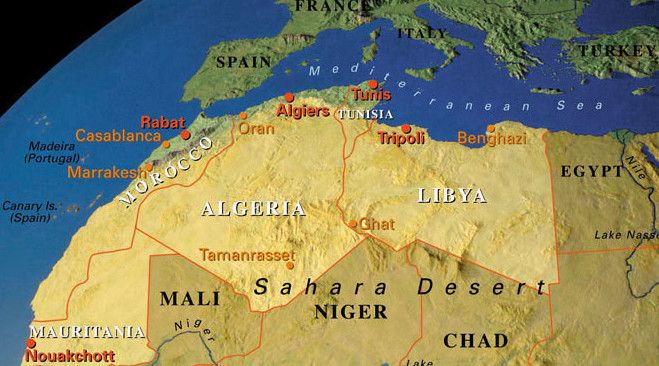
This part of North Africa (the Maghreb) has a long and rich history. Isolated from the Sahel by the Sahara Desert and the Atlas Mountains, the region has held the attention of the Phoenician, Greek, Roman, and Byzantine Empires. As noted above, Muslim Arabs controlled almost all of North Africa by 1,000 AD. And one must use the word "control" with caution. Despite these powerful external influences, the indigenous and mostly independent Berber peoples of the Maghreb have enjoyed a rich history of nomadic movements across the desert and extensive trade with the peoples of the Sahel. Rich deposits of salt allowed for an exchange for sub-Saharan products, including gold. Trade routes were long-established, and networks of movement had extended for generations between the two regions.²
Setting the Contemporary Stage for Migration
By the beginning of the 20th century, the Ottoman Empire was beginning to weaken, particularly along her distant borders.3
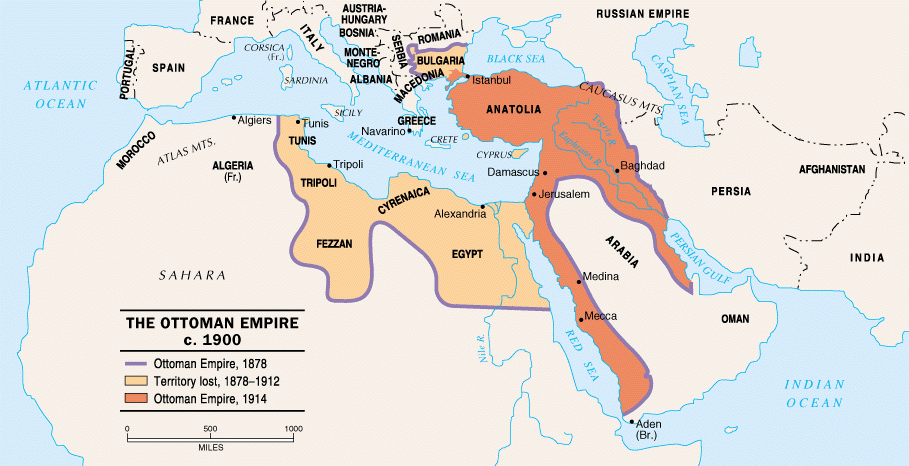
In 1911, Italy claimed Libya as a colony. Her proximity across the Mediterranean made both Tunisia and Libya a favored destination for Italians. During this brief time of control, there was an emphasis on the building of infrastructures and public works. Hundreds of kilometers of new roads were constructed, which simplified travel within the country. After WWII, Italy was forced to relinquish control of the region, and Libya would become independent in 1951. Politically, the country was a monarchy led by King Idris. During this time, both the British and American governments invested heavily in the country, building their own military bases and strengthening its economic capacities. In 1961, oil was discovered, and the country became rich overnight. Most of those riches, however, went into the pockets of the ruling classes and corrupt politicians.
Muammar Gaddafi and the Normalization of Migration
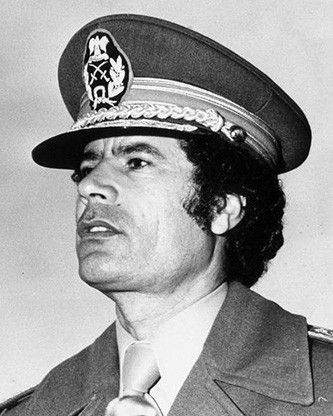
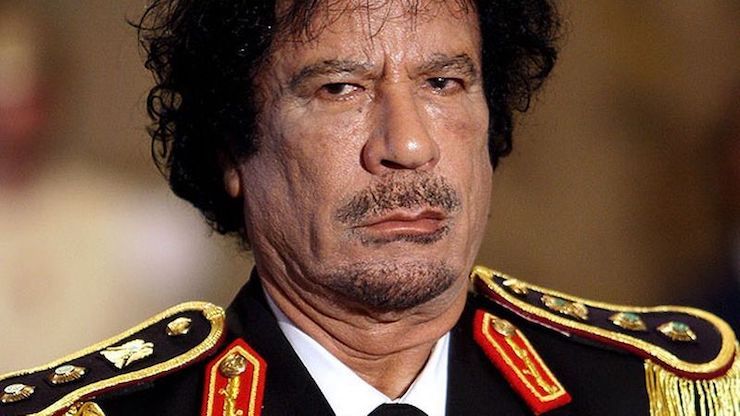
Amid growing discontent, the military deposed the king while he was in Turkey, receiving medical treatment. A 27-year-old army officer named Muammar Gaddafi was subsequently chosen to lead the government. In the years that followed, control was centralized, and dissidents were suppressed, often executed publicly. By 1977, Gaddafi held almost unlimited power. He quickly expelled Western interests and began to use the country’s wealth to strengthen the economy, develop internal infrastructures, and build his army. His international interests, however, soon caused trouble in the West. During his first three decades of power, his alliances with militant Arab groups and sponsor of terrorism led to sanctions from both the United States and the European Union.
As Libya continued to use her wealth to build internal structures, she began to experience significant labor shortages. The 1992-2000 UN embargo limited access to the West and prompted Libya to intensify its relations with sub-Saharan countries. As part of these renewed “pan-African” policies, Libya began to invite sub-Saharan Africans to work in Libya.4 They were very receptive to both free trade and open borders.5 It was not uncommon to see advertisements in sub-Saharan papers promoting jobs and low-cost airline tickets. As such, Libya became a major migratory destination. Even after relations were restored with the West in 2003, migratory movements continued across the Sahara Desert and had become normalized in both directions.6
Libya was not just a land of immigration. Many of her own citizens would emigrate to Europe, even as she became a major pass-through country for sub-Saharan migrants. Following the destruction of her cities during WWII, Europe began to experience an economic rebound. Modernization and industrialization led to many Italians relocating in a search for better jobs. This only increased the need for laborers, particularly in the agriculture sector. Following the oil crisis of 1973, when many European countries began to implement stronger border controls, Italy remained open. Italians were occupying higher-level positions, creating a vacuum in low to mid-skilled labor. Suddenly, Italy had become a country of destination… and Libya was more than willing to facilitate those movements.
It is hard to over emphasize the role Muammar Gaddafi played in the normalization of sub-Saharan migration. In essence, he mobilized his nation to become the consummate smuggling and trafficking network. No one passed through the country without the government engaging in the process. Migration was controlled at every level. And while migrants were certainly victimized, and smugglers became rich, Gaddafi’s government maintained a sense of order. In the same way, Libya had become a major transit point for drug trafficking into Europe. Much of North Africa is a consumption, production, and transit hub for various illicit drug commodities.7 Gaddafi had honed that reality into an opportunity. It seemed that the Libyan government was always positioned between the criminal networks of Italy and the traffickers of North Africa. As such, if the EU wanted to control either migration or drug trafficking, they had to do business with Libya. For Gaddafi, it was the ultimate position of power.
Arab Spring
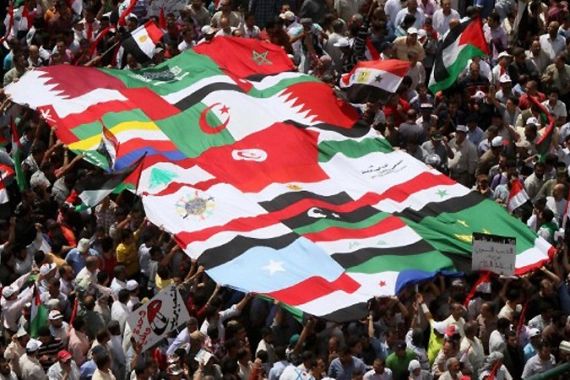
The power of Muammar Gaddafi was his ultimate downfall. While it made many rich, it oppressed many of his own people. In 2011, The Arab Spring movement brought much of the discontent in Libya to the surface. Those who opposed Gaddafi’s government were able to seize power, and with the aid of the West, Gaddafi was eliminated. An interim government was established, but the country soon fell into civil war. For all the faults of Muammar Gaddafi, the one thing that he had maintained was a measure of control. In his absence, tribal militias and jihadists filled the vacuum. As the economy collapsed, the need for migrant labor dissipated. Prior to the conflict, there were as many as 2.5 million migrant workers in Libya.8 As things disintegrated, most of them either returned home or sought to move forward into Europe. As noted above, many would get into boats for Italy.
After four decades of control by Gaddafi’s government, the structures for migration had become highly sophisticated. As those controls evaporated, the business of migration became much more “free market”. By that, I mean to say that each component of the process could now operate independently and offer its services to the highest bidder. That meant that the price of passage went up… along with the risks of abuse and victimization. It was at this point that we began to hear of migrant detentions, labor camps, and even slave markets.9
A Land of Conflict
Unfortunately, Libya remains a country in conflict with two government factions vying for control. The Government of National Accord (GNA) is headquartered in Tripoli and is supported by numerous militias. The Libyan National Army (LNA) controls the East and is led by a former Gaddafi ally. Both have measures of international support, neither are willing to compromise, and the conflict could continue well into the future.
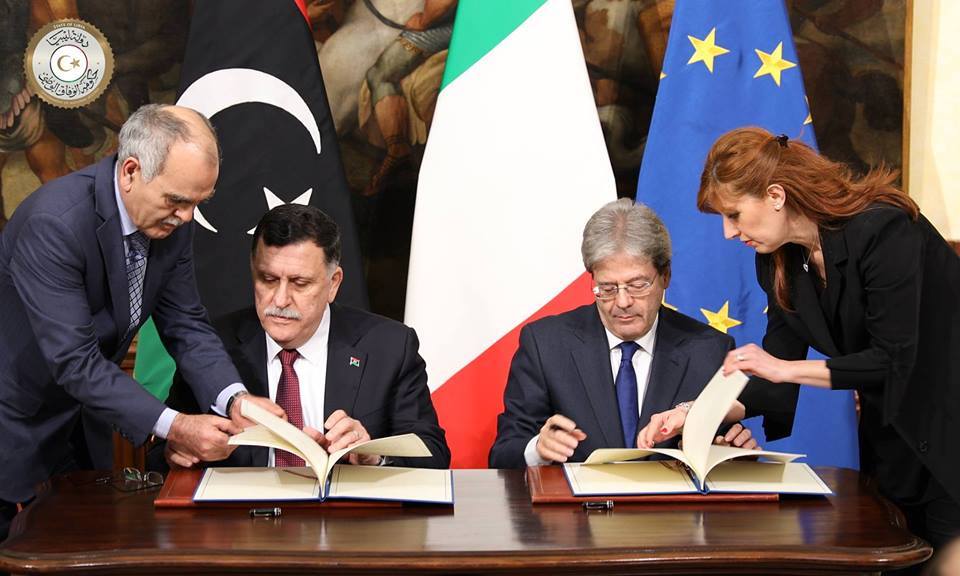
As noted above, both sides also have an interest in migration. There is a lot of money to be made both from the smuggling/trafficking networks and from the European Union. In 2017, Italy brokered a deal called the Memorandum of Understanding with the GNA, which offered some 236 million euros in incentives to the government and tribal groups to reduce EU-bound migration.10 While controversial, it was relatively effective. In 2017, 108,400 migrants arrived on Italian shores. By reducing the number of rescues at sea, and by depending on the Libyan coast guard to detain departing migrants, that number was down to just under 13,000 in 2018.11 Lives were certainly saved from drowning, but the suffering inflicted upon those detained is incalculable.
Despite the ongoing conflict in Libya, there remains a measure of stability for long-term foreign-born residents. As such, there are external investors ready to capitalize on future growth. The country remains wealthy due to its rich oil reserves and capacity for petroleum exports. Internal blockades are common, but the capacity to generate income abides.12 Because of this potential, there is presently a construction boom in many parts of the country, drawing sub-Saharan labor migrants once again.
As with any migratory destination, there are multiple pathways of arrival. The Central Mediterranean Route describes those who are seeking entry to Europe, passing through Libya and into Italy. But... we must remember that Libya is indeed a destination for many. Her airports are open, visas are possible to obtain, and there are jobs available in every sector of society. The stories of those who are abused, enslaved, and killed will always make headlines and influence international diplomacy. (As well it should!) But those numbers are often small compared to those who follow the direct routes, arrive legally, and profit greatly from the endeavor.
Conclusion
For the context of the CMR route, Libya has been a powder keg. The country held everything one would imagine necessary to facilitate successful migration. There were established routes, reliable networks, and government protection from abuse. But when the country collapsed, it sent millions fleeing for safety, and it victimized a host of others. Only now, a decade later, are things beginning to stabilize. For those who pass through the desert, it is still one of the most difficult routes, marked by suffering and abuse. Currently, it seems to be in the best interest of the two ruling factions to court EU support and limit illegal movements. But like most regions in this part of the world, things can quickly swing in the other direction.
As God’s people, we need to recognize that our Father can see the transgressions of governments, the corruption of her leaders, and the profiteering of those who would take advantage of those in need. In places where such sin abounds, God’s grace is made even more evident. Those who suffer have the eye, and the heart of our Lord. He has promised to hear their prayers and to bring deliverance.
We should also recognize that the church is alive and well in Libya. Across the land, believers meet to worship their Lord and serve their neighbors. The sub-Saharan African church has a strong presence in the region and is actively caring for those migrants who come under the shelter of her wings. We may not be able to do much, but we can certainly pray for those who can.
1One could certainly spend significant time discussing the differences that this division creates. It is more than just geographical, but it also encompasses vast theological differences.
2Olivier Pliez, "Vieux Réseaux Et Nouvelles Circulations Entre Les Deux Rives Du Saharrah," Méditerranée 99, no. 3-4 (2002): 33.
3The history of the Ottoman empire becomes foundational for an understanding of the conflicts occurring in modern Islam. I do not normally recommend Wikipedia, but their article offers an excellent summary. See https://tinyurl.com/h6sn4e6n
4Hein de Haas, Irregular Migration from West Africa to the Maghreb and the European Union: An Overview of Recent Trends (Geneva: International Organization for Migration, 2008), 15. See also Sara Hamood, African Transit Migration through Libya to Europe: The Human Cost (Cairo: The American University in Cairo, 2006).
5Hamood.
6Olivier Pliez, La Nouvelle Libye: Sociétés, Espaces et Géopolitique au Lendemain de l’Embargo (HAL, 2004), 131.
7INTERPOL, Overview of Serious and Organized Crime in North Africa (Lyon, France: INTERPOL, 2018), 8.
8Hamood, 75.
9Nima Elbagir, "People for Sale", CNN https://tinyurl.com/533n228h.
10Arezo Malakooti; Chiara Fall, Migration Trends across the Mediterranean: Piecing Together the Shifting Dynamics (Global Initiative Against Transnational Organized Crime (GI-TOC), 2020), 8.
11Ibid., 8-9.
12Angus McDowall, "Explainer: What's Behind Libya's Oil Blockade", Reuters https://tinyurl.com/4vy6nu8f (accessed June 23, 2022).