CMR Update 1 - Tunisia
Historial Context of Tunisia
2024 No 27a
In the world you have tribulation, but take courage; I have overcome the world.
--John 16:33
Early History
Allow me to share a quote that has been attributed to Cyprian, the bishop of the city of Carthage in modern-day Tunisia.
“It is a bad world, Donatus, an incredibly bad world. But I have discovered in the midst of it a quiet and good people who have learned the great secret of life. They have found a joy and wisdom which is a thousand times better than any of the pleasures of our sinful life. They are despised and persecuted, but they care not. They are masters of their souls. They have overcome the world. These people, Donatus, are Christians. . . and I am one of them.”
The best I can tell, Cyprian did not actually say this. It is a paraphrase of his letter to a friend named Donatus shortly after his conversion in the third century. I would encourage you to read the letter.2
But… he could have said this! And so could many in Tunisia today.
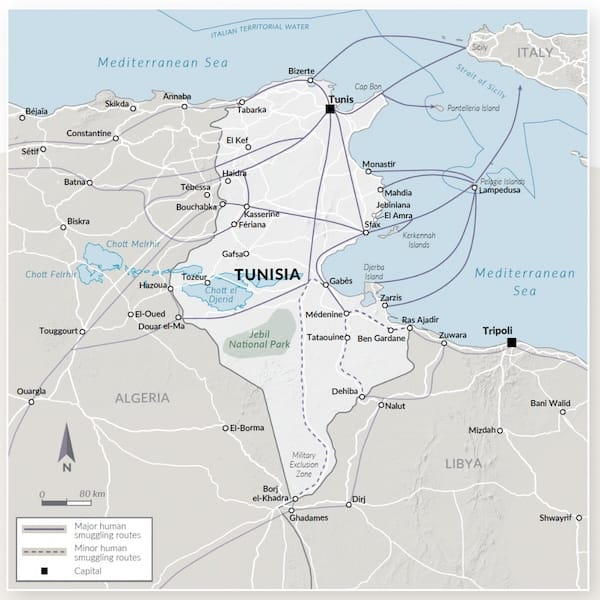
Tunisia has a long, if not tenuous, history. When Rome conquered the region in 146 BC, they gave the land a new title… Provincia Africana. The name stuck! The city of Carthage, modern Tunis, was established at the mouth of the Medjerda River and lies just a short distance (90 miles) across the Mediterranean from Sicily. This region was incredibly fertile and, once conquered, would become the breadbasket for much of Southern Europe.3 At one point, almost all of the grain consumed in Rome came from the province of Africana.4
Christianity arrived in the territory sometime in the first century, and the church was established in Carthage. Over the next four hundred years, it would become the capital of African Christianity and the counterpart to Rome in Italy. It was here that the names of some of the first Africans martyrs for Christ were recorded. Around 160 AD, Tertullian, one of the early Latin Church Fathers, was born here. It was in Carthage where Cyprian, above, was beheaded in AD 258. The city was also home of several significant early church councils. By the end of the fourth century, the theological construct of the trinity was established (via Augustine) and our New Testament canon of Scripture was locked into place.
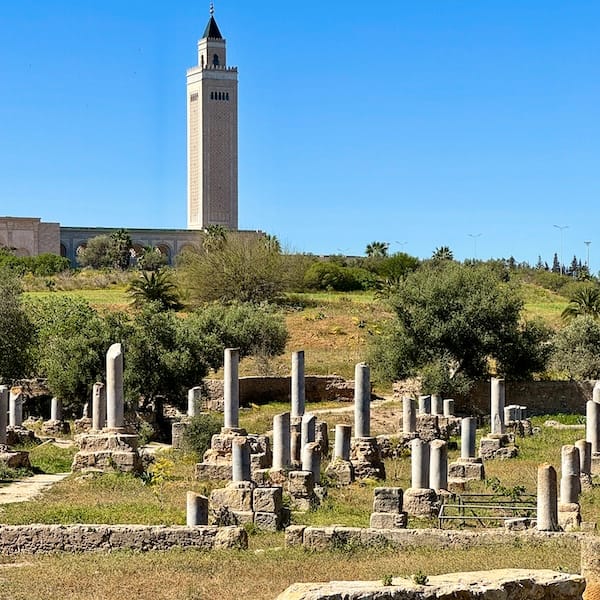
Africana remained a center of Christianity throughout the late Roman period and played a crucial role in the expansion of Christianity. This would remain true until Islam spread across the Maghreb in the sixth century. The region (North Africa) remained Muslim from that time forward. As the Ottomans began to lose their territories in North Africa in the mid-1800s, France took the reins of control. They occupied Algeria (1830) and Tunisia (1881) until both gained independence in the middle of the 20th century.
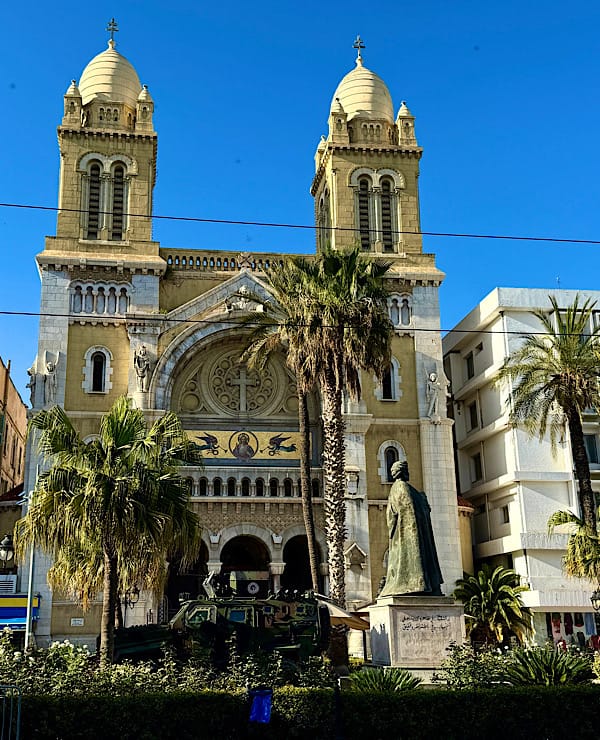
After the Second World War, nearly 350,000 foreigners were living in Tunisia.5 As with all migrants, they brought their faith with them, and churches were quickly re-established. However, this revival would be short-lived. The country gained independence from France in 1956, and within a decade, some 70% of those foreigners would leave. Islam would once again regain control. Today, approximately 99% of the population identifies as Muslims. It is not that churches cannot be found, but they are certainly a minority. Many of their buildings are now abandoned.
Recent History
Over a decade ago, Tunisia would become the birthplace of the Arab Spring. In December 2010, a young Tunisian street vendor set himself afire in protest of continual police harassment.6 Politically, Tunisia had been a de facto one-party state since independence in 1956. His death, along with others before him, led to national protests. Within a few weeks, reigning president Ben Ali had fled to Saudi Arabia. The people elected a new president, and a multiparty representative democracy was established, a first for North Africa. This proved immensely popular, particularly in drawing financial interest from the West.7 In the early days, this gave Tunisia an economic advantage in the Maghreb and a place on the world stage. Unfortunately, this prestigious status would not last.
The challenge for Tunisia, and ultimately its downfall, was debt. The government borrowed extensively from its new Western friends to support its economic ambitions. Between 2010 and 2020, the foreign debt incurred by Tunisia increased by more than 250%.8 Today, that debt is over eighty percent of their GDP and has led to the threat of bankruptcy and double-digit inflation.9 The causes of the economy's collapse have been mostly internally driven, and the result has been especially difficult for Tunisians.
Their problems have only been exacerbated by their politics. President Geji Caid Essebsi died in 2019, and the new president, Kaiser Saied, has taken the government in a different direction. He recently suspended their Parliament, replaced the prime minister, and sought to consolidate power. In July 2022, a new constitution was approved, granting him additional powers.10 His argument was that he was taking control so he could improve the people's lives. Such is proving not to be the case. In many respects, things have become infinitely worse.
As one might imagine, the centralization of power and the ongoing economic hardships can only lead to two things… political corruption and criminal expansion. Both factors have pushed Tunisia to the front as a departure point on the Central Mediterranean Migration Route.
Tunisian Migration to Europe
Tunisians have a history of being migratory, even before the Arab Spring. In 2012, 1.2 million of her population lived abroad out of a total population of eleven million.11 Most were in France, with Italy coming in at a close second. As in other contexts, this means that many stories were circulating back home about how successful and profitable migration could be. In those days, one could fly directly to Europe with a visa. High unemployment and political factors certainly played a role in these movements. The amount of money returned home was in the billions of Euros.12
The years following the revolution were marked by a steady increase in young adults going to Europe.13 Freedom of movement had been one of the key demands of the new government, and those demands were largely ignored. Many had become discouraged when they did not see the dramatic changes they had anticipated. Political hardships remained, and economic advancement became increasingly difficult. Undoubtedly, there were always those seeking greener pastures in the North. However, as boats were leaving Libyan shores after the fall of Gaddafi, they were also leaving Tunisian shores for Italy.
In the early days of the European Migrant Crisis, (2015), Tunisians formed the most significant percentage of arrivals in Italy… at least in those boats departing Tunisia. They would be rescued and taken to Lampedusa along with boats from Libya. Due to the sheer volume of arrivals, everyone would be transported to the mainland for processing. From that point, Tunisians could move forward and join friends and family who were already established. However, as Europe began to close its borders and regulate entries in 2016, it became more complicated for those Tunisians to gain entry and remain. They were on the European radar, and they were not being welcomed as before.
The new Tunisian government sought to appease European concerns and signed multiple agreements that allowed forced returns. This meant that Tunisian boats intercepted in Italian waters could simply be turned back, and those who landed on Italian beaches could be arrested and sent back. As with Greece, Frontex interceptions became a strategy to dissuade movement.14 These policies have continued to this day. Do not misunderstand. Tunisians are still attempting to enter Italy. It has just become very difficult to get through the system without being arrested and returned.15
African Migration to Tunisia
The number of sub-Saharan Africans transiting to Tunisia has increased since the early 2000s. By 2014, an estimated 54,000 legal non-Tunisian nationals, primarily African, lived in the country. Over 10,000 were undocumented SSA migrants.16 By 2018, however, that number (illegal) had increased to as many as fifty thousand.17 Statistically, one-third were from Côte d'Ivoire, followed by Mali and Guinea. One thing is essential to remember. Tunisia was, at that time, a destination. Why? Because life was good in Tunisia. In those days, few were looking to move forward into Europe.
Remember also that most West Africans can travel to Tunisia without a passport. That gives them 90 days to remain in the country legally. After that, they become irregular. Such is not a problem for most. The economy in Tunisia is better than in their home country, and in the past, they could easily find jobs in the construction and service industries in the informal market. As the African population grew in cities like Tunis, Sousse, and Sfax, social networking connections encouraged more to come and created support structures upon arrival. Laborers from across Africa were getting word that there was work and paychecks in Tunisia. As noted above, specific sectors of the economy were doing well, even if those markets were being driven by foreign debt.
There was also a strong influx of university students who could take advantage of generous scholarship offers. Like Turkey and Morocco, Tunisia imagined that she could improve her economic and political stature by influencing these aspiring young leaders.18 These study incentives were very attractive for students who could not get into a European school. Over the years, the number steadily increased from under 6,000 in 2014 to over 9,000 in 2022.19 These scholarships offered legal entry and often residency with a right to be employed. For many, North Africa also allowed students to “study abroad” while remaining a reasonable distance from home. Visa policies made it affordable for parents to visit, and for married students to bring their families.
However, things have changed with recent political shifts in the country. As the economy started to collapse, building and tourism suffered… meaning that irregular SSA migrants found it difficult to find work. One could still fly to Tunisia and enter under a tourist visa at the airport, but the fines for overstaying were substantial. In three years, one can easily accrue penalties of several thousand US dollars.20 Most migrants cannot afford to pay these fees and are prohibited from buying a ticket home without doing so. Many arrived intending to make Tunisia their destination, but in the end, they have become trapped with nowhere to go. Often the cost of going home… penalties plus airfare… exceeds what the smugglers are charging for a seat in a boat to Italy.
African Migration to Europe
One might imagine that Tunisia's difficulties would cause SSA migrants to think twice about flying to North Africa. In truth, the circumstances have created a situation for increased movements. Tunisia has now become a country of transition… with a destination of Europe. Between January and August 2023, over 225,000 migrants landed in Europe, 156,000 in Italy alone. One in three were from Tunisia. Less than ten percent of that number were Tunisians.22 On two days in September last year, over 7,000 migrants landed on the island of Lampedusa.23 Tunisia reports that they intercepted nearly 70,000 migrants attempting to go to Italy in 2023, compared to 31,000 in 2022.24 So, why such an increase? There are several reasons.
Paradoxically, the first and foremost has been the efforts of the European Union to close its external borders. Those efforts have been relatively effective. Italian agreements with Libya have essentially closed those Central routes. Similar funding to Turkey and pushback efforts in Greece have slowed many of those Eastern flows. For a while, one could fly from Tunisia to Serbia without a visa, and smugglers would then take them into Hungary. In 2022, an estimated 12-15,000 Tunisians traveled via this “Balkan” route.25 That loophole was closed in December 2023.26 Migrants are now beginning to choose to pass through Tunisia over these other routes due to a perception of increased safety and higher rates of success. They (the smugglers) know that if they can overrun the island reception centers (Lampedusa and Malta), the authorities must take them to the mainland for processing rather than returning them to Africa.27 As we have often said, migration streams follow the path of least resistance. Today, that pathway is through Tunisia.
The second reason for increased movements is rampant corruption within the Tunisian governmental system. The country currently lacks a migration policy, meaning that each region can create its own rules. This allows for a high degree of systemic collusion with smuggling networks.28 A poor economy and missed paychecks mean enforcement personnel are more than apt to accept bribes. One report noted that an official can make as much as ten thousand dollars by assisting smugglers to avoid detection.29 When border control looks the other way, it allows indigenous Tunisians to engage without fear, it allows organized smugglers to be more successful, and it incentivizes migrants who see the chances of success increase. Those with resources can buy their way out of trouble even when arrested.30 Some sources even suppose that external forces are at play with an intentional effort to destabilize the region.31
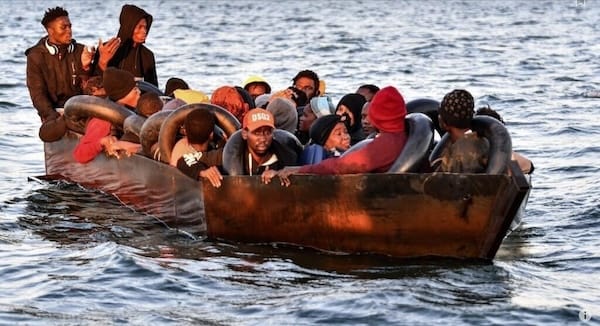
Third, and not surprisingly, an informal economy has arisen around the migration industry. Money can be made for transportation, housing, and movement facilitation. Every boat that leaves requires logistical support. Migrants can pay between 600 and 1,500 euros for a seat, depending on the season.32 That can equate to over forty thousand euros per boat.33 This creates a significant income stream for many Tunisians and has become a critical support of the faltering economy. While justifiable reasons exist to develop and enforce migration policies, there is little incentive. And if they did, the repression of the income earned in the community would create substantial hardship and would have significant political consequences.
Fourth, history has proven that it is impossible to prevent the flow of information into West Africa and other places of origin. Individuals hear about the success stories, and little can dissuade them from making an attempt. Those who cannot fly can self-facilitate their travel through Algeria and into Tunisia by land. Increasing tension in Mali, Niger, Burkina Faso, and Northern Nigeria is pressing more people to take the land route. The long arid border between Algeria and Tunisia is challenging to control, greatly facilitating those crossings.34 When they arrive, they find both Tunisian and African communities willing to assist with their passage. Authorities are now discovering that coastal Africans are bringing their boat-building skills and fabricating their own vessels.35

Finally, life is becoming increasingly difficult for long-tenured sub-Saharans in Tunisia, and there is increasing pressure for existing migrants living in the country to leave. In February 2023, President Saied gave a speech where he blamed much of the failed economy on the black African population.37 This has created a shift in public sentiment, making it even more difficult for SSA migrants to secure housing and work. This is true even for those who have been in the country for decades. Arbitrary detentions and expulsions have become common. Unfortunately, those in the country legally, such as university students, have been caught up in the fray. Recent expulsions have stranded hundreds of migrants in Libyan and Algerian deserts. As noted earlier, most cannot afford the fines to return home, so they simply move forward. The proximity of the Italian islands makes this movement possible.
It is this final point that leads to an obvious question. Why does the government not control the movements? They could stop most of the entries by simply requiring a visa application. Many would return home if they only suspended the penalties for overstaying. The current president ran on a campaign to crack down on corruption. Why not now prosecute those who are guilty? Well, it appears that the current migration situation in Tunisia is proving to be an advantage for Tunisia. Much of what I have described above is not only known... but is the product of an intentional effort.
There is a common theme across the Mediterranean Rim. Any external assistance to the European Union to reduce migration must come at a cost. Face it… migration is profitable. It makes money for the people, the smugglers, and at times, the government. A lot of money! As has been observed with Turkey, Libya, and Morocco, migration can be a huge bargaining chip at the table of international finance and politics. What we are seeing today is simply the manifestation of that principle. In July 2023, the EU and the Tunisian government signed a "memorandum of understanding" that could pump 250 million euros into their struggling economy.38 That deal was later rejected because the president believed more money should be offered.39 He now wants over a billion euros. Until the EU concedes, he is hardly motivated to do anything to slow down current movements. In many respects, he is making things more difficult (for the migrants) as a means of encouraging them to take the risk and get into a boat.
Conclusion:
As we began this discussion of Tunisia, we are reminded that God has had His hand and His people in the region for a very long time. The church in Africa made her home here in the first century, and she still abides. Our time in the country was spent with pastors who can clearly see the needs of the people in their communities. The hope of God and the gospel's message has not changed in these 2,000 years. These churches are doing an incredible job managing an overwhelming task. And their efforts are being well received.
Transition zones are always places of opportunity to minister to those at the height of their receptivity to the gospel. Those who are stranded are open to assistance from any source. Those who have lost hope are eager to hear good news. Those who have been crushed by their circumstances are receptive to attention from those who care. In places like Tunisia, it is difficult for any organization or entity, including the church, to make much of a dent in the situation. But when a Christian neighbor offers love, it is seldom rejected. Little things become big things, and often lead to a gospel conversation. Such is the work of God, and His church in Tunisia.
1 "Libyan Border Guards Rescue Migrants Left in Desert Near Tunisia", Guardian https://www.theguardian.com/world/2023/jul/16/libyan-border-guards-rescue-migrants-left-in-desert-near-tunisia (accessed March 8, 2024).
2 You can find a translation of Cyprian’s letter to Donatus here. Kevin Knight, "Cyprian Epistle 1: To Donatus", New Advent https://www.newadvent.org/fathers/050601.htm (accessed March 8, 2024).
3 Thomas C. Oden, How Africa Shaped the Christian Mind: Rediscovering the African Seedbed of Western Christianity (Downers Grove: IVP Books, 2007), 21.
4 John Swanson, "The Myth of Trans-Saharan Trade During the Roman Era," The International Journal of African Historical Studies 8 (1975): 586-87.
5 Katharina Natter, "Revolution and Political Transition in Tunisia: A Migration Game Changer", Migration Policy Institute https://www.migrationpolicy.org/article/revolution-and-political-transition-tunisia-migration-game-changer (accessed March 8, 2024).
6 "What Is The Arab Spring, And How Did It Start", Aljazeera https://www.aljazeera.com/news/2020/12/17/what-is-the-arab-spring-and-how-did-it-start (accessed March 8, 2024). This young man's immolation was not the first, as others had protested in similar ways before him. In his case, the police had confiscated his business scales, which effectively prohibited him from earning a living.
7 Sharan Grewal, "Ten Years in, Tunisian Democracy Remains a Work in Progress", Brookings https://www.brookings.edu/articles/ten-years-in-tunisian-democracy-remains-a-work-in-progress/ (accessed March 8, 2024).
8 Mohamed Bouabidi, "The Surge in Tunisia Foreign Debt: Causes and Possible Ways Out", National Library of Medicine https://www.ncbi.nlm.nih.gov/pmc/articles/PMC9901378/ (accessed March 8, 2024).
9 Abuse, Corruption, and Accountability: Time to Reassess EU & US Migration Cooperation with Tunisia, (Washington DC: Refugees International, 2023).
10 Elie Abouaoun, Thomas Hill, and Leo Siebert, "Tunisia’s New Constitution Expands Presidential Power. What’s Next for Its Democracy?", United States Institute of Peace https://www.usip.org/publications/2022/07/tunisias-new-constitution-expands-presidential-power-whats-next-its-democracy (accessed March 8, 2024).
11 Natter.
12 Ayman Zohrey, "Migration Without Borders: North Africa as a Reserve of Cheap Labour for Europe", UNESCO https://unesdoc.unesco.org/ark:/48223/pf0000139152 (accessed April 21, 2024).
13 Mercy Corps, "Tunisia, Country of Emigration and Return", Reach https://www.mercycorps.org/sites/default/files/2020-01/Tunisia_country_of_emigration_and_return.pdf (accessed March 8, 2024).
14 "Frontex: European Border and Coast Guard Agency", https://www.frontex.europa.eu/ (accessed March 8, 2024).
15 "Pantelleria Faces Surge in Migrant Arrivals: Over 200 Land in Two Days", TP24 https://www.tp24.it/2024/01/04/english-news/pantelleria-faces-surge-in-migrant-arrivals-over-200-land-in-two-days/198728 (accessed March 8, 2024).
16 Mercy Corps, "Tunisia, Country of Destination and Transit for Sub-Saharan African Migrants", Reach https://www.mercycorps.org/sites/default/files/2020-01/Tunisia_country_of_destination_and_transit_for_sub-saharan_migrants.pdf (accessed March 8, 2024).
17 Lauriane Noelle Vofo Kana, "How Did Tunisia Become a Hostile Land for Sub-Saharan African Migrants? [Interview}", AfricaNews https://www.africanews.com/2023/07/26/how-did-tunisia-become-a-hostile-land-for-sub-saharan-african-migrants-interview/ (accessed March 8, 2024).
18 Viggo Stacey, "Tunisia Pushing to Become International Study Destination", The Pie News https://thepienews.com/news/tunisia-aiming-10-students-overseas-2025/ (accessed March 8, 2024).
19 Statista, "Number of African Students in Tertiary Education in Tunisia from 2014/2015 to 2021/2022" https://www.statista.com/statistics/1241762/number-of-african-students-in-tertiary-education-in-tunisia/ (accessed March 8, 2024). See also Wagdy Sawahel, "Tunisian Agency for International Students to Be Established", University World News https://tinyurl.com/3m7fc8r9. See also TICAD8, "Tunisie: Destination Universitaire Regionale D’excellence", Tokyo International Conference on African Development https://tinyurl.com/5n8f98rv (accessed April 21, 2024).
20 Mercy Corps.
21 Tasnim Abderrahim, Tunisia: Increased Fragility Fuels Migration Surge (Geneva: Global Initiative Against Transnational Organized Crime, 2023).
22 Francesco Mascini, "Door to Tunisia Wide Open for West Africans, and the EU Fails to Act", Clingendael https://www.clingendael.org/publication/door-tunisia-wide-open-west-africans-and-eu-fails-act (accessed March 4, 2024).
23 Abuse, Corruption, and Accountability: Time to Reassess EU & US Migration Cooperation with Tunisia.
24 "Tunisia Intercepts 70,000 Migrants in 2023, Numbers Sharply Rise from Last Year", The Arab Weekly https://thearabweekly.com/tunisia-intercepts-70000-migrants-2023-numbers-sharply-rise-last-year (accessed March 8, 2024).
25 "Tunisia Expels Hundreds of Sub-Saharan African Migrants from Sfax Amid Crackdown", InfoMigrants https://www.infomigrants.net/en/post/51877/tunisia-expels-hundreds-of-subsaharan-african-migrants-from-sfax-amid-crackdown (accessed March 8, 2024).
26 Abderrahim, 3.
27 Pantelleria Faces Surge in Migrant Arrivals: Over 200 Land in Two Days.
28 Abuse, Corruption, and Accountability: Time to Reassess EU & US Migration Cooperation with Tunisia, 6. See also Tunisia Expels Hundreds of Sub-Saharan African Migrants from Sfax Amid Crackdown.
29 "Tunisia: New Crossroads for Sub-Saharan Migration to Europe", Deutsche Welle https://www.dw.com/en/tunisia-new-crossroads-for-sub-saharan-migration-to-europe/video-66792020 (accessed March 8, 2024).
30 "Tunisia", Africa Organized Crime Index https://africa.ocindex.net/country/tunisia (accessed March 8, 2024). See also Africa Organized Crime Index: Increasing Criminality, Growing Vulnerabilities, (ENACT, 2023), 45.
31 ANSA, "Italy Reports 50% Increase in Migrant Landings in 2023", InfoMigrants https://www.infomigrants.net/en/post/54260/italy-reports-50-increase-in-migrant-landings-in-2023 (accessed March 8, 2024).
32 Abderrahim, 18-19.
33 Mascini.
34 Sabina Henneberg, "Global Ambitions and Tunisia’s Crisis Could Spur Algeria to Reghink Its Non-Intervention Policy", The Washington Institute for Near East Policy https://www.washingtoninstitute.org/policy-analysis/global-ambitions-and-tunisias-crisis-could-spur-algeria-rethink-its-non (accessed March 8, 2023).
35 Tunisia Expels Hundreds of Sub-Saharan African Migrants from Sfax Amid Crackdown.
36 "Mahdia: 31 Passers-by of Different African Nationalities Arrested in the Process of Making a Wooden Boat", Radio RM https://tinyurl.com/2nvdrw7k (accessed March 8, 2024).
37 Noelle Vofo Kana.
38 "Tunisia and EU Sign a “Strategic Partnership” on Economy and Migration", EuroNews https://www.euronews.com/2023/07/16/tunisia-and-eu-sign-a-strategic-partnership-on-economy-and-migration (accessed March 8, 2024). See also Noelle Vofo Kana.
39 "Tunisia’s Saied Rejects EU Financial Aid, Casting Doubt on Immigration Deal", France 24 https://www.france24.com/en/africa/20231003-tunisia-s-saied-rejects-eu-financial-aid-casting-doubt-on-an-immigration-deal.
40 Fethi Belais, "Five Migrants Dead, Scores Missing after Boat Capsizes Off Tunisia", RFI https://www.rfi.fr/en/international/20230323-five-migrants-dead-scores-missing-after-boat-capsizes-off-tunisia (accessed April 21, 2024).