36 - Arrive in Europe
2022 No 36
The LORD is my rock and my fortress and my deliverer; my God, my rock, in whom I take refuge, my shield and the horn of my salvation, my stronghold and my refuge; my savior, You save me from violence. I call upon the LORD, who is worthy to be praised, and I am saved from my enemies. For the waves of death encompassed me; the torrents of destruction overwhelmed me; the cords of Sheol surrounded me; the snares of death confronted me. In my distress I called upon the LORD, yes, I cried to my God; and from His temple He heard my voice, and my cry for help came into His ears.
—2 Samuel 22:7
In our previous post, we sought to help you understand the realities facing those immigrants who do not ever find a way across the Mediterranean. It would seem that every space in every available boat is filled with someone. All have paid a price for the journey. By the time these migrants have reached a beach in Libya, they may have already spent one and a half times their annual salary. The boat now requires that they do so a second time. How many people do you know that have three years of annual income in a place where they can hand it over to a complete stranger? Most of these migrants run out of money long before they ever see a boat. In other words, hundreds of thousands of people arrive in North Africa and never get the chance to take the next step to Europe.
And yet, there are those who can secure the resources to continue forward. As we have seen, however, paying for the trip simply creates an opportunity… it is not a guarantee of success. It is only by the grace of God that one survives the voyage. Migrant boats are seldom equipped to handle the open water, seldom have the fuel required for the complete journey, and rarely have a qualified pilot. If everything goes well, a boat will cross several hundred miles of open water, be intercepted by European authorities, and transport the passengers into Italian territory.
In the first seven months of 2022, some 44,000 migrants arrived on the Italian mainland, most passing through the island of Lampedusa.1 By now, the system is relatively standardized. Upon arrival, any who are injured are given medical attention. Each person is fingerprinted, photographed, and ultimately interviewed. This process links them to Italy as their first point of entry into the European Union, and it is highly controversial. Allow me a moment to explain.
The Country of Arrival is Critical
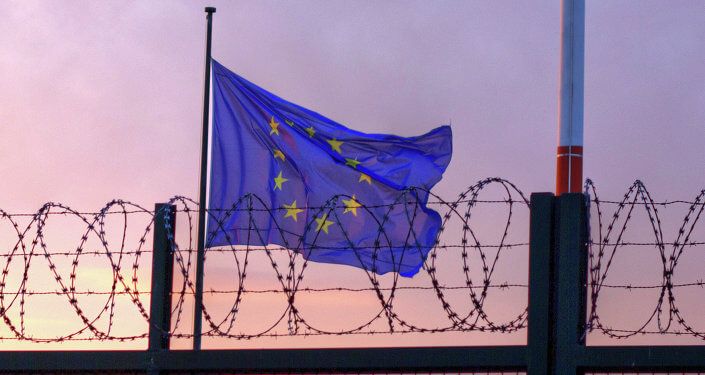
Immigration policy in the EU follows the Dublin Regulation of 2013. In this convention, incoming migrants applying for asylum are required to be registered in their first country of entry.² A file is created with fingerprints and photographs that link the migrant to that country. It then becomes the responsibility of that entry country to process their application and to care for the migrants until a final decision has been made. If asylum is approved, then they can stay legally in that country and apply for relocation to another country. If asylum is denied, they are then deemed illegal migrants, "sans papiers”, and they are ordered to leave the EU within a certain period.3 Of course, the majority never do… and simply fade into the background.
EU countries on the outer edges detest this policy. Why? Because it places the entire burden of processing and caring for asylum seekers on their shoulders. These Mediterranean countries catch the majority of immigrant entries and therefore have become responsible for all of the financial and social costs. Migrants are not allowed to travel to other EU countries until their case is resolved, meaning that the countries of entry must support them for extended periods of time. Those applicants who are denied become homeless, adding to the social challenges of their host countries.4
The migrants also detest this policy. The economic situation in Greece, Italy, and Spain is challenging at best. Most migrants do not want to be processed in these countries. They would much rather be processed in a more affluent country like Germany, Sweden, or the Netherlands. They know that by the time their application has been processed, the government (in their preferred country) will have already paid for a significant portion of their housing, language studies, health care, and children's education. They know that even if they are denied asylum, their chances are much better in one of those countries. I remember speaking to someone who had been displaced by Hurricane Katrina in 2005.5 They had moved to Texas and were not planning to return to New Orleans. When I asked them why their response was simple. “If you have to start from nothing, would you rather do it in Houston, where things are stable, or in New Orleans, which is an economic disaster?”
For the very same reason, migrants who cross from Turkey seek to avoid processing centers in Greece. Their goal is to get as far into the interior of Europe (Germany) as possible before turning themselves in and claiming asylum. Those who cross from Morocco to Spain do the same thing. And of interest, there are times when these border countries look the other way, simply to reduce the number of migrants their governments must support. But that will be the topic of a future post.
Avoiding an Italian processing center along the Central Mediterranean Route is next to impossible. Except for those run by human and drug traffickers, very few boats arrive on the Italian mainland. Everyone else lands on an island, is processed, and is then placed in a detention facility where they will await an interview.
The Asylum Interview is Critical
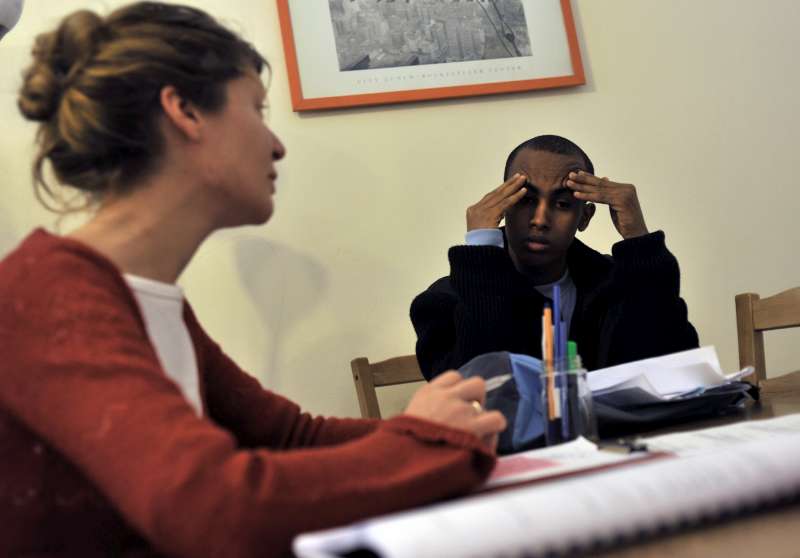
The asylum interview is critical for determining the future of each migrant. Once again, this process is determined by international law and EU policy. A refugee is “someone who is unable or unwilling to return to their country of origin owing to a well-founded fear of being persecuted for reasons of race, religion, nationality, membership of a particular social group, or political opinion.”6 It is a demanding standard for most Africans to meet. They must also demonstrate that they did not pass through a safe country before arrival in Italy.
But, if one is granted asylum status, they are given protection by the EU and guaranteed specific provisions. This is like winning the lottery for an African coming out of poverty. Without diminishing the realities of genuine refugees, we must concede that most asylum seekers are economic migrants. This is particularly true of sub-Saharan migrants. And of those who were genuine refugees when they fled their home country, most passed through several countries that could have offered them security. By the time they get to Europe, only a tiny percentage of those interviewed genuinely fit the category of a refugee entitled to asylum.
Thus it becomes a cat-and-mouse game for both the migrants and the interviewers. The migrants must craft a story that contains all the elements necessary to qualify for asylum. Their story must be convincing and supported by some measure of evidence. Migrants are often coached in what to say by other migrants. Many have paid for a backstory, one that includes false identity papers and references from African countries in conflict. Interviewers, however, are on to the game. They may record the histories so that migrants can be interviewed at a later time to check for consistency. They often employ refugees from similar African countries to evaluate language or the applicant’s knowledge of their claimed place of origin. I have heard hundreds of migrant stories, and they all sound the same… some are identical. There is a reason for this. In the end, very few are granted asylum, and are added to the growing number of illegal immigrants in Europe.
As you might imagine, those interviewed shortly after rescue are in the weakest positions to fabricate a story. But, such is one of the intentions of the process, and it has an economical foundation. The sooner the government can discern if a migrant is fabricating their story, the sooner they can bump them off of support. Once the interview is completed, the migrants are eventually transferred to the Italian mainland. Generally, their first landing zone is in Sicily.
A Whole New World of Difficulty
In the past, during the height of the European Migrant Crisis, Italy maintained several systems to care for newly arriving migrants. The asylum process could take up to six months, and the government offered support until a decision was rendered. This support included a stipend and often a place to live.7 As all local shelters became filled, the government began to house migrants in various places around the country, often utilizing empty hotels. It was critical for the migrants to maintain a low profile, avoid negative encounters with the police, and follow the rules while waiting. Otherwise, one bad note from anyone could result in a denial. While they had the freedom to travel in the country, they could not leave Italy for the same reason.
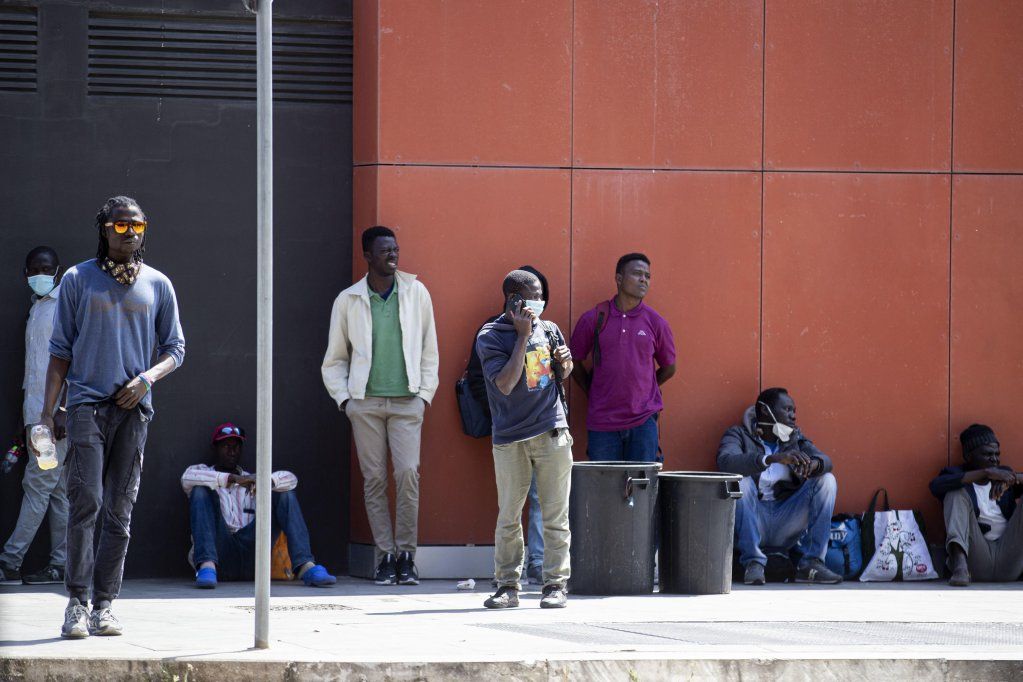
Today, however, things are different.8 Most migrants are released upon arrival in Italy without any support and are told to await the decision on their application. The rules still apply, but the migrants are seldom monitored. They could perhaps make their way to other countries, but since they are registered in Italy, it would have little benefit. Most are forced to live either on the streets, in abandoned buildings, or under abusive rental conditions. They beg for food and work in the informal labor markets. Many fall prey to human traffickers and are moved into mafia-controlled agricultural areas.
We have spoken with many of these immigrants, and they tell us that in hindsight, they would have done things very differently. Their vision of Europe was not the reality that they found. The cost of living was high, and the availability of a means to earn income was very low. Many told us that their life was actually better in Africa than in Europe. One would think that the message would be sent back and that the number of migrants would diminish. To some degree, that is indeed happening. Many, however, find themselves in the same situation as those stuck in North Africa. Shame is a powerful reality for Africans. If their family or community knew that they had arrived in Europe, they would expect a high return on their investment. Unable to offer such, most migrants avoid contact with home, leaving most to believe that they had died along the way.
The Exceptions
There are indeed exceptions. If you remember, Mamadou was rescued and, by a stroke of luck, taken to the island of Malta. Frontex boats typically take migrants to Lampedusa. But because of the injuries of some of the migrants, they were taken to the closest port of Valletta. Normally Malta refuses to accept vessels with migrants, but they agreed to do so only if Italy would accept those who were not injured. Thus when Mamadou arrived, he was processed like the rest and quickly put on a plane to Rome.9 Only for him, he held a special status that would likely work in his favor. Malta would process Mamadou's asylum application but would probably not pay the expenses of further interviews. As such, the denial of his asylum request could quickly become complicated for the authorities. And since he had claimed that he had left Northern Mali (a country in conflict) and passed through Libya (another country in conflict), he met most of the conditions for asylum.
More to his favor, when he arrived in Rome, his uncle was there to greet him. Thus he had a place to stay and people there to help him. Such was important because Italy would not support him since he was not in their system. Malta would not support him because he was not on their island. The benefit, however, was that if he were granted asylum, he could travel freely and, more importantly, work anywhere he could find a job in Europe. It would appear that he will have a future.
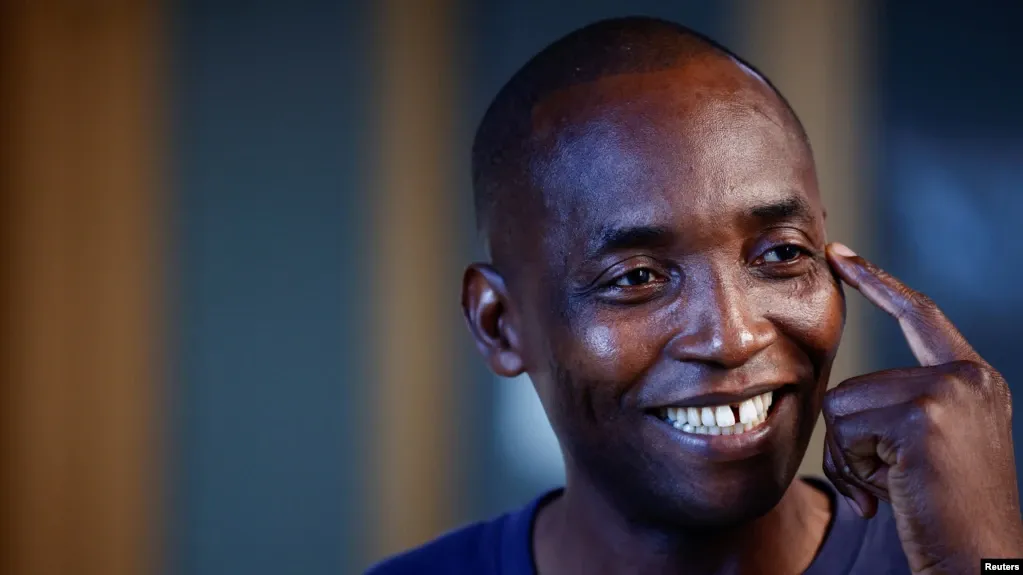
Perhaps the most notable exception occurred just a few weeks ago. Aboubakar Soumahoro had migrated from Ivory Coast in 1999, at the age of 19. He worked hard, gained his Italian citizenship, and went from shining shoes to winning a seat in Italy's lower house of Parliament.10 While uncommon, stories like this can fly across social media in Europe, North Africa and the countries and villages further south.
Conclusion
Like Aboubakar, the story of Mamadou will likely become a success story, and it would undoubtedly reverberate back in Bamako. And although there may be a thousand others who fail, his story, like Abubakar, will also be repeated and will motivate others to migrate. As we have said before, it only takes one to win the lottery for millions of those who just lost to buy another ticket.
Acts 17:26-27 tells us that "He made from one man every nation of mankind to live on all the face of the earth, having determined their appointed times and the boundaries of their habitation, that they would seek God, if perhaps they might grope for Him and find Him, though He is not far from each one of us."
Paul reminds us that God is with us along our migratory pathways. His goal is that we survive long enough to find Him. Many will perish. But many will find life and, in the process, see the One who offers abundant, eternal life. The church should carry an incredible sense of burden for the tens of thousands who die and hundreds of thousands who are stranded every year. But she should also be able to see those outside her doorsteps, those who made it within such proximity to the house, and people of God. In their distress, they have called unto the Lord. He has heard their call, and He gave them… you!
1Frédéric Bobin, "Italy Again Becomes Main Entry Point for Migrants Arriving in Europe", Le Monde https://www.lemonde.fr/en/international/article/2022/08/29/italy-again-becomes-main-entry-point-for-migrants-arriving-in-europe_5995138_4.html (accessed October 20, 2022).
2 https://m2m3.org/7-european-migration-we-were-refugees/
3 See MacGregor, "EU: When an Asylum Claim Is “Inadmissible”, InfoMigrants https://www.infomigrants.net/en/post/39545/eu-when-an-asylum-claim-is-inadmissible (accessed October 20, 2022). See also Crispian Balmer, "Migrants Face Tougher Times in Meloni’s Italy", Reuters https://www.reuters.com/world/europe/migrants-face-tougher-times-melonis-italy-2022-10-07/ (accessed October 20, 2022).
4 Ashley Armstrong, "You Shall Not Pass! How the Dublin System Fueled Fortress Europe," Chicago Journal of International Law 20, no. 13 (2020): 357. See also Giovanna Coi and Arnau Guardia, "The EU’s Real Refugee Policy: Division and Delay", Politico https://www.politico.eu/article/ukraine-war-refugees-europe-real-policy-brussels-migration-division-delay/ (accessed October 20, 2022).
5 Hurricane Katrina, ed. Wikipedia contributors, in the Wikipedia, The Free Encyclopedia, https://en.wikipedia.org/w/index.php?title=Hurricane_Katrina&oldid=1117067349 (accessed October 20, 2022).
6 UNHCR, "What Is a Refugee?", United Nations High Commissioner for Refugees https://www.unhcr.org/en-us/what-is-a-refugee.html (accessed October 20, 2022).
7 Maryellen Fullerton, "Asylum Crisis Italian Style: The Dublin Regulation Collides with European Human Rights Law," Harvard Human Rights Journal 29 (2013): 71.
8 Caterina Bove and Maria Romano, Asylum Information Database Country Report: Italy (European Council on Refugees and Exiles, 2021), 128. See also Marlene Panara, "Italy’s Refugee Policy Remains “in Trial and Error” after Almost a Decade", InfoMigrants https://www.infomigrants.net/en/post/37522/italys-refugee-policy-remains-in-trial-and-error-after-almost-a-decade (accessed October 20, 2022).
9 Benjamin Bathke, "Mediterranean: Open Arms Rescues 402 Migrants, Sea-Watch Disembarks 428", InfoMigrants https://www.infomigrants.net/en/post/43411/mediterranean-open-arms-rescues-402-migrants-seawatch-disembarks-428 (accessed September 24, 2022).
10Marion MacGregor, "Aboubakar Soumahoro: From Shining Shoes to a Seat in Italy's Parliament", InfoMigrants https://www.infomigrants.net/en/post/43960/aboubakar-soumahoro-from-shining-shoes-to-a-seat-in-italys-parliament (accessed October 20, 2022).