68 - Historical Context of Arab / Persian Displacements
2023 No 68
“Cursed is he who distorts the justice due an alien, orphan, and widow.” And all the people shall say, “Amen.”
—Deuteronomy 27:19
The beginning of wisdom is… acquire wisdom; and with all your acquiring, get understanding.
—Proverbs 4:7
As we dive deeper into the Eastern Mediterranean Route (EMR), we again emphasize a crucial point... this route did not evolve around sub-Saharan migration patterns. This route grew out of a context of war and displacement. The contemporary EMR results from the conflict that arose from the Arab Spring (2010) and the subsequent Syrian civil war (2011).² That one war displaced over 12 million people. But it didn’t stop there. The region continues to be rocked by conflict, creating refugee movements from Afghanistan, Pakistan, Iran, and now particularly Palestine… which in turn fall into the larger pattern of global displacements. The numbers are staggering. The United Nations seeks to track worldwide movements, citing that by the end of 2022, over 108 million people have been forcibly displaced, with over 35 million becoming refugees.3
This is not to suggest that involuntary displacement does not occur in sub-Saharan Africa, nor that African refugees do not follow the Eastern Mediterranean Route. In 2022, the Internal Displacement Monitoring Center reported over 9 million Africans were displaced due to conflict.4 Nearly five million are from the East and the Horn of Africa (Sudan & Somalia), while 1.5 million are from West and Central Africa. (DRC and CAR) It is well-accepted that these numbers are most certainly underreported. But it is also known that most of these IDPs will either remain within their home country or will travel no further than their neighboring country in their search for security. Very few will seek asylum away from the African continent.
Our post aims to understand how these refugee movements through Turkey have created pathways for sub-Saharan Africans. As noted above, some truly are refugees in every way. Others, however, will seek to use the system to their advantage, crafting stories in an effort to satisfy an asylum application. As followers of Christ, our role among refugees is not to sort these things out… that is the role of others. Our part is simply to love and serve. Why? Because justice is in the hands of our Lord, and if not careful, we could distort that justice by attempting to do things that are not our responsibility... like judging people… or their motives. We are called to be people of compassion, setting aside politics and loving our neighbors.
This does not suggest that the church is not tasked to be a change agent in her culture. It is simply to say that the starting place, as noted in our last post, is understanding. (Proverbs 4:7) As a pastor writing to pastors, I encourage you to gain understanding so you can better love and serve. Such will allow you to minister to those in your community and to share the hope of Christ with all.
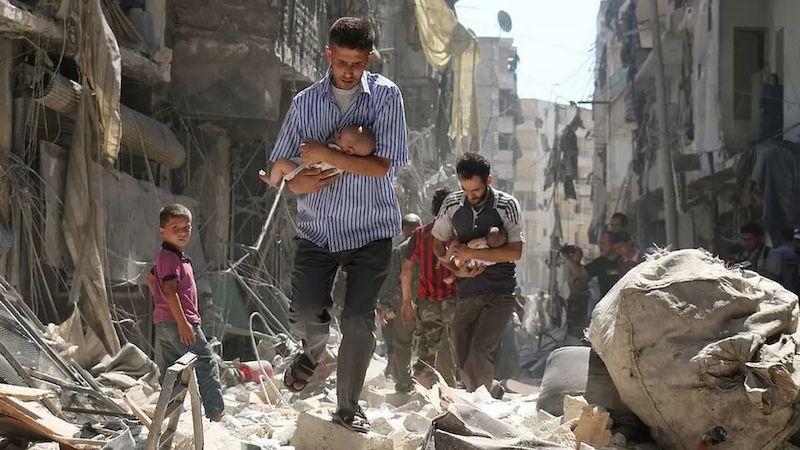
Crisis in Syria
As the Arab Spring spread around the Mediterranean, protests were held in Syria in March 2011. The movement began with demands for democratic reforms, which then led to wide-scale protests and, ultimately, an effort to unseat the regime of Bashar al-Assad. In his attempt to crush the dissent, thousands of civilians were killed. Militias arose, supported by defections from the Syrian army, and the entire situation evolved into an armed rebellion. The degree of violence that ensued against the public was unparalleled and led the United Nations to condemn Assad's government and demand a cessation of all military operations.
That obviously did not happen. As the Syrian government pressed for control, other foreign countries began to provide support either for Assad or for the rebel factions. This only served to expand and extend the conflict. To date, the war has resulted in over a half million deaths. Of the 12 million displaced, 3.5 million reside in Turkey. Because the North of Syria has been so badly ravaged by conflict, and because the border with Turkey is so porous, it has not been difficult for people to find security in the North.
We have observed that one of the fundamental principles of migration is that financial resource becomes critical in how people migrate and how far they go.6. The very poor do not go very far. When possible, many will cross the border to join relatives or ethnic groups who would provide security. There are over a dozen refugee camps in Turkey for Syrians... but very few make use of these facilities.7 Most prefer to live in improvised shelters or rent rooms in the cities. For those living in southeast Turkey or northern Syria, their situation only became worse with the devastating earthquake in February 2023.8 That one event killed over 50,000 people and damaged four million buildings on both sides of the border.
Those in higher economic classes can do better and can travel further. When money is available, people will always be available to facilitate these movements. Thus, it should not be a surprise that wealthy Syrians would seek to travel to the larger cities of Turkey or Europe.9 Many would return to Syria if the conflict was resolved and the government was to change. Why? Because Syria is their home. But as that prospect becomes less likely, they are looking to find places for longer-term residences where they can relocate their entire families.10 For many, that would be in Europe.11
The response of the international Christian community has been nothing short of heroic. Local churches have embraced the refugees in their communities. Faith-based organizations (FBOs) have brought millions of dollars to the table, offering humanitarian aid and hope where they have been allowed access. Refugee networks have arisen across the West to train, equip, and aid workers.12 Above all, the love of Christ through His Spirit has been evident across the region. This author stands with profound respect and admiration for "our" brothers and sisters in Christ for how they have engaged "their" brothers and sisters along this modern refugee highway.
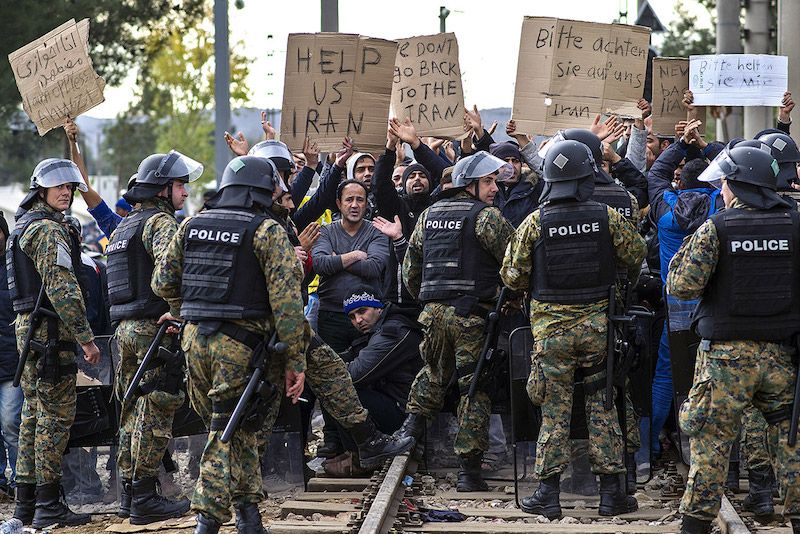
Conflict in Iran and Iraq
Turkey shares its border with eight other countries. Before the Syrian conflict, Turkey had served as a place of refuge and a transit country for those fleeing the Islamic Revolution in Iran, the Iran-Iraq war, and the subsequent Gulf War in 1991. In those days, some 1.5 million Iranians sought legal refuge in Turkey. Most of these refugees would ultimately be resettled in the US and Europe.14 In the years since, various international economic sanctions have led to a near collapse of the Iranian economy, creating extreme hardship across the country. Political pressures, along with religious persecutions, have pushed many of her citizens to flee. In 2021, it was estimated that over four million Iranians lived outside the country.15 But, the press to emigrate goes beyond the economics. A recent survey indicated that nearly half of the young people in Iran would leave if given the opportunity. The reason… growing religious and political restrictions.
The smuggling networks established during those early years and their role in contemporary migration patterns are significant to our conversation. Today, those seeking to leave these two countries (Iran/Iraq) can easily find "national" connections to facilitate movement. Some 67,000 Iranians live full-time in Turkey, a third of which are asylum seekers.16 Another two million will visit Turkey as tourists.17 Similarly, as many as 700,000 Iraqis make Turkey home, with an average of 3,500 tourists arriving daily.18 Those without resources can seek to cross a land border by bus or on foot. Those with money can simply fly to Istanbul. Turkish Air has 125 flights from Iran and 154 from Iraq each week. Many of these tickets cost less than 90 Euros.19 Once in Turkey, many believe they can take another step and soon be in Europe.
Pakistan and Afghanistan
With so much instability in these three bordering countries, Syria, Iraq, and Iran, it is no wonder that smuggling networks have found the freedom to operate. Today, they are facilitating movements from further East. Pakistan, a country of 231 million people, has some 6.3 million citizens living outside her borders. Nearly a million of them are residing in Europe.20 Like many in the region, this country has endured a crippling economic crisis, with inflation currently running at nearly 30%. Much of the population is unemployed, and there is little hope of finding work at home.21 It is unknown how many seek undocumented transit into Turkey, but an estimated three to six thousand Pakistani nationals are said to be detained in Turkey at any time.22 Unofficial reports place the number of arrivals at nearly forty thousand per year.23
In the same way, conflict in Afghanistan has produced multiple seasons of migration since the 1970s. Three out of four Afghans have experienced some measure of displacement in their lifetimes.24 These factors include the invasion of the Soviet Union (1979-1989), the Civil War (1992-1996), Taliban Rule (1996-2001), and the Western-led war in Afghanistan (2001-2012). Now, there is a second Taliban era of persecution that began with the withdrawal of US forces in August of 2021. There is a strong press for relief, and today, there are nearly 2.7 million refugees. Most are found in Pakistan and Iran.25 From there, many will attempt to cross Turkey and gain European access. Most will do so illegally.26 It is unknown how many Afghans are in transit. There could easily be hundreds of thousands flying under the radar. Turkey reports that in 2022, they deported some 70,000 Afghanis.27 (Those are the ones they caught.) European reception centers are accepting between 500 and 2,000 migrants arriving each day.28 That would indicate over half a million are making it across the EMR.
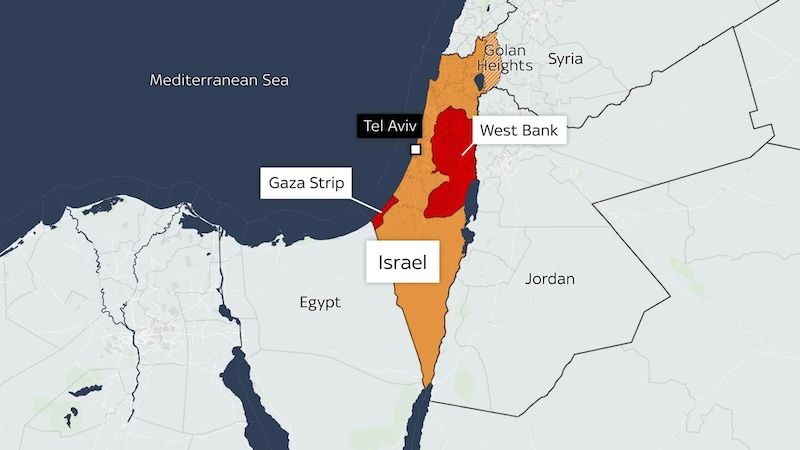
War in Israel
The world is still reeling and seeking to understand the events of the past few weeks in Israel. Thousands have lost their lives due to the conflict in the region. At the time of this writing, over a million Palestinians have been forcibly displaced by the conflict. Emotions are running very high at the moment, and rightfully so. But we must urge caution. Hundreds of thousands of people desire nothing more than to live in peace... and those days may be difficult to find.
But this has been building for generations. One can find many Palestinian youths along the Eastern Mediterranean Route. In most circles, to be a Palestinian is to be a refugee.30 Of the fourteen million Palestinians worldwide, 5.6 million were considered refugees by the United Nations in 2019. They are scattered across the West Bank, Jordan, Syria, Libya, Saudi Arabia, Iraq, and several other countries. They constitute the world's largest stateless population. The median age is just under 20.31 There is a sense of hopelessness among these young adults, who are often caught up in the additional conflicts of their host countries. Many will take the chance when the opportunity arises to seek a better life. The route may be dangerous, and the price may be high, but the possibilities outweigh the perceived risks involved in migration. And once again, someone is always available to make that pathway possible.
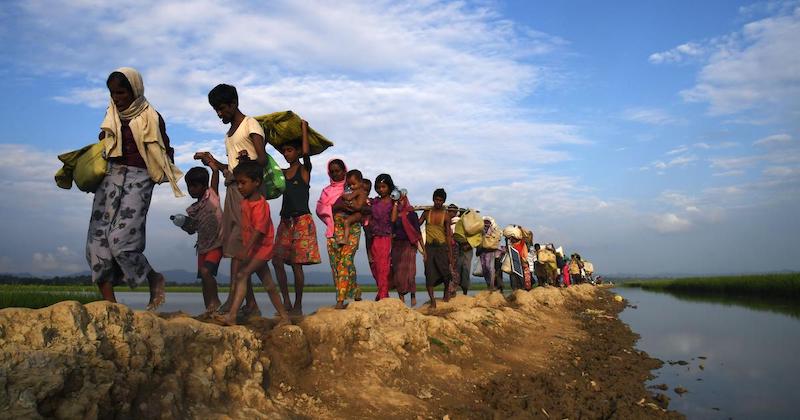
Other Sources of Migrants
The goal of this post is not to seek to explain the migration among Arab or Persian peoples. Such is a topic that could be as inclusive as our study of sub-Saharan migration. (And we are on post number 68!) The goal is to help the reader understand that well-established migration routes existed long before Africans entered the picture. These routes were magnified by the Arab Spring and have served to create pathways for many who were more than willing to pay the cost of passage. Today they are open to any who has cash.
Along the route, for example, one can easily find migrants from Bangladesh. Over a million Rohingya refugees have fled Myanmar (Burma) in the past ten years. This has added to existing Bangladeshi stressors, including rural-to-urban migration, inflation, unemployment, etc. These are primarily economic migrants seeking to better one's status and earn an income for family support.33 In 2022, the United Nations recorded over 37,000 documented refugees from Bangladesh.34 Considering the poverty found in India, the goal of many is to gain access to Europe.
How This Impacts African Migration
In so many ways, it is Middle Eastern refugees and economic migrants who are driving the movements from Turkey to Greece and beyond. Were it not for them, the Eastern Mediterranean Route would be minuscule. In the year of the Great European Migrant Crisis, 2015, over a million people entered Europe. Eighty-four percent of those migrants were refugees fleeing war zones.35 Over half were coming from Syria, Afghanistan, and Iraq. At that time, Turkey was overwhelmed with 2.5 million refugees, costing over $8 billion annually.36 Today, the number of refugees in Turkey is 3.6 million and growing.37 From the Turkish perspective, all these people are unwelcomed, transient visitors to their country. In the public eye, they must either be sent back to their countries of origin or moved forward to whoever will grant them asylum. In the meantime, they are placing incredible strain on almost every area of Turkish life.
It is in this context that smuggling and human trafficking can thrive. The word is out: if you can get to Turkey, someone can get you to Europe. Strong criminal networks exist across the Middle East to facilitate migration, and the amount of money generated has historically been significant. Europe is hoping that those days may be coming to an end. In 2015, nearly 900,000 people transited to Europe using the EMR.38 Significant efforts by the EU, including hefty payouts to the Turkish government, reduced that number to only 20,500 in 2021.39 On the surface, one may think that this is progress.
Underneath the surface, however, this has simply played into the hands of smuggling networks and organized crime. Turkey has learned how to profit politically and financially from the crisis. Smugglers can now focus more on recruiting, drawing from wealthier clients, and expanding their networks abroad. Routes are changing, as departures from Turkey now direct migrants through the Balkans. Nearly two hundred thousand migrants are believed to have traversed that route in 2022, ten times more than reported the year before.40 The routes are still open, and smugglers are now extending further to find paying clients. Such may explain why there are more Asian migrants, i.e., Bangladesh, but it also helps explain why more Africans choose this pathway.41
Conclusion
This post intends to help place sub-Saharan migrants into the larger picture of Middle-Eastern refugee movements. In the following posts, we will see the impact of the Eastern Mediterranean Route on Africa. To gain that understanding, it will become necessary to explore not just the Arab and Persian contexts but also those of Turkey, Greece, and even Cyprus. Remember, our objective in this series is to gain a high view of migration… that is, to see it from the proverbial 40,000 feet. At that level, the scale and scope of suffering become obvious.
So many lives have been lost, so many homes destroyed, and so many dreams dashed across this region. Families have been torn apart as men and boys were conscripted into military service, many losing their lives or becoming permanently disabled. There are inevitably widows and orphans seeking refuge. It is also understandable why parents send their youth toward Europe, hoping to craft a future for themselves. Justice demands that they be supported, accepted, and loved.
I would encourage you to watch a film called "The Swimmers ."It is the story of two young Syrian refugees. The trailer is here.43 You can find the full film on Netflix.
There is much that the church can do as God's hands and feet across this region. Human decency compels us to care for the needs of refugees. Christian love offers comfort, hope, and life in our Savior. The barriers are seldom financial but rather in wisdom to know how best to serve. As we learned last week, wisdom requires wisdom, and that comes from understanding. Ask the Father this week to grant us both.
1 ReliefWeb, "Yarmouk Camp Not Beseiged, Un Rules", United Nations Office for the Coordination of Humanitarian Affairs (OCHA) https://reliefweb.int/report/syrian-arab-republic/yarmouk-camp-not-besieged-un-rules (accessed July 8, 2023).
2 Mitch Hamilton, "The Central Route: The Historical Context of the Maghreb", M2M3 https://m2m3.org/27-the-central-route-the-historical-context-of-the-maghreb/27 – (accessed September 24, 2022).
3 Refugees are people who have fled war, violence, conflict, or persecution and have crossed an international border to find safety in another country. See UNHCR, "What Is a Refugee?", United Nations High Commissioner for Refugees https://www.unhcr.org/what-refugee (accessed July 8, 2023). See also UNHCR, Global Trends: Forced Displacement in 2022 (Copenhagen, 2023), 2.
4 IDMC, 2023 Global Report on Internal Displacement (Geneva: Internal Displacement Monitoring Center, 2023), 17.
5 Photo courtesy of BBC, "Syria Conflict: All Parties Committed War Crimes in Aleppo - UN", British Broadcasting Company https://www.bbc.com/news/world-middle-east-39126653 (accessed July 8, 2023).
6 Mitch Hamilton, "Principle Four: Money Directs the Way", M2M3 https://m2m3.org/21-principle-four-money-directs-the-way/ (accessed Jan 24, 2023).
7 David Shchiefer and others, "Sampling Refugee Groups: The Example of Syrians in Turkey," International Migration 2023, no. 1 (2023). See also 2023, "Syrians Under Temporary Protection by Years", Directorate of Migration Management https://www.goc.gov.tr/gecici-koruma5638 (accessed July 8, 2023).
8 CDP, "2023 Turkey-Syria Earthquake", Center for Disaster Philanthropy https://disasterphilanthropy.org/disasters/2023-turkey-syria-earthquake/ (accessed July 8, 2023).
9 Sasha Al-Alou, "Syrians in Turkey: Groupings, Fractures and a Floundering Civil Society", Arab Reform Initiative https://www.arab-reform.net/publication/syrians-in-turkey-groupings-fractures-and-a-floundering-civil-society/ (accessed July 8, 2023).
10 Philip Loft, Syria’s Civil War in 2023: Assad Back in the Arab League (London: House of Commons Library, 2023).
11 Al-Alou.
12 See International Association for Refugees (https://www.iafr.org),
Refugee Highway Partnership (https://rhpeurope.net),
Send Relief (https://www.sendrelief.org),
Samaritans Purse (https://www.samaritanspurse.org),
and Way Maker International (https://waymakerinternational.org)
13 Photo courtesy of Warren Nelson, "Balkans Close Door to Iranian Refugees", Iran Times https://iran-times.com/balkans-close-door-to-iranian-refugees/ (accessed July 8, 2023). See also https://iran-times.com/wp-content/uploads/2015/12/migrants-macedonia.jpg

14 ERN, "Iranian & Iraqi Refugees in Turkey", European Resettlement Network https://tinyurl.com/39yerbmw (accessed July 8, 2023).
15 "Distribution Statistics of Iranians Living Abroad", House of the Supreme Council for Iranians Living Abroad https://iranian.mfa.ir/files/mfairanian/Amar.pdf (accessed July 8, 2023).
16 Iranwire, "From Over the Border: A Turkish Iran Expert on How Ankara Sees Tehran, Russia and the JCPOA", Iranwire https://tinyurl.com/4ders3c3 (accessed July 8, 2023).
17 "Over 2 Million Iranians May Visit Turkey This Year: Associaton", Hurriyet Daily News https://tinyurl.com/j5bnf5dy (accessed July 8, 2023).
18 "Iraqis in Turkey: Their Living, Residency, and Investments", Imtilak Real Estate https://www.imtilak.net/en/turkey/articles/iraqis-in-turkey (July 8, 2023).
19 See Skyscanner, "Flying from Turkey to Iran: Fast Facts" https://www.skyscanner.net/routes/tr/ir/turkiye-turkey-to-iran.html (accessed July 8, 2023). See also Skyscanner, "Flying from Turkey to Iraq: Fast Facts" https://www.skyscanner.net/routes/iq/tr/iraq-to-turkiye-turkey.html (accessed July 8, 2023).
20 "Country Profile: Pakistan", Dicastery for Promoting Integral Human Development https://tinyurl.com/3w2w9bhs (accessed July 8, 2023). See also IOM, "Pakistani Nationals in Europe 2022", International Organization for Refugees: Pakistan https://tinyurl.com/4cwvfc9m (accessed July 7, 2023).
21 S. Khan, "Why Are So Many Pakistanis Trying to Reach the EU Illegally?", Deutsche Welle https://www.infomigrants.net/en/post/47167/why-are-so-many-pakistanis-trying-to-reach-the-eu-illegally.
22 di Valerio Fabbri, "Illegal Pakistani Migrants Sour Relationship with Turkey", Geopoliltica.info https://www.geopolitica.info/illegal-pakistani-migrants-sour-relationship-turkey/ (accessed July 8, 2023).
23 Al-Alou; Kanika Gupta, "Pakistani Youtubers Are Exposing the Dangers of Illegal Migration to Europe", Rest of World https://restofworld.org/2023/pakistani-youtubers-expose-dangers-illegal-migration-dunki/ (accessed July 8, 2023).
24 Susanne Schmeidt, “Going, Going... Once Again Gone?” the Human Capital Outflow from Afghanistan Post 2014 Elections (Barcelona: Barcelona Center For International Affairs, 2014).
25 Sema Buz and others, Destinations Unknown: Afghans on the Move in Turkey (Mixed Migration Center, 2020).
26 ReliefWeb, "Initial Assessment of the Current Situation of Afghan Refugees in Turkey", ReliefWeb https://reliefweb.int/report/turkiye/initial-assessment-current-situation-afghan-refugees-turkey (accessed July 8, 2023). See also Buz and others.
27 Stefanie Glinski, "New Turks” Are All in for Erdogan", Foreign Policy https://foreignpolicy.com/2023/05/10/turkey-election-erdogan-kilicdaroglu-immigration/.
28 Liz Cookman, "The Afghan Refugee Crisis Brewing On Turkey’s Eastern Border", The New Humanitarian https://www.thenewhumanitarian.org/news-feature/2021/8/4/the-afghan-refugee-crisis-brewing-on-turkeys-eastern-border (accessed July 8, 2022).
29"Israel-Hamas War: The Latest Conflict in Maps", Sky News https://news.sky.com/story/israel-hamas-war-the-latest-conflict-in-maps-12980904 (accessed October 13, 2023).
30 Ana Gil, Nathan Citino, Kelsey Norman, Generations of Palestinian Refugees Face Protracted Displacement and Dispossession (Washington DC: Migration Policy Institute, 2023).
31 "Population of the State of Palestine (2023)", World O Meter https://www.aljazeera.com/news/2023/10/11/what-is-gaza-strip-the-besieged-palestinian-enclave-under-israeli-assault (accessed October 13, 2023).
32 Photo courtesy of Andrew Nachemson, "Justice in the Balance as UN Considers Recognition Question", Frontier https://www.frontiermyanmar.net/en/justice-in-the-balance-as-un-considers-recognition-question/ (accessed July 8, 2023). See also https://s01.sgp1.cdn.digitaloceanspaces.com/article/99902-kstpuiqtlq-1536249528.jpg

33 "Country Profile: Bangledesh", Dicastery for Promoting Integral Human Development https://migrants-refugees.va/country-profile/bangladesh/ (accessed July 8, 2023).
34 "Countries of Origin and Destination of Refugees", WorldData.info https://www.worlddata.info/refugees-by-country.php (accessed July 8, 2023).
35 Nathan Citino, Ana Gil, and Kelsey Norman, "Generations of Palestinian Refugees Face Protracted Displacement and Dispossesion", Migration Policy Institute https://www.migrationpolicy.org/article/palestinian-refugees-dispossession (accessed July 8, 2023).
36 Ola Awad, "Brief Report on the Population of Palestine at the End of 2021", Arab Center https://tinyurl.com/2b3f7jsk (accessed July 8, 2023).
37 Jonathan Clayton and Herewarde Holland, "Over One Million Sea Arrivals Reach Europe in 2015", United High Commissioner for Refugees https://www.unhcr.org/news/stories/over-one-million-sea-arrivals-reach-europe-2015 (accessed July 8, 2023).
38 Kemal Kirisci, "As EU-Turkey Migration Agreement Reaches the Five-Year Mark, Add a Job Creation Element", Brookings https://tinyurl.com/yv3777h3 (accessed July 8, 2023).
39 UNHCR, 2.
40 Viktor Marsai, Gatekeeper Countries - Key to Stopping Illegal Immigration (Center for Immigration Studies, 2023).
41 Ibid., 57. See also FRONTEX, "Migratory Routes: Eastern Mediterranean Route" https://frontex.europa.eu/what-we-do/monitoring-and-risk-analysis/migratory-routes/eastern-mediterranean-route/ (accessed July 8, 2023).
42 IOM, Displacement Tracking Matrix: Migration Trends in the Western Balkans in 2022 (Geneva, 2022), 7.
43 Arezo Malakooti; Chiara Fall, Migration Trends across the Mediterranean: Piecing Together the Shifting Dynamics (Global Initiative Against Transnational Organized Crime (GI-TOC), 2020), 21. See also IOM, Displacement Tracking Matrix Europe (Geneva: Global Data Institute, 2023), 8.