44 - Where Do These People Come From? Routes of Resource
2023 No 44
Now there were Jews living in Jerusalem, devout men from every nation under heaven. And when this sound occurred, the crowd came together, and were bewildered because each one of them was hearing them speak in his own language. They were amazed and astonished, saying, “Why, are not all these who are speaking Galileans? And how is it that we each hear them in our own language to which we were born? Parthians and Medes and Elamites, and residents of Mesopotamia, Judea and Cappadocia, Pontus and Asia, Phrygia and Pamphylia, Egypt and the districts of Libya around Cyrene, and visitors from Rome, both Jews and proselytes, Cretans and Arabs—we hear them in our own tongues speaking of the mighty deeds of God.” —Acts 2:5-11
There were Jews living in Jerusalem! Is anyone surprised? Of course, there were Jews living in Jerusalem! But these Jews were different. They were global travelers who had come to reside in this holy city. It was not their home, but it was certainly their destination! Many were Jews by birth, while others had been converted to Judaism in their places of origin... or transition. And for reasons known only to our Lord, they all found themselves living in Jerusalem at a very unique time in history.
The text makes it clear that they were migrants! Each had been on a journey of movement, and along the way, God had brought them to some measure of faith. And to be clear, they were not there by accident. It was not by chance that they were in a strategic place to witness the arrival of the Holy Spirit… and to hear the proclamation of the gospel. It was an incredible movement of God.
This would not be the only time God would move in such a way. Paul witnessed a similar movement of God in Athens… only this time, it was among the gentiles (Acts 17:26-27). Those in the forum at Mars Hill may not have been of the Jewish diaspora, but they were, without a doubt, mobile. The surrounding temples certainly imply that they were religious. Like their Jewish counterparts, they were in a strategic place to hear the gospel.
Some two thousand years later, we continue to witness our Lord moving people, preparing people, and gathering people to centralized locations where they can experience the Holy Spirit and hear the gospel. And as in the New Testament, wherever these gatherings may occur, one can also find the church and her people in place, ready to share the good news. Nowhere is it more evident than in Morocco.
From Where Do They Come?
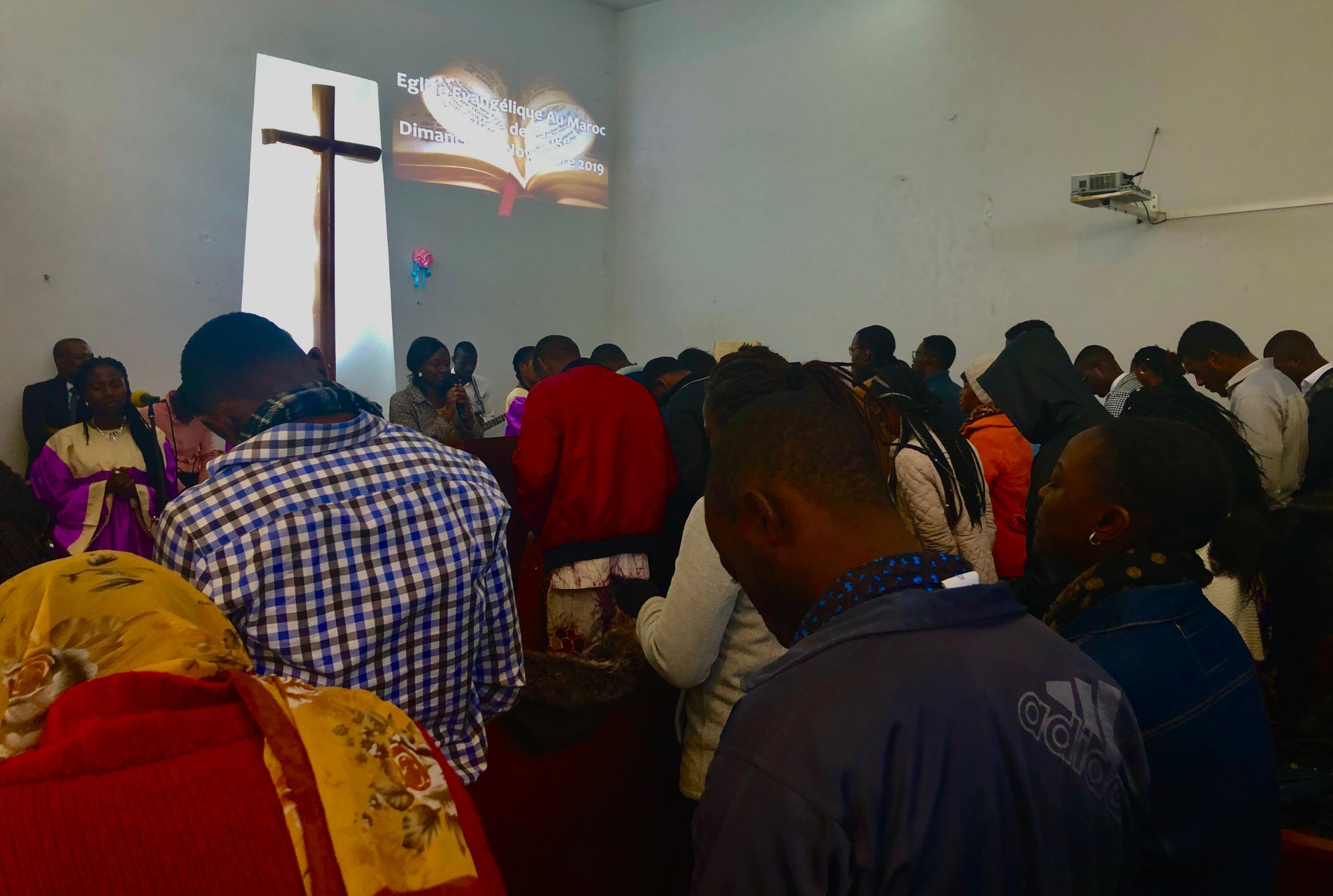
When my wife and I first arrived in Morocco, we did what most believers would do. We found a church to attend. Some are surprised that the church is not illegal in Morocco. While there may be cultural reasons why her people may not openly attend church, there is no prohibition for "foreigners" to worship Christ openly. Our first experience was amazing. There were people from around the world in attendance that morning. We heard various languages, witnessed multiple worship traditions, and clearly heard the gospel preached. We felt at home.
A natural and quite logical question arose in our mind. From where do these people come? The majority were sub-Saharan, and most were university students. We would soon discover no less than 16 vibrant evangelical churches gathered across Morocco each Sunday. They were in every major city, and each would have 50-150 people in attendance. Many were from local universities.
One should not be surprised to find students here. Morocco has a very well-developed system of graduate education. She recognizes that her future relationship with sub-Saharan countries can be significantly enhanced by recruiting their brightest students to pursue degrees in medicine, science, and economics. I have met many of them; most were at the top of their graduating class in high school. As such, they received invitations to attend one of the many universities in Morocco.
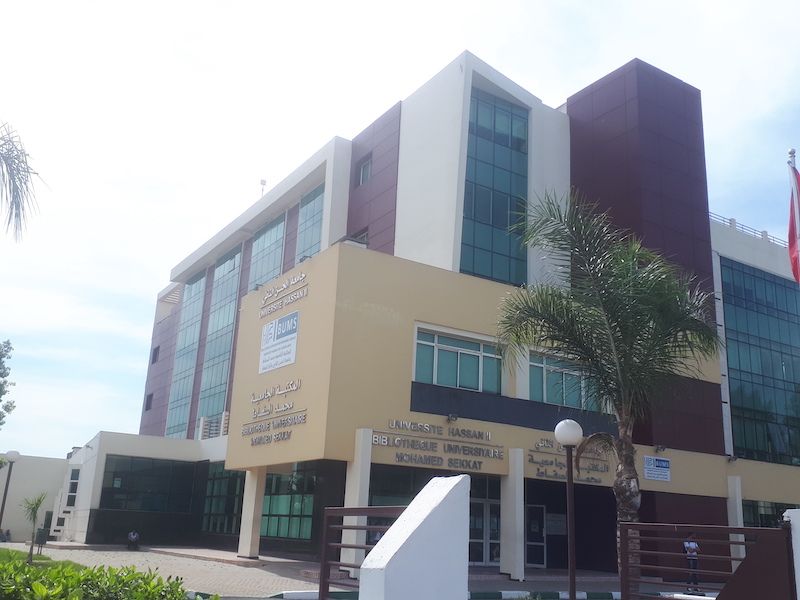
A great example would be Charlene. She is from Senegal, and because she graduated at the top of her class at Dakar Bourguiba University, she was invited to pursue a doctorate in hydro-engineering in Morocco. Her desire when she came was to gain a competitive advantage over her peers when she returned to Senegal. I suspect that she will! She is active in the French-speaking church and plays a significant role in a ministry to care for the migrant women and children who live on the streets of Casablanca.
Another example would be Thomas. He is from Yaouendé, Cameroon. Although he speaks French, he prefers to attend the English services at the International Church. He is finishing a degree in Information Technology and is considering his future. He could remain in Morocco for his Master's degree, but he works for a company headquartered in France. Like others before him, there may be an opportunity to move to Europe. In the meantime, he is active at church, working with the tech team.
Not all who attend church are university students. One can find business owners who have been in Morocco for many years. John and Hope migrated from Nigeria over twenty years ago. They established a small restaurant, now a thriving business serving African migrants. Consequently, they have encouraged some relatives to migrate north and join them. Because of their connections back home, they can import African goods such as jollof rice and cassava leaves. They draw from across the community by preparing chicken yassa and fufu daily. They and their children are actively involved in church, and John serves on the leadership team.
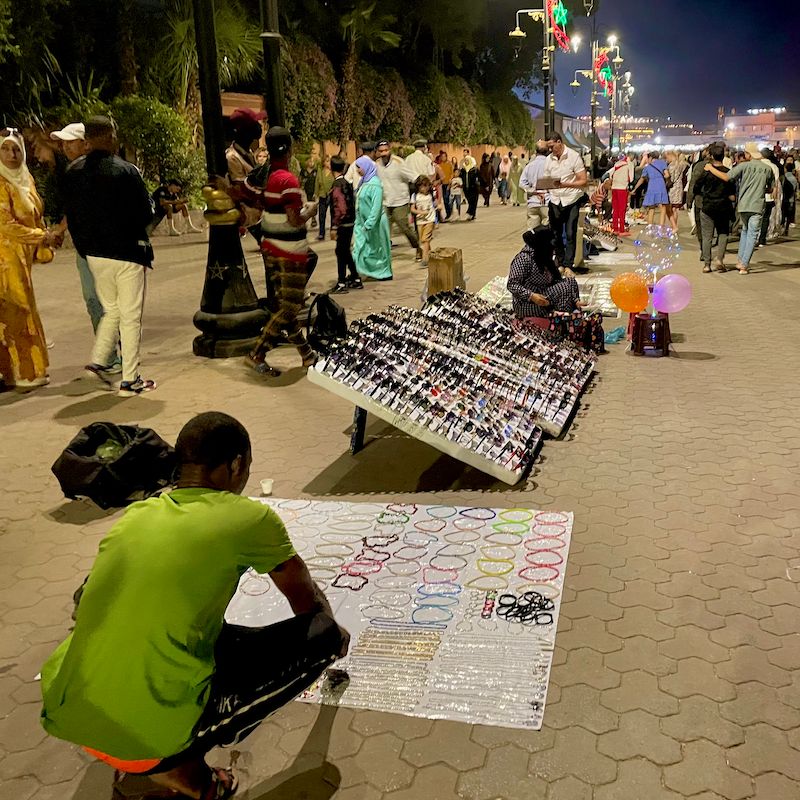
Mourid Sellers, Marrakech
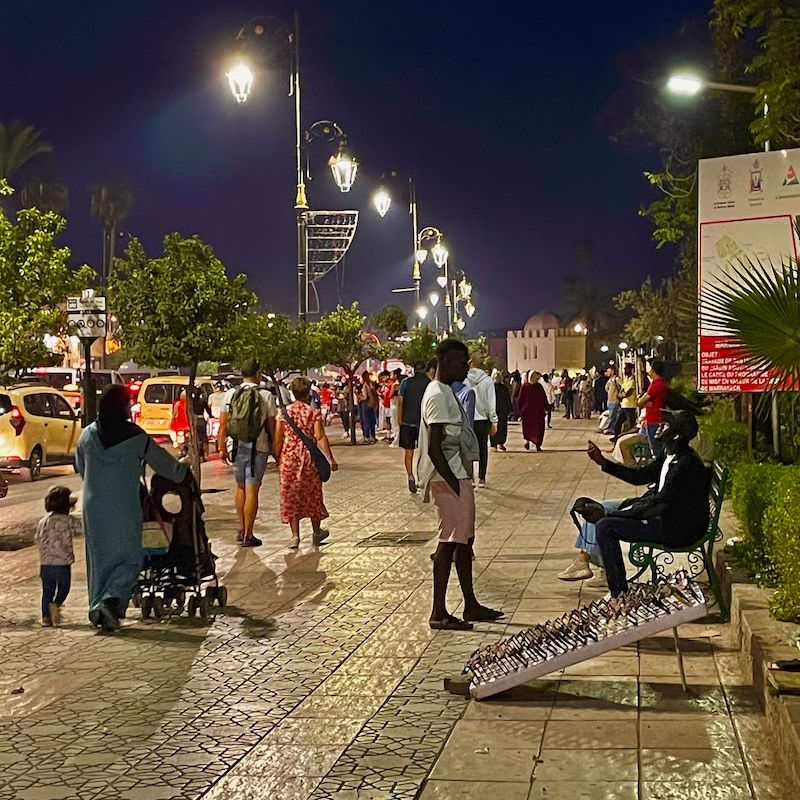
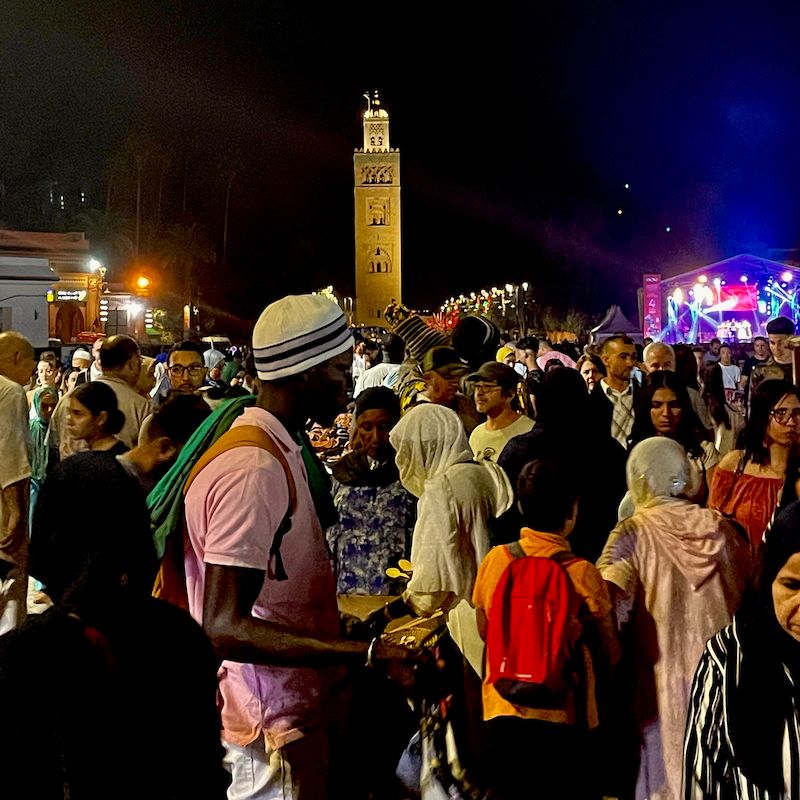
But not all such migrants are Christian. If you look outside the door of the church, particularly in tourist towns, you will find two other kinds of sub-Saharan migrants. Mohammed can represent the first. He is a religious migrant who is a part of the Islamic Mourid network.1 He sells goods to tourists and then sends remittances back to the Grand Mosque in Touba, Senegal. In a manner not too dissimilar to western missionaries, he was sent to Morocco on a two-year mission. He could stay longer, depending on how well he does, or perhaps be sent into Europe. A second kind of sub-Saharan migrant would be the tourists. They come from the higher economic classes of West Africa and stand apart due to their apparent wealth. They are the Africans spending money, taking photos, and eating at restaurants.
It is important to remember that all of the above arrived in Morocco via plane or bus. Each possesses a passport and a visa. This means they are known to the authorities and have permission to be there. They are in the country without anxiety or fear. One should also recognize that they typically plan to leave the country the way they came… that is, legally. They will either return home or move forward as circumstance demands or opportunity arises.
Door to Door Migration²
So this raises a question. If the majority of SSA migrants in Morocco arrived legally, then why are there so many illegal migrants in the country? It is the answer to this question that makes the Western Mediterranean Route so unique. Remember that North Africa is often the first step in a multi-step process for those seeking Europe. Unlike Morocco, Europe remains inaccessible to most from West Africa, even those with modest financial resources. The only way to gain entry is through irregular channels across the Mediterranean. Thus to pull it off, they must first get to a North African beach.
One of the key principles of migration is the fact that economics always directs the pathways of movement.3 I would remind you that the poorest of the poor do not migrate. They are generally forced to stay in place and face their challenges head-on. For the rest, the availability of resources dictates how they move. Most do not go any further than their money will take them. Those who go to Morocco, however, are generally in the top echelons of the African economy.
From that group come those who desire to go to Europe, but cannot do so legally. But they can go to Morocco, and then pay a smuggler to take them directly to Spain. Most will cross the Strait of Gibraltar on a very comfortable boat. There is a new tactic where, for between four and ten thousand euros, someone on a jet ski will take you across.4 This group of migrants can make the transition from a legal student or tourist to an illegal arrival in Europe in very short order. If you were wondering what truly differentiates the WMR from the CMR, it is generally economics… and the availability of resources… up front. It is that upfront part that is the catch and throws most observers off. Many migrants who arrive in Europe via the CMR will have spent the same amount of money as their western counterparts, but did not have access to it upfront. Or, if they did, they did not have access to the connections of their more socially and economically positioned peers.
There are also those with enough means to go to Morocco, but then need to work to earn enough money for the second leg. A seat in a typical boat to Spain can cost between 500 and 4,000 euros.5 The less you pay, the greater the chance of being intercepted and arrested. If they do not raise enough money in short order, they overstay their visa and become illegal. For many, things can go differently than planned, and saving money becomes very difficult. The cost of living in Morocco is much higher than in most West African urban centers. What they do save can evaporate very quickly, creating a vicious cycle in which many will descend into deep debt and poverty.
Finally, those with even fewer resources can make their way through Algeria and cross into Morocco illegally. (We will address this group in our next post.) Like those on the Central Route, these migrants come across Algeria's desert and enter the country from the south and east. These migrants typically arrive very poor and are forced to live on the streets or in the forests of the North. Life can be tough for this group, and their hope of raising enough money for a boat is weak. As such, they tend to focus on crossing the fences into the Spanish enclaves of Ceuta or Melilla.
Conclusion: A Window Into Migration
As one might imagine, gaining access to any of these migrants can pose unique challenges. The first group, those with significant resources, will often come and go so fast that someone from the outside will never find a point of engagement. Because they intend to enter Europe illegally and have so much money invested, they tend to avoid anyone outside their circle.
In the same way, the last group can be challenging to engage. Being illegal, and living in remote camps of the far north, they tend to be targeted by the authorities. That causes them to be suspicious of everyone. When they do step out, it is often to beg for money or food. Time of contact is always short, and always driven by ulterior motives. Under these circumstances, building genuine relationships can be very difficult.
But the middle group, those with moderate resources, can be different. They tend to settle, for a season, as legal immigrants to Morocco. Their objective is to blend into society as they gather resources for the next step in their journey. Because of their legal status, they can live in the open without fear of government interference. Those who are believers will often attend church, and it is there that relationships can be formed. It is there where the gospel can be freely shared.
This is why we are so encouraged by the believers along the Western Route. As they gather in worship, and as they live their daily lives, they have a unique capacity to engage their neighbors with the hope of Christ. Like us, those from the West will seldom gain entry into the lives of those migrants who are very rich, or very poor. But... their cultural and near cultural neighbors have instant access.
Like the church in Jerusalem, the pastor may look outside the door of his church and see a host of diasporic peoples in desperate need of Christ. But he can also turn around and see a similar diversity inside the church. The difference is that those inside the church have the Holy Spirit dwelling within them... and have the capacity to share the gospel freely. It will be by them that the needs of the community will be supplied, and it will be through them that the light of the gospel will shine into the darkest of places.
1 Mitch Hamilton, "Principle Three: No One Moves Alone – Local Networks", M2M3 https://m2m3.org/18-principle-three-no-one-moves-alone-local-networks/ (accessed December 7, 2022).
² "Door to Door" migration is a descriptor for those who make the first step of their journey legally, and then pay a smuggler to take them into Europe. It tends to be very expensive, but can occur within a matter of days.
3 Mitch Hamilton, "Principle Four: Money Directs the Way", M2M3 https://m2m3.org/21-principle-four-money-directs-the-way/ (accessed Jan 24, 2023).
4 See Associated Press, "Migrants to Europe: A 30-Minute Jet Ski Ride for 4,000 Euros", AP News https://apnews.com/article/0766a307ecd84b2c814590e972937a6d (accessed January 24, 2023). See also John Cody, "Illegal Migrants Paying up to €10,000 to Jet Ski from Morocco to Spain", ReMix News https://rmx.news/article/illegal-migrants-paying-up-to-e10000-to-jet-ski-from-morocco-to-spain/ (accessed January 24, 2023). And, Diana Rodriquez Pretel, "Immigration Mafias Reinvent Themselves and Launch Dozens of Jet Skis into Sea", Atalayar https://atalayar.com/en/content/immigration-mafias-reinvent-themselves-and-launch-dozens-jet-skis-sea (accessed January 24, 2023).
5 Oumaima Latrech, "Irregular Immigration: Smugglers Charge €4000 for Melilla from Morocco", Morocco World News https://www.moroccoworldnews.com/2022/02/346978/illegal-immigration-smugglers-charge-euro-4000-for-melilla-from-morocco (accessed January 24, 2023).