18 - Principle Three: No One Moves Alone – Local Networks
2022 No 18
I looked, and behold, a great multitude which no one could count, from every nation and all tribes and peoples and tongues, standing before the throne and before the Lamb, clothed in white robes, and palm branches were in their hands; and they cry out with a loud voice, saying, “Salvation to our God who sits on the throne, and to the Lamb.”
--Revelation 7:9-10
Imagine a pastor standing at the front door of the church. As he looks upon his community, he can see a great multitude from every nation and all tribes and peoples and tongues. If he is like most of God’s servants, he has a burden on his heart for their eternity. Christ came for them, and as a pastor, he hardly knows where to begin to reach them with the gospel. He knows that they will not be there... Revelation 7... if he does not reach them here. Our prayer is that he can find resources, such as this blog site, and start to process that to which he is already committed. Having migrants in his community should not be surprising. Everyone in his community, including this pastor, has been on the move and has come from somewhere else. (Principle One.) He knows that they are there for a multitude of reasons. Some are students; others come for work. Perhaps others are in a more desperate situation, unaccompanied minors and maybe even victims of trafficking. All have a story. (Principle Two.)
But what this pastor does not understand is, "How did they get there?" "Was the journey from point A to point B really that complicated?" For the pastor, he was likely invited. Then, he went online, applied for a visa, purchased a plane ticket, and made his way. But what about those in his community? Those with enough money may have come the same way he did. And those who have arrived from underdeveloped countries without much money? By what means did they arrive? In truth, they had help. And “that” is the third principle of migration becomes evident. No one… or at least very, very few… ever move alone.
In the next three posts, I want to describe how people move. I want to talk about the people involved in getting someone from where they are to where they hope to be. In many respects, this is the logistical side of migration. Some of these migratory pathways are obvious. The news media often presents stories on refugees, smuggling, and human trafficking. Unfortunately, their reports have a way of drowning out all of the other stories. I would dare say that most people in your neighborhood do not match the stories you hear in the media. They came by other means. Take a moment to listen to their stories. In so doing, you will hear them tell you why they moved, and if you pay attention, you will also learn how they moved.
Family / Community Networks
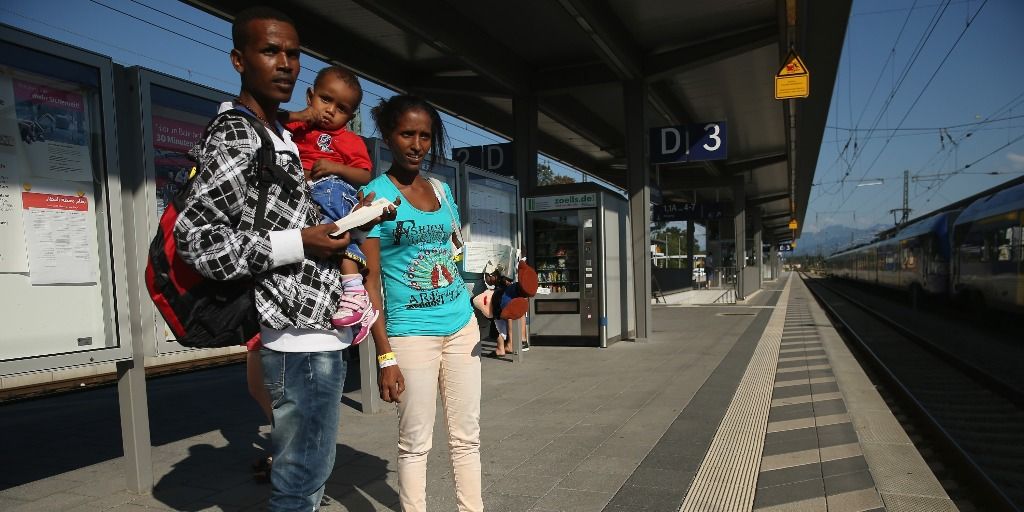
The primary logistical network used by African migrants is kinship-based. That is to say; they are familial. Students will often relocate and live with extended family members. It is not only pragmatically necessary… but caring for extended family is culturally expected. If a family member (nephew/niece) were to move to the city to find a job, those living in the city would be obligated to offer some means of support. These networks are an essential component of almost all migration. And I mean something like 80-90%! Why? Because it allows for success! Not only is there a known connection in the place of destination, but there exists a support system upon arrival.1 At that point, the only variable becomes the means to get there. For intra-regional movements, one can travel by bus for a few dollars.
But what about international movements? This very same familial network comes into play here as well. European cities are destinations of high value for those on the African continent. (Actually, anywhere that you may have family or friends is attractive.) In comparison to their home country, these locations represent an ability to earn high wages, and they offer a measure of prestige among peers. Many of these cities already have significant African populations, meaning that those established are habitually requested to assist family members who seek to migrate there. As you might imagine, tenured migrants living in Europe would be quickly overwhelmed if it were not for the financial and often legal restraints to such movements. For reasons to be further explained later, most who live in Europe will typically not participate in transportation costs. But what they will say is, “If you can get here, I will help you with your basic needs, such as lodging and food.”
In essence, this response satisfies the cultural expectation while leaving the responsibility for the migration in the hands of the individual and/or their community back home. And since the primary benefactors of the relocation will be their family or community in Africa, those with resources often do pay for the journey. But there is a reality to be understood; resource does not equate to opportunity. Legal migration is controlled, and there are not enough slots for everyone who would like to go. As such, family support is necessary to pay the smugglers to take someone from where they are to where they would like to go, even if it means crossing borders illegally. The cost can be very high on some routes, like the Central Mediterranean Route. Along the way, the situation can fall apart quickly. Migrants are often held captive as their families are then extorted to pay ransoms and exorbitant fees to get into Italy.
Religious Networks
A secondary network used by African migrants is religious. We have already discussed that religion can play a role in why people may move, but here we need to recognize that faith-based networks often provide the means for movement. Religious organizations in Africa, Christian, and Muslim alike, tend to be personality-driven, works-based, and often demand much from their adherents. Many are sent out to proselytize others and to expand the organization. Others are sent to the fields to labor or the streets to sell, returning the proceeds to the religious hierarchy. Still, others serve as fronts for more nefarious activities, including human trafficking.
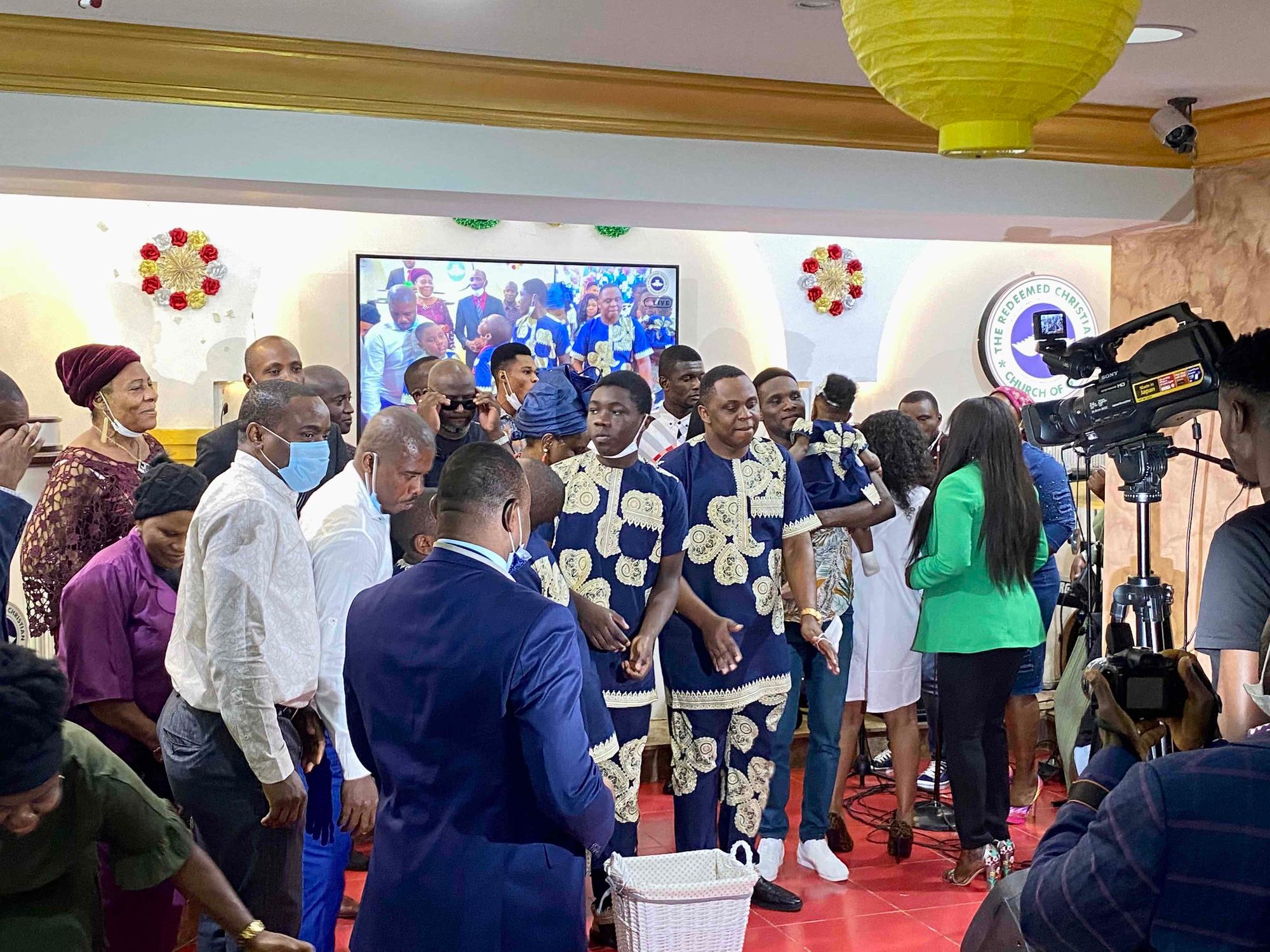
Let us begin with Christian religious migration. Across Africa, it is not uncommon for churches and denominations to send out missionaries to propagate the faith. The Lighthouse Group of Churches (UD-OLGC) from Ghana claims to have 3000 locations in 94 countries worldwide.² The Redeemed Christian Church of God in Nigeria claims to have nearly 24,000 churches inside the country, with a similar number spread around 165 different countries.3 Winners Chapel claims to have six million members spread across 147 countries.4 The expansion strategies of these and similar African churches hold some aspects in common. They will first send African pastors with the goal of engaging other African immigrants in places of transition and destination. As small churches are established, they then seek to create branch locations. New pastors are then drawn from the community or perhaps sent by the mother church. In many ways, it can be viewed as similar to historic forms of chain migration.
These missionaries can arrive in their host countries by a variety of means. Many come as students, having secured scholarships in graduate programs. Others come and establish businesses, generally in the retail sector. There are still others who can secure religious visas and directly engage in bi-vocational ministry. The key is to recognize that very few are financially supported directly by their home church networks. Instead, these organizations provide the networks that facilitate movement and other forms of logistical support. As their churches grow, they will then draw resources from their congregations for their support and to remit to the home organization. It is truly unknown how many of these churches exist outside of Africa, but the number is likely to be tens of thousands. What is known is that they can be found in almost every urban center across North Africa, Turkey, and Europe.
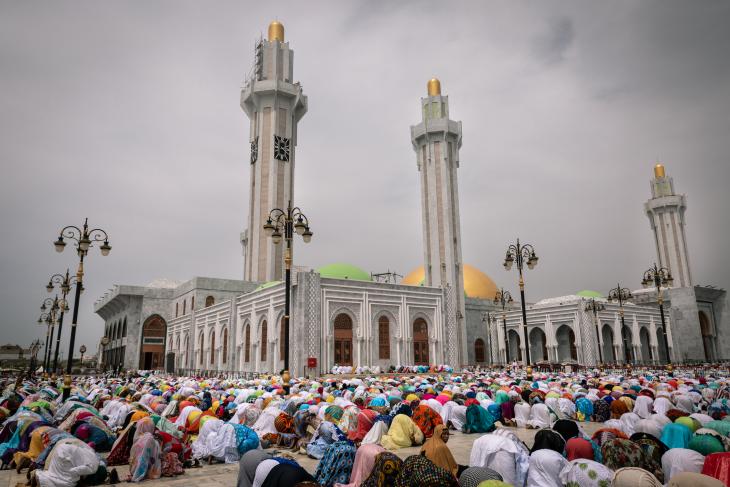
On the Muslim front, Islamic brotherhoods across Africa also send their disciples worldwide to make converts and secure resources to return to their religious centers. The Mourides of Senegal are an excellent example of international religious/economic migration. They are a Sufi religious order centered in Touba. Their members comprise some 40% of the population in Senegal. They are an economic powerhouse, one of the richest and most powerful in the region. They control most of the groundnut production in the country, and their financial enterprises span the globe, with merchants found in Europe, Asia, and the Americas.5 They routinely finance the movements of migrants as commerçants to key global cities who then send resources back to Senegal. Some estimate that remittances through the Mouride networks exceed one billion dollars per year.6
Mouride migrants are typically privileged members of the brotherhood and chosen through internal processes from within the order. They are generally fully funded and have significant logistical support upon arrival. It is a highly developed system from start to finish. Structures exist within this network to move individuals quickly throughout the world to accommodate market conditions. They maintain strict control, and if a member of the system did not perform well or was to stray from the faith, he would be returned to Senegal, and another migrant would simply replace him.
If you have ever gone to a tourist area of Europe, you will find Mouride sellers marketing higher-value items such as cell phones and jewelry. How do you know that they are Mourides? Because they are the few who have the investment capital to purchase their inventory and have a means to still live in the area. We have traveled through much of southern Europe and have encountered these sellers in almost every location. In recent days, we have begun to see more Nigerian sellers. They are also there to make money, but their story is for a later post.
Conclusion
If you were the pastor in the introduction to this post, standing at the doorway of the church, the question of how everyone arrived in your city remains. It might be helpful to know that the vast majority of those in the community are there legally and have come through legal pathways. At one end of the spectrum are those who had resources available to obtain a visa and secure transportation. Upon arrival, they had friends and family who could help get them settled and integrated into the community. On the other end of the spectrum are those who arrived as a part of an economic or religious strategy. They are also there for a reason and, once again, have networks that assist in the process.
As you begin to build relationships with your neighbors, the day will come when they start to share a bit of their story. Listen carefully for why they took the journey, how they arrived and who was involved in making it all possible. Then pause for a moment and consider that they are also on a spiritual journey. Think of how God has guided their pathway in such a way that they would encounter His network of people. You are one of them! If you are attentive to their needs, have compassion for who they are, and take the opportunity to share the hope of the gospel, then they may very well wind up at the throne of Christ. Such was the vision of the Apostle John. Let it be yours as well.
_______________
1Lawrence Marfaing; Alena Thiel, "Networks, Spheres of Influence and the Mediation of Opportunity: The Case of West African Trade Agents in China," The Journal of Pan African Studies, no. 10 (2015): 71. Marfaing and Thiel would describe these as networks of Accumulation. They are kinship-based relationships that work closely together to achieve financial goals. In their context, China, these networks are evident.
2 Dag Heward-Mills Ministries", https://www.daghewardmills.org/new/ (accessed March 23, 2022).
3 "Redeemed Christian Church of God", https://www.rccg.org/ (accessed March 23, 2022).
4 "Winners Chapel Has Six Million Members Spread across 147 Countries", Vanguard https://www.vanguardngr.com/2014/12/winners-chapel-has-six-million-members-spread-across-147-countries-oyedepo/ (accessed March 23, 2022).
5 Stephen Golub and Jamie Hansen-Lewis, "Informal Trading Networks in West Africa: The Mourides of Senegal / the Gambia and the Yoruba of Benin / Nigeria," in The Informal Sector in Francophone Africa: Firm Size, Productivity, and Institutions (Washington DC: The World Bank, 2012). See also Victoria Ebin, "International Networks of a Trading Diaspora: The Mourides of Senegal Abroad," in La Ville À Guichets Fermès: Itinéraires, Réseaux Et Insertion Urbaine, ed. Phillippe ANTOINE; Abdoulaye DIOP (Institut Fondamental d’Afrique Noire, 1995), 332.
6 U. S. Department of State, International Narcotics Control Strategy Report2018. Vol. INCSR 2018 Volume II.