51 – I Am the Lucky One
2023 No 51
Pharaoh said to Joseph, “See, I have set you over all the land of Egypt.”
—Genesis 41:41
If you have closely followed this blog series, you may rightly conclude that modern, irregular migration is much like playing the lottery. For every hundred migrants who leave, less than five will arrive anywhere close to their intended destination. For every hundred who arrive, even fewer will find the life for which they dreamed without bearing intense physical and emotional scars. If you make it, you are incredibly lucky. It is no wonder many kiss the soil when they arrive and resist repatriation to their home countries if caught.
And yet, like the lottery, people engage in such movements every day. Why? In many cases, it is because they have heard the stories of the "lucky ones ." The West is naive, thinking that the Africans would stay home if they only knew the risks. I often hear that SSA migration would be dramatically diminished if only those in places of origin could better understand the dangers they would face and realities on the ground in areas of transition and destination. Both assume that African migrants have a diminished understanding of their actual situation at home… or the road ahead. Nothing could be further from the truth.
Most Africans I have met were relatively well-informed before they began their journey. Their social networks are filled with stories, and videos, of the dangers and tragedies faced by those who have gone before. Each likely knew someone who had lost their life along the way, and most know someone personally who is stuck in a transition zone. Africans are a communal people, making secrets hard to keep and failure difficult to hide. But they also know those who made it… and have also heard their testimonies… even if embellished. They understand that the risks are high in the going… but also know the score if they stay home. Thus, even a tiny chance of success becomes magnified in the context of the poverty of their countries of origin.
One cannot discount those success stories. In many cases, they should be celebrated. Let us never forget that God has a way of working through evil circumstances and bad decisions. In the case of Joseph, God worked through the suffering to preserve His people.
And we know that God causes all things to work together for good to those who love God, to those who are called according to His purpose. (Romans 8:28)
But Joseph said to them, “Do not be afraid, for am I in God’s place? As for you, you meant evil against me, but God meant it for good in order to bring about this present result, to preserve many people alive. (Genesis 50:20)
Such stories abound across Europe. Each brings a measure of inspiration, along with an incredible testimony of God’s hand. Many come to faith along these migratory pathways. Through these migrants, churches are planted. Others find a way to take care of their families back home. Thus, through their suffering, they become conduits of life. As such, how could one not celebrate?
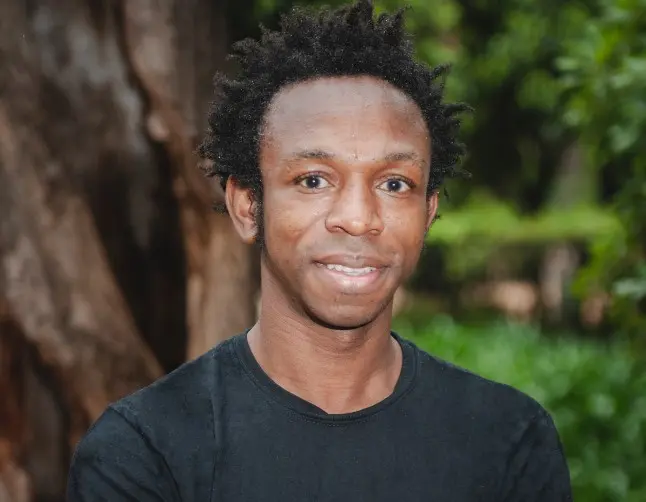
Ousman Ulmar
An easy story to illustrate this point is that of Ousman Ulmar of Ghana.2 His mother died as she was giving him birth. Her death was such a bad omen that he was considered cursed in their animistic society. For protection, his father moved him to another town to be raised by his aunt. At age 12, he was apprenticed to a mechanic in a neighboring city. Having learned a trade, he would later move to the capital to work on trucks at the port. Needless to say, as an outcast, there were not many opportunities back home. His only pathway was forward.
Working in a global African city gave him exposure to drivers who came from across Africa. He was good at his trade and was told there was work in Libya. His skills as a mechanic could prove to be very profitable. Since he already had a job, he could save the money needed for the journey. Since he knew the truck drivers, he could get a ride north. He was encouraged that he could work along the way, paying for any additional expenses that may be incurred. Like many, he knew the risks and took the step of faith.
It is here that Ousman’s story intersects with that of those on the Central Mediterranean Route.3 His travel across the desert through Mali and Niger, and his time in Libya were similar to that of other migrants. But because of his mechanic skills and young age, he found a place in Libya… and those who would watch over him. It also gave him the opportunity to move beyond Libya and make his way west to Morocco. There he would buy a seat in a boat that would take him to the Canary Islands and ultimately to Spain.4
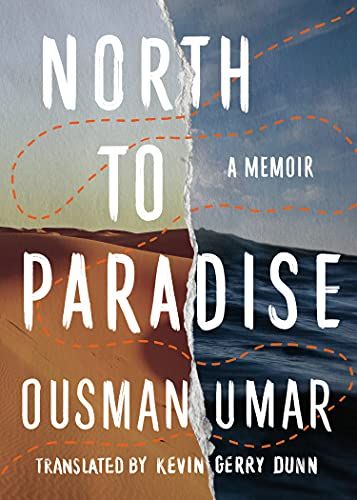
I encourage you to read his book, North to Paradise.5 Ousman shares his story and speaks to the difficulty of the journey and the sheer luck that brought him safely to Europe. But even in Spain, he somehow found favor. By chance, he met a family who had compassion for his situation and helped him through the legal system. Eventually, they would adopt him as a son, giving him the opportunity to go to High School. He ultimately attended a program in pharmacology at a Spanish university. He was indeed lucky. But even that somehow misses the scope of his fortune.
Today, Ousman runs a non-governmental organization called NASCO.6 It is a charity that helps place computers in public schools in Ghana. He aims to create opportunities for students to function in a modern, global business climate. He believes that if they can find jobs locally, they may also find alternatives to migration. Sounds like a great plan! The difficulty is that his popularity and success have proven to be counterproductive. His very presence in Spain sends a message that it is possible to migrate successfully! He would tell the students to stay home and not follow in his footsteps. The difficulty is that Ousman himself represents a winning lottery ticket… and there are always those who believe that they will be next.

Inaki and Nico Williams
In the last world cup, two brothers, Inaki and Nico, played for Ghana and Spain, respectively.8 They were each born and raised in Spain to parents who had migrated to Europe from Africa. Their parent’s story is one to tell, having crossed the Sahara Desert barefoot with little food or water. It was only by the grace of God that they survived. After they arrived in Morocco, they climbed the fence into Melilla and were arrested. An immigration official told them they could claim asylum if they destroyed their Ghanaian documents and reported that they were from war-torn Liberia. It worked! They were soon brought to the Spanish mainland… and given a chance at a new life.
In those days, however, work was hard to find for those who did not speak Spanish.9 Their father would soon move to London to find work. Things were better there since he spoke English, and he was able to provide for his family for nearly a decade to come. But that made life even more difficult for Inaki and Nico because, in essence, they were raised only by their mom. They survived on the money their father sent them while their mother worked three additional, meager-paying jobs.
But, like most Africans, these two boys had a natural love and talent for soccer. Before long, they were playing for local leagues. As their skills progressed, they were picked up by higher-level teams. As young adults, they had made the national league. To make a long story short, they ultimately made it into the 2022 World Cup. In so doing, they became instant heroes back in sub-Saharan Africa. It didn't matter that they were born in Spain. They were Africans.
Every African boy plays soccer in their village or neighborhood... and every African soccer player dreams of playing for a European league. To play in a World Cup is a fairy tale come true. It doesn't matter that the parents, rather than these men, migrated to Spain. It only matters that they made it and that their children were successful. These two brothers represent the possibility for other Africans to make their mark and fortune in football. As soccer stars, Inaki and Nico represent a winning lottery ticket… and there are always those who believe that they will be the next.
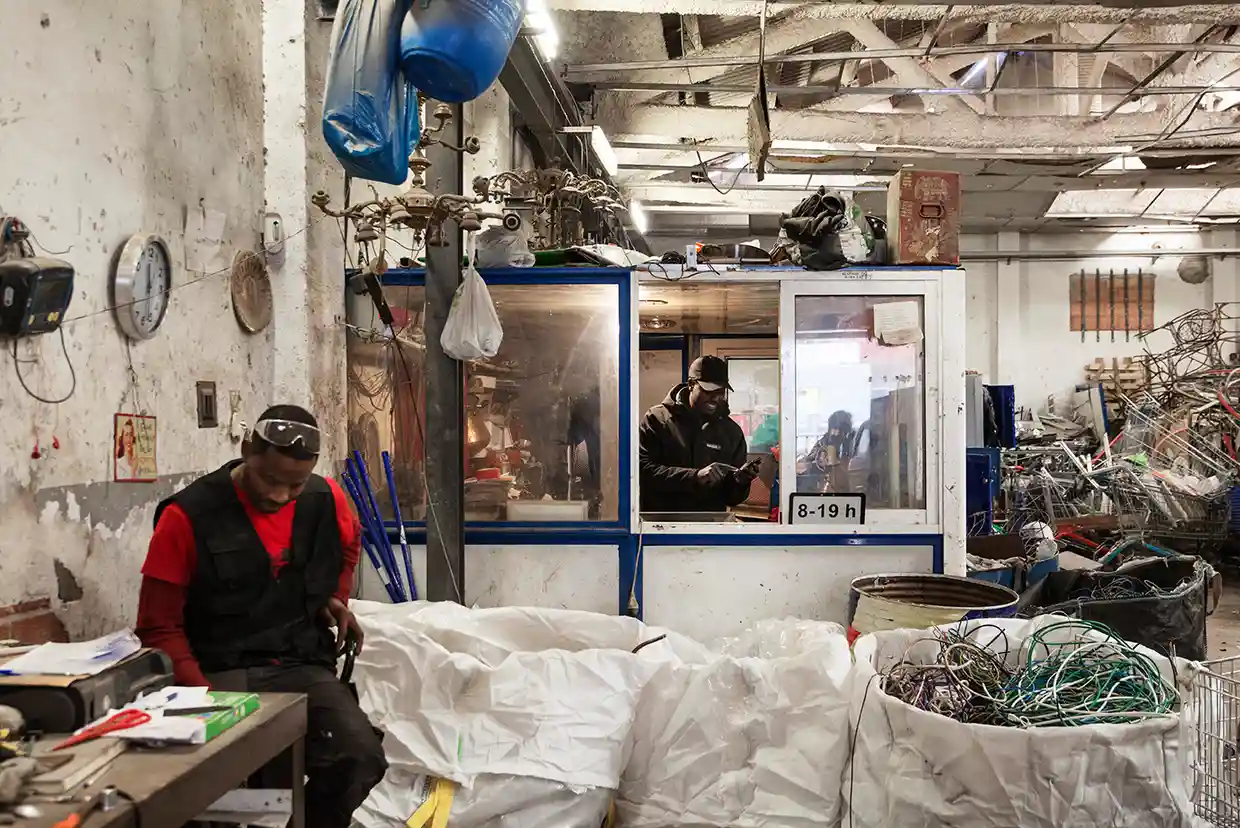
Moustapha Diop
Moustapha has been a resident of Madrid since 1976. He landed in Spain from Morocco shortly after the death of Francisco Franco.11 In those days, more people were leaving Spain than were arriving, creating work opportunities at the lowest tiers of society. The government was not focused on African migrants, so he could cross on the ferry from Morocco and easily slip past the border controls. He will tell you that life in Spain has not been easy, but it has always paid more than anything he could do back in Senegal. He was offered Spanish citizenship some 30 years ago through one of the regularization programs. Today, he is a mainstay of support for his extended family in Africa.
Madrid is a growing metroplex, and the service industry has benefited migrants. A job can be found if you can get there and have the right connections. Moustapha has been there long enough that he knows how to find those jobs, which has allowed him to help his family in Senegal in significant ways. He is clear to everyone that he cannot pay for passage to Spain. But he can certainly help to make those who arrive successful. To date, he has helped over a dozen of his nephews settle into Madrid and find work. They, in turn, have helped others do the same.
One may well argue that their offer of support, that their invitation to come, has cost family members their lives as they crossed the desert and the sea. Such may indeed be the case. But this is a family network. Those in Europe are sending remittances back to their families in Senegal. That means the family back home has much more money than their neighbors. And as we have witnessed in other places, more money can create pathways for migration. With money, one can fly to Morocco and then pay a smuggler with a jet ski to bring them to Spain. They can bypass the asylum process entirely and travel directly to Madrid. In my conversation with Moustapha, it was evident that their system was working well.
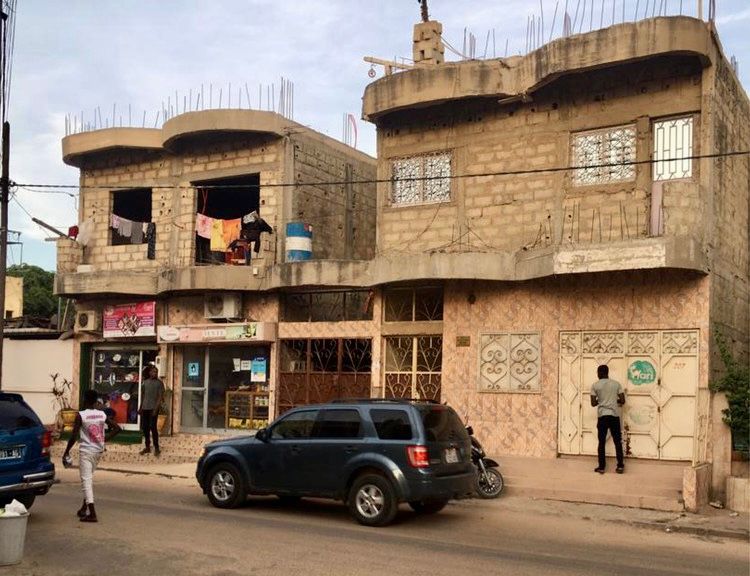
The Diop family is well known in Senegal, and their success has been noticed. Everyone knows that it is family remittances that are building the houses, buying the cars, and providing the food for the families. Everyone knows the nephews of Moustapha who live in Madrid. Everyone would give anything to have such an opportunity. It doesn't matter that the Diop network was established over forty years ago and that those who now go to Spain do so with a decisive advantage. Everyone can see that this family represents a winning lottery ticket… and there are always those who believe they will be the next.
Conclusion
As previously stated, the Western Mediterranean Route is seldom followed by the poorest of the poor. One simply cannot cross the Sahara or the Mediterranean without paying for the passage. Those costs can be very high, upwards of 8,000 Euros. Consequently, those who make an attempt must have some measure of resources. And yet, this route remains one of the most dangerous routes to Europe. Many may make an effort. Most will become stranded in North Africa or, worse yet, die along the way. Others will land in southern Spain only to become pressed into forced labor.
But there are those who will be successful. Their numbers are few in comparison to those who make an attempt. But they do exist. In fact, one can walk the streets of almost any Spanish city and meet Africans who took the risk and have done quite well. They have a home and a job, and many have gained citizenship. They are often able to send money back to their African families. That makes them heroes in the eyes of all.
They are indeed the lucky ones.
1 "Senegal Migrant Who Narrowly Escaped Death Wins €400,000 in Spanish Lottery", TVM News https://tvmnews.mt/en/news/senegal-migrant-who-narrowly-escaped-death-wins-e400000-in-spanish-lottery/ (accessed March 25, 2023).
2 Ousman Umar and Kevin Gerry Dunn, North to Paradise: A Memoir, First edition. ed. (Seattle: Amazon Crossing, 2022). This is an incredible story. It is available on Amazon.
3 For further details, refer back to previous posts on this topic. M. Augustus Hamilton, "A Journey across the Desert", M2M3 https://m2m3.org/31-a-journey-across-the-desert/ (accessed February 4, 2023). See also M. Augustus Hamilton, "The Horrors of Libya", M2M3 https://www.m2m3.org/32-the-horrors-of-libya/ (accessed September 26, 2022).
4 We will spend time in coming posts about what has come to be called the Atlantic Route. On this route, migrants will depart Morocco and go to the Spanish Canary Islands. From there, they are transported to Spain.
5 Umar and Dunn, North to Paradise: A Memoir.
6 Ousman Umar, "NASCO Feeding Minds", NASCO https://nascoict.org/en/ (accessed March 22, 2023).
7 Joe Williams, "World Cup 2022: Spain Forward Nico Williams Dreaming of a Clash against Inaki's Ghana", Ghana SoccerNet (accessed March 25, 2023).
8 Sid Lowe, "Iñaki Williams: My Parents Crossed the Desert Barefoot to Get to Spain", The Guardian https://www.theguardian.com/football/2021/oct/06/inaki-williams-my-parents-crossed-the-desert-barefoot-to-get-to-spain (accessed March 22, 2023). See also Joshua Jones, "Will to Win: Brothers Nico and Inaki Williams Play for Different World Cup Nations after Parents Trudged across the Sahara Barefoot", The Sun https://www.the-sun.com/sport/6794177/brothers-nico-inaki-williams-world-cup-ghana-spain/ (accessed March 22, 2023).
9 M. Augustus Hamilton, "43 – Historical Context of Spain", M2M3 https://m2m3.org/43-historical-context-of-spain/ (accessed February 14, 2023). It is important to remember that although jobs exist in Spain, preference always goes to those who migrate from other Spanish-speaking countries. In this respect, Africans are decidedly disadvantaged.
10 Stephen Burgden, "Chariots of Steel: Barcelona's Hidden Army of Scrap Recyclers", The Guardian https://www.theguardian.com/global-development/2021/mar/23/chariots-steel-barcelonas-hidden-migrant-army-scrap-recyclers (accessed March 25, 2023).
11 Ibid.
12 Hanah Abdel, "Living in Dakar, a Study of Senegalese Housing & Future Development", ArchDaily https://www.archdaily.com/955865/living-in-dakar-a-study-of-senegalese-housing-and-future-development (accessed March 25, 2023).