52 - African Church in Morocco
2023 No 52
He executes justice for the orphan and the widow, and shows His love for the alien by giving him food and clothing.
—Deuteronomy 10:18
Undoubtedly, one of the greatest joys of our work has been to experience the hand of God through His church. We have yet to travel to a location where either Christians or their places of worship could not be found. Such has been true for both the indigenous and immigrant churches. Around the Mediterranean Rim, God's people gather for worship, discipleship, and ministry in their communities. It is a wonderful reality that is often lost upon a Western audience. There seems to be a message that the church "out there" is weak and desperately needs "our" assistance. Nothing could be further from the truth.
Morocco is a decidedly Islamic country. Over 99% of the population is Muslim.1 And yet, according to their constitution, the state guarantees the freedom of religion and the liberty to practice one’s faith.² That doesn’t mean that things are easy. While these provisions may limit state persecution of Christianity, social pressures are exerted to remain Muslim, and any deviation has real consequences. Despite the challenges, there are indeed Christian Moroccans; they gather for worship, their churches are healthy, and their numbers are growing.
The immigrant church, on the other hand, is relatively unfettered. Laws that prohibit the proselytizing of Moroccan citizens do not apply to non-residents. In other words, neither the state nor the culture gives much attention to the religion of foreigners. They may gather openly for church, share their faith with one another, and minister to their neighbors' needs. And while there may be disdain for the conversion of a foreign Muslim to Christianity, such is offset by the benefits of being considered an “open” society. Morocco very much enjoys the fruit of being considered a modern, global state.
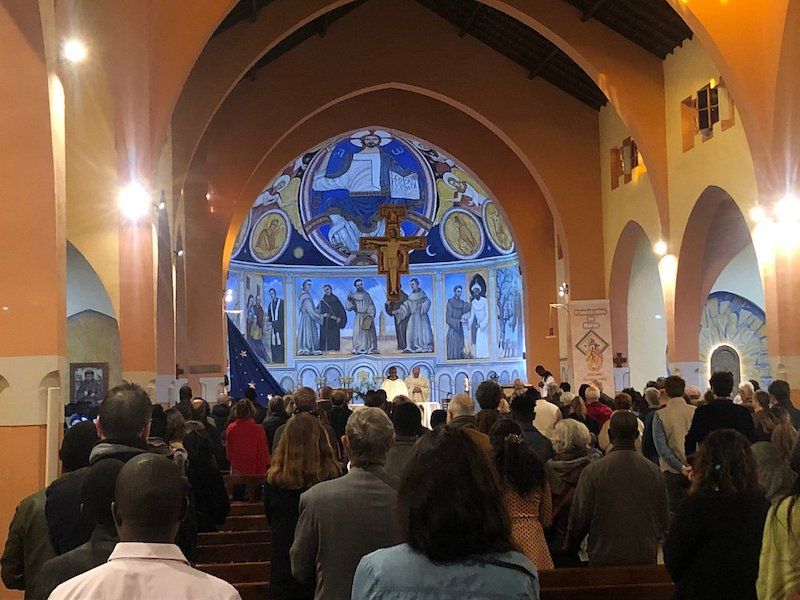
Consequently, the African church is strong in Morocco. Jeu Hanciles once noted that people carry their ideas, beliefs, and religious practices with them when they move.3 Such is certainly true among sub-Saharan migrants. Every weekend, in almost every major city, African churches gather for worship, many exceeding a hundred people in attendance. Some gather in historic houses of worship, both Catholic and Anglican. Small house churches meet in neighborhoods across the country, their songs of praise spilling out through open windows into the streets. International churches can also be found, drawing expats, and Africans, from around the world. Each has a place in the religious fabric of Morocco, and each plays a significant role in their ministry to migrants.
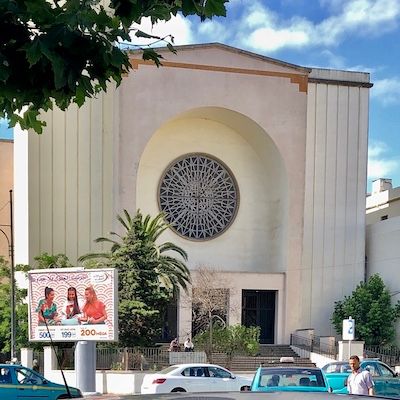
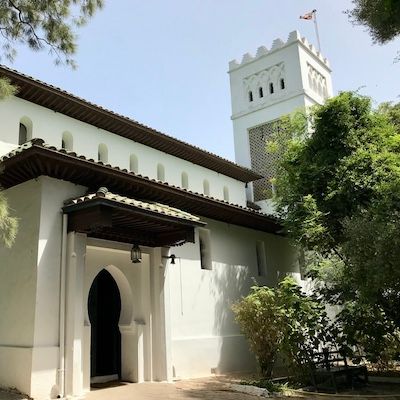
Catholic / Anglican Churches in Tangiers, Photos by Author
The Catholic / Anglican Church
The Catholic church has had a presence in Morocco since before the 11th century. Before Morocco's independence in 1956, the territory was first a Spanish and then a French protectorate.4 In those days, Morocco was home to nearly half a million European Christians, the majority being Spanish.5 The Catholic church held political favor and built churches, schools, and hospitals across the country. After independence, there was a mass exodus of non-Moroccans. The European population in Morocco dropped to less than perhaps 20,000.
This is not to say that the Catholic Church is neither present nor visible today. Services are held in almost all urban centers, the two main Cathedrals being Rabat and Tangiers. The church was most recently in the spotlight in 2019 when Pope Francis visited Morocco. His intent was to meet with Muslim leaders and address the migrant crisis.6 His visit renewed focus on the church's social ministries in Morocco. Caritas is an arm of the church that ministers directly to migrants, particularly those transitioning through the country.7 Other groups such as the Delegation Diocésaine des Migrations of Tangiers, operate out of the church, offering food and clothing to those most desperate.8
As a part of our research, we have had the privilege of meeting with Catholic leaders nationwide. Many are doing impressive work, particularly in Marrakech and Laayoune. Several priests are sub-Saharan themselves, giving them a unique heart and capacity to engage African immigrants. Keep in mind that these men may have been trained in Europe, but they carry a very evangelical, African perspective on the gospel.9 We have wept together as we discussed the lostness and the suffering in the migrant community. Consequently, God is using the Catholic Church in Morocco to significant effect. We even found one location where the church has opened her doors to allow for Protestant gatherings, offering a clear and open proclamation of the gospel.
The Anglican church, along with Greek and Russian Orthodox churches, has also been a part of the Moroccan religious landscape for over a century. Morocco donated land for the construction of a cathedral in Casablanca in 1880. Since then, there have been two additional congregations, one in Tangiers and the other in Rabat. Smaller groups meet in other locations, such as Marrakech.10 As with the Catholic Church, the Church of England has a social outlook and has served migrants in various capacities across the country. Her ministries focus on daily needs such as food, shelter, and clothing.11
We have visited many of these historic churches. In each case, we have found a significant number of sub-Saharans in attendance. A surprisingly large number are active in leadership roles and have found a place of not only fellowship, but of service. It is often the legal migrants who are serving the irregular community, and they are drawing many of Islamic background into the church. Such is a crucial component for the transmission of the gospel. Relational engagement is one of their earliest contacts with Christianity, effecting change in how unbelievers think, and what they know about Christ and His people.
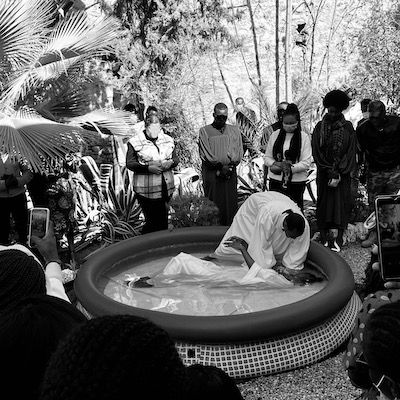
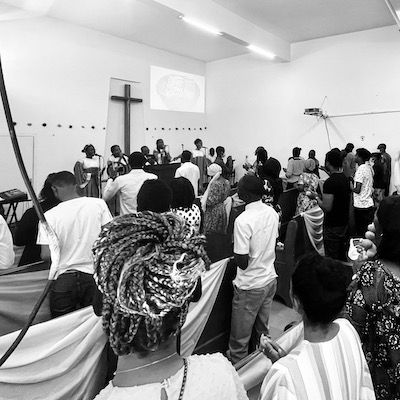
EEAM Churches in Marrakech and Tangiers, Photos by Author
The Evangelical Church
The Eglise Évangélique au Maroc (EEAM) was established in Morocco in 1874.12 Initially, the church was formed to serve the colonial populations in various cities, falling primarily under the control of the Reformed Church of France. In the early 20th century, as many as ten pastors served over 2,500 European families. As noted above, national independence brought a decline in European congregants. Over time, however, they were replaced by sub-Saharan students… mostly Congolese.13 Today, nine EEAM locations across the country are led by pastors of various nationalities.14 Most are sub-Saharan. They have a strong foundation in the country and now support an Ecumenical Institute of Theology in Rabat to train pastors and church leaders.15
The recent Africanization of EEAM has had numerous consequences. First, there has been a dramatic shift towards Pentecostal theologies. Because students "bring their faith with them," one should not be surprised that African charismatic experience has begun to displace European reformed practices. Second, African culture demands a hospitable response to the needs of others. Students in the country have an incredible opportunity to engage with irregular migrant populations. This has led the church to serve those in need, with a correspondingly high rate of gospel transmission. Many are coming to faith from both Christian and Muslim backgrounds.
We have found the EEAM churches to be healthy, albeit immature, in their theological expressions. Because most of their members are students, there is a passion in their worship, an exuberance in their fellowship, and great compassion for their community. Most will see an attendance of over 100 each Sunday, and their members are active in programs throughout the week. Because their services are in French, they have demonstrated an incredible capacity to engage SSA Islamic migrants from the Sahel on the streets and neighborhoods. From a kingdom perspective, they are doing an amazing job.
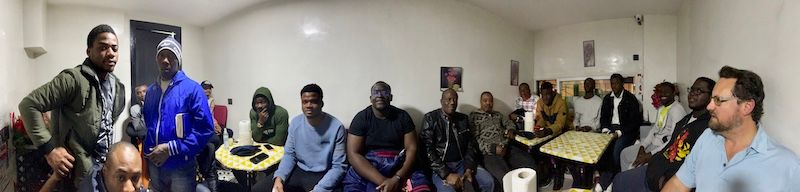
The International Church
International Protestant Churches can be found globally, typically are led by, and seek to serve Western workers in the region. Sometimes they may have denominational affiliations, depending on how they are formed or who leads their services at any given time. Many are the fruit of historic western missional strategies.16 They are found around the Mediterranean Rim and often offer significant support to local indigenous and immigrant churches.
Such has genuinely been the case in Morocco. As noted above, the Anglican church and EEAM have existed since the early 20th century. In those formative days, the Anglican believers sought to create space for their protestant brethren, offering an occasion for evangelical services in English. As European Christians departed following independence, those who were left began to form their own identity.
At that time, International Churches began to formally meet in their own spaces, call their own pastors, and fill the gap left by their European brethren. Notable congregations were formed in Casablanca, Tangiers, and Marrakech.17 They serve a broad international community, the largest of which are legal African immigrants. As with EEAM, perhaps as much as 80% of the attendees will be sub-Saharan at any given service. Many are now filling leadership positions, most notably the worship teams. Their services are in English, attracting students at local universities who either grew up in Anglophone countries or desire to be a part of an English Speaking community.
The effectiveness of the ministry of the International Protestant Church in Morocco cannot be overstated. They provide all the functions of a local church, creating tremendous discipleship opportunities for young African believers. As such, they help provide a model and a balance for those who attend both the English IPC and the French services of EEAM. These students, in turn, can engage the irregular immigrant community freely, sharing the gospel and ministering to their needs.
There are other expressions of Christianity to be found in Morocco. In addition to the IPC, we have discovered gatherings of western expats in almost every major Moroccan city. These gatherings tend to be informal expressions of worship by foreign workers and tourists. They often meet in homes, rented spaces, and occasionally existing church structures. In most cases, these groups do not claim to be a "church," as they do not provide the normal function of a church nor have the legal status to make such a claim. However, they play a significant role as they create space for fellowship and encouragement for foreign Christian residents. They, in turn, are then able to serve their local communities.
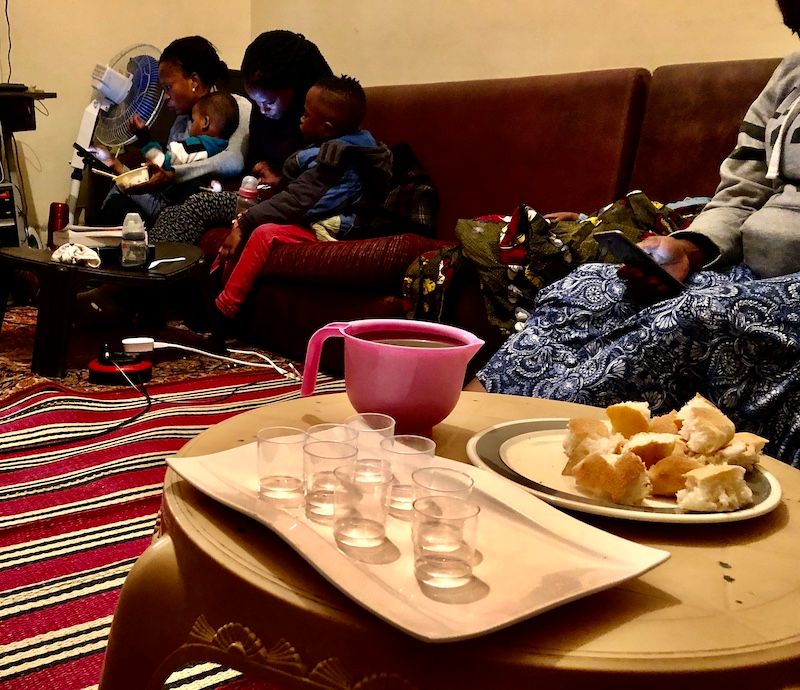
The African Immigrant Church
When one speaks of the African Church in Morocco, the above descriptions should clarify that most non-indigenous churches in Morocco are led primarily by Africans. But… these churches are typically legal and recognized by the government. There is undoubtedly another group of "unofficial" immigrant churches in Morocco. It is impossible to know, but they very well may number in the hundreds!18 Our time and status in the country have limited our ability to probe all possible variations, but a clear example can be found within the Nigerian community.
Not long ago, I was invited by a friend to attend a worship service led by a Nigerian pastor in the North. The location was an apartment on the outskirts of town. I was given the impression that there was a need to maintain a level of secrecy, not to park nearby, not to telegraph my presence. After all, the participants were not in the country legally, and the church was not recognized by the government. When I arrived, however, I discovered there was nothing secret about the meeting at all. I was greeted on the street and welcomed into the assembly with open arms.
There were about 25 people stuffed into the small apartment, with the aroma of Nigerian food permeating the atmosphere. There was joy and laughter among the people, and the worship was spontaneous. Three pastors were present that evening, two young men and one elder. Obviously, he was the founder and was held in very high esteem. Because I was also a pastor… with grey hair… I was given special honor. It was a wonderful experience.
Given the member's exuberance, the apartment's size, and the time of the year, one could barely manage the warmth of the situation…. literally. So… they opened the windows, knowing that the music and the preaching would be heard across the neighborhood. No one seemed to care. There was no fear, even though most in attendance faced arrest if the authorities discovered them. Their faith in God and their commitment to worship Him were unparalleled. Needless to say, I was impressed.
It turned out that the senior pastor had planted this church... and some fifty others during his tenure in Morocco. The focus of these churches was to give irregular believers an opportunity to worship and to provide a point of ministry to their needs. He shared that the government tolerated them because they offered a sense of control for the immigrants and provided the kinds of services that would be difficult for the local community to offer. Officials in Morocco, as in much of Africa, recognize that faith in God can reduce crime and negative social behaviors. While the government may not want illegal immigrants in the country, their Islamic values dictate that they respect their faith and care for those under their charge.
Remember that this was just one "branch" of the anglophone Nigerian church in Morocco. There are certainly others. There are also francophone house churches throughout the region, particularly in the crowded urban centers of Tangiers, Casablanca, Fez, Agadir, and Marrakech. As outlined in previous posts, the transient SSA populations in Morocco could easily exceed half a million. Many are believers. One should not be surprised that, as followers of Christ, they would gather for fellowship and establish their own places of worship. Together, they create a substantial Christian network in Morocco.
Conclusion
One of our goals in this blog series has been to examine the movements of sub-Saharan Africans, only from a 40,000-foot level. Such allows us, and the missional community, to see trends and patterns of movement. It also allows us to return to the ground and help the local church understand how better to love her neighbors, many of whom are "not from around here ."Our heart is to serve the church and her pastors, as they are indeed the point of the spear for the gospel of Christ around the Mediterranean.
An elevated view also allows us to see the church in her global perspective. Denominational lines tend to blur at a distance, and one can see how God works across the spectrum of His people. On the ground, it is easy to become isolated from other believers as we struggle to overcome traditional or theological differences. At altitude, however, one can see a great movement of our Lord around the Mediterranean. His church is strong and ever-expanding. Lives are being changed as those suffering are exposed to the hope found only in Christ. It is a joy to watch… and a privilege to participate in that movement.
1 U. S. Department of State, 2021 Report on International Religious Freedom: Morocco (Washington DC, 2022).
2 Ibid.
3 Jehu Hanciles, "Migration and Mission: Some Implications for the Twenty-First Century Church," International Bulletin of Missionary Research 27, no. 4 (2003): 4.
4 BBC, "Morocco Profile - Timeline", British Broadcasting Corporation https://www.bbc.com/news/world-africa-14123260 (accessed April 1, 2023).
5 Migration and Development Co-Operation, ed. Raimondo Cagiano de Azevedo, vol. 28 (Netherlands: Council of Europe Press, 1994).
6 "Pope Francis Visits Morocco to Boost Dialogue", France 24 https://www.france24.com/en/20190330-pope-francis-visits-morocco-boost-dialogue (accessed March 25, 2023).
7 Paul Samasumo, "Caritas Morocco: People Should Listen to Pope on Migration", Vatican News https://www.vaticannews.va/en/church/news/2019-03/caritas-morocco-listen-to-pope-on-migration-papmar.html (accessed March 25, 2023). See also, Maria Lozano, "Bishop: The Catholic Church Does Exist in Morocco!", Aid to the Church in Need https://www.churchinneed.org/bishop-the-catholic-church-does-exist-in-morocco-and-it-is-a-samaritan/ (accessed March 25, 2023). See also, "Caritas Maroc", Caritas https://www.caritas.org/where-caritas-work/middle-east-and-north-africa/morocco/ (accessed March 25, 2023).
8 Cara Ṭabachnick, "Migrants Form Community on the Steps of a Moroccan Church", Sojourners https://sojo.net/articles/migrants-form-community-steps-moroccan-church (accessed April 1, 2023).
9 In the same way, African Anglicanism is very conservative compared to the church in England. African Catholics tend to hold a very evangelical view of salvation.
10 "Saint Andrew’s Church, Tangier", London Metropolitan Archives https://search.lma.gov.uk/scripts/mwimain.dll/144/LMA_OPAC/web_detail/REFD+CLC~2F386?SESSIONSEARCH (accessed April 1, 2023).
11 "Migration, Refugees and Displacement", Anglican Communion Office https://www.anglicancommunion.org/mission/at-the-un/migration,-refugees-and-displacement.aspx (accessed April 1, 2023).
12 Bernard Coyault, "l’Africanisation de l’Église Évangélique au Maroc: Revitalisation d’Une Institution Religieuse et Dynamiques d’Individualisation" Lannée du Maghreb 11, no. 2014-II (2014). See also "Église Évangélique au Maroc - EEAM", Église Évangélique au Maroc http://egliseevangeliqueaumaroc.fr (accessed April 1, 2023).
13 Coyault, "l’Africanisation de l’Église Évangélique au Maroc: Revitalisation d’Une Institution Religieuse et Dynamiques d’Individualisation".
14 Église Évangélique Au Maroc - EEAM.
15 Enrique Bayo, "Morocco. The Al Mowafaqa Ecumenical Institute of Theology in Rabat.", SouthWorld https://www.southworld.net/morocco-the-al-mowafaqa-ecumenical-institute-of-theology-in-rabat/ (accessed April 1, 2023).
16 In the mid-20th century, notable mission organizations sought to plant "western" churches around the globe. They were intended to serve the expat community and were often led by missionary pastors. The turn of the century brought change to missional strategies, and many of these churches were transitioned to indigenous pastors. Many, however, maintained a western focus and were led by independent missionaries. That trend is growing today, and it is having very positive results.
17 Interview with Chris Martin, longtime pastor of the IPC in Casablanca, March 18, 2023
18 Rémy Pigaglio, "The Growing Phenomenon of 'House Churches' in Morocco", LaCroix International https://hrwf.eu/morocco-the-growing-phenomenon-of-house-churches-in-morocco/ (accessed April 1, 2023).