54 - A Window of Opportunity
2023 No 54
“The Spirit of the Lord is upon me, because he anointed me to preach the gospel to the poor. He has sent me to proclaim release to the captives, and recovery of sight to the blind, to set free those who are oppressed, to proclaim the favorable year of the Lord.” And He closed the book, gave it back to the attendant and sat down; and the eyes of all in the synagogue were fixed on Him. And He began to say to them, “Today this Scripture has been fulfilled in your hearing.”
—Luke 4:18-19
When I began this blog series, I used an image of flowing water to describe migration. The primary mover of any liquid is gravity, which always flows along the pathway of least resistance. After speaking with hundreds of sub-Saharans, it becomes evident that the kinetic energy behind their movements is the search for a better life. So many come from places where poverty is rampant. When they discuss "home," they tell stories of sickness, oppression, and, most significantly, the feeling of being trapped. These men and women, and often boys and girls, are searching for life… for themselves… and for their families. It is a quest that has occupied humanity since Adam and Eve.
When I speak of "pathways of least resistance," I mean to say that people can only go where opportunity takes them. When migrants tell their stories, directional decisions are always circumstantial. Some of their pathways, such as towards Libya, were harsh and dangerous. But that was all that they could afford. Others made their way through Morocco, but that took more money. Some were given the golden ticket of a university scholarship, while others were kidnapped from their homes. Even those who may have started well and had the resources necessary to make the journey… often fell upon bad times. Remember, migration is seldom fair… and there is always someone looking to make money off the suffering of others.
Regrets are common in the migrant community. Most say that if they had known what their life would have been like on the road, they would have never left home. They have witnessed more death, abuse, and heartache than we in the West could ever imagine. They left home searching for wealth, health, and freedom. In the end, they found only despair. There is a temptation for outsiders to take the same position as the rich man when he spoke with Abraham.
And he said, “Then I beg you, father, that you send him to my father’s house, for I have five brothers, in order that he may warn them, so that they will not also come to this place of torment.” (Luke 16:27-28)
Being relatively uninformed, these outsiders propose sending people back to their places of origin to share their stories and warn them of the road ahead. They believe that this would somehow slow down the flow. But as I think we have adequately demonstrated, their appeals would fall on deaf ears. Most knew of such hardships before they left. They were just convinced that they would avoid failure and be one of "the lucky ones". It was for people such as this that Jesus came.
Opportunities in Western Points of Destination
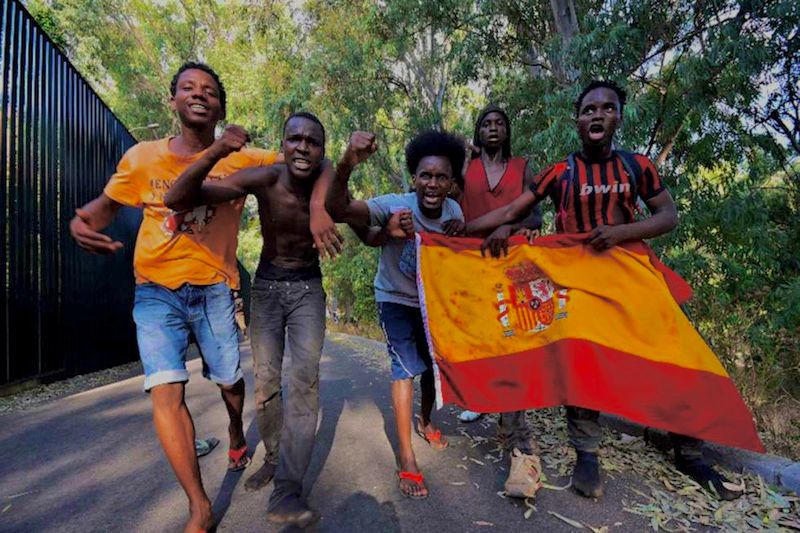
The direction of most sub-Saharan migration flows is toward the Western World. Why? Because arriving in "our" world seems to be the answer to all of Africa’s problems. After all, we have jobs, houses, schools, hospitals, and uncorrupted politics. And while such is truly false advertising… it has a ring of truth compared to their context. Our world is a destination because their world is so much worse. It doesn't matter how bad we think things are here; the truth is that we live in luxury compared to most of the world.
Most of the African migrants that we meet in our world arrived legally. That means they had the opportunity and resources to secure a visa and a plane ticket. Occasionally in the United States and more frequently in Europe, one will befriend someone who came the hard way. The story you hear may sound good, but bear in mind that they carry many scars on the inside. Their trauma will run deep, and those wounds will be carefully concealed. But on the outside, in the eyes of their peers and family, they are heroes.
Unfortunately, arrival does not mean success. Immigrants soon discover that the image of the West they held in Africa was a facade created by television, the internet, and social media. The reality is that life is difficult, money is hard to earn, and the cost of living is high. Their sense of morality and community is challenged daily, while a secular culture continually assaults their religious convictions (whatever they may be). The isolation can be unbearable. To make matters worse, the expectation of caring for their family back in Africa can be overwhelming. After all, they are heroes… and a hero's job is to save others.
It is in this context that the message of the Gospel brings hope. Christ has a way of overcoming the challenges of our modern society. If that is true for us, it is also true for the migrant. Coming from an animistic or even Islamic background, many will not have ever had a Christian friend. For them, Christianity is just another mysterious part of their new world. Anything that does not put food on the table or offer them an advantage in that new world must be set aside for later. Most are in survival mode. Such may help explain why the church food closet can draw a crowd… but so few of these new faces in our communities show up in church.
The hope of the gospel is not found in a benevolent ministry. It is located in relationship with followers of Christ. What a food closet does, however, is to create opportunities for those relationships to be formed. Western Christianity has an incredible opportunity to engage moving people at their fundamental points of need. They are our neighbors, they come from cultures centered upon community, and they will respond to our hospitality. All that is needed is for the church to step outside her doors and meet the families across the street. When she does, she will see that they are real people with real needs… who can and will respond to the invitation of Christ.
Opportunities in African Points of Transition
I remember visiting with a young African who told me that for every five boats that left a Moroccan beach for Spain, only one, maybe two, would arrive successfully. One, perhaps two, would return to Morocco. The currents would sweep the rest into the Atlantic. He added that it took an average of three attempts to make it across. With nearly thirty thousand arrivals to Spain in 2022, one can only imagine the number lost and those still stranded in North Africa.3
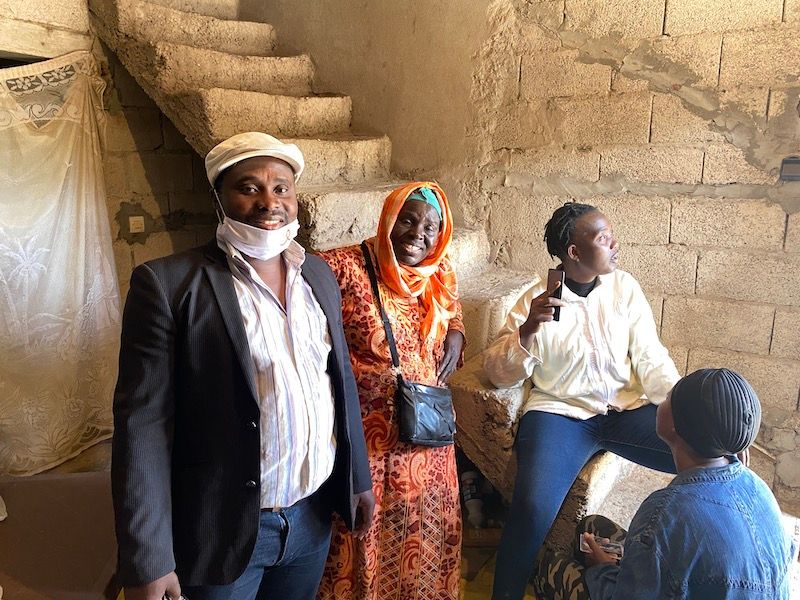
The point of transition for the Western Mediterranean Route is Morocco. It is unknown how many SSA migrants are stranded here, but the number may be as high as a million people.4 They are evident on the streets, in the shacks at the edge of town, and in the forest camps. They are often destitute, dishonored, and discouraged. They are also in survival mode. Only on the African side of the Mediterranean, every day can be a life and death struggle. As they face the reality that they may not make it to Europe, they fall into a spiral of despair, unable to move forward… unable to go home.
If you, as a believer, were to ask our Lord to give you an opportunity to share His love, do not be surprised if He connects you to the work in Morocco. Here, one can find those who are the most calloused to the world, empty in spirit, and yet responsive to those who care. It was for such as these that Jesus came. It doesn't matter their cultural or religious background… Christian, Muslim, or Animist… all seem to respond positively to the gospel of Christ. But if God were to connect you to the work in such a transition zone, please do not oversimplify that process. Paul wrote,
How then will they call on Him in whom they have not believed? How will they believe in Him whom they have not heard? And how will they hear without a preacher? (Romans 10:13)
I return to a premise of how migrants come to faith.5 People can only make a volitional choice (call on Him) once they have experienced cognitive (belief in Him) and affective (willing to hear) changes. This premise is true in almost all settings, but it is especially relevant in places of transition. SSA migrants in North Africa are in serious survival mode, and their focus is on moving forward… or adapting to a new life in Morocco. Changing religions is perhaps the last thing on their mind. But… as noted above… these individuals are desperate for a message of hope. But that message must come from a trusted source. Those kinds of relationships only come with time.
As you might imagine, building a trusting relationship with an African migrant can be difficult for non-Africans. It is easier among fellow migrants; it comes inherently for those who have suffered together. This helps explain why those most effective in sharing the gospel among SSA migrants are Christian SSA migrants. And while statistical information is broadly lacking, it is evident that many such believers are in Morocco. All they need is some attention, help to heal from their wounds, and a time of discipleship to grow to maturity. The best context for this to occur is the local church. By God’s grace, such churches are alive and well in the land.
What is Our Role?
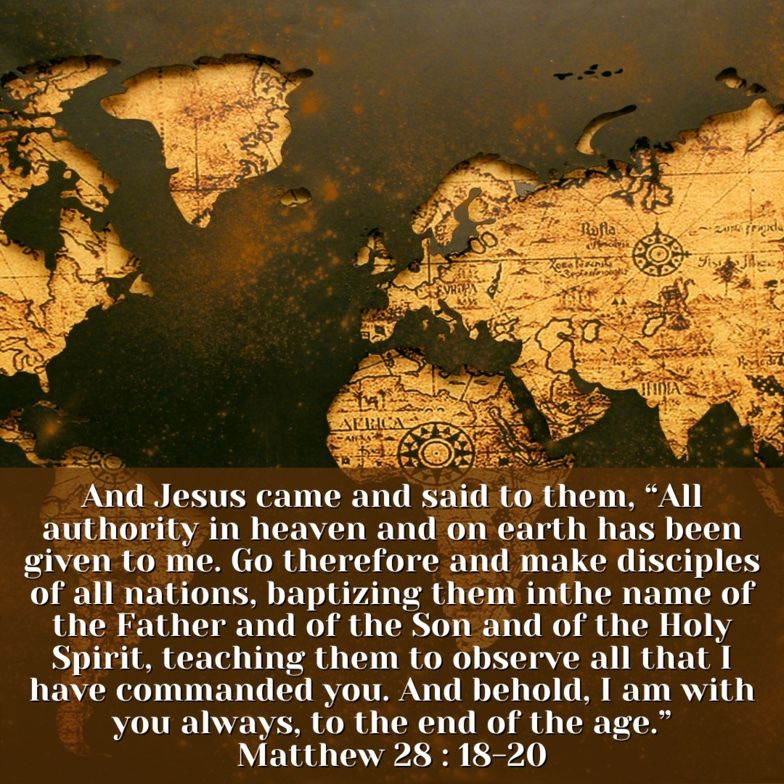
That is a great question. The answer is evolving. In the past, the role of the Western church was to send people to places like this. We called them missionaries. In those days, the world was rural… and we considered the work “pioneer.” Their objective was to enter a region devoid of Christianity and settle down for life. They learned the language and culture and invested their lives among a singular people group. They were very effective, and World Christianity owes much to their sacrifices.
Today, however, over half the world lives in urban contexts.6 Our work among sub-Saharans seeks to describe their movements… often between these metropolitan regions. We have shown that migrants may come from rural, but they almost always end up in a city. Those cities are multi-ethnic and host a vast diversity of languages. These cities also have churches, indigenous and immigrant, who are engaging their communities. In the past, the foreign missionary was the point of the spear among rural peoples. In many places, particularly in urban contexts, that mantle has now been passed to the local church.
Much of our role today is to encourage, support, and assist these local churches as they do their work in their communities. Many of these churches are young and need help to grow to maturity. They often desire to reach their neighbors but need to know how. Workers are still required from the West, but their role is now to undergird the pastors as they lead their people. At times we may have the occasion to train and direct, but caution is required lest we impose our Western constructs in places where harm could result. I have been in many of these churches. They are grateful for our help and long for our fellowship.
Our role today is also to recognize areas where the local church does not exist. Transition zones are often places of darkness, and we are called to bring light into such spaces. There is still much work to be done; only now can laborers be drawn from the church's strength in sub-Saharan Africa. Remember, the fruit is found in the harvest… and so are the future laborers! The African church has grown exponentially in the past few decades and is now ready to send her own people into the field. Many are already there!
Jesus once told Peter,
I also say to you that you are Peter, and upon this rock I will build My church; and the gates of Hades will not overpower it. (Matthew 16:18)
In those days, a global church was but a prophecy. Jesus could see a day when a robust and vibrant church would be present in sub-Saharan Africa. There would be a day when she would send her sons and daughters into the world to make disciples. At her side would be churches from around the world, encouraging, supporting, and praying for their efforts. As such, the words of our Lord ring true once again… “ for today this Scripture has been fulfilled in your hearing.”
1 Ouzoud Falls, Courtesy: "The Atlas Mountains in Morocco - The Spectacular Waterfalls of Ouzoud", FreePik https://www.freepik.com/premium-photo/atlas-mountains-morocco-spectacular-waterfalls-ouzoud_22754399.htm (accessed April 5, 2023).
2 Jesús Canas, "More Than 100 Migrants Manage to Jump Border Fence into Spain", El Pais https://english.elpais.com/elpais/2018/08/22/inenglish/1534938404_320141.html (accessed April 5, 2023).
3 UNHCR, "Operational Data Portal: Refugee Situations", Refugees Operational Data Portal https://data.unhcr.org/en/country/esp (accessed April 5, 2023).
4 Mitch Hamilton, "The Historical Context of Morocco", M2M3 https://m2m3.org/42-historical-context-of-morocco/ (accessed April 5, 2023).
5 Jehu Hanciles, "Migration and Mission: Some Implications for the Twenty-First-Century Church," International Bulletin of Missionary Research 27, no. 4 (2003): 4.
6 Mitch Hamilton, "Le Monde Est Grand", M2M3 https://m2m3.org/3-le-monde-est-grand/ (accessed April 5, 2023).