53 – Receptive Church in Spain
2023 No 53
But as for you, brethren, do not grow weary of doing good.
—2 Thessalonians 3:13
Most people have the heart to do good, even those who do not follow Christ. Southern Europe has received millions of migrants over the past two decades. In the early days, almost every receiving country welcomed those who landed on her shores, particularly those who had been forcibly displaced by war and crisis. The government established refugee centers, communities opened their homes to families, and billions of Euros were invested in helping people re-establish their lives. The challenge was that the immigrants kept coming… wave after wave. Soon fatigue set in, and good hearts grew weary.
In each country, institutional churches played a crucial role in managing the needs of migrants, particularly those who fell through governmental cracks. The services they offered were highly dependent upon the local context. In Italy, along the Central Mediterranean Route, the Catholic church is central. She is ingrained into the culture and has deep connections and influence across all strata of society. She is “the” non-governmental organization (NGO) who works with the authorities to support social services and offer humanitarian aid. She is also “the” faith-based organization (FBO) who has deep pockets for charitable efforts, bringing a spiritual component to the crisis. Her greatest challenge may be that she is too culturally connected… too centrally aligned with the government… too regionally influenced by organized crime.
As we will see in a future series on the Eastern Mediterranean Route, the Orthodox Church of Greece has also offered compassionate service. Her story is that she was overtaken by the sheer number of refugees transiting Turkey from Iran and the war in Syria. Unlike the Catholic Church in Italy, the Orthodox Church has neither the wealth nor the political influence to drive humanitarian efforts. External NGOs and FBOs, large and small, consequently filled that vacuum. They came at the government's invitation to help manage the migration crisis. Unfortunately, the mix of agendas and voices quickly created conflict, with some improving the situation and others worsening it. So many have come and gone over the years that the Greek people have become weary of both the migrants… and those who come to help.
The Uniqueness of the Spanish Migrant Crisis
Along the Eastern Route, economic migrants are a minority among actual refugee populations. Most who pass through Turkey are fleeing conflict in Iran, Afghanistan, and Syria. Therefore, these refugees carry public and political prowess, and the EU must spend billions of euros on their care. Much of those resources flow through large NGOs to support their humanitarian efforts.² From the perspective of the migrant, it is vital to begin the asylum process as soon as possible upon arrival. Registration means financial support, and acceptance means a new life. There are Africans in the mix, but they are typically not viewed as refugees and seldom receive any attention or support. Their only hope is to claim asylum under false pretenses.
In contrast, along the Central Route, most of the migrants are Africans. They tend to arrive in Italy via boat, having passed through the islands of Malta or Lampedusa. By the time they arrive, they are generally impoverished and deeply scarred by the journey. Others will be smuggled into Italy, landing on the farms and in the brothels of criminal organizations.3 NGOs are limited because they cannot compete with the Catholic hierarchy. One can find a few FBOs, but they are small and often externally funded.
The Western Route, however, is comprised almost entirely of economic migrants from both the Maghreb and the Sahel. In the public eye, poverty may be considered a displacement factor, but it is perceived very differently from those who have been forcibly displaced due to war. In Spain, the needs of migrants are transitory, as are their objectives. Because of this, there is little attention from EU humanitarian organizations or anyone else. NGOs and FBOs certainly exist, but they tend to work very closely with the Spanish government. Most are simply distribution points for humanitarian aid. But… that means they only serve those legally progressing through the system. Unfortunately, that leaves the care of most African migrants to the churches.
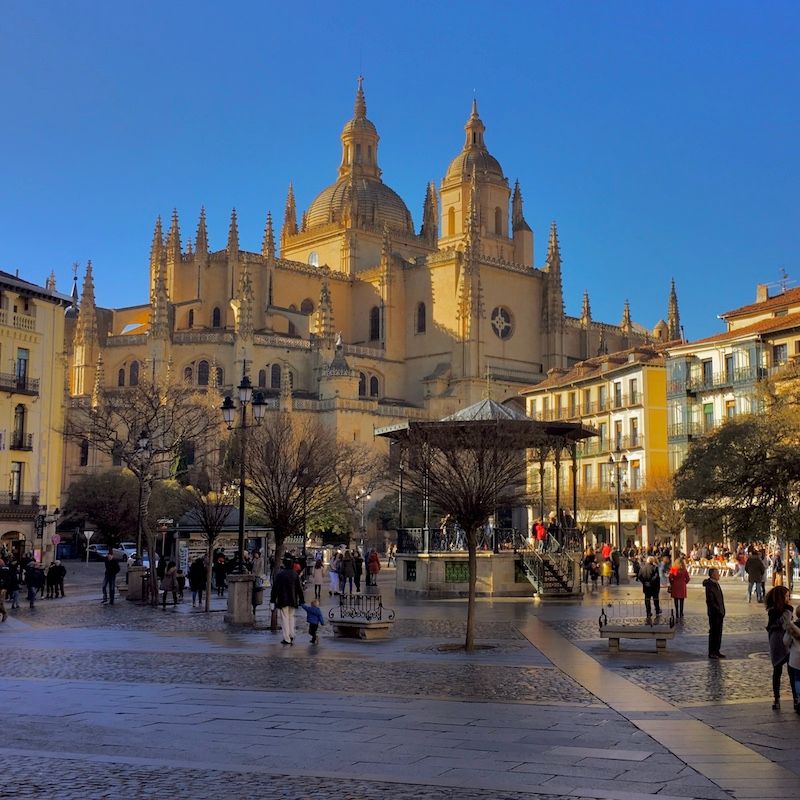
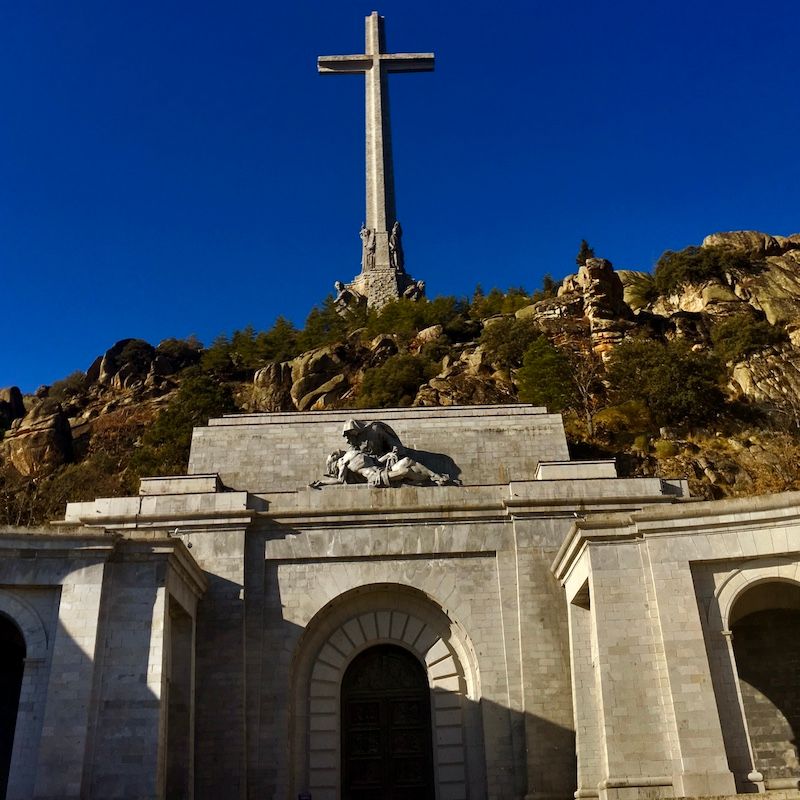
Segovia Cathedral and Valle de Cuelgamuros - Photos by Author
The Catholic Church in Spain
When discussing the church in Spain, the obvious point of departure is the Catholic Church. Without a doubt, Catholics are prevalent across the country. Most, however, do not practice their faith.4 The official membership of the church is thought to be some 42 million congregants or 90% of the Spanish population. But the number of faithful attendees may be less than 7 million. And that number is diminishing, affecting the church’s ability to attract clergy. In 1975, there were some 24,300 priests. By 2019, that number had dropped to 16, 960 serving nearly 23,000 parishes.5
What that means is that the contemporary Spanish Catholic church is struggling to minister to her own members. This makes her efforts to care for migrant populations much more difficult. Resources are scarce, and laborers are few. Caritas, the Catholic Relief Agency, has offices in almost all major metropolitan areas.6 Despite their limitations, they are doing impressive work. Working alongside other organizations, such as the Red Cross, they are bringing a measure of assistance to migrant populations.7 I have been to their centers in Madrid and Malaga. Volunteers work diligently, but like others, they are overwhelmed by their needs.
The Spanish Evangelical Church
In a previous post, we discussed the historical context of Spain.8 Space at that time did not permit a full discussion of the challenges the Protestant church faced during the “Reconquista" and following. For nearly four centuries, the country was ruled by monarchs who repressed any expression of faith outside of Spanish Catholicism. In 1868, however, a revolution led to a coup, forcing Queen Isabella into exile.9 Afterward, Protestants enjoyed more freedom, even if for only one generation. Francisco Franco ruled Spain between 1939 and 1975. During those years, Protestants were once again persecuted. Even though the Spanish Bill of Rights (1945) guaranteed the freedom of worship, they were subject to harassment, violence, and a prohibition of public assembly.10 During those years, many fled the country seeking religious freedom. That freedom was once again restored in 1975 when Franco was deposed.
The effects of such a history of religious repression can be seen today. Evangelical Protestantism is recovering, but very slowly. Of 8,100 Spanish villages, over 90% are without an evangelical church. The same is true for over 330 towns and municipalities with populations greater than 5,000. That means that over 10 million people in Spain live in places unreached by the gospel.11 This is particularly true in Southern Spain. In so many ways, Spain is one of Europe’s largest mission fields. In that aspect, God is responding.
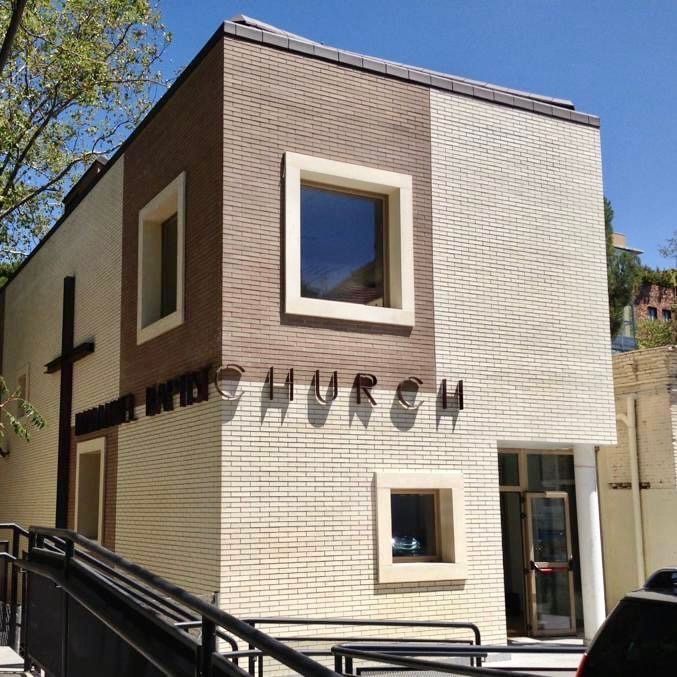
According to the Federation of Evangelical Religious Entities of Spain (FEREDE), there were 3,243 Evangelical congregations in 2022.12 That number, while true, is likely far from accurate. Why? Because not everyone participates in the FEREDE. The National Observatory of Religious Pluralism shows 4,238 evangelical places of worship in 2018. That number had risen by nearly 200 from the previous year.13 Baptist churches have been in Spain since the 19th century, with a current listing of 140 congregations. Latin American Pentecostalism has come to the country through recent immigration and is quickly taking a foothold. Many of their congregations are small and not registered with the government. But they are indeed growing.
The African Immigrant Church of Spain
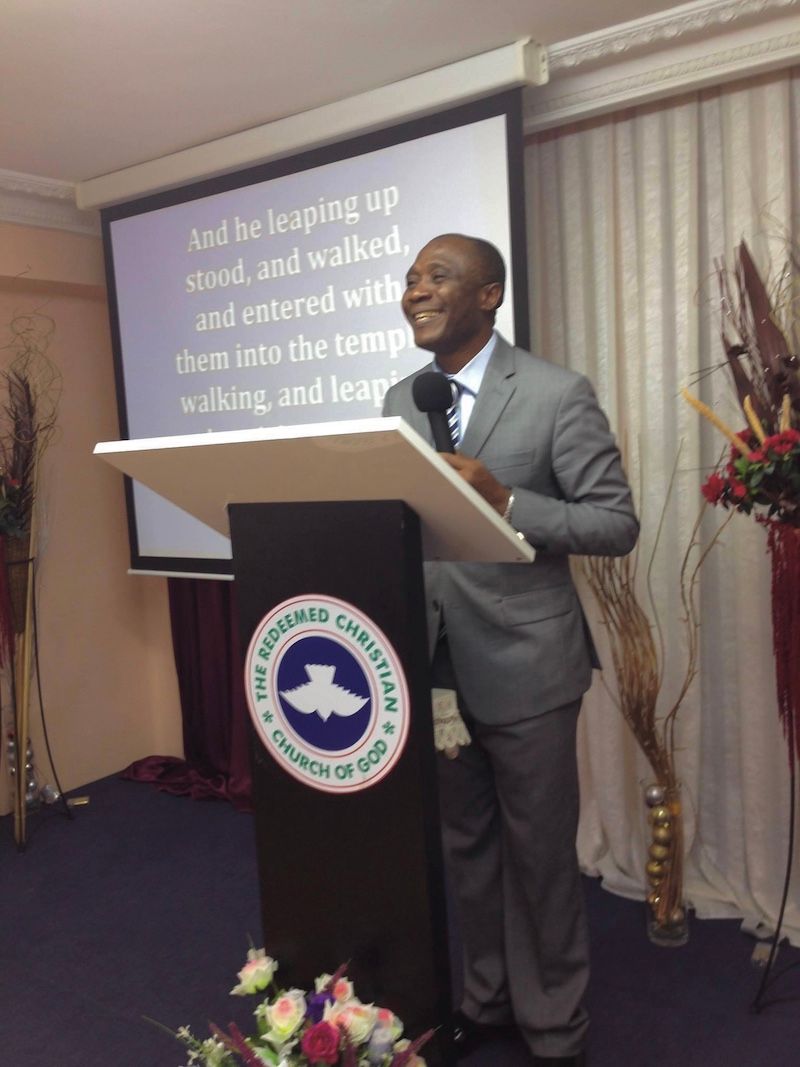
Perhaps the greatest uncharted movement of church growth is among African immigrants. I remember meeting with a group of African pastors in Southern Spain. They faced criticism because they had publicly expressed a reticence to engage in direct ministry among fellow sub-Saharan migrants in their community. I was curious to understand their reasons and perhaps help them discover new options. I walked away from the meeting with a more profound respect for these pastors' maturity and a lesson to share with others.
As in the Maghreb, African churches are scattered across southern Spain. They are often informal gatherings, meeting in homes or rented spaces in business complexes. Many were formed by long-term residents of Spain, having migrated legally. The government recognizes their churches and gives access to public funds to minister to immigrants. The key is that they can only service those migrants who are also known to the authorities. Typically, these individuals are awaiting a decision on their asylum request.14 Other small congregations have been spontaneously formed by believers in the undocumented immigrant community. As in Morocco, they have been tolerated by the government because they create a structure by which migrant issues can be managed, and they provide a service to the community.
The challenge for these small churches is that their resources are limited, and they can be quickly overwhelmed by the vast needs of the community. When I met with this group of pastors, they explained that African culture demands that they show hospitality to their neighbors. If an African comes to your door, it would be a sin… culturally and biblically… to turn them away. But they also know that there will be ten tomorrow if they help one today. Those ten would then turn to a hundred the next day. Without some measure of control, every church would become overwhelmed… if not bankrupt in short order. They felt the tension between caring for the community's needs and their congregation's needs.
Their solution was to make it known that they did not engage in public service to the migrant community. But… with incredible wisdom… they encouraged their members to seek ways to love their neighbors. They found that the congregation, being migrants themselves, knew how to best care for their friends and co-workers. By resourcing their members to do that kind of ministry, they empowered them to share the gospel with a high level of credibility and effectiveness. It also allowed them to minister without coming into conflict with governmental mandates that prohibited assistance to the illegal migrant community.
As we have traveled across central and southern Spain, we have been impressed with how the Lord uses the African immigrant church. There is passion in her worship, clarity in her purpose, and amazing stability in her leadership. She is both Pentecostal and evangelical in her theology, tempered… and yet finding liberty in a European context. She is also open to growth. And because the region is an emerging mission field, opportunities abound for African believers, legally present in the EU, to plant churches and serve alongside the church in Spain. From their perspective, the fields truly are white unto harvest.
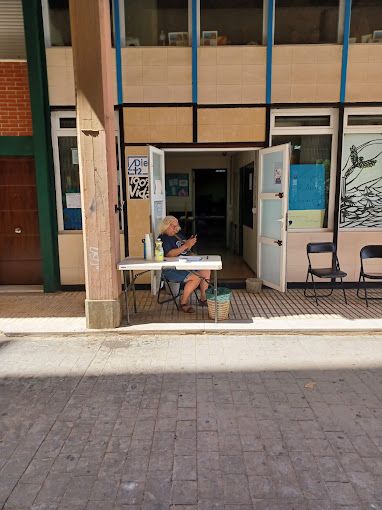
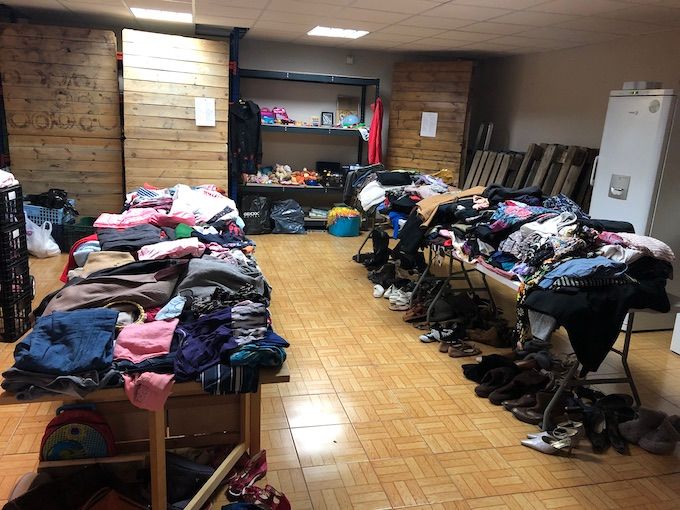
Diez 42 - A Ministry in Malaga Spain
The Role of Faith-Based Organizations
The secular nature of the Spanish context has historically made it challenging for FBOs to fully serve immigrant populations. Like most EU countries on the front line of migration, Spain strongly resists illegal entries, prosecutes those who facilitate such movements, and opposes those who might make life easier for those who come.15 Any group that receives government funding is limited to only helping those who can show proper paperwork that they are being legally processed by the system. Such creates significant restrictions upon the ministry focus of faith organizations.
And yet the number of migrants in that group (those claiming asylum) and being served is not insignificant. Those services can include food, language study, and perhaps even housing. Operating in this sector certainly increases the opportunity to share the gospel, But because funding is limited, at times, so are the services. Often churches, FBOs, and missional organizations pool their resources for greater effect. One does not have to watch for long to see that these groups are doing phenomenal work. In that most of the migrants who can claim asylum are coming from Muslim backgrounds, these faith groups are strategically engaging people at one of their most receptive moments.
Unfortunately, many sub-Saharan Africans are excluded from the above ministries. Gaining asylum status is not easy, and most simply do not qualify. Once the application is rejected, the migrants are supposed to be repatriated to their home country. That seldom occurs, and the individual quickly fades into the community.16 In the South, they go to work on farms. In the North, they move into informal labor markets. All have significant needs, and due to their lack of legal status, those needs often go unmet. I have met with the directors of several FBOs who shared the challenge of maintaining their obligation to assist only those approved by the government while a large segment of the migrant community continues to suffer.
Conclusion
Once again, Spain represents a mission field that is white unto harvest. Such could be said about the indigenous peoples, but even more about the immigrant population. Some of the greatest challenges for non-governmental humanitarian organizations and many faith-based organizations are the political limitations they must navigate. Those who handle government funds, and seek official access to the migrants, must play by the secular rules. And while these humanitarian efforts certainly play a crucial role in ministry to migrants, it becomes clear that the hands and feet of our Lord belong to the local church.
We must always remember that people take their faith with them when they move.17 As such, Christian migrants are flooding into Spain along with everyone else and establishing places of worship. Their churches represent most of the new growth in the region, and it is through their love for their neighbors that tremendous work is being accomplished. NGOs and even FBOs can offer humanitarian aid. However, a cup of cool water delivered by the hands of a Christian neighbor can do so much more. The political and social limitations fall away as individual believers engage their community with the love and gospel of Christ. Such has proven to be true across the spectrum of the Western Mediterranean Route.
1 See "Refugees Welcome: A Most Uncommon Phrase", Gallivance https://gallivance.net/2017/04/17/refugees-welcome-a-most-uncommon-phrase/ (accessed April 4, 2023).
2 There are a number of large, international non-governmental organizations active in Greece. They include the UNHCR, American Red Cross, Médecins Sans Frontiérs, and Danish Refugee Council among others.
3 Mitch Hamilton, "Remain in Africa", M2M3 https://m2m3.org/35-remain-in-africa/ (accessed April 4, 2023).
4 Mitch Hamilton, "43 – Historical Context of Spain", M2M3 https://m2m3.org/43-historical-context-of-spain/ (accessed February 14, 2023).
5 See Peter McLaren-Kennedy, "Numbers of Priests and Nuns Fall in Spain", EuroWeekly News https://euroweeklynews.com/2022/03/20/numbers-of-priests-and-nuns-fall-in-spain/ (accessed April 2, 2023). f
6 "Cáritas Diocesana De Málaga", Caritas Malaga https://www.caritasmalaga.es/ (accessed April 4, 2023).
7 J.C. Romero Villadóniga, "Lugares Inestables. Neoesclavismo En El Siglo XXI En Los Campos Freseros Onubenses En España.," Migraciones internacionales 11 (2020).
8 Hamilton.
9 Guy P. C. Thomson, The Birth of Modern Politics in Spain: Democracy, Association and Revolution, 1854-75 (Basingstoke ; New York: Palgrave Macmillan, 2010).
10 Stanley G. Payne, Spanish Catholicism: An Historical Overview (Madison, Wis.: University of Wisconsin Press, 1984), 186.
11 "Spain: 10 Million Live in Towns without Evangelical Presence", Evangelical Focus Europe https://evangelicalfocus.com/print/4434/Spain-More-than-100-million-live-in-towns-without-evangelical-presence (accessed April 4, 2023 Madrid).
12 See FEREDE, Memoria De Servicios Y Actividades Ferede 2022 (Madrid, 2023), 61. This number likely does not include significant groups, such as those of Baptist background. The Union of Evangelical Baptists of Spain reports 140 places of worship, with over 11,000 baptized members. See also "Https://Uebe.Org/Breve-Cronologia/", Unión Evangélica Bautista de Espana https://uebe.org/breve-cronologia/ (accessed April 4, 2023).
13 "Spanish Evangelicals Celebrate Another Year of Growth", Christian Today https://www.christiantoday.com/article/spanish-evangelicals-celebrate-another-year-of-growth/131419.htm (accessed April 4, 2023).
14 Arezo Malakooti, Migration Trends across the Mediterranean: Connecting the Dots (Cairo: IOM MENA Office, 2015), 49.
15 Article 318 bis of the Spanish Criminal Code. See "Codigo Penal Y Legislacion Complementaria: Titulo Xv Bis, Articulo 318bis", SHERLOC https://sherloc.unodc.org/cld/legislation/esp/codigo_penal_y_legislacion_complementaria/titulo_xv_bis/articulo_318bis/article_318bis.html?lng=en&tmpl=sherloc. (accessed April 1, 2023).
15 See UNHCR, "Response to Your Asylum Application", United Nations High Commissioner for Refugees https://help.unhcr.org/spain/en/solicitar-asilo-en-espana/respuesta-a-tu-solicitud-de-asilo/ (accessed April 4, 2023). See also Lorenzo Gabrielli, Blanca Garcés-Mascareñas, and Olatz Ribera-Almandoz, "Between Discipline and Neglect: The Regulation of Asylum Accomodation in Spain," Journal of Refugee Studies 35 (2021): 274.
16Jehu Hanciles, "Migration and Mission: Some Implications for the Twenty-First-Century Church," International Bulletin of Missionary Research 27, no. 4 (2003): 4.